From EOP-012-3 to Order 587-AB, from Cold Weather Critical Component inventories to dual-fuel conversions, the bulk power system has spent five years rewiring how it prepares for extreme cold. Winter Storm Fern, the latest test, showed the system ran “very close to the edge.”
The last five winters have given the North American power sector a harried sequence of tests. After the calm in the years following the polar vortex of 2014, Winter Storm Uri delivered a catastrophic rupture in a 13-day event in February 2021, precipitating 61,305 MW of unavailable generation and 23,418 MW of firm load shed in the largest controlled firm load shed event in U.S. history. Elliott followed in December 2022 and drove 90,500 MW of coincident unplanned generation outages across the Eastern Interconnection and 5,400 MW of firm load shed in the Southeast. By the January 2025 arctic events—22 days across Winter Storms Blair, Cora, Demi, and Enzo—unplanned generator outages still peaked at 71,022 MW across the Eastern and Texas Interconnections, though operators avoided firm load shed. And despite lessons urgently learned and implemented in the aftermath of those storms, Winter Storm Fern, which spanned 19 days from Jan. 23 to Feb. 10, 2026, and stressed the bulk electric grid across the Midwest, Northeast, and South, proved “a near-miss event,” as Jim Robb, president and CEO of the North American Electric Reliability Corporation (NERC), testified before the House Energy Subcommittee in March.
During Fern, grid operators declared 26 Energy Emergency Alerts (EEAs), including two EEA3s, the highest alert level, one step from firm load shed, Robb testified. In tandem, the Department of Energy issued 20 emergency orders under Section 202(c) of the Federal Power Act: seven in Florida, four in the Southeast, four in the Mid-Atlantic, two in New England, two in Texas, and one in New York. “These outcomes should be no cause for complacency,” Robb warned. “The wide array of actions to manage Fern may have had far different results with a larger, longer, colder storm.” He also noted, candidly, that the storm was not as cold as initially forecast and that widespread school and business closures reduced demand, which potentially eased pressure on the system.
But the ultimate test Fern administered, as other recent winter storms have done, was of capacity adequacy—whether enough generation is available at peak—and of energy adequacy—whether the fuel and stored energy behind that generation can sustain output across a multi-day event. Capacity adequacy during Fern seemed to meet its mark. PJM met its peak of 140,049 MW on Jan. 29 against outages, which averaged 18 GW to 19 GW, according to a February 2026 PJM Operating Committee cold weather update. Energy adequacy, however, showed strain. For several days in late January, all gas-fired generation in New England relied on scheduled liquefied natural gas (LNG) injections, according to ISO-NE data cited by José Costa, president and CEO of the Northeast Gas Association, at the hearing.
A New Winter Load Profile
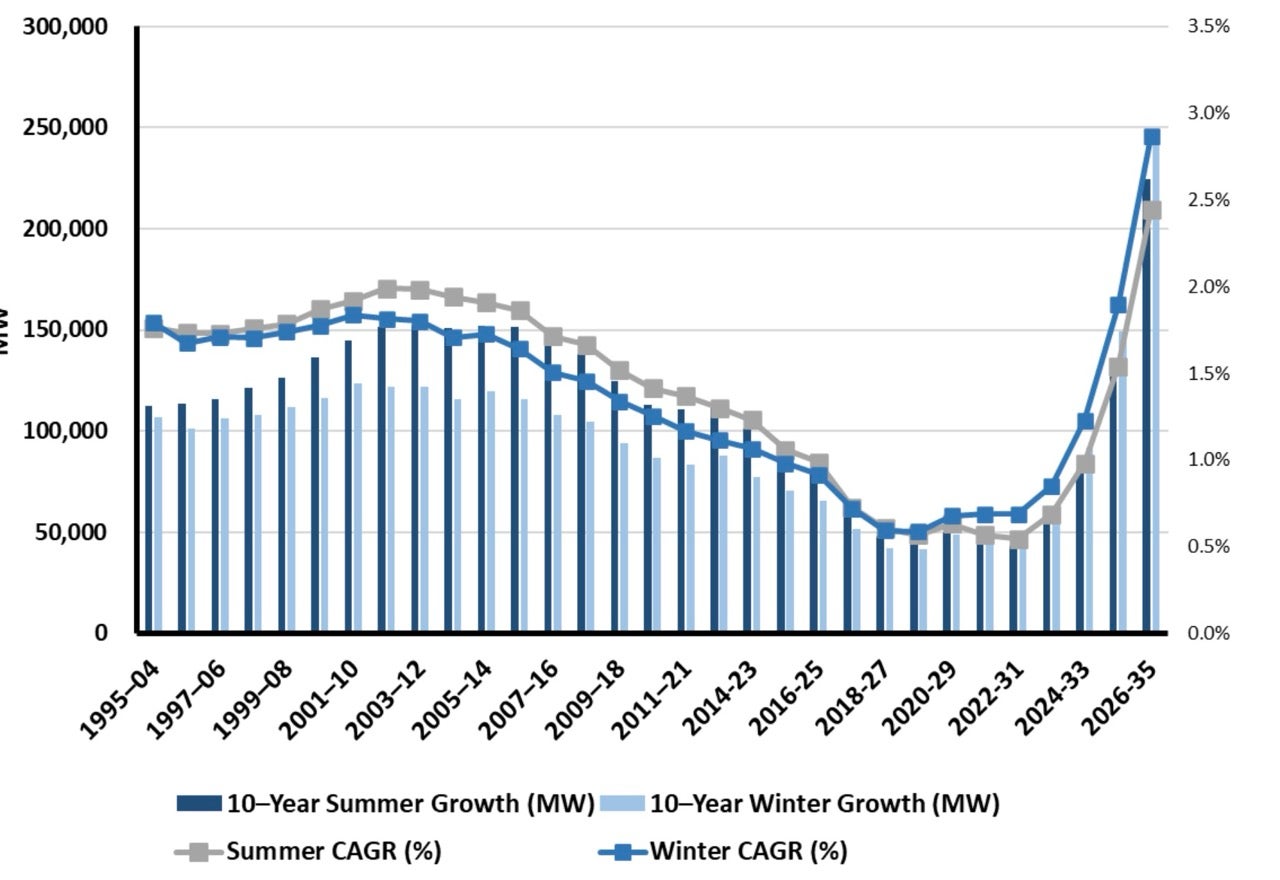
The bigger reason for the “near miss” assessment, Robb said, was that Fern “closely tracked many risks” NERC identified in its 2025 Long-Term Reliability Assessment (LTRA), released that January. The annual 10-year-forward outlook projected that 13 of 23 North American assessment areas face resource adequacy challenges over the next five years. It also projected that summer peak demand could surge 224 GW through 2035, that winter peak demand could surge even more—245 GW over the same period—and that winter capability from solar and battery resources will lag the additions needed to offset retiring fossil capacity (Figure 1).
In This Issue
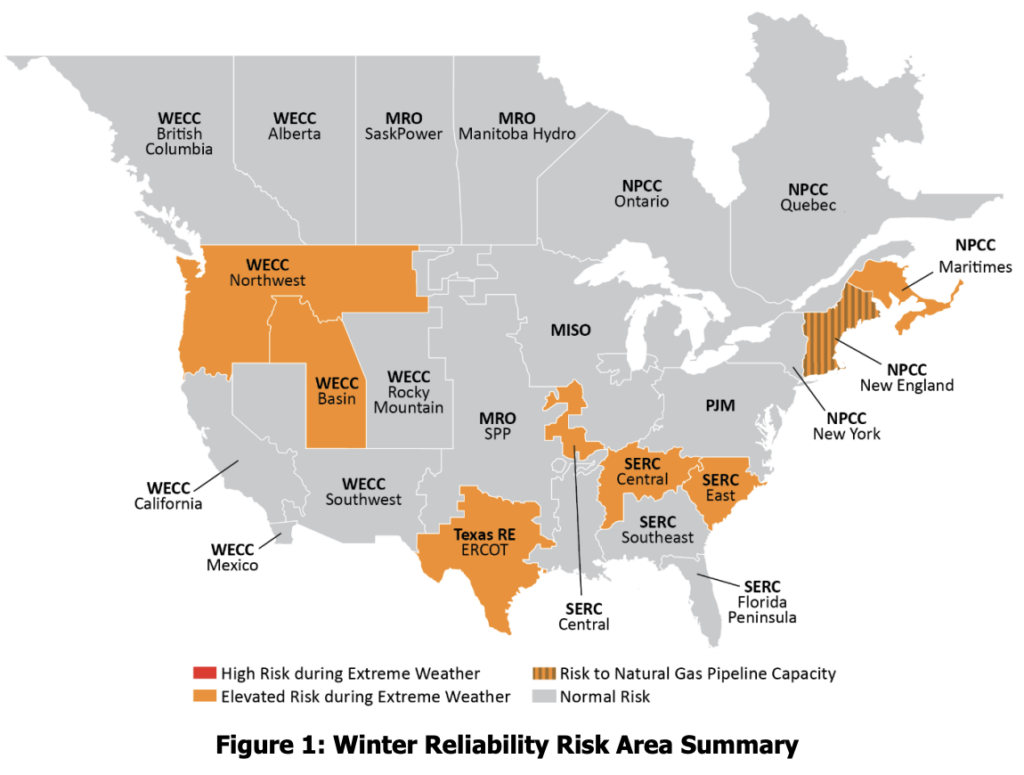
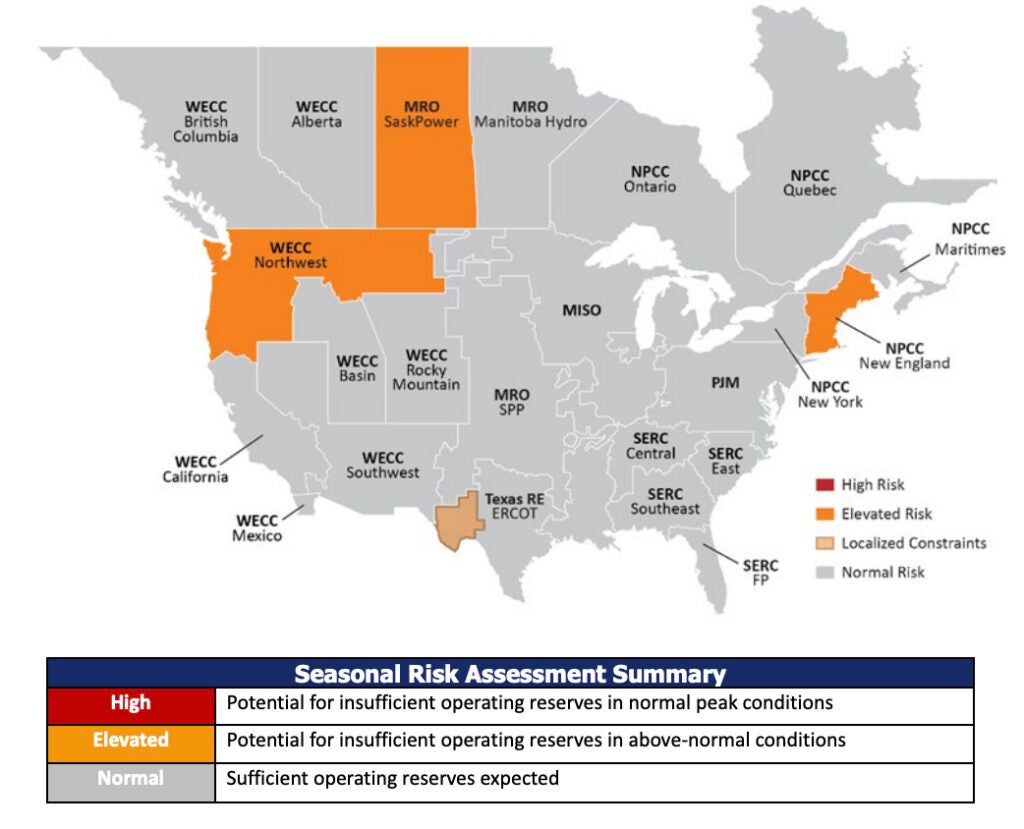
Full issueNERC’s 2025–2026 Winter Reliability Assessment (WRA), released in November 2025, meanwhile, says that aggregate peak demand across the NERC footprint rose 20.2 GW (2.5%) winter-over-winter, while net resources increased only 9.4 GW—and of that resource increase, generation accounted for just 1,335 MW. The larger share came from demand response and battery additions whose output can diminish in sustained extreme cold. Seven assessment areas entered the season carrying elevated reliability risk: NPCC-Maritimes, NPCC-New England, SERC-East, SERC-Central, Electric Reliability Council of Texas (ERCOT), WECC-Basin, and WECC-Northwest, per the WRA. NERC also warned that risks are tied less to normal peak conditions than to the combination of extreme cold, above-normal load, generator outages, reduced output from intermittent resources, and fuel constraints. The WRA also underscores that natural gas production and delivery can be disrupted by freezing conditions, that freeze protection for gas infrastructure remains voluntary in most of North America, and that gas-electric market timing misalignments continue to complicate generator fuel procurement ahead of severe winter conditions, especially over holiday weekends.
For now, the winter load profile shift is most pronounced in the Northeast. ISO-NE’s Final 2025 Heating Electrification Forecast projected that the regional summer peak would rise from 24,803 MW in 2025 to 32,021 MW in 2045, an increase of about 30%. Winter peak demand, by contrast, is set to essentially double over the same period, reaching 40,278 MW by 2045, driven primarily by the electrification of space heating and transportation. More significantly, ISO-NE expects to cross over to a winter-peaking system by the mid-2030s, owing to heating electrification, which alone is forecast to contribute 5,533 MW to the 50/50 winter peak in 2035–2036. However, other regions may be following that trend. WECC-Northwest’s winter peak for the 2025–2026 season is projected to be 9.3% above the prior year, driven by data center load, building electrification, and semiconductor manufacturing, according to NERC’s WRA.
A Growing Body of Cold Weather Mandates
Given that complex risk profile, since Uri, the Federal Energy Regulatory Commission (FERC), NERC, regional entities, and state regulators have layered new winter-readiness requirements and operating expectations onto the bulk power system. The most direct mandatory standards govern generator cold-weather preparedness, but the broader response also affects grid operations, load-shed coordination, seasonal transfer studies, load forecasting, critical natural gas infrastructure identification, and gas-electric coordination. The mandates now in force include the following.
EOP-012-3—Extreme Cold Weather Preparedness and Operations. Effective Oct. 1, 2025, the standard became the third iteration of the post-Uri generator standard in two and a half years and the most consequential. While FERC approved the first version in February 2023, it found it had ambiguous applicability and open-ended compliance windows. EOP-012-2, which followed in October 2024, included a corrective action regime that FERC again ordered tightened. EOP-012-3, approved Sept. 18, 2025 (Docket RD25-7-000), gives the 1,314 U.S. generator owners on NERC’s compliance registry 48 months to install new freeze protection and 24 months to fix existing measures. It requires any unit entering commercial operation on or after Oct. 1, 2027, to operate at its Extreme Cold Weather Temperature on day one. It also strips ambiguous “cost” language from the Generator Cold Weather Constraint definition and requires compliance enforcement authority validation, reviewed every 36 months. And it directs NERC to file biennial reports to FERC from October 2026 through October 2034.
EOP-011-4—Emergency Operations. FERC in February 2024 approved EOP-011-4, a standard that carries forward the emergency operations framework for reliability coordinators, balancing authorities, and transmission operators. It adds the Uri-driven requirement to prioritize identified critical natural gas infrastructure loads in any manual load shed, given that cutting power to a compressor station in a cold snap can knock out fuel supply downstream.
TOP-002-5—Operations Planning. FERC also approved TOP-002-5 alongside EOP-011-4, which directs transmission operators and balancing authorities to incorporate extreme cold weather into operations planning analyses, including the ability to serve forecast load and maintain reserves under defined cold conditions.
Order No. 896 (June 2023)—Transmission Planning for Extreme Weather. The order directs NERC to develop a reliability standard requiring transmission providers to incorporate extreme heat and cold into their planning studies, including benchmark events, corrective action plans, and wide-area assessments. NERC’s Board of Trustees adopted TPL-008-1 on Dec. 10, 2024, and NERC filed the proposed standard with FERC on Dec. 17, 2024 (Docket RD25-4-000). FERC approved TPL-008-1 at its February 2025 commission meeting. The standard applies to transmission planners and planning coordinators, and requires an Extreme Temperature Assessment at least every five years.
Order No. 897 (June 2023)—One-Time Extreme Weather Vulnerability Assessments. The order requires transmission providers to submit one-time reports analyzing their systems’ vulnerability to extreme weather. Transmission providers filed reports in October 2023, which inform the ongoing development of the Order 896 standard.
Generator Efforts Coalesce Around a Common Framework
But even as the federal mandates were being forged, industry had begun stepping up to guard against extreme cold temperatures and freezing precipitation from severe winter storms and to curb significant generating unit outages, derates, and failures to start.
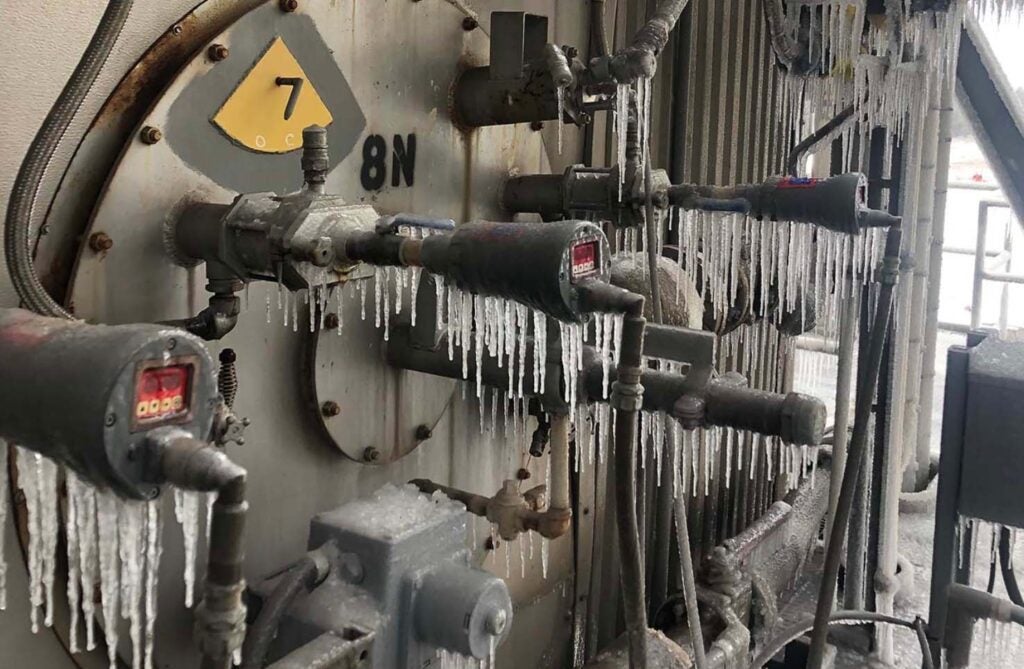
Among common causes are “freezing of critical systems such as instrumentation and controls, sensing lines, drains, vents, cooling water intakes, coal feeders, and ash handling,” according to a December 2024 EPRI report authored by principal investigator Brad Burns. Burns’ general recommendations span the full lifecycle of a unit-specific Cold Weather Preparedness Plan (CWPP). These include determining an Extreme Cold Weather Temperature (ECWT) for each generating unit, identifying Cold Weather Critical Components (CWCCs) whose freezing would likely cause a forced derate exceeding 10% of unit capacity for more than four hours, a startup failure, or a forced outage, documenting freeze protection measures for each CWCC, conducting annual inspection and maintenance, and training all personnel responsible for implementing the plan.
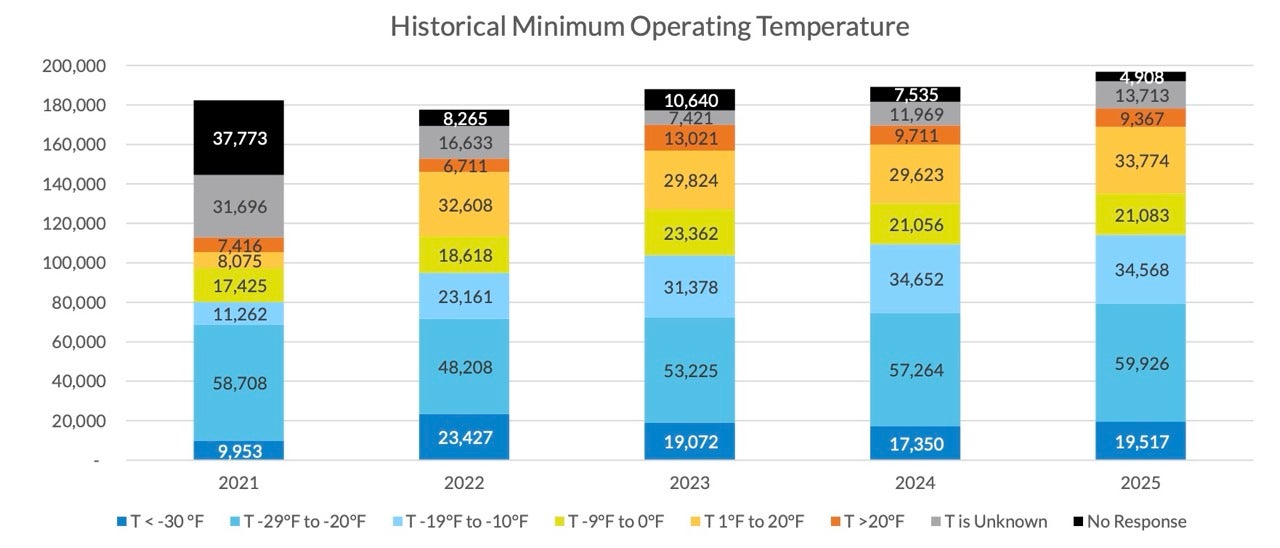
The Midcontinent Independent System Operator’s (MISO’s) winterization survey points to the same trajectory at the fleet level: the share of fleet capacity rated to operate below 0F has grown substantially, while capacity with unknown cold-weather ratings or rated only above 20F has shrunk markedly (Figure 2). The grid operator—whose footprint stretches from Manitoba to the Gulf Coast and which lost roughly 21 GW of incremental generation during both Uri (February 2021) and Elliott (December 2022)—has built a multi-layered cold-weather program. It pairs the annual winterization surveys and cold-weather drills with a multi-day forward reliability assessment and commitment process that issues capacity advisory and conservative operations declarations one to five days ahead. An uncertainty management model sizes short-term reserves to the 99.7th percentile of forecast risk, and new operations uncertainty platform dashboards track generator fail-to-start and gas pipeline risk. The payoff showed during the January 2025 arctic events—Winter Storms Blair, Cora, and Enzo—when incremental outages peaked at roughly 9 GW against a 108-GW systemwide peak, well below Uri- and Elliott-era levels.
Burns treats the ECWT—calculated as the lowest 0.2 percentile of hourly December-January-February temperatures from January 1, 2000, through the date of calculation, recomputed at least once every five calendar years—as a floor rather than a design target. In a recent ERCOT webinar, he noted that “meeting the ECWT is the minimum requirement for compliance but ensuring winter resiliency may require sustained operation at lower ambient temperatures.” During Winter Storm Elliott, ambient temperatures in Knoxville fell below the ECWT for roughly five hours, rose slightly, then fell below the ECWT for an additional 20 hours.
Burns also recommended that heat trace and insulation be treated as a single integrated system, with the complete system tested annually in summer to identify failed circuits and schedule repairs before winter. Heat trace panels should be inspected every three hours during cold weather events. He further urged redundant heat-trace circuits sized for wind-chill effects, heated enclosures designed to maintain temperatures above freezing at the ECWT, and continuous monitoring via smart panels, current-draw measurement, or infrared cameras rather than single end-of-circuit LEDs prone to silent failure.
Inspections Remain Integral. ERCOT, operating under Texas’s 16 TAC §25.55 Weather Emergency Preparedness rule, has run the deepest disclosed inspection program. ERCOT Director of Weatherization and Inspection David Kezell, in an October 2025 workshop presentation, reported 4,079 cumulative weatherization inspections across four winter seasons and three summer seasons since the rule took effect: 2,646 at generation resources and 1,433 at transmission service provider facilities. Kezell reported that outages of non-intermittent renewable resources—the gas, coal, nuclear, hydro, and battery fleet—“stayed at a consistently low level across the 2024 and 2025 winter storms.” Compared to Uri outages, which peaked above 30,000 MW, outages during Winter Storms Heather (January 2024), Enzo (January 2025), and Kingston (February 2025) each stayed near 8,000 MW to 10,000 MW, he said.
The CWCC List Has Become the Central Organizing Artifact. Every disclosed ERCOT program also now centers on a CWCC list—a §25.55-defined inventory of components whose failure causes a trip, a derate exceeding 5%, or a failure to start. ERCOT’s October 2025 inspection guidance uses two February 2025 transformer trips to illustrate the stakes. A generator step-up (GSU) transformer’s load tap changer (LTC, a device that adjusts voltage as load varies) tripped on low oil during Feb. 19–20, 2025. The LTC was not on the facility’s CWCC list, ambient was below the LTC design threshold, and the low-oil alarm reached the remote operations center (ROC) on Feb. 19 but was not telemetered for immediate operator response, with the trip following a day later. A second GSU tripped at 8:07 a.m. on Feb. 19 on a false low-oil reading caused by improperly calibrated micro switches on the oil-level gauge. No warning signal was sent to the supervisory control and data acquition (SCADA) system before the trip. ERCOT now directs operators to add GSUs and LTCs to CWCC lists, telemeter low-oil alarms to the ROC, train ROC staff on alarm response, and validate oil-level sensors at commissioning and after maintenance.
Heat Trace Monitoring Has Emerged as a Standard Fix. Heat trace failure remains the dominant cause of cold weather plant outages, and the general response has been to move away from single-LED status indicators—which can burn out without warning—toward networked monitoring that reports each circuit’s condition to the control room. The Tennessee Valley Authority installed smart panels across its fleet alongside new heat trace and insulation, permanent hard-side enclosures, and permanent heater evaluation and replacement. Oglethorpe Power installed a heat trace distributed control system (DCS) interface, integrating heat trace status into the plant’s main control system. Wolf Hollow 1 in Texas, operated by EthosEnergy, complements that approach on the manual side, adding monthly amperage readings at heat trace panels and labeling critical breakers inside the panels for faster operator access.
Enclosures and Wind Breaks Are Moving from Improvised to Engineered. Temporary tarps and plastic sheeting were the first line of defense against wind-driven cold in the years after Uri, but they ripped and let cold air through the seams. Power generators have been embracing durable, permanent structures. ERCOT’s best-practice guidance calls for heavy-duty tarps, plywood, durable siding, or planking at all elevations—with reinforced plastic permitted only at ground level—alongside weekly inspections through winter. Wolf Hollow 1 adopted heavy-duty shrink-wrap with zipper-access doors to hold heat and resist wind, replacing earlier tarps that ripped in high winds. Calpine has gone even further, adding heated enclosures atop heat recovery steam generators at specific locations to minimize personnel exposure during extreme cold.
Sensing-Line Replacement Targets the Residual Vulnerability. Sensing lines—the small-diameter pipes that carry pressure or level signals from process equipment to transmitters—are among the highest-risk components for cold-weather failures, EPRI’s December 2024 report notes. In many plants, they lack insulation, heat trace, and enclosures. They also carry little or no flow most of the time, and they are vulnerable to freezing during cold startup. Some operators are eliminating the most freeze-prone sensing lines entirely. Oglethorpe Power installed guided-wave radar drum-level indication on all three of its combined-cycle gas turbines, replacing freeze-prone drum-level impulse equipment. The radar is mounted on a chamber and sends a low-energy microwave pulse down a probe and back to the device, so that nothing fluid-bearing is exposed to ambient temperature.
The Framework Has Extended to Renewables and Storage. While cold-weather mandates were originally written with thermal plants in mind, ERCOT’s §25.55 framework now applies to renewable and storage operators, who face distinct freeze risks. Enel Green Power, which operates more than 4,500 MW of solar, battery storage, and wind in the ERCOT region, last spring certified 111 site personnel and technology specialists on an internal training platform, and field inspections now flow through Survey 123 software to dedicated technology specialists for review, while SAP work orders track repairs. Enel’s critical failure points for battery storage include conduit and door seals on battery containers, thermostat functionality and glycol levels in the battery temperature-control system, inverter heating elements, and fire-suppression water that must not freeze. At solar substations, the critical points include heater functionality and insulating gas pressure on outdoor gas-insulated circuit breakers, motor-operated disconnect heaters, main power transformer cabinet heaters, tap changer cabinet heaters, breather desiccant, and Hydran meters that monitor transformer oil for dissolved gases.
A Year-Round Cadence Has Become Standard. Rather than treating winter readiness as a fall sprint, Constellation Energy holds bi-weekly seasonal readiness meetings, conducts pre-season CWCC list reviews in both March and October, holds winter system reviews in September, completes site-specific training and staffing review in November, and operates through the December-to-February winter run. At Calpine, operators conduct a post-winter lessons-learned meeting in March or April, site-specific readiness meetings May through July, a finalized work scope by August or September, a procedure review in October, training and certification of readiness in November, and all winter preparations complete by December 1.
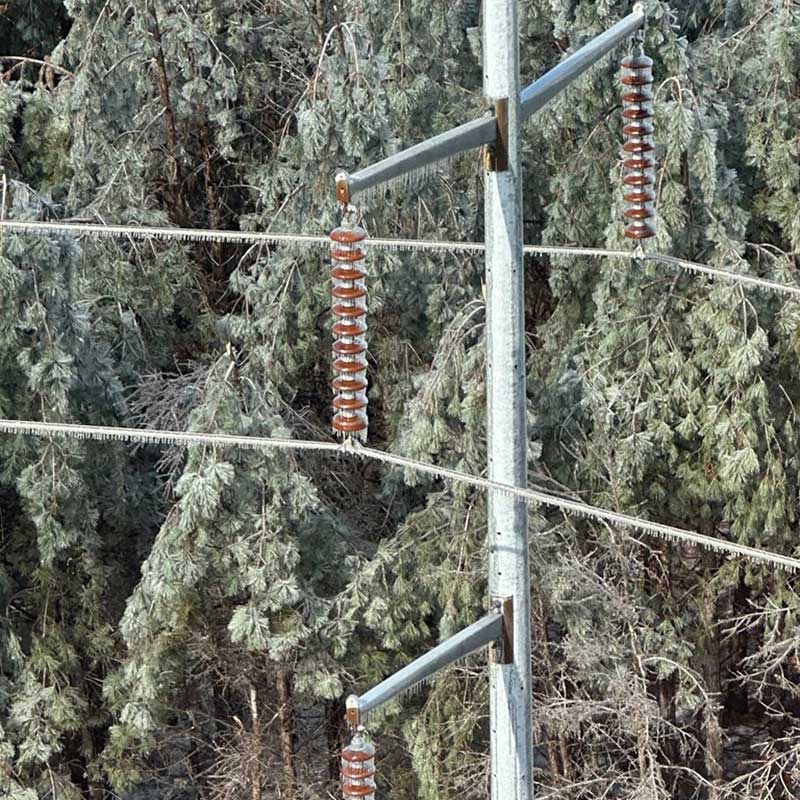
Transmission-Side Winterization Is Its Own Discipline. Because transmission service providers (Figure 3) operate in a different equipment universe than generators, ONCOR organizes its program into three operational categories: seasonal preparations, declaration of preparedness, and ERCOT inspections. Texas’s §25.55 transmission inspection scope covers SF6 pressure and heaters in breakers and metering equipment, transformer control cabinet heaters, main tank oil levels checked against actual oil temperature, bushing oil levels, nitrogen pressure, and oil quality for moisture and dissolved gases. Pedernales Electric Cooperative runs year-round substation inspections on a 12-day revolving route, sending two inspectors to three or four substations daily. They log battery bank float voltage, cell specific gravity, ventilation fan operation, transformer load tap changer oil filtration pump hours and pressure, and capacitor bank physical integrity each month. CPS Energy uses a layered compliance structure, tracking work at the component level through its CASCADE maintenance management system and at the rule level through an email reminder system.
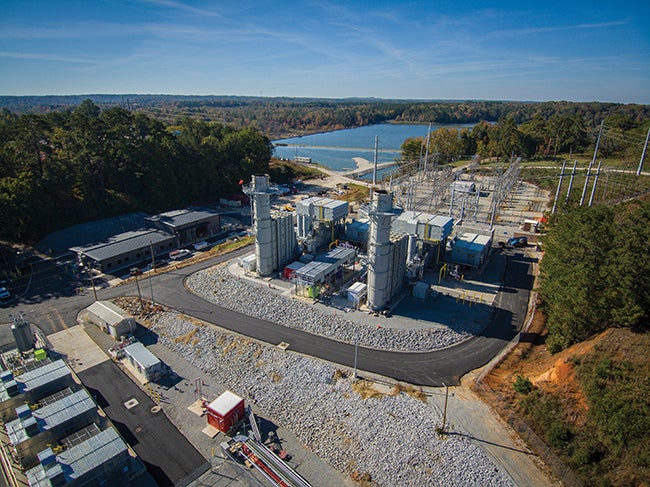
Dual-Fuel and On-Site Fuel Storage Are the Response to Gas-Supply Correlation. To counter gas supply curtailments during cold snaps, operators in the Southeast, in particular, are responding by adding on-site firm backup fuel. Oglethorpe Power filed a final environmental assessment with the U.S. Department of Agriculture Rural Utilities Service in February 2024 to convert four of six simple cycle combustion turbines at its Talbot Energy Facility in Box Springs, Georgia, to dual-fuel firing on No. 2 diesel. The project added two 1.6-million-gallon fuel oil storage tanks, two 2-million-gallon demineralized water tanks, liquid fuel atomizing packages, and water injection packages. Each turbine is permitted up to 4,200 hours per year on any fuel and up to 450 hours per year on diesel. The on-site fuel supply supports full-load operation of all turbines for approximately 70 hours without resupply. Oglethorpe noted in the filing that recent cold snaps in the Southeast had limited or cut off natural gas supplies during periods of high demand. Duke Energy’s 2025 Carolinas Resource Plan filed Oct. 1, 2025, with the North Carolina Utilities Commission, takes a similar approach. The plan adds enhanced LNG storage to reduce fuel cost volatility and targets potential two- to four-year extensions of the dual-fuel coal units at Belews Creek, Cliffside, and Marshall.
Gas-Electric Coordination Is Catching Up to the Problem
Still, physical fuel insurance—on-site diesel, LNG storage, dual-fuel coal—addresses only half of the gas-electric correlation problem. The other half involves operational visibility between the two systems during the hours when each is under the most stress. As NERC’s Robb told lawmakers in March, the natural gas system’s performance and supply to power generators remains “perennial issues during extreme winter events.” During every major cold-weather event since Uri, pipelines have run at or near maximum hourly takes, while local distribution companies have curtailed nonfirm power plant customers to protect firm heating loads. According to the November 2023 FERC-NERC Winter Storm Elliott joint inquiry report, gas pipeline scheduling data for individual power plants, the geographic locations of pipeline emergencies, and fuel availability information were either unavailable or scattered across pipeline informational postings websites in non-standardized formats—impeding grid operator situational awareness when both systems faced coincident peak demand.
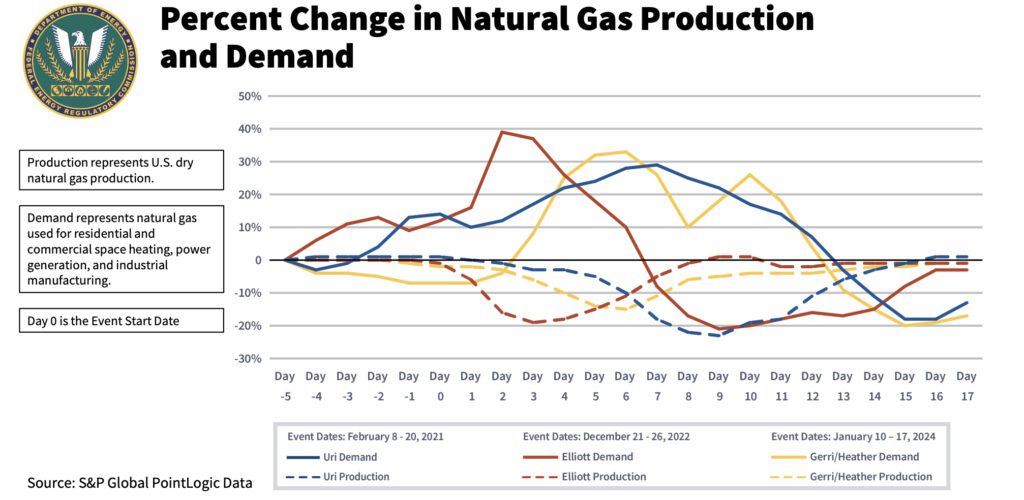
Fern signaled that producer-side improvements are real but partial (Figure 4). Storage was the backbone of the supply response, equaling 30% of total U.S. gas demand over the 10-day stretch, and the 360 billion cubic feet (Bcf) draw for the week ending Jan. 30 was the largest single week EIA had ever reported. Lower-48 production dipped about 13% at its low point but recovered quickly—a smaller decline than in Winter Storms Uri (2021) or Elliott (2022)—while Canadian imports reached 11.1 Bcf per day on Jan. 24, the highest since 2008.
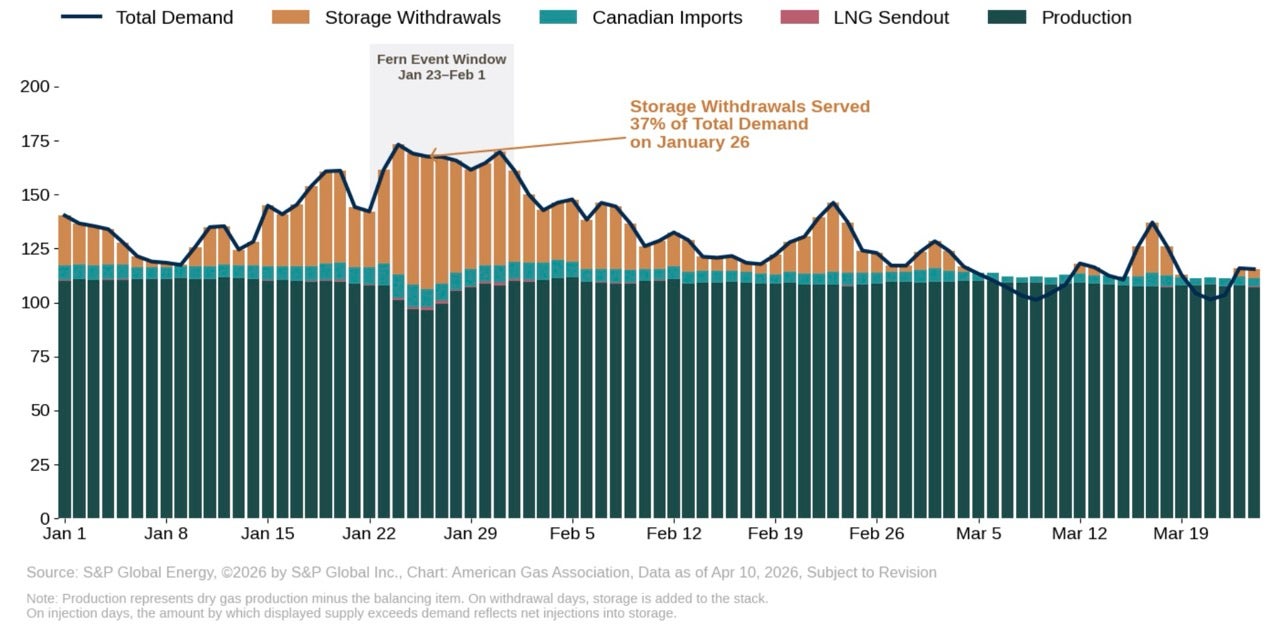
“While production declines were observed and massive storage withdrawals were made, production in the Marcellus and Utica regions remained strong,” NERC’s Robb told lawmakers in March. “This performance highlights the critical role that natural gas storage plays in supporting electric reliability and demonstrates that many previously observed production challenges can be mitigated by natural gas producers. It also stresses the growing need for assuring sustained winter operations across the natural gas value chain as reliance on natural gas continues to rise.” Natural gas was the No. 1 electricity source in ERCOT, PJM, NYISO, MISO, the Southeast, and Florida for nine days spanning Jan. 23–31.
That gap has driven a multi-year federal and standards-body effort to formalize gas-electric data sharing. In July 2022, then-FERC Chairman Richard Glick and NERC CEO Jim Robb co-signed a letter directing the North American Energy Standards Board (NAESB) to convene a Gas-Electric Harmonization Forum, citing recommendations in the November 2021 FERC-NERC Uri report. More than 700 individuals from over 370 organizations across the gas and electric sectors participated, and NAESB issued a report in July 2023 with 20 recommendations. The November 2023 FERC-NERC Winter Storm Elliott joint inquiry report then directed NAESB to convene gas infrastructure entities, grid operators, and local distribution companies to improve cold weather communications. NAESB’s Wholesale Gas Quadrant (WGQ) Executive Committee approved the resulting new and revised standards on Oct. 24, 2024, and the membership ratified them on Nov. 25, 2024. FERC issued the Notice of Proposed Rulemaking (NOPR) a year later, on Oct. 16, 2025, and the final rule on May 22, 2026—41 months after Elliott.
Notably, the new FERC final rule—Order No. 587-AB (Docket RM96-1-044)—incorporates three revised NAESB WGQ business practice standards, which will require interstate pipelines to publicly post scheduled quantity information for directly connected power plants by cycle, location, RTO/ISO territory, and total scheduled quantity. It also establishes a new “Gas Electric Coordination” posting category on pipeline informational websites to consolidate that data in a single standardized place. Finally, it requires that geographic information about impacted areas, locations, and pipeline facilities accompany every critical notice a pipeline issues during an emergency. Compliance filings are due Sept. 1, 2026, with mandatory implementation by Jan. 1, 2027. Several pipelines, including the Natural Gas Pipeline Company of America, Tennessee Gas Pipeline, and Algonquin Gas Transmission, have already voluntarily implemented the standards. The rule’s scope, however, remains narrow. FERC listed the force majeure policy, pipeline reliability metrics, natural gas storage infrastructure, demand response incentives, and weatherization requirements for natural gas infrastructure as outside the scope of the proceeding.
Still, despite the procedural and physical work the power industry has done to improve cold weather performance since Uri, as Fern showed, “the system ran very close to the edge, leaving no room for error,” Robb told lawmakers. “A system bordering on the edge during winter extremes should not be normalized.” Robb pointed to four areas requiring acceleration. “We just got to get off the dime and effectively address siting and permitting reform at the federal, state, and local levels. We need to accelerate efforts to speed resource addition. We need to reliably figure out how to integrate large loads. And we need to accelerate efforts to better coordinate the increasingly interdependent gas and electric systems that serve this country.”
—Sonal C. Patel is a POWER senior editor (@sonalcpatel, @POWERmagazine).