 |
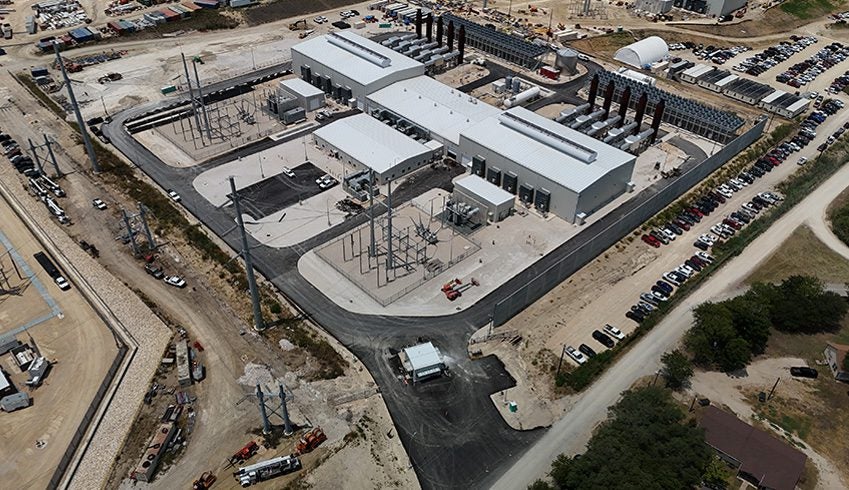
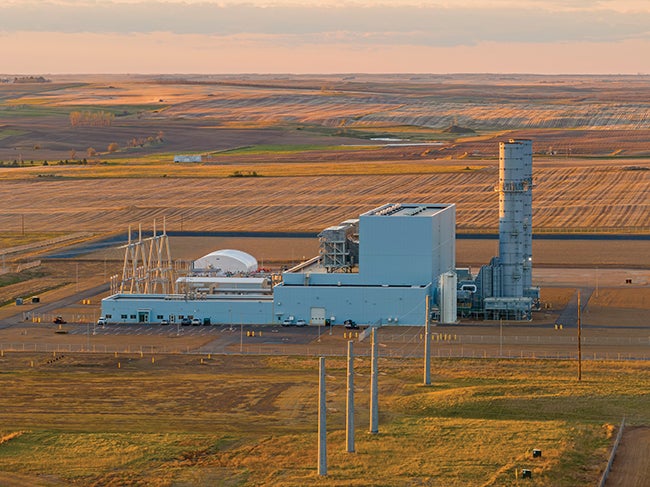
The Lower Colorado River Authority’s 190-MW reciprocating engine plant in Maxwell, Texas, went from contract award to commercial operation in about two years—a schedule that demanded unconventional engineering sequencing, around-the-clock construction, and a site plan built with the neighbors in mind.
When the Lower Colorado River Authority (LCRA) needed new dispatchable capacity on the Electric Reliability Council of Texas (ERCOT) grid, there was little time to waste. According to engineering, procurement, and construction (EPC) contractor Fagen Inc., the driver was ERCOT’s increasing need for peaking capacity—generation that can be dispatched when renewable resources are not available. Timmerman Power Plant Unit 1, a 190-MW natural gas facility in Maxwell, Texas, was awarded to Fagen in the third quarter of 2023. Roughly two years later, in August 2025, the firm handed the completed plant over to LCRA for commercial operation—about a week ahead of the contract date.
That timeline is the story. Timmerman Unit 1 runs on 10 Wärtsilä 18V50SG reciprocating engines, a technology chosen across Texas and beyond for its fast-start flexibility. Reciprocating engine technology offers an excellent heat rate, according to Fagen, and 10 units rated at 18.9 MW each give the owner fine-grained flexibility in how many megawatts to bring online at any moment. But delivering the plant at the speed the grid demanded required the project team to compress nearly every convention of power plant delivery: engineering packages released days ahead of the crews that would build from them, building procurement cycles cut roughly in half, and a workforce that ran multi-craft second shifts for nearly a year because the site couldn’t physically hold everyone at once. The project’s selection as a 2026 POWER Top Plant award finalist recognizes an execution model that other owners racing to add capacity will want to study.
A Schedule with No Slack
The constraints were apparent from the start. According to Fagen, contract milestones for energization and initial synchronization compressed the construction window, while long-lead equipment and owner-supplied deliveries added further pressure. The plan called for deep foundation work to begin in early 2024, with construction reaching 90% completion by January 2025.
Peak manpower was projected at roughly 400 employees—but the 20-acre site could accommodate only about 300. The solution was to spread the work across time rather than space: multiple crafts ran second-shift activities for nearly 12 months to hit milestones without overcrowding the site. Staffing itself was never the problem, according to Fagen—space was. Once the parallel Unit 2 build was underway on the same 30-acre property, the company’s headcount reached roughly 550, with total site staffing topping 600. The pace did not come at safety’s expense: over the project duration, the team posted a total recordable incident rate of 0.65, a days away/restricted/transferred rate of 0.43, and no lost-time incidents.
Keeping that effort coherent fell to a project controls system built during the short development phase of the EPC contract—a cost- and labor-loaded Primavera P6 schedule spanning several thousand activities, developed before drawings and specifications even existed. The labor-hour data fed an earned value analysis program that flagged crafts trending behind before problems compounded, reviewed with LCRA monthly.

In This Issue
Full issueEngineering a Week Ahead of the Excavators
The most persistent challenge of the project, per Fagen, was the engineering schedule relative to the construction timeline. Engineering began in September 2023, shortly after contract award, and Sargent & Lundy—hired by Fagen as the project’s engineer of record—delivered an issued-for-construction (IFC) civil package just three months later, allowing heavy civil work to commence immediately. From there, deep foundation and pile cap design releases were sequenced to match the construction team’s progression across the site—with some IFC packages landing only a week before crews built from them.
Making that work meant procuring materials from preliminary first-draft drawings so they would be on-site when IFCs arrived, and counting on those IFCs to arrive with minimal changes. Fagen acknowledged the trade-off candidly: the unorthodox approach kept construction on schedule but raised the risk of design mistakes that field teams would have to resolve on the fly. The Sargent & Lundy and Fagen team worked together to identify areas of potential changes so construction could plan and evaluate the risks of rework.
The project team’s answer was to harden quality control rather than slow down. Multiple programs were implemented to ensure adherence to the project-specific inspection and test plan developed before work began. One example: at LCRA’s request, pre-placement walkdowns for foundation work brought the contractor, owner, and engineering teams together to verify no steps were missed during around-the-clock construction. “From day one, project leadership identified the need for communication,” said Matt Pesta, Fagen’s vice president of operations. “We didn’t wait for meetings to discuss issues or successes; we built a trust and picked up the phone day, night, and weekends to make sure we were giving each other what we needed. As simple as this sounds, it’s very rare in this industry.”
That culture faced its clearest test in the middle of the night, when a large storm popped up partway through a pile cap concrete pour. By early morning, Fagen had made the call to demolish the slab immediately, before it had time to fully cure. The decision caught LCRA and the owner’s engineer by surprise—both had anticipated the contractor would try to repair the pile cap and press for acceptance of the work. “We do what we say we were going to do,” Pesta said, describing the mantra the team leaned on when construction served up the unexpected.
A parallel procurement sprint addressed another bottleneck. The entire Wärtsilä delivery scope—10 engine-generator sets, large modules, skid steel, radiators, and more—was slated to arrive in early spring 2024, which meant the pre-engineered metal buildings that would house the equipment had to be up first. A building package of that size typically takes eight to 12 months to engineer and deliver; through intensive coordination of underground, foundation, and building engineering, the team cut the timeframe to five months.
Concrete Around the Clock
Field execution matched the paper schedule’s pace. As deep foundation work neared completion in early March 2024, concrete crews began working around the clock, placing more than 6,000 cubic yards of structural concrete in just two months. The pours were choreographed with underground piping, stormwater, and electrical duct bank installations that had to be finished before pile caps went in. Much of the duct bank ran more than 10 feet below grade to clear other underground utilities—threading through the site’s 1,496 18-inch auger-cast-in-place pilings during a wet spring.
Over the following two months, structural, architectural, electrical, and mechanical crews erected and dressed out both engine halls—each roughly 18,000 square feet—so the first genset, weighing nearly 750,000 pounds, could be slid into position. Here the team made a sequencing decision with outsized payoff: ceiling-elevation installations were worked “inside out,” completed before the engines arrived. That eliminated the need to erect large scaffolds over sensitive installed equipment, delivering significant cost savings and sharply reducing the risk of damage to permanent plant components.
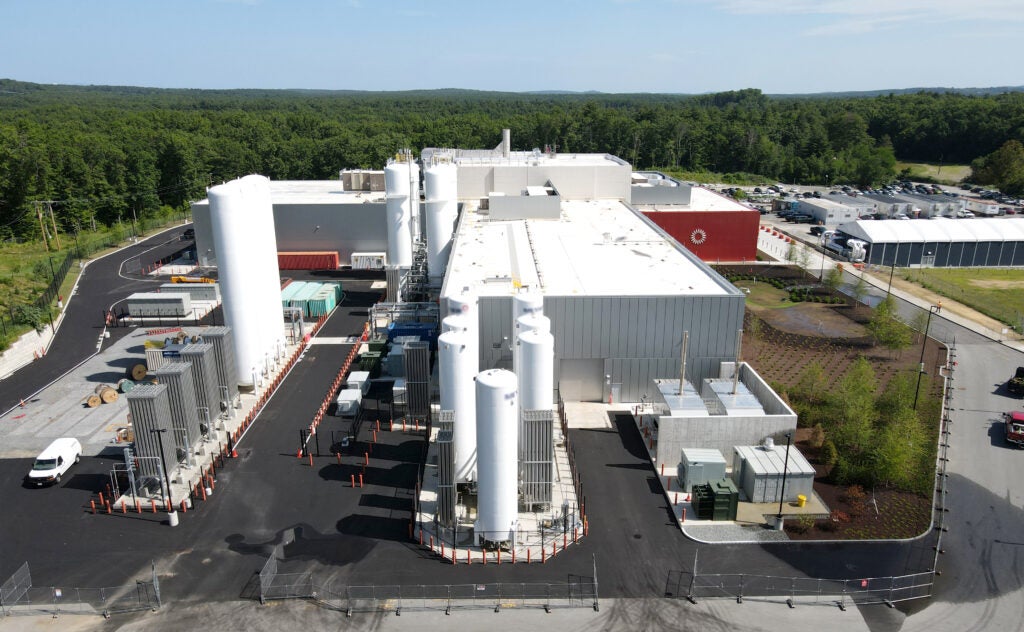
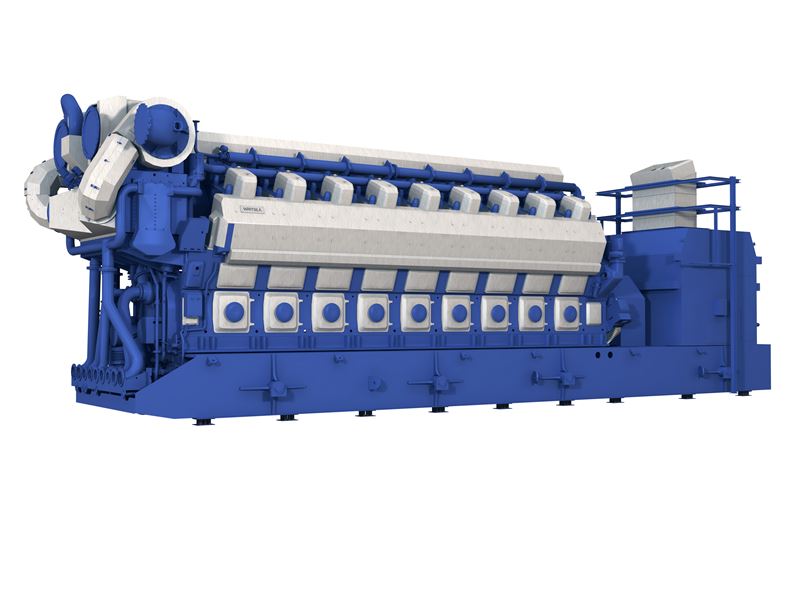
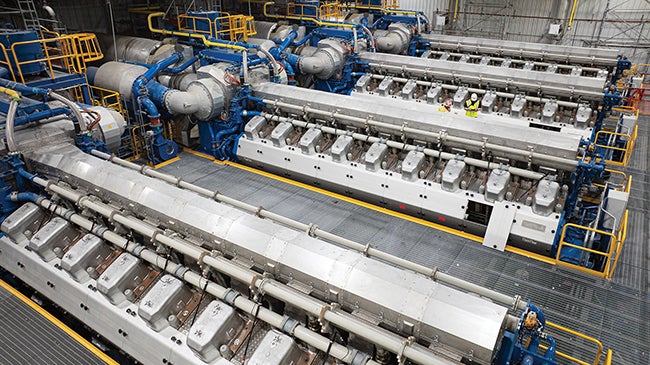
Once all 10 Wärtsilä gensets were in place (Figure 1) in late August 2024, mechanical and electrical crews joined the around-the-clock push, ultimately installing more than 50,000 linear feet of piping and pulling nearly 600,000 linear feet of cable. With the 10 gensets and their auxiliary equipment nearly identical, Fagen assigned just two mechanical teams to work through all 10 units in sequence—a deliberate choice that let lessons learned on each genset carry directly into the next, raising productivity while holding quality. As each unit’s engine-out work wrapped, crews tied in balance-of-plant systems for lube oil, natural gas, cooling water, compressed air, and service water, along with engine-specific electrical and instrumentation work.
 |
|
1. Timmerman Unit 1 runs on 10 Wärtsilä 18V50SG reciprocating engines, a technology chosen around the world for its fast-start flexibility. Courtesy: Fagen Inc. |
Racing the Interconnect Clock
The electrical scope carried the schedule’s final act. As owner-furnished electrical equipment arrived through the fall of 2024, crews staffed up to nearly 100 electricians in October, pulling cable site-wide in a sequence built around one target: energization from the grid in March 2025. Owner-supplied generator step-up transformers were delivered and dressed out by the end of November, allowing Fagen to complete the generation interconnect facilities before the new year.
The tail end of the schedule left little margin. Among the obstacles, ERCOT requirements dictated that communication systems be established weeks in advance of requested energization—a deadline behind the deadline. Heavy coordination with LCRA’s telecommunications team ensured the electrical and communications installations landed early enough to satisfy the grid operator.
Through the second quarter of 2025, Fagen coordinated final construction with multiple commissioning teams, achieving initial energization, synchronization, and performance testing within the contract timeline before the early handover in August.
Built to Be a Good Neighbor
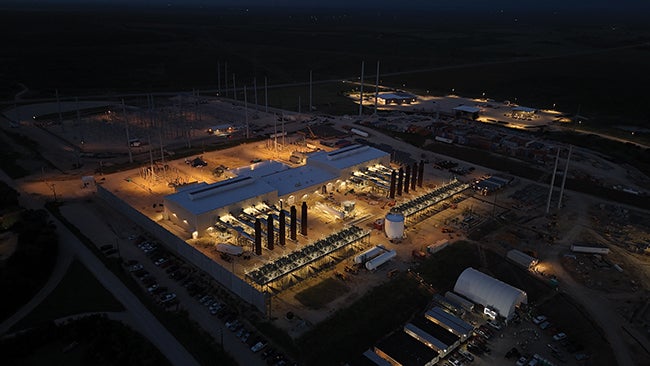
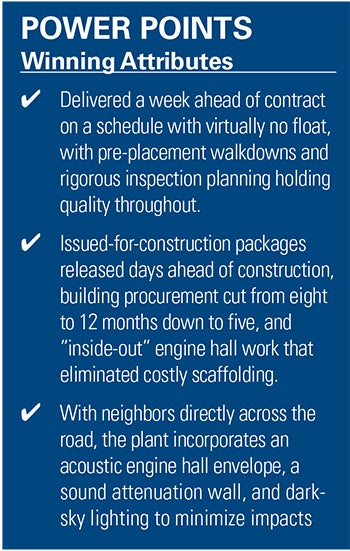 Timmerman Unit 1 sits on the edge of Maxwell, with a residential neighborhood directly across the road—a siting reality that shaped the plant’s design. The chief concern was noise: reciprocating engines are loud, and the facility had to be designed so it wouldn’t become a long-term nuisance. Sound consultants devised an engine hall envelope to contain and suppress engine noise, and a sound attenuation wall was placed at the easternmost site boundary between the facility and the community. Dark-sky lighting—downward-facing and shielded—keeps the plant safely illuminated for personnel while preserving the neighbors’ view of the night sky.
Proof of Concept, Times Two
Perhaps the strongest endorsement of the delivery model came before Unit 1 was anywhere near finished. In September 2023—mere weeks after the Unit 1 award—LCRA approached Fagen about installing another 10 Wärtsilä 18V50SG engines in a similar facility on the same 30-acre property. The second project was awarded to Fagen and staffed with the same project teams to maximize continuity. Even before Unit 2 was fully developed or under contract, Fagen worked with Sargent & Lundy to shift the Unit 1 layout to make room for its twin on the same property. The two plants were built in parallel, with the second unit’s commercial operation trailing the first by nine months.
Since entering commercial operation, the plant has outrun its own business case. Unit 1 was modeled at a 13% capacity factor; as of June 2026, the Timmerman units were operating at 32.41%, with future budget planning projecting 55%, according to Fagen. The plant has been reliable, the company reported, and is generating more revenue than originally anticipated.
For Pesta, the takeaway extends beyond Maxwell: Fagen and Wärtsilä demonstrated that a utility-scale power plant can move from contract through design to commercial operation in the ERCOT market in two years. “Not many teams can produce like that,” he said.
—Aaron Larson is POWER’s executive editor.