At 4:30 a.m., before the sun is up, a lineworker steps onto a site that did not exist six months ago. By mid-morning, crews from three different contractors will be working in parallel: civil teams finishing trenching, electricians pulling cable, another crew preparing for energization. The schedule is tight. The handoffs are constant.
On paper, every person on-site is trained. Every step is documented. Every control is in place.
In practice, the reality is more uneven. An isolation plan updated overnight has not reached every crew. One team is working from the latest controls; another is catching up. A subcontractor arrives with experience, but not on this site and not under this specific set of conditions. So, the supervisor pauses the job, not because the risks are new, but because the environment around them is moving faster than the safety management systems built to manage it.
Changing Conditions Test Controls
Utilities have always operated in complex, high-risk environments governed by detailed procedures, formal work controls, and strict compliance requirements. What has changed is the context in which that work is executed. Projects are moving faster, more activities are happening in parallel, the labor market is tight, and work is increasingly distributed. In North America, 38% of utilities workers identify as lone workers, and nearly half of those workers, 49%, report they have experienced safety incidents while working alone (Figure 1).
The workforce is also changing. U.S. Bureau of Labor Statistics data for utilities shows “median years of tenure with current employer for employed wage and salary workers” to be 4.9 years in 2024, down from 9.5 years in 2018. As utilities scale up to meet demand, they are onboarding new crews more quickly, relying more heavily on contractors, and integrating people into active sites at a pace traditional training models were not designed to support.

In This Issue
Full issueExtreme weather is now part of that operating environment too. EcoOnline’s North America Workplace Safety Report found that 26% of workers cite severe or extreme weather as a top threat to business operations, rising to 42% as a leading worry among lone workers. For utilities, that matters because the same event can change site conditions, expose workers in the field, and test crisis plans at once.
These are not hypothetical risks. In March 2026, federal investigators cited a utility contractor in Florida following a fatal incident during a routine pole replacement. A crew made contact with an energized transmission line, killing one worker and injuring two others. The investigation did not find an absence of procedures. It found breakdowns in execution: required approach distances were not maintained, a designated observer was not in place, and the job briefing did not adequately cover site-specific hazards and precautions.
On paper, the controls were in place. In practice, they did not hold under the conditions in which the work was being executed.
Where Controls Break First: Points of Coordination
What these incidents point to is not a failure of safety principles. It is a pattern in which controls fail first: at the points of coordination where information is handed off, updated, or interpreted across multiple crews.
Traditional utility safety models assume that work can be planned, hazards identified, controls defined, and execution managed against that plan. That logic still matters. But on today’s worksites, controls do not stay contained within one crew or one sequence of work. Construction, commissioning, and energized operations increasingly overlap. Multiple crews may rely on the same isolation, the same permit, or the same understanding of system state, but apply it to different tasks at different moments.
That is where risk begins to concentrate. An isolation plan that is accurate at the start of a shift may not reflect changes made later. A job briefing may establish the right precautions for one crew but not fully translate to another arriving mid-cycle. A permit that is valid for one phase of work may be misapplied as scopes overlap.
Control of hazardous energy, or lockout/tagout, remains among the Occupational Safety and Health Administration’s (OSHA’s) most frequently cited violations despite being one of the most established safety practices. That points to a persistent execution problem, not a lack of awareness. Risk is no longer concentrated only where controls are defined. It emerges where those controls are shared, updated, and applied under changing conditions.
From Compliance to Visibility, Then Predictability
The instinctive response is often to add more procedures, more documentation, and more oversight. But utilities do not need safety bureaucracy to grow at the same pace as infrastructure. They need compliance processes to produce clearer operational visibility, and for that visibility to become the basis for more predictive action.
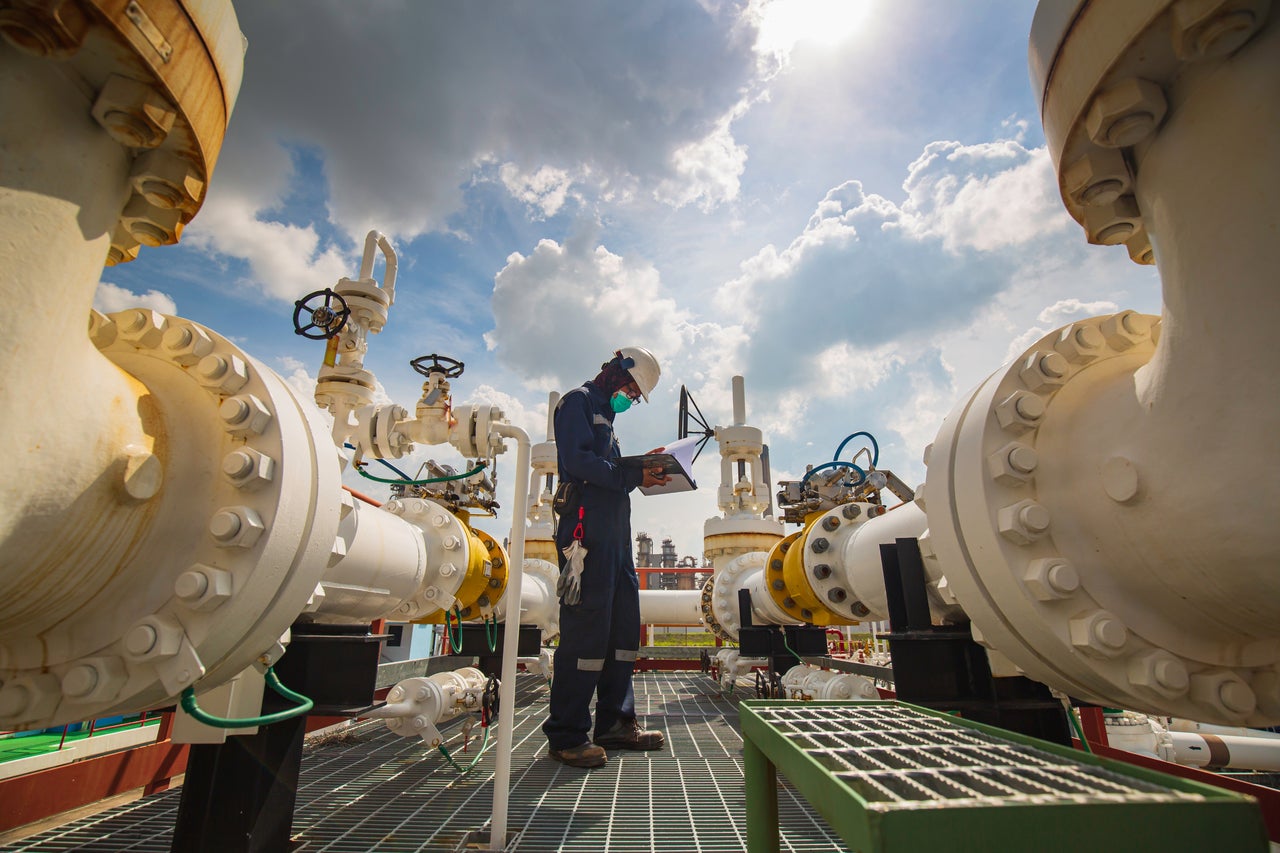
That starts by connecting the signals utilities already collect. Contractor permits, training records, work authorizations, hazard observations, near misses, incident reports, lone worker alerts, and corrective actions all tell part of the same story. When those signals sit in separate systems, leaders see compliance activity, but not always operational risk. When they are connected through health and safety software (Figure 2), patterns begin to show: which sites generate repeated permit changes, where new crews need more support, which tasks produce the most near misses, and where field conditions are shifting faster than plans.

This is where artificial intelligence (AI) in safety has a practical role to play. Used carefully, it can help safety teams scale expertise by surfacing trends, highlighting repeated weak signals, and pointing leaders toward areas that deserve human attention. The goal is not to let AI make safety decisions. It is to help experienced professionals find the places where their judgment is needed sooner.
The Practical Playbook for Safety at Speed
Translating these dynamics into safer operations does not require abandoning established safety principles. It requires adapting how those principles are applied in an environment where conditions change faster, work is more distributed, and alignment cannot be assumed.
First, control systems need to become dynamic, not static. Permits, isolation plans, and work controls can no longer function only as point-in-time documents. They must be continuously updated, easy to access, and visible across all crews, so the control remains current as work progresses.
Second, frontline alignment must be treated as core safety outcomes. On complex sites, safety depends less on whether a procedure exists and more on whether every crew is working from the same understanding of conditions. That requires updates to move across teams, not just within them, especially at shift changes, contractor handoffs, phase overlaps, and storm restoration work. Mobile access matters here because field workers need the latest information at the point of work, not when they return to a desk.
Third, utilities need stronger oversight of work in action. Safety leaders need to see not only what was planned, but what is actually happening. Real-time alerts from hazard, near miss, and incident reporting can help supervisors respond before small issues become larger events. For lone workers, oversight also has to mean protection in the field, including the ability to trigger panic alerts, fall or man-down detection, and faster escalation when a worker may not be able to call for help.
Fourth, training must move beyond completion to readiness. In a more transient workforce, the question is not just whether a worker completed required training, but whether they can apply it within a specific, changing environment. That places greater emphasis on site-specific onboarding, contextual awareness, short reinforcement at the point of work, and evidence that training is understood, not simply assigned.
Finally, crisis planning must reflect the conditions workers now face. Severe weather, wildfire smoke, floods, outages, cyber disruption, public health incidents, and security threats can all change the risk profile for utility workers in minutes. In those moments, a paper-based crisis plan is not enough. Organizations need digital visibility into who is in the field, where they are, what hazards are emerging, and how quickly teams can be reached and supported. That means crisis response cannot sit separately from worker safety, lone worker protection, permits, training, and incident reporting. It must be connected into the same operating picture, so safety extends beyond prevention into readiness and response.
Safety Drives Speed and Productivity
No one is betting the pace of utility buildout will slow. Electrification, grid modernization, and rising demand are pushing projects forward faster and at greater scale than at any point in recent decades. In that environment, safety cannot operate as a constraint on speed. It must function as an enabler of it.
EcoOnline’s North America Workplace Safety Report found that 88% of utilities workers say a safer workplace makes them more productive. In the utilities sector specifically, the 49% incident rate among lone workers shows how quickly that productivity case becomes a protection case. When workers are isolated, conditions are changing, and teams are under pressure to restore or expand service, a gap in visibility is not just a safety risk. It is an operational risk.
When controls are current, shared, and consistently understood, work moves with fewer interruptions. Crews spend less time stopping to reconcile differences in understanding, revalidating conditions, or correcting misapplied controls. Alignment reduces friction, and less friction means work progresses more predictably, with fewer delays and fewer rework cycles.
The inverse is equally true. When safety systems fall out of sync with how work is being executed, work pauses more frequently. Handoffs become less reliable. Small misalignments compound into delays that ripple across the entire project. Dashboards in head offices can only reflect reality if frontline workers have the training, reporting tools, and mobile access to keep them connected to what is happening in the field.
For utilities, the challenge is not simply doing more work safely. It is creating the conditions where safe work is also the most efficient way to get work done. The organizations that move quickest will not be the ones that take the most risk. They will be the ones that maintain the clearest, most consistent understanding of how work is actually being done.
—John Maynard is a solutions engineer at EcoOnline.