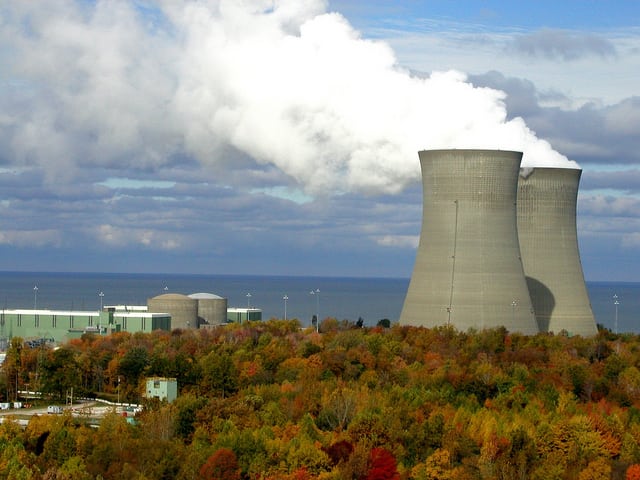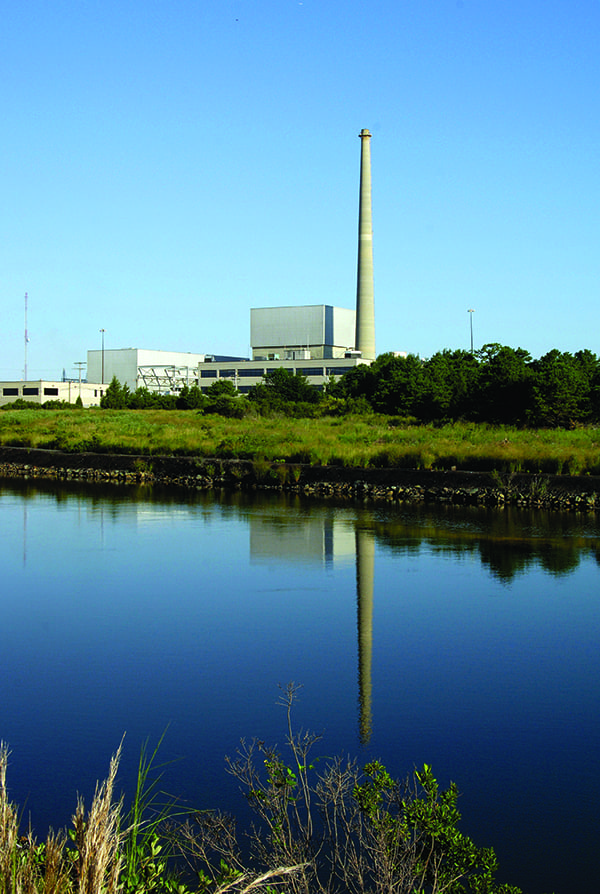
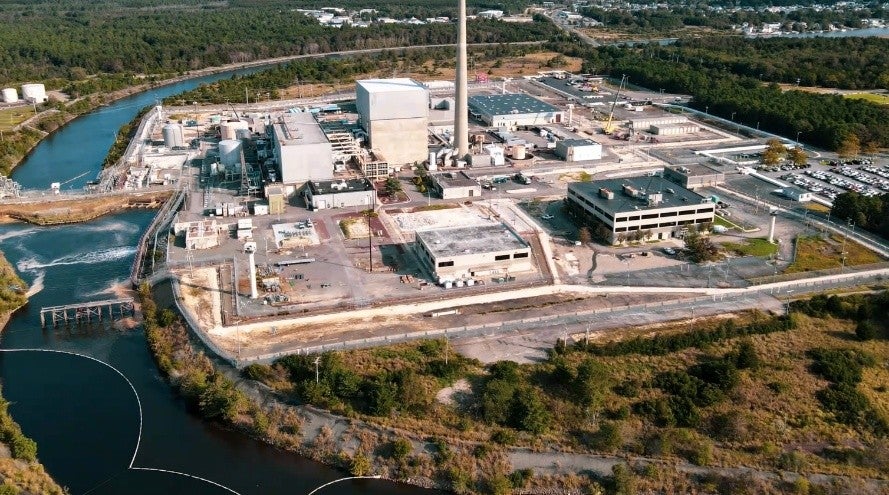
The U.S. Nuclear Regulatory Commission (NRC) has approved the License Termination Plan (LTP) for the Oyster Creek Generating Station in New Jersey, a regulatory milestone that clears the final phase of decommissioning and sets the stage for Holtec International to pursue construction of four SMR-300 small modular reactor units at the Lacey Township, New Jersey, site.
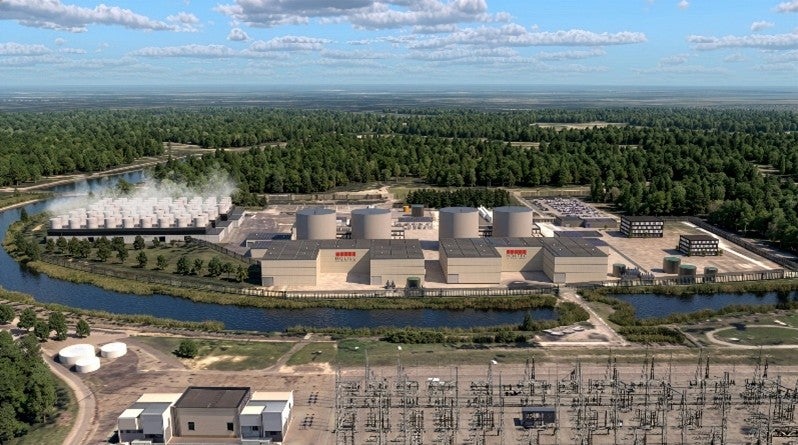
Holtec on July 30 said it plans to build four SMR-300 reactors at the retired Oyster Creek nuclear plant, targeting commercial operation of all four units in 2036 as the company advances cleanup and restoration of the former boiling water reactor (BWR) site.
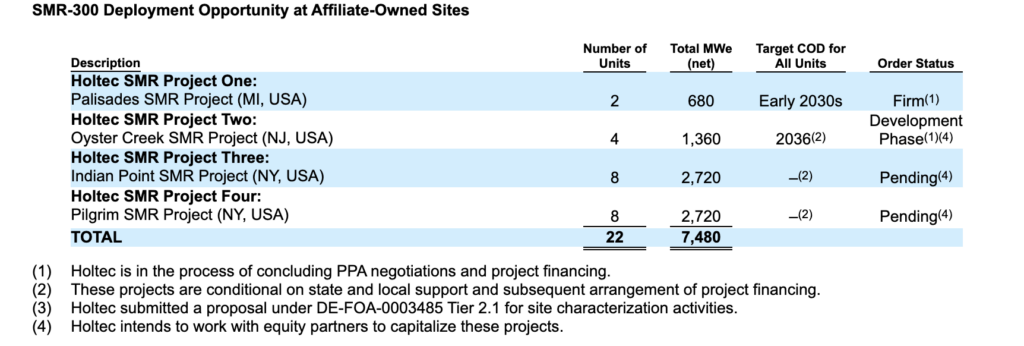
The proposed project would comprise four 340-MW units totaling 1,360 MW—more than twice the generating capacity of the 636-MW reactor that operated at Oyster Creek for nearly five decades. Holtec disclosed the 2036 target in a July 10 securities filing, which classified Oyster Creek as a “Development Phase” deployment opportunity. The company noted, however, that projects at its former nuclear plant sites remain conditional on state and local support, financing, and arrangements with equity partners.
“The approved LTP provides the roadmap for the final phase of decommissioning and site restoration,” Oyster Creek Site Vice President Jeff Dostal said in Holtec’s announcement. “We will continue to execute the remaining work with the same discipline, professionalism, and focus on safety that have guided the project to date.”
From Early Commercial Reactor to Proposed SMR Campus
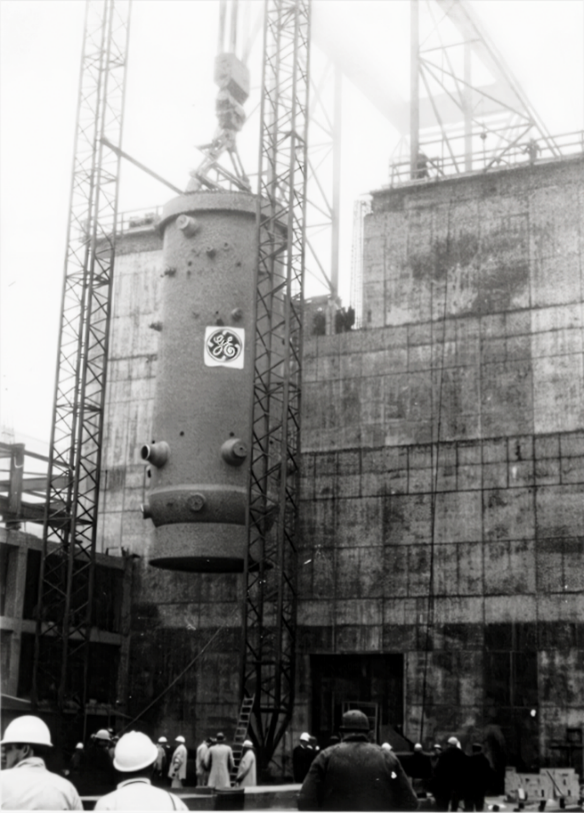
Located 54 miles from Holtec’s corporate headquarters in Camden, New Jersey, Oyster Creek received its construction permit in December 1964 and entered commercial operation in December 1969. The 636-MW General Electric Type 2 boiling water reactor was the oldest operating commercial nuclear power plant in the U.S. when former owner Exelon permanently shut it down on Sept. 17, 2018, after nearly 49 years of operation.
While originally owned by GPU, it was sold to AmerGen Energy in 1999 and folded into Exelon Corporation by 2003. In April 2009, the NRC granted Oyster Creek a 20-year license renewal extending operations to 2029, over objections from anti-nuclear and environmental groups concerned about drywell corrosion and other aging issues.
Its closure was initiated more than a decade before the plant’s renewed NRC operating license was due to expire in April 2029. Exelon had agreed in 2010 to retire Oyster Creek by December 2019 after deciding not to install cooling towers required under evolving New Jersey water regulations, then accelerated the shutdown by more than a year as rising fuel and maintenance costs collided with persistently low wholesale power prices. The plant had also failed to clear PJM Interconnection capacity auctions held in 2014 and 2015 for delivery periods spanning 2017 through 2019.
Exelon sold the plant to Holtec International in a transaction that closed in 2019. A joint venture comprising Holtec and SNC-Lavalin, Comprehensive Decommissioning International, assumed responsibility for dismantlement. Decommissioning and dismantlement work is now more than halfway complete, Holtec said. Oyster Creek generated more than 192 TWh of electricity over its operating life, it added.
But on Thursday, Holtec suggested a changed regulatory environment in Trenton made the nuclear plant’s reinvention more amenable. On April 8, 2026, notably, Governor Mikie Sherrill signed S3870/A4528, amending the Coastal Area Facility Review Act to remove a statutory provision that had operated as a de facto four-decade moratorium on new nuclear construction in the state. The law, which passed both legislative chambers unanimously, allows the state Department of Environmental Protection to approve permits based on safe on-site storage of radioactive waste rather than requiring a federal permanent repository. It also builds on Sherrill’s Executive Order 2, issued in January 2026, which created a Nuclear Task Force to evaluate accelerating advanced nuclear deployment in the state.
The site in the Forked River section of Lacey Township, on an 800-acre site adjacent to Barnegat Bay, now offers a “unique opportunity to strengthen the state’s energy future with advanced nuclear technology developed, built, and deployed close to home,” Holtec said.
SMR-300: Oyster Creek Is Part of a Broader Portfolio
The SMR-300, Holtec’s proprietary Generation III+ pressurized water reactor (PWR) design, has an expected net electrical output of approximately 300–340 MWe per unit and passive, “walk-away-safe” safety systems, according to a securities filing Holtec submitted as part of a proposed initial public offering.
According to its Form S-1, filed on July 10 under the newly formed Holtec Nuclear Corp., Holtec is pursuing a two-track commercialization strategy. Holtec’s Nuclear Power Division is slated to lead licensing, procurement, construction, and commissioning of SMR-300 plants in collaboration with Hyundai Engineering and Construction and other supply-chain partners. Its newly formed subsidiary, Energetics, meanwhile, will develop projects by handling siting, financing, power-offtake arrangements, capital structuring, and eventual equity sales.
Holtec said it expects to use two principal commercial models. Under its “Build-Own-and-Operate” model, the company will develop and retain ownership of a plant after commissioning, generating revenue through long-term electricity sales and capacity payments. And under its “Develop-to-Deploy” model, Holtec will complete early development, licensing, and permitting work before transferring the project to a utility or another owner. The company expects most future deployments to use the latter structure but said it could retain ownership where strategically advantageous.
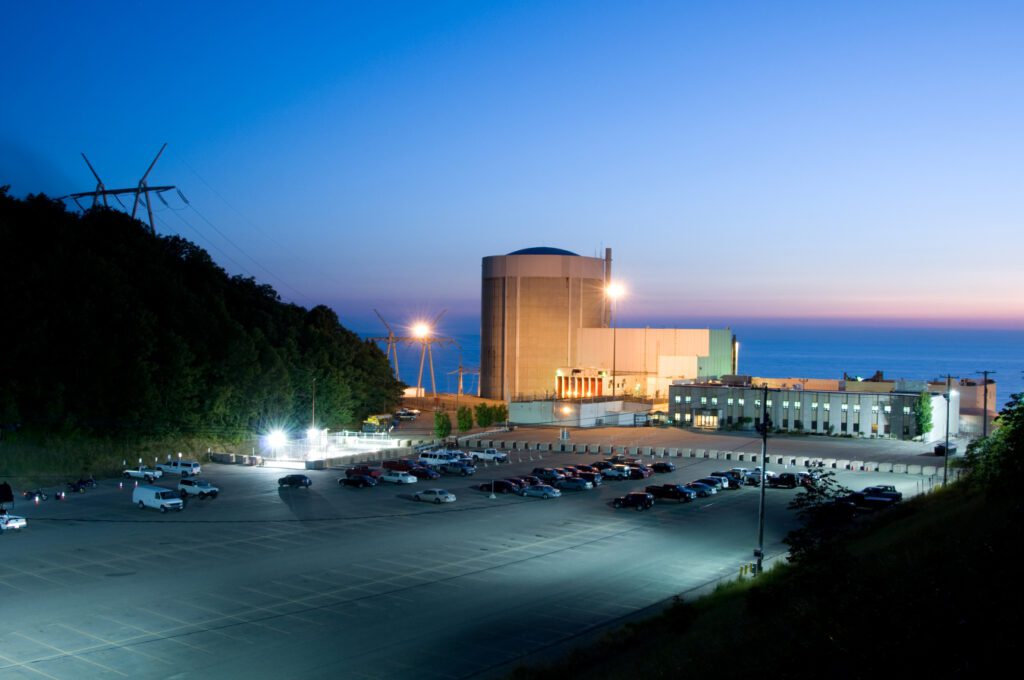
So far, its current U.S. SMR portfolio includes the Pioneer 1 and 2 projects at Palisades in Michigan, the four-unit Oyster Creek project in New Jersey, and prospective deployments at Pilgrim in Massachusetts, Indian Point in New York, and Big Rock Point in Michigan.
The Palisades redevelopment—Pioneer 1 and 2—is the company’s most advanced SMR-300 proposal. Developing under Holtec’s Build-Own-and-Operate model, the dual-unit plant planned at the company-owned Palisades site in Covert, Michigan, has a targeted commercial operation in the early 2030s, subject to financing, regulatory approvals, and power-offtake arrangements. The project would be built alongside the existing 800-MW Palisades plant, which Holtec is seeking to return to service after its permanent shutdown in May 2022. While the NRC restored the plant’s operational licensing status in 2025, Holtec’s latest July 2026 update says major refurbishment projects are complete, and the plant has moved into remaining maintenance, testing, inspections, and operational-readiness work “required before startup.”
When returned to service, the effort is set to constitute the first restart of a previously shuttered commercial nuclear plant in the U.S. Holtec has said the restart would provide experience in securing permits, financing, and power-purchase agreements that it intends to apply to its SMR development business.
In December 2025, the Department of Energy selected Pioneer One and Pioneer Two for a Tier 1 First Mover Award that Holtec expects could provide $400 million to accelerate deployment. The award remains subject to conditions, including negotiation and execution of a funding agreement. The S-1 filing, however, makes clear that the Pioneer project has not yet secured all of the agreements needed to proceed. Holtec said it was negotiating with potential power purchasers and had entered into a binding framework agreement establishing milestones toward a definitive long-term offtake contract. It also cautioned: “We have not yet constructed or received all necessary regulatory approvals for any of our SMR-300s or entered into definitive agreements with customers to take delivery of, or to off-take power from, an SMR-300, and there is no guarantee that we will be able to do so in the future.”
Oyster Creek will be Holtec’s second defined project in the domestic pipeline. The S-1 classifies Oyster Creek as a development-phase opportunity and lists a targeted commercial operation date of 2036. Holtec has not disclosed a construction permit schedule, financing structure, power purchaser, or whether it intends to retain long-term ownership of the project.
The Larger 47-GW Pipeline
Beyond Palisades and Oyster Creek, Holtec identifies the retired Pilgrim, Indian Point, and Big Rock Point nuclear sites as potential locations for future SMR-300 deployment. Pilgrim, in Plymouth, Massachusetts, permanently shut down in May 2019 and is now being decommissioned by Holtec. Indian Point, in Buchanan, New York, was shut down by Entergy in April 2021 and is also being decommissioned by Holtec. Big Rock Point, near Charlevoix, Michigan, shut down in 1997 and now operates as an independent spent fuel storage installation.
The S-1 filing calls the sites “prequalified locations to deploy our SMR-300 plant, subject to receipt of required regulatory licenses and other approvals.”
The four retired sites—Oyster Creek, Pilgrim, Indian Point, and Big Rock Point—previously hosted approximately 3.4 GW of nuclear generation. Holtec has argued that their existing grid connections and other nuclear infrastructure could reduce capital costs and shorten development schedules compared with greenfield construction. The filing says the properties could ultimately host “dozens” of SMR-300 units, but that broader fleet concept remains prospective.
Holtec’s U.S. pipeline, however, extends beyond its owned decommissioning fleet. In May 2026, the company announced its SMR-300 had been chosen to power the Green River Advanced Nuclear Project in Utah, under an exclusive arrangement to supply the technology as the project progresses through federal licensing toward deployment. The SMR-300’s design includes an optional air-cooled condenser system, a feature Holtec highlights for arid regions like Utah where water resources are scarce.
In the UK, Holtec has advanced a separate, high-profile SMR-300 program in partnership with EDF Energy. In June 2026, the companies submitted a joint proposal to the U.K. government to deploy up to four SMR-300 reactors at the former Cottam coal-fired power station site in Nottinghamshire, representing approximately 1.3 GW of clean, reliable generating capacity. The proposal would repurpose existing grid infrastructure from the old coal plant and is intended to support regional economic growth and new industrial load, including data centers. Holtec completed Step 2 of the U.K. Generic Design Assessment in April 2026, with regulators concluding there were no fundamental shortfalls in the SMR-300’s design or safety case. The companies have indicated the SMRs at Cottam could be operational in the early 2030s; the site’s 900-acre footprint allows multiple two-unit SMR-300 sets alongside data center development.
Holtec has also outlined a global opportunity pipeline of approximately 47 GW of potential capacity—14 GW in the U.S., 12 GW in Europe, 11 GW in India and 10 GW across South America, Asia and Africa. Specific opportunities cited in the S-1 include a 5-GW deployment in Rwanda intended as a strategic gateway for Africa, projects in Sweden and Hungary, and work toward developments in Turkey, Armenia, Kazakhstan, the Philippines and Vietnam. In Latin America, Holtec is evaluating Brazil as a first regional opportunity under that country’s Plano Nacional de Energia 2055, which targets up to 14 GW of new nuclear capacity by 2055.
The company also recently signed an agreement with Entergy to evaluate SMR-300 deployments in the Gulf South Region. As of July 10, 2026, the pipeline included roughly 2 GW in ongoing offtake discussions, 13 GW at identified sites under development, 8 GW at identified sites where development had not yet begun, 5 GW tied to letters of support for its DOE Tier 1 proposal, and 19 GW covered by non-binding memoranda of understanding. Holtec expects to deliver 27 GW in installed capacity by 2040, though it cautions that most projects remain subject to preliminary evaluation, negotiation and regulatory approvals.
—Sonal Patel is a POWER senior editor (@sonalcpatel, @POWERmagazine).