
O&M
-
 O&M
O&MA Burning Concern: Combustible Dust
If not properly controlled, coal and coal dust can cause fires, explosions, and implosions at power plants. Strategies for promoting safer management of these combustibles include actions such as training personnel exposed to the hazards of coal and coal dust about safe handling methods.
-
 O&M
O&MLaser Hole-Shaping Improves Combustion Turbine Efficiency
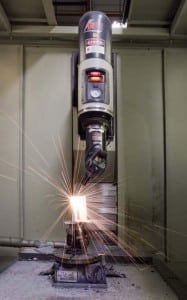
Laser shaping technology has evolved from a two-step process into a single process that drills and shapes holes through a TBC, bond coat, and airfoil base metal to create a finished product.
-
 O&M
O&MThe Role of Fireside Corrosion on Boiler Tube Failures, Part I
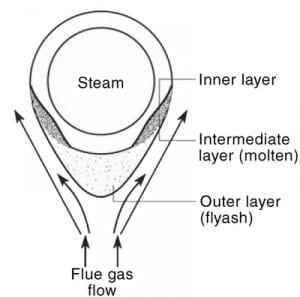
One of the primary challenges of reliably burning coal is managing the corrosion experienced by the furnace heat transfer surfaces. Fireside corrosion remains a leading cause of failure in superheater and reheater tubes. Three case studies examine the different failure modes experienced by tubes located throughout the furnace.
-
 O&M
O&MPower 101: Flue Gas Heat Recovery in Power Plants, Part I
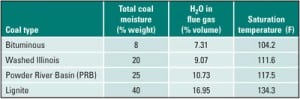
Every power engineer must have a firm grasp of the rudiments of how fuel is processed to produce electricity in a power generation facility. With this article, we begin a series of Power 101 tutorials that present these fundamentals in a clear and concise way. First up are the essentials of recovering heat from flue gas.
-
O&M
The Unique Challenge of Controlling Biomass-Fired Boilers
Biomass has many advantages as a fuel for boilers: It’s inexpensive, readily available in many regions, CO2 neutral, and its use warrants government subsidies. The fuel also presents unique concerns to the designers, owners, and operators of biomass plants, especially in the design of the control system.
-
O&M
Competitive Maintenance Strategies, Part II
Nearly every combined-cycle operator recognizes that cycling reduces the life expectancy of hot-gas-path components in combustion turbines. Often overlooked, however, is that the same phenomenon affects the heat-recovery steam generator (HRSG).
-
 O&M
O&MA Primer on Optimizing Fleet Operations
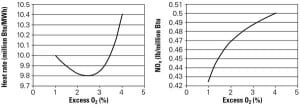
The power industry needs a straightforward definition of "fleet optimization" and a game plan to achieve the promised economic gains of optimizing. This need has become more urgent because integrating nondispatchable renewable resources requires more complex optimization strategies. The bottom-up approach presented here applies well-understood optimization principles and techniques that will help power producers minimize their fleetwide cost of production, independent of the technologies used to generate electricity.
-
 O&M
O&MEnhanced Condenser Tube Designs Improve Plant Performance
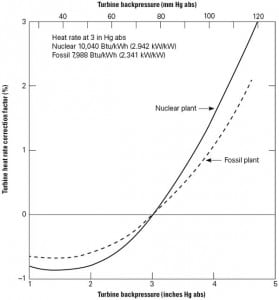
Enhanced condenser tube designs can significantly improve the heat rate and performance of fossil and nuclear plants. Using the optimum number of tubes and replacement tube sheets will cost more than simply replacing plain tubes. However, the investment’s simple payback is measured in only weeks, which builds a strong case for using an enhanced tube design as part of your next condenser overhaul.
-
O&M
Deciphering Desuperheater Failures
The "combined" portion of a combined-cycle plant is the heat-recovery steam generator (HRSG) that generates high-pressure and high-temperature steam and the steam turbine generator that expands the steam to produce electricity. Integrating the HRSG and steam turbine with the combustion turbine is a key challenge for plant designers, as each system has differing operating profiles, operational constraints, and design requirements.
-
 O&M
O&MVenezuela’s Power System on Brink of Collapse
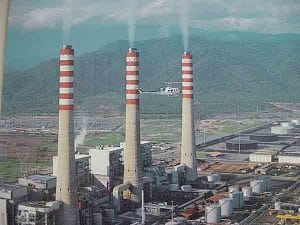
Venezuela, a country that relies on hydropower for almost three-quarters of its electricity, has been battling a deepening electricity crisis since a drought in 2009 and a sudden 7% surge in demand brought the country’s power system to the brink of collapse.
-
O&M
Competitive Maintenance Strategies
Many consultants are prospering today by creating "new" maintenance strategies. What they’re really creating is new buzzwords.
-
 O&M
O&MRestraining Torsional Vibration
All rotating equipment power trains found in a power plant have some amount of vibration, usually caused by mechanical unbalance of the rotating system, shaft misalignment, or weakness in the bearing support.
-
O&M
A Game Plan for Improving Boiler Operations
Operating a boiler is not difficult, but operating a boiler safely and efficiently requires skill and proper training. Following boiler operation best practices will keep your equipment in like-new condition for years to come. This game plan includes a compendium of best practices, with web links to a number of additional key resources you should be famililar with.
-
O&M
Fuels Used for Power Generation Expected to Rebound in 2010
The Energy Information Administraion has predicted that, as the economy gathers steam this year, rising demand for gasoline, crude oil, coal, and natural gas is expected to push up energy prices, aided by a projected boost in crude oil production.
-
 O&M
O&MConveyor Upgrades Increase Plant Availability, Reduce Airborne Dust
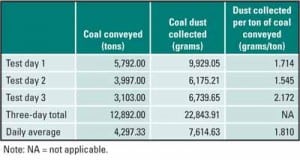
The loading and discharge of conveyor belts is the area where many, if not most, of the problems in solids conveying occur. Fortunately, a new technology provides chutes to accomplish conveyor loading and discharge without blockages while minimizing the dust generated: engineered-flow transfer chutes.
-
 O&M
O&MCan Your Boiler Feed Pump Handle a Deaerator Pressure Transient?
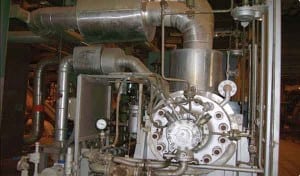
In a typical steam power plant, the boiler feedwater (BFW) pump takes suction from the deaerator (DA) and discharges high-pressure water to the boiler through the feedwater heaters. During normal operation, the DA is supplied with steam turbine extraction steam to mix with and heat the feedwater.
-
 O&M
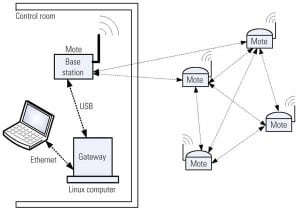
O&MLow-Cost Wireless Sensors Can Improve Monitoring in Fossil-Fueled Power Plants
As equipment ages in fossil-fueled power plants, component wear leading to machinery failure increases as a result. Extending equipment life requires increased attention to maintenance, and one way to improve maintenance planning is to detect faults prior to failure so maintenance can be scheduled at the most cost-effective, opportune time. This type of strategy benefits from the use of additional sensors, and wireless ones can often be installed with the least time and cost.
-
O&M
How to Avoid Alarm Overload with Centralized Alarm Management
In 1999, the Engineering Equipment and Materials Users’ Association (EEMUA) released its general guide to the design, management, and procurement of alarm systems for industrial plants. The guidance document (EEMUA 191), however, is vague about applications to specific facilities, such as electric power plants. This article specifies EEMUA 191 standards and practices applicable to the electric power industry and spells out specific variations in alarming practices that are tailored for today’s power plants.
-
O&M
Widespread Voltage Collapse Demonstrates the Importance of Generator Acceptance Testing
A September 2005 power outage that affected two million people in the California Southland was initiated when workers cut live electrical wires after consulting erroneous design drawings, but it was exacerbated by a number of extant problems with local generation and protection configurations.
-
O&M
Replacing an HP/IP Rotor
Today’s power plant owners face many challenges, including the aging and degradation of equipment. Steam turbines at times may be condemned due to operating inefficiency or rising vibration levels. In such cases the options may be few because the turbine may require a full or partial rotor section replacement. The good news is that a rotor section replacement can be performed in a relatively short time, depending upon the original rotor configuration. Here’s one example.
-
 O&M
O&MThe U.S. Gas Rebound
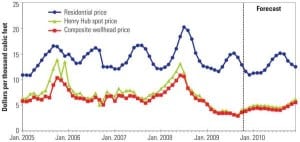
"It’s déjà vu all over again," said Yogi Berra. The Hall of Fame catcher could easily have been predicting the coming resurgence of natural gas – fired generation. Yes, a few more coal plants will be completed this year, but don’t expect any new plant announcements. A couple of nuclear plants may actually break ground, but don’t hold your breath. Many more wind turbines will dot the landscape as renewable portfolio standards dictate resource planning, but their peak generation contribution will be small. The dash for gas in the U.S. has begun, again.
-
O&M
Sealing Transformer Oil and SF6 Leaks Quickly and Effectively
Transformers, which are prone to leaking, are an excellent example of where using the right materials and techniques can quickly reduce cleanup costs and potential environmental damage from a fluid leak. Transformer leaks are most commonly caused by degrading cork gaskets or holes in the radiator fins or the steel tank. Often these leaks are slow drips, but occasionally a catastrophic leak will occur, spilling hundreds of gallons of mineral oil into the environment and causing the transformer to short-circuit, causing further health and safety concerns. These dangers, coupled with transformers’ isolated locations, make inspection, repair, and maintenance a major challenge.
-
O&M
When to Use an Oil Skimmer
Oil skimmers are very effective in removing oil from wastewater before discharge but are also perhaps the most efficient and economical approach.
-
 O&M
O&MFour Methods of Fly Ash Sampling
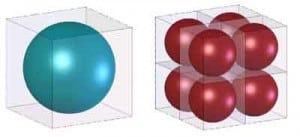
There are four approaches to measuring fly ash content and, therefore, the quality of fuel combustion in a boiler. Before choosing one, you should understand their relative levels of complexity and accuracy.
-
 O&M
O&MCeramics Win the War on Erosion
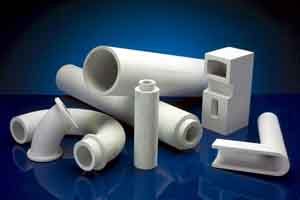
Erosion can significantly reduce the operational life of boiler components. Abrasion-resistant ceramic parts can be a sound alternative to expensive metallic parts when replacing boiler components.
-
 O&M
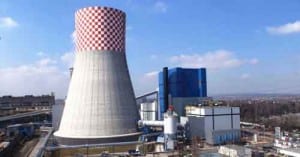
O&MWorld’s Largest Circulating Fluidized Bed Boiler Begins Commercial Operation
When the Åagisza power plant began commercial operation in late June 2009, it marked the beginning of a new era in the evolution of circulating fluidized bed (CFB) technology. At the heart of this 460-MW plant is the world’s largest CFB boiler, which is also the world’s first once-through unit supercritical CFB boiler.
-
O&M
Halar-Lined Chimney Remains Maintenance-Free
A fiberglass-reinforced plastic (FRP) Halar stack liner was installed at Vattenfall’s 300-MW Unit 2 at the Nordjylland Power Station in 1995. The 112-meter-high (367-ft) stack, protected from corrosion by the ECTFE liner, is still in excellent condition and has not required any repairs during more than 13 years of service. (ECTFE is short for ethylene chlorotrifluoroethlyene polymer, marketed under the brand name Halar ECTFE [Halar] by Solvay Solexis.)
-
O&M
Rebuilding Feedwater Heaters While a Plant Is Online
Rebuilding aged feedwater heaters can make better economic sense than buying new ones, because rebuilding reduces capital cost and plant outage expenses. At one Texas generating station, rebuilding saved one-third the cost of a new feedwater heater while improving the plant’s heat rate.
-
 O&M
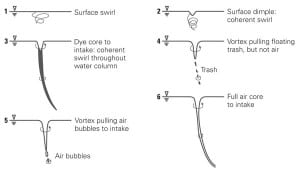
O&MScale Model Testing Confirms Adequate Refueling Water Storage Tank Vortex Allowance
Recent Nuclear Regulatory Commission (NRC) Component Design Bases Inspection activities have scrutinized empirical approaches used to determine vortex allowances for emergency core cooling system (ECCS) suction sources.
-
 O&M
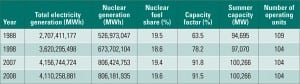
O&MBenchmarking Nuclear Plant Operating Costs
In an exclusive agreement with the EUCG Nuclear Committee, POWER was provided access to some key, high-level performance and operational data from the group’s nuclear industry benchmarking database. All U.S., and many international, nuclear power plants are members of the committee and have contributed to its database for many years. This month we introduce you to the EUCG Nuclear Committee and share sample nuclear operating costs. Look for future reports on other key performance benchmarking metrics during 2010.