
O&M
-
 O&M
O&MGaining Control with Electraulic Actuators
Plant engineers at Eskom’s Majuba Power Station in South Africa have been continuously looking for ways to improve efficiency and reliability. The six-unit, 4,000-MW, supercritical coal-fired plant was experiencing an efficiency decrease of 5% to 7%, which plant engineers determined was caused by poor performance of the actuators on their condensate level control valves (CLCVs). […]
-
 O&M
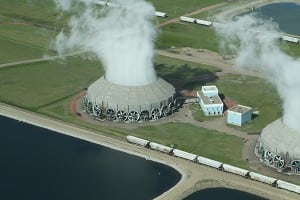
O&MPrepare Your Coal Plant for Cold Weather Operations
Cold temperatures are nothing new, but extreme winter weather has been in the headlines more and more in recent years. Many of us had never heard the term “polar vortex” before last winter, but earlier
-
 O&M
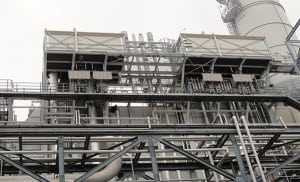
O&MPrepare Your Gas Plant for Cold Weather Operations
A sustained Arctic blast composed of freezing rain, record snowfalls, and high winds hit 22 states, from Mexico to New England in early February 2011. The extreme weather severely affected the power generation
-
 O&M
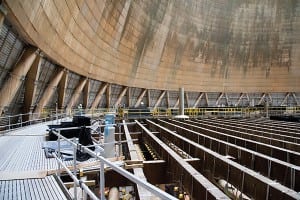
O&MPrepare Your Nuclear Plant for Cold Weather Operations
During the Jan. 3–12, 2014, polar vortex that brought record-setting cold temperatures and severe winter weather to much of the U.S., nuclear plants not only survived, but thrived. According to the Nuclear
-
 O&M
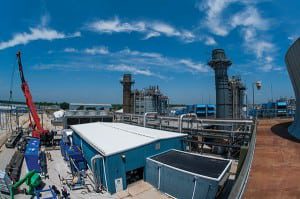
O&MQuickly Boost Your Combustion Turbine Response
Twice this year, PJM flirted with blackouts when brutal winter storms (dubbed a polar vortex) struck the Eastern U.S. in January. The cold weather set a new winter peak demand record of 141,500 MW on Jan. 7
-
 O&M
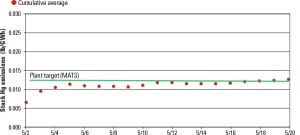
O&MNon-Carbon Reagent Injection for MATS Compliance
The upcoming implementation of the Environmental Protection Agency’s (EPA’s) Mercury and Air Toxics Standards (MATS) is putting pressure on coal-fired power plants to develop and implement compliance
-
 O&M
O&MProper Lubrication Practices Improve Plant Operations
Although industrial lubricants typically account for only 1% of plant operational costs (Figure 1), the lack of proper lubrication products, techniques, or applications can have a much more severe effect on
-
 O&M
O&MTwo Units at Coal Power Plant Back Online Following Spring Fire
With Units 6 and 7 back in operation, Colorado Springs Utilities (CSU) has restored 80% of the generation capacity at its Martin Drake Power Plant located in downtown Colorado Springs. The plant was taken offline after sustaining significant damage during a May 5 fire. Most of the damage occurred in the area surrounding Unit 5, […]
-
 O&M
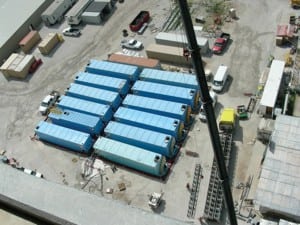
O&MBoiler Chemical Cleaning: Doing It Correctly
Like some of those tests your doctor is always after you to get, boiler chemical cleaning is something that most of us would rather not think about but that we all agree is necessary. Adding to our general discomfort with the process are new Environmental Protection Agency regulations, which make the disposal of chemical cleaning […]
-
 O&M
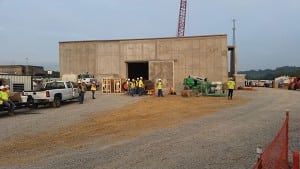
O&MNew Disaster Preparedness Approaches for Nuclear Plants
To ensure that its nuclear plants do not meet the same fate as those damaged and destroyed by the March 2011 events at the Fukushima Daiichi plant—should they be hit by similarly severe natural disasters—Tennessee Valley Authority (TVA) is using multiple new approaches to enhance safety. First Installation of New Spent Fuel Pool Instrumentation Spent […]
-
 O&M
O&MDigital Writing Solution Allows Timely Updates to Drawings and Field Reports
Skilled maintenance and service teams inspect critical infrastructure, perform preventive maintenance, and quickly respond to issues to keep service levels high. It is critical that such teams work with as-built drawings that reflect original plans along with the cumulative changes. Armed with the current drawings, service teams can avoid surprises. The challenge is that drawings […]
-
O&M
More Strategies for Inspecting HRSGs in Two-Shift and Low-Load Service
This supplement to “Strategies for Inspecting HRSGs in Two-Shift and Low- Load Service” in the August issue includes additional discussion of the heat recovery steam generator (HRSG) Inspectors Toolkit and HRSG Inspection Guide sections of the main article plus additional photos of damage caused by rapid startups and two-shifting of units over time. More Tools […]
-
O&M
Rapid Cycling: The Human Factor
A combination of falling natural gas prices, greater integration of renewable generation, and advancing technology has meant changing roles for many plants, particularly gas turbine combined cycle plants. (See “Managing the Changing Profile of a Combined Cycle Plant” in the June 2014 issue.) The added wear and tear on plant equipment, and the changing maintenance […]
-
 O&M
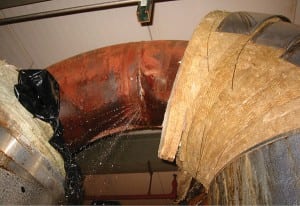
O&MStrategies for Inspecting HRSGs in Two-Shift and Low-Load Service
Aheat-recovery steam generator (HRSG) is much like other power generation equipment—run it at design conditions and chances are it will run with high availability and require only routine maintenance for
-
 O&M
O&MTrackers Optimize Yield of Utility-Scale Solar Plants
The utility-scale solar market is rapidly growing in North America, representing a large area of opportunity for project and product developers alike. The market more than doubled in size between 2012 and 2013
-
 O&M
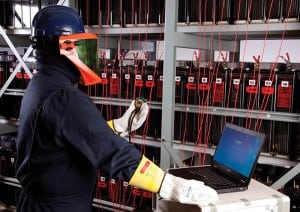
O&MIntelligent Monitoring of Distribution and Emergency Power Systems Improves Availability
Problematic power plant systems diminish availability and directly affect plant productivity and efficiency. In order to maintain availability, electrical testing and maintenance services are imperative. Two
-
 O&M
O&MLatest Electromagnetic Technology Device Improves Inspection Accuracy and Repeatability
Eddy currents are electrical currents induced within conductors by changing magnetic fields. They are commonly used in nondestructive evaluation (NDE) and corrosion monitoring of structures with painted surfaces. The work of eddy current technicians, who specialize in the electromagnetic modality, requires a high degree of accuracy even when working under challenging testing conditions. Traditionally, technicians relied on […]
-
 O&M
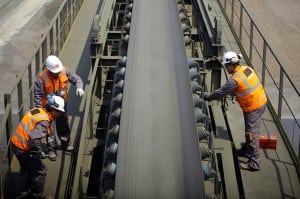
O&MConveyor Inspections: Could a Contractor Help You?
Conducting conveyor inspections and maintenance can pose significant risks to employees, as these activities bring workers into close proximity with the conveyor system under potentially dangerous conditions. Staff members are exposed to moving belts, rolling components, and pinch points, all in an environment that is commonly dirty, distracting, and sometimes noisy. As plants struggle with […]
-
 O&M
O&MNew Enclosure Solution Enables Remote Monitoring of Battery Backup Systems
With 4.4 million customers and nearly 46 GW of generating capacity, Atlanta-based Southern Co. has doubled the size of its supervisory control and data acquisition (SCADA) system in the past three years and
-
 O&M
O&MRobust Bearings Tested for Brazil’s Belo Monte Hydro Project
Brazil’s Belo Monte hydropower project includes a complex of dams, numerous dikes, and a series of canals supplying two different power stations with water. With a rated capacity of 11,233 MW, it will be the
-
 O&M
O&MSite-Specific Factors Are Critical for Compliance with Final 316(b) Existing Facilities Rule
On May 16, 2014, the Environmental Protection Agency (EPA) is scheduled to release its long-delayed final 316(b) rule for existing facilities. The rule—which was supposed to have been issued Apr. 17 after
-
 O&M
O&MManaging the Changing Profile of a Combined Cycle Plant
With the growing need for operational flexibility across the power industry, the combined-cycle gas turbine (CCGT) fleet is increasingly being subjected to load-following and cyclic operation. This change in
-
 O&M
O&MFuel Flexibility Is the Gift That Keeps Giving
All power plants must continually strive to control operating expenses, but it is particularly important for coal-fired facilities to cut costs these days to stay competitive while meeting ever-more-stringent
-
 O&M
O&MMISO Prepares for Hurricane Season
Todd Hillman As hurricane season begins this year, utilities across the Gulf Coast will have a new partner as they work to keep the lights on after extreme weather events. Starting in late 2013, the
-
 O&M
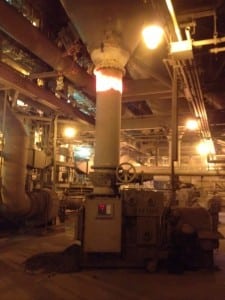
O&MCoal Silo Fires and Hot Spots: Extinguishing and Preventing Recurrence
Many coal-fired power plants in operation today do not have a fire-extinguishing medium installed in their coal storage silos. CO2 injection would generally be the preferred method, and is used in many plants, but what do you do when your plant was left without this option after construction? Wet or just plain “hot” coal making […]
-
 O&M
O&MManpower Report: Power Industry Faces Talent Shortage
A report released on May 5 by staffing firm Manpower suggests that utilities are under a “double squeeze”—a shortage of skilled workers at both the entry and senior level—caused by an aging workforce, advances in technology, and a breakdown in the educational system. In its report, “Strategies to Fuel the Energy Workforce,” Manpower noted that […]
-
 O&M
O&MCritical Path: Getting Your Outage Ducks in a Row
It’s no secret that equipment requires maintenance. Just as your personal vehicle needs an oil change periodically, a power plant needs to shut down regularly for a tune-up to take care of all those little
-
 O&M
O&MOSHA Revises Standards for Line Work and Electrical Protective Equipment
The Occupational Safety and Health Administration (OSHA) on Tuesday issued a final rule that revises a 42-year-old construction standard for electric power line work to make it more consistent with general industry standards. The final rule, which is scheduled to be published in the Federal Register on April 11 and becomes effective 90 days after that, […]
-
 O&M
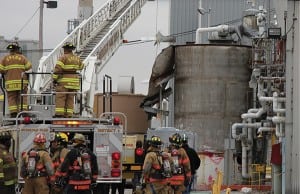
O&MSafety Is Not an Accident
Many generation companies have made safety a cultural norm, often beginning internal meetings with a safety note and requiring monthly safety training sessions. Zero lost time accidents during the two- or
-
O&M
3D Visualization Could Benefit Plant Inspection Programs
Taking a cue from the petrochemical sector, power plants may be on the cusp of applying high-fidelity 3D models of the as-built plant environment to streamline flow-accelerated corrosion (FAC) and other