
O&M
-
 O&M
O&MCustomized Storage Solution Improves Efficiency
Omaha Public Power District (OPPD) operates four baseload plants in the state of Nebraska. In 1993, when the North Omaha Station added a new warehouse, OPPD sought help from Vidmar to create effective storage
-
 O&M
O&MAdaptive Brush Seals Restore Air Preheater Performance
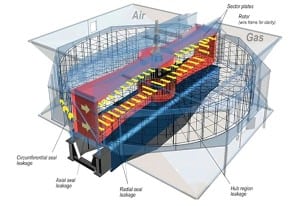
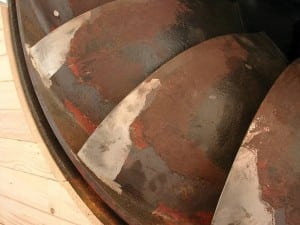
The gas sealing systems used on rotary, regenerative air preheaters (APHs) have evolved little from the metal strip configuration used on the first Ljungström preheaters nearly a century ago. Metallic strip
-
 O&M
O&MModern Polymeric Materials Offer Options for Equipment Repair
Currently accounting for over 16% of global energy production, and with an expected growth rate of 3% per year for the next quarter century, hydroelectric power generation continues to grow as the front runner
-
 O&M
O&MPractical Considerations for Converting Industrial Coal Boilers to Natural Gas
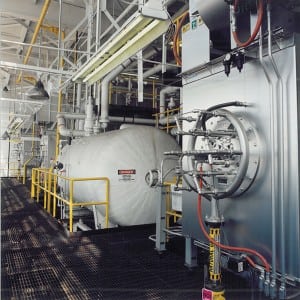
Increasing Environmental Protection Agency (EPA) restrictions pertaining to emissions from coal-fired power plants, the increasing cost of coal operations, and the decreasing cost of natural gas provide strong
-
 O&M
O&M3D Metal Printing Turbine Replacement Parts Could Cut Repair Times by 90%
3D metal printing is still an experimental process in nearly all industries, used primarily for prototypes and test products. But if Siemens and GE have their way, it will soon become a standard means of rapidly producing small numbers of industrial parts. Siemens announced in December that it would begin using 3D printing—also known as […]
-
 O&M
O&MUsing Neural Network Combustion Optimization for MATS Compliance
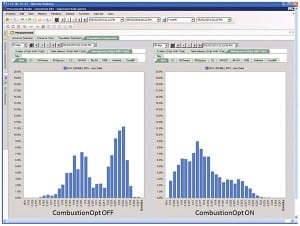
The Mercury and Air Toxics Standards (MATS), promulgated by the Environmental Protection Agency (EPA) on Dec. 21, 2011, set maximum achievable control technology (MACT) emission standards for specific classes
-
 O&M
O&MRetrofitting Mechanical Draft Fans to Optimize System Performance
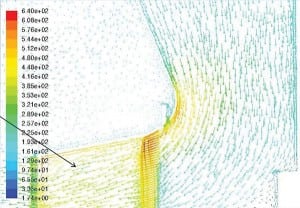
Mechanical draft fans are used exclusively in power generation to move air and gas from one point to another. They create draft in a process system so that fluid media can be induced, forced, and boosted
-
O&M
Upgraded Control Room Consoles Improve Ergonomics
Great River Energy (GRE) is a not-for-profit electric cooperative that generates and transmits power for 28 member cooperatives throughout southern, central, and northern Minnesota and northwestern Wisconsin
-
 O&M
O&MReliable Fire Protection for Turbine Rooms
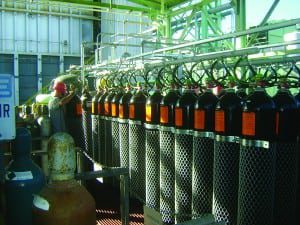
Fire protection for power plant turbine rooms has typically been a game of tradeoffs. Enclosure integrity issues in older facilities can render CO2 and halon systems ineffective. In new and old facilities
-
 O&M
O&MCorrosion Protection for FGD Vessels
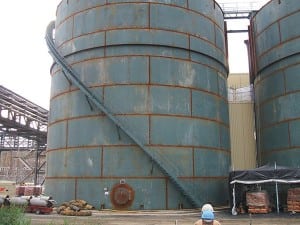
Roughly five years ago, the power industry readily embraced the new Alloy 2205 metal as a more lightweight and cost-effective substrate for the construction of flue gas desulfurization (FGD) absorbers and
-
![COAL POWER Stealth Losses Part 2 Fig 1[2]](https://www.powermag.com/wp-content/uploads/2014/01/COAL-POWER-Stealth-Losses-Part-2-Fig-12-286x300.jpg) O&M
O&MHow Stealth Combustion Losses Lower Plant Efficiency. Part 2: The Solutions
Important process variables that affect unit efficiency were reviewed in Part 1 of this two-part report. Many of those process parameters were also identified as related to boiler air in-leakage. These stealthy combustion losses are difficult to identify or locate yet have a significant effect on boiler combustion efficiency. Keeping your plant operating at or near […]
-
 O&M
O&MUpgrading a Wired Public Address System with a Wireless Option
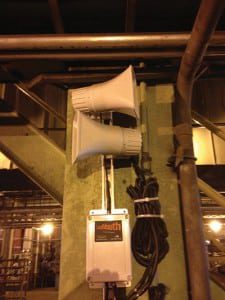
The management at a 1,094-MW coal-fired power plant in the Midwest sought to augment their hardwired public-address (PA) system. With hundreds of employees working in varied conditions, a means of
-
 Commentary
How U.S. Power Generators Are Preparing for 2014
The business environment for generating companies worldwide continues to become increasingly complex, and not just as a result of regulations. Even in the U.S., the concerns and constraints faced by generators
-
 O&M
O&MDay & Zimmermann Focuses on Flexibility
Now more than ever, we see the U.S. power market sharply focused on maximizing return on investment. We see power producers responding to economic uncertainty, high costs for new emission controls, and a
-
 O&M
O&MPreventing Failure of Elastomeric Expansion Joints in FGD Systems
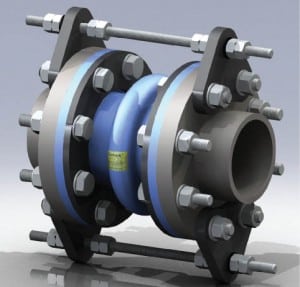
Fossil-fuel-based power generation plants with wet scrubbing systems use slurries of sorbents to remove sulfur dioxide from their emissions. These highly abrasive slurries accelerate wear on the expansion
-
 O&M
O&MReducing Bottom Ash Dewatering System Maintenance
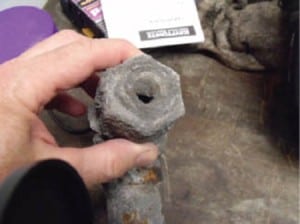
Many coal-fired power plants use water to cool and sluice bottom ash away from the bottom of the boiler for final disposal, and then they recirculate the water for reuse. This system is also known as a
-
 O&M
O&MElectrical Area Classification in Coal-Fired Power Plants
Electric power production from coal is on a steep rise in major developing countries, including China, India, Indonesia, South Africa, and Vietnam, albeit declining in developed countries such as the United States. Shortfalls in coal production have been reported in some of these countries, but these issues are being addressed by increasing coal production, as […]
-
 O&M
O&MFocus on O&M: Replacing Multiple Turbine and BOP Control Systems with a Single Platform
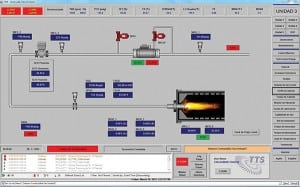
Termoyopal, a utility based in Bogota, Colombia, recently repowered its power plant at Yopal, Colombia, by replacing three gas turbines with refurbished units and upgrading the remaining two turbines. The
-
 O&M
O&MReducing SCR Fly Ash Accumulation with Improved Reactor Inlet Airflow
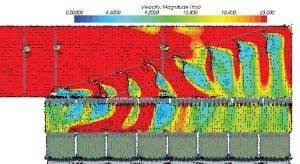
The Kansas City Power & Light (KCP&L) La Cygne Generating Station provides 1,532 MW of peak power from its site south of Kansas City. La Cygne Unit 1 is an 815-MW Babcock & Wilcox cyclone boiler
-
 O&M
O&MTo Flush or Not to Flush, That Is the Question
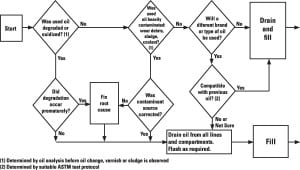
Lubricating oil is the lifeblood of virtually all rotating equipment found in a power plant. Keep it clean and the lube system is relatively low maintenance. However, cycling operation and restarts after a temporary or long-term shutdown can reveal a whole new class of perhaps unfamiliar problems. The fundamental question is determining when a […]
-
 O&M
O&MConsiderations When Upgrading Gas Turbine HMIs
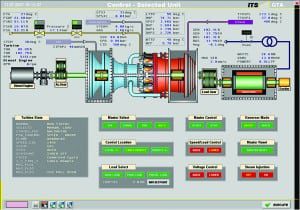
Aging human machine interface (HMI) hardware will eventually become a burden on plant operation. Obsolete HMIs can cause problems with connectivity, historical data loss, and hardware failure. As the hardware
-
O&M
Hybrid Inlet Chilling for Small Gas Turbines
Like any internal combustion engine, the power output and efficiency of a combustion turbine decrease as ambient temperatures rise. This loss of power and efficiency is caused by a reduction in ambient air density at higher temperatures. Since turbines are mass flow machines with a volumetrically limited intake, less-dense intake air results in degradation of […]
-
O&M
Improve Plant Heat Rate with Feedwater Heater Control
Meaningful, yet often hidden thermal performance losses occur in feedwater heaters.
-
O&M
AEP Will Retire Rather than Refuel Ohio Plant
American Electric Power (AEP) has opted to retire—instead of refueling with natural gas—its 585-MW coal-fired Muskingum River Plant Unit 5 in Beverly, Ohio, in 2015.
-
O&M
How Stealth Combustion Losses Lower Plant Efficiency. Part 1: The Problem
At the average coal-fired power plant, the battle to reduce net heat rate is complicated by skin-tight maintenance budgets, staff reductions, and—for some—the switch from baseload to mid-peaking service. The most fruitful approach to improving a plant’s heat rate is to optimize combustion in its boiler, particularly by minimizing the amount of “stealth” air in-leakage.
-
O&M
ORP: New Tool or Another Gadget?
Understand how to best use a new tool-in this case, the measurement of oxidation-reduction potential—and avoid another on-line gadget.
-
O&M
Cost Benefits of a Cycling Analysis on a Combined Cycle Unit
Cycling is a fact of life for most gas plants. But do you really understand the true costs of cycling operation? Not having a full picture risks leaving substantial money on the table.
-
 O&M
O&MIndustrial Wireless Sensors: A User’s Perspective
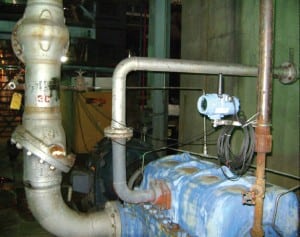
There are many reasons to anticipate that the use of wireless instrumentation in industrial settings will increase dramatically in the next few years.
-
 O&M
O&MORP as a Predictor of WFGD Chemistry and Wastewater Treatment
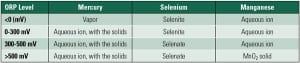
Recent studies have shown that system oxidation-reduction potential (ORP) is not only an important factor for predicting wet flue gas desulfurization (WFGD) absorber chemistry but also may be a predictor of process equipment corrosion and wastewater treatment requirements.
-
 O&M
O&MThe Case for Utility Boiler Fuel Delivery System Upgrades
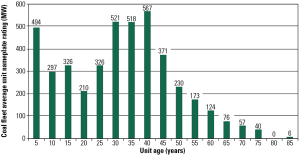
A vital part of any coal-fired unit is its fuel delivery system (FDS). A newly formed subcommittee of the ASME Research Committee on Energy, Environment, and Waste has investigated potential FDS upgrades on three typical 500-MW wall-, tangential-, and cyclone-fired boilers. The subcommittee has produced a series of suggested upgrades that have a simple payback of no more than two years.