
O&M
-
 O&M
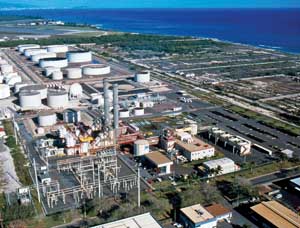
O&MSolving Fouling Problems with an HRSG Upgrade
Despite being located on the beautiful Hawaiian island of Oahu, the Kalaeloa Cogeneration Plant had trouble in paradise: Large amounts of ash from #6 low-sulfur fuel oil coated the finned tubes of its heat-recovery steam generators (HRSGs). The fouling added an extra $5 million dollars a year to the plant’s fuel bill. By retrofitting the HRSG with new panels and improved fin design, the plant overcame the fouling problems, stopped tube leaks, and cut fuel costs.
-
 O&M
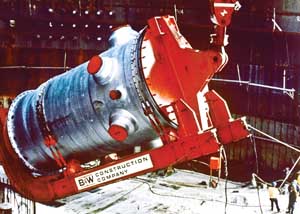
O&MNuclear: Realistic Simulation Assists in Nuclear Power Plant Certification
From the onset of the civilian nuclear era (marked by President Dwight Eisenhower’s "Atoms for Peace" speech to the United Nations in 1953), there has been a strong awareness of the importance of safety within the nuclear energy industry. Western experts have devoted much time and effort to ensuring the integrity of reactor cores and […]
-
 O&M
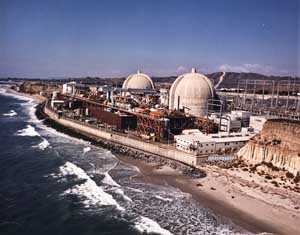
O&MSteam Turbines: San Onofre Nuclear Generating Station Gets Upgraded Generator Rotors
Southern California Edison’s (SCE) 2,250-MWe San Onofre Nuclear Generating Station (SONGS) recently took receipt of a new and upgraded generator rotor for one of its two Alstom steam turbine generator units (Figure 1). Following the successful installation and flawless start-up of this new rotor in the Unit 2 generator, the former Unit 2 rotor was […]
-
Legal & Regulatory
Looking Downstream After the Cooling Water Case
In the wake of the recent U.S. Supreme Court ruling related to cooling water intake practices at large power plants, many utilities are relieved to be off the hook as far as implementing expensive control upgrades to protect fish and other aquatic organisms.
-
 O&M
O&MBetter Combustion Airflow Monitoring at the Hunan Yiyang Power Plant
Measuring combustion airflow in a coal-fired power plant can be problematic when using annubar instruments that feature small holes that can easily plug with coal dust. Sierra Instruments eliminates this big maintenance headache with its more-accurate, nonplugging thermal mass flow meter design.
-
 O&M
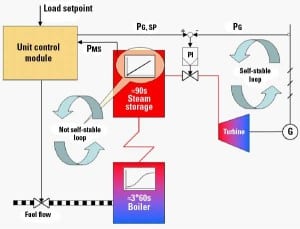
O&MA New Era in Power Plant Control Performance
Recent improvements in the performance of steam power plants have been achieved with advanced computerized controls. These new control schemes not only reduce fuel consumption and make the plant much more responsive, but they also can significantly decrease start-up commissioning time and cost.
-
 O&M
O&MLessons Learned from a Hydrogen Explosion
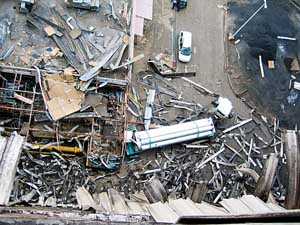
On January 8, 2007, a hydrogen explosion at the Muskingum River Power Plant’s 585-MW coal-fired supercritical Unit 5 caused one fatality, injuries to 10 other people, and significant damage to several buildings. The explosion occurred during a routine delivery of hydrogen when a hydrogen relief device failed, which allowed the contents of the hydrogen tank to escape and be ignited by an unknown source. This article covers the findings of the incident investigation and the actions the plant has taken to prevent a reoccurrence.
-
 O&M
O&MBoiler-Tuning Basics, Part II
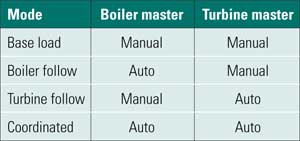
Boilers have enormous thermal mass and are relatively slow to react. Turbines are nimble and quickly answer an operator’s command. Coordinating an entire plant requires an intimate knowledge of both systems and selecting the right logic tools to bring them together.
-
 O&M
O&MHydrokinetic Plant Piggybacks on Existing Hydro Plant
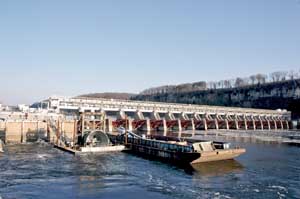
Hydrokinetic energy — which generates power by using underwater turbines that harness moving water — is on the rise in the U.S. In January, the first U.S.-licensed, commercial, grid-connected hydrokinetic project installed the first of two 100-kW nameplate-rated turbines downriver from an existing run-of-river hydroelectric plant on the Mississippi River.
-
 O&M
O&MFire Safety in Modern Hydroelectric Stations
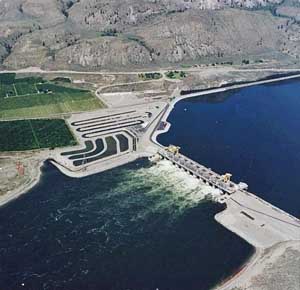
It may seem counterintuitive, but fire can be a serious danger in hydropower plants. In some respects, the danger is even greater than in thermal power stations. Most U.S. hydro plants are 30 to 70 years old but can deliver another 20 or 30 years of service with upgrades — including state-of-the-art fire protection systems. The design options outlined here also apply in large part to other generating stations.
-
 O&M
O&MMaking the Most of Thermal Imaging Data
This article discusses planning, operation, and documentation procedures designed to effectively use the thermal imaging camera as a critical element in an effective reliability program.
-
 O&M
O&MReducing Millirem Exposure
Radioactive materials are clinging to the inside walls of reactor system components because of a noble metals injection process error some years ago at Cooper Nuclear Station (CNS). CNS has launched an aggressive, long-term program to remove the materials, but until the work is successfully completed, the station is also taking extensive measures to protect employees and reduce higher source term dose.
-
 O&M
O&MBalanced Pipe Fuel Flow Is Not Enough for Uniform Combustion
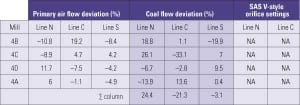
Conventional wisdom tells us that the key to good boiler combustion requires carefully balancing the fuel-air ratios across all the coal pipes. Recent tests show that the uniformity of the burner-to-burner stoichiometries—not balanced pipe-to-pipe fuel flow distributions—dictates combustion uniformity.
-
 O&M
O&MDominion Solves Mt. Storm’s Fuel-Handling Problems with Improved Coal Silo Design
Many coal-fired power stations built before 1980 were designed for handling relatively easy-handling lump coal. If your plant’s bins, bunkers, and silos aren’t up to dealing with today’s range of more variable coal properties, this case study shows one way to minimize coal flow problems.
-
 O&M
O&MBoiler-Tuning Basics, Part I
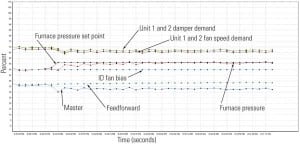
Tuning power plant controls takes nerves of steel and an intimate knowledge of plant systems gained only by experience. Tuning controls also requires equal parts art and science, which probably is why there are so few tuning experts in the power industry. In Part I of a two-part series, we explore a mix of the theoretical and practical aspects of tuning boiler controls.
-
O&M
"Blueprint" Your Pulverizer for Improved Performance
Pulverizer throughput is determined by the coal fineness desired for a given coal. However, compromising on coal fineness when your pulverizer isn’t up to snuff can increase NO x and cause many furnace problems. Your least costly option for increasing pulverizer capacity is to pay careful attention to key dimensions and critical tolerances during your next overhaul.
-
 O&M
O&MHelping Power Plant Control Systems Achieve NERC CIP Compliance
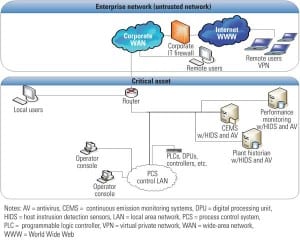
This guide offers suggestions from a control system engineering perspective for protecting power-generating units that are determined to be critical cyber assets
-
 O&M
O&MBest Management Practices for Coal Ash Ponds
The unfortunate coal ash spill at the Tennessee Valley Authority’s (TVA’s) Kingston Fossil Plant that occurred on December 22 has heightened national awareness of the problems associated with utilities’ coal ash surface impoundments if they are not properly maintained.
-
 O&M
O&MReduce Costs with Wireless Instrumentation
New wireless technologies for power plant instrumentation offer significant cost savings when compared to traditional wired networks. The value of this cost savings is especially relevant in the highly competitive power industry, where aging facilities are common and upgrades are an expensive necessity. Modern wireless networks offer a reliable upgrade path that even provides some unexpected benefits when compared to traditional copper networks.
-
 O&M
O&MFERC Focuses on Internal Compliance Programs
By now, most electric industry participants are aware of the mandatory reliability standards required by the Energy Policy Act of 2005 and managed by the North American Electric Reliability Corp. (NERC). Bulk-power system users, owners, and operators (known as NERC registered entities) are responsible for complying with the set of standards that are applicable to their operations in their specific region. Compliance is monitored by the NERC regions (Texas Regional Entity, Western Electric Coordinating Council, Reliability First Corp., Midwest Reliability Organization, SERC Reliability Corp., Florida Reliability Coordinating Council, Northeast Power Coordinating Council, and Southwest Power Pool) through spot checks, self-certifications, audits, and investigations.
-
 O&M
O&MPreventing Boiler Code Violations Creates a Safer Work Environment
Nearly 10% of boilers and pressure vessels inspected in the second quarter of 2008 were slapped with violations, which means that the violations put workers and equipment in danger, according to a quarterly report released by the National Board of Boiler and Pressure Vessel Inspectors.
-
 O&M
O&MConverting a Pump to Use Mechanical Seals
Wear and leakage are common maintenance problems that result in pump discharge pressure dropping below optimum levels and reduced pump efficiency. Converting pumps to mechanical seals eliminates fretting or grooving of the shaft and provides for easier pump maintenance. By converting to mechanical seals, a plant also avoids incurring expenses associated with the replacement of sleeves and shafts.
-
 O&M
O&M2009 Industry Forecast: Existing Generating Assets Squeezed as New Project Starts Slow
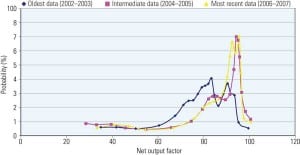
Most forecasting reports concentrate on political or regulatory events to predict future industry trends. Frequently overlooked are the more empirical performance trends of the principal power generation technologies. Solomon & Associates queried its many power plant performance databases and crunched some numbers for us to identify those trends.
-
 O&M
O&MConserve Water by Improving Cooling Tower Efficiency
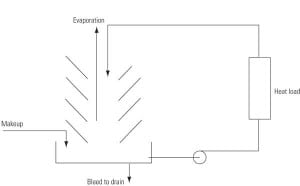
Though an abundant supply of freshwater has been taken for granted in many parts of the world, its availability is becoming less certain, even in North America. Water is a valuable resource and commodity that needs to be efficiently managed to minimize waste, reduce energy consumption, and control cost, especially for power generation. The industry must respond by seeking out more efficient ways to use water, such as by implementing water recycling and reuse strategies, especially for critical equipment like cooling towers.
-
 O&M
O&MStopping Natural Gas Leaks
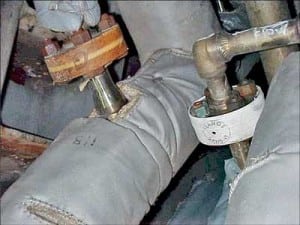
Chances are you have endured the tedious process of removing fuel piping when maintaining just about any gas turbine, especially aero-derivative engines that are usually swapped out rather than repaired in place. One of the most time-consuming jobs after reassembling the fuel piping is checking for leaks at all the flanges. In a large frame-size turbine, that means sealing up to 64 flanges and then removing the seals after the leak testing.
-
 O&M
O&MImproving Workforce Connectivity
Wright-Hennepin Cooperative Electric Association (WHCEA) is an electric distribution utility located in Rockford, Minn., that has been serving Wright County and western Hennepin County near Minneapolis with electricity since 1937. WHCEA is a not-for-profit, member-owned energy and service cooperative dedicated to enhancing the quality of life of its members and providing reliable services. Its field operations department consists of 35 fleet members who focus on building and maintaining electric power lines.
-
O&M
Oregon wind turbine loses its bearings
The generator bearings on a wind turbine located in Oregon (Figure 1) first failed in May 2006, only 11 months after the tower was brought on-line. The company that owns and operates the wind farm replaced the bearings and slip rings, but the new bearings failed only five months later. Once again, new bearings and […]
-
O&M
Advanced batteries supply ancillary services
For the power engineer, delivering an instantaneous and consistent power supply can be an elusive goal. Yet without it, grid frequency regulation is impossible. Today, frequency regulation is an ancillary service bought by the hour, the day prior to utilization, and dispensed on an as-needed basis by dispatch communiqués and provided by the ancillary service […]
-
 O&M
O&MInnovative Control Strategies Improve Boiler Dynamic Response
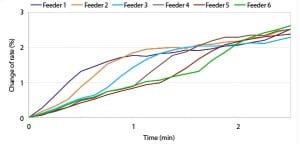
The more capable a power-generating unit is of reacting quickly to changes in load demand, the more profitably the unit can be operated. An improvement in load dynamics means that additional control response and capacity can be made available to the power grid. These characteristics are especially in demand in regions where a fast-responding unit can supply energy as ancillary services at a premium price.
-
 O&M
O&MLaser scanning produces 3-D plant database
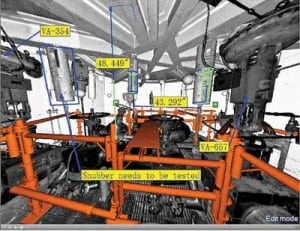
Advanced computer design tools have merged with high-definition laser camera scan data to produce integrated images that are particularly useful for outage and maintenance planning.