
O&M
-
 O&M
O&MUsing Temperature- Measuring Indicators
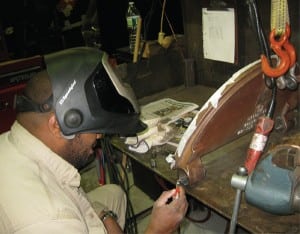
Correct welding procedures are extremely important elements of the work done by the PSEG Central Maintenance Shop (serving Public Service Electric and Gas Co., PSEG, a New Jersey utility). We have, for example, a Critical Weld Inspection Program for high-temperature pressure piping whose goal is to identify cracks in high-temperature piping welds.
-
 O&M
O&MWet Booster Fans Optimize Power Station Performance with FGD and Wet Stack
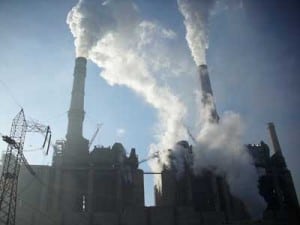
A Romanian lignite-fired power station wanted to minimize the operating cost of the flue gas desulfurization (FGD) system by placing the booster fans in the "wet position," between the wet FGD scrubber and the wet stack, where they would consume significantly less power. A number of combined environmental effects must be considered in this design.
-
 O&M
O&MPulverizers 101: Part III
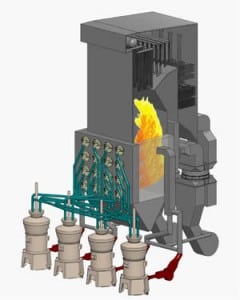
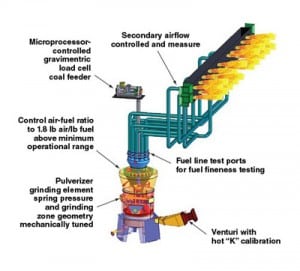
Pulverizers prepare raw fuel for burning by grinding it to a desired fineness and mixing it with the just the right amount of air before sending the mixture to boiler burners for combustion. Part I of this three-part report examined the essentials of pulverizer design and performance; Part II discussed the importance of fuel fineness. This final article discusses the importance of air and fuel measurement.
-
 O&M
O&MImproved Performance from Priority-Based Intelligent Sootblower Systems
When sootblower operation frequency is too high, a plant risks losing power generation from tube leaks; but when sootblower frequency is too low, there is a risk of boiler pluggage. Intelligent sootblowing finds the right balance between tube erosion and plant economic operation.
-
 O&M
O&MTools at Height
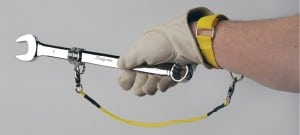
A structure or mechanical system that requires fasteners also demands tools to maintain it properly. In power sectors such as wind, fossil fuel, and nuclear, some work areas may be several hundred feet in the air. While working at those extreme heights, or even just 10 feet off the ground, it’s simply unacceptable to drop anything. That’s why the concept of “tools at height” is being embraced as a way to improve safety and efficiency on the worksite.
-
 O&M
O&MSteam Turbine Cleaning Using Chemical Foams
In the May issue, we discussed the importance of either preventing copper plating of the high-pressure (HP) steam turbine rotor or finding a good foam or mechanical removal means of restoring lost efficiency. In that article we noted that “copper deposits typically form on the stationary nozzle block or first-stage stationary blades” and that those deposits usually result in a steam turbine loss of capacity at a rate of about 2 to 3 MW per month. We also stated that the “general rule of thumb is that there is a reduction of about 1 MW of generating capacity for each 1 to 2 pounds of deposit that accumulates on the HP turbine.
-
 O&M
O&MPredictive Maintenance That Works
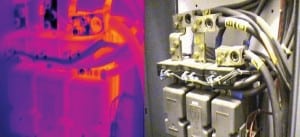
This is the fourth in a series of predictive maintenance (PdM) articles that began in the April “Focus on O&M” with an introduction to PdM as a process whereby maintenance is performed based on the condition of the equipment rather than on a predetermined interval. In the May and July issues, we began exploring specific PdM techniques, such as motor-current signature analysis and oil analysis.
-
 O&M
O&MOptimizing Condenser Tube Selection
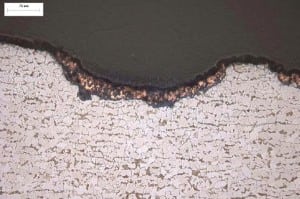
Selecting the most economical tube for a new condenser, or the retrofit of an existing one, is much more complex than mere price shopping. Each material has unique performance characteristics that affect the operating economics of the entire plant. A case study illustrates the importance of carefully choosing the tube material that is right for your plant.
-
 O&M
O&MCondenser Tube Failure Mechanisms
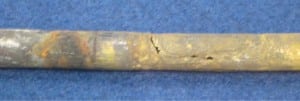
The operating environment within a condenser is extremely harsh, and in spite of the designer’s best intentions, sometimes tubes made of the best materials fail. The most important tube failure mechanisms typically result from different forms of corrosion and erosion. When it’s time to select new condenser tube material, you’ll need to consider the projected operating environment and failure mechanisms that material will be subjected to.
-
 O&M
O&MCondenser Retubing
Once the condenser tubes are designed, selected, and purchased, the final step in a retubing project is to remove the old tubes and install the new ones. The success of this project is very dependent upon attending to quality control, following proper procedures, using the right tools, and having a highly skilled workforce.
-
O&M
Improving Condenser O&M Practices
Losses attributed to condenser tube leaks, fouling, and failures continue to climb, costing the power generation industry an estimated half-billion dollars annually in maintenance costs and loss of production. Investing in an effective condenser maintenance program will reduce those expenses in short order.
-
 O&M
O&MEnhanced Capture of Mercury Using Unique Baghouse Filter Media
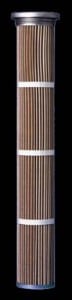
Several states have already instituted mercury emission limits in expectation of tightening mercury emission rules that will require reductions of up to 91%. Coal-fired plants searching for an economical way to meet the new limits may need to look no further than replacing their baghouse filter elements.
-
 O&M
O&MPulverizers 101: Part II
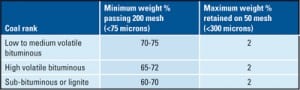
Pulverizers prepare the raw fuel by grinding it to a desired fineness and mixing it with the just the right amount of air before sending the mixture to boiler burners for combustion. In Part I of this three-part report, we examined the essentials of pulverizer design and performance. In the second part, we discuss the importance of fuel fineness. In the final article, we will discuss the importance of air and fuel measurement.
-
 O&M
O&MImproved Coal Fineness Improves Performance, Reduces Emissions
Utilizing engineering ingenuity and today’s developing computational fluid dynamics tools, a new classifier design is now available that significantly improves fineness from pulverizers without the heavy costs associated with dynamic classification or any downsides on pulverizer capacities, maintenance, and parasitic power. Instead, operational flexibility and improved emission control options are enhanced.
-
 O&M
O&MJEA Increases Power Output Through CFB Improvements
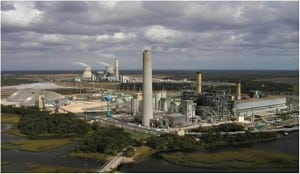
JEA’s Northside Generating Station in Jacksonville, Fla., Units 1 and 2 were built in 1966 and 1972, respectively, although the Unit 2 boiler had not operated since 1983. Both were heavy oil– and natural gas–fired steam units rated at about 300 MW. The utility “repowered” those two units by removing the old boilers and adding new circulating fluidized bed (CFB) boilers (Figure 1) that entered service in 2002. At that time, they were the world’s two largest CFBs, and the plant won POWER’ s Plant of the Year Award.
-
 O&M
O&MApplying Acoustic Pulse Reflectometry in a Geothermal Plant
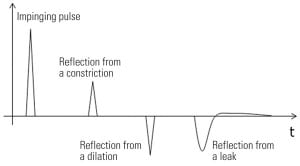
Acoustic pulse reflectometry (APR) is a tube inspection method that has been gradually gaining acceptance as a tool for heat exchanger inspection. Different types of heat exchangers operating in different operating environments have different failure mechanisms, making some of them more suited than others for inspection by APR. Finned tube heat exchangers are a typical example of heat exchangers particularly conducive to APR inspection.
-
O&M
Advanced Coatings Protect Plant FGD Systems
Now that many flue gas desulfurization (FGD) systems are reaching middle age, corrosion repairs of structural and process vessels are becoming more common. Corrosion is caused by condensates of acids formed during the FGD process, which accelerate pitting and crevice corrosion, particularly in scrubbers where high sulfate solutions are present. Scrubbers lined with 2205 duplex stainless steel are among the most vulnerable to pit or crevice corrosion, from both chlorides and fluorides.
-
 O&M
O&MThe New Water Lab
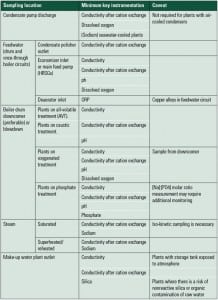
Recent advances in water laboratory instrumentation—from improved sample conditioning to advanced online instruments—have reached the market. Here’s a look at the equipment you’ll find in the best-equipped power plant laboratory this year.
-
O&M
BIG PICTURE: Lights Out (Web Supplement)
A web supplement to the September issue with details of global power shortages.
-
 O&M
O&MFighting Pipe Abrasion
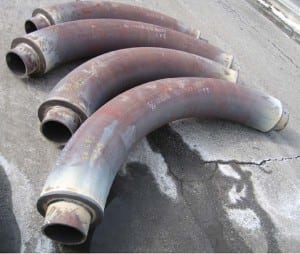
Steel piping systems used to convey coarse materials, often over long distances, are under constant attack from abrasion. In power plants, the materials are usually coal and limestone slurry. The common industry solution has been to install abrasion resistant (AR) pipe that is much harder on the Brinnell Scale than standard steel pipe. The harder the inner wall, studies have shown, the better it resists the gouging or plowing action of abrasive sliding particle flow.
-
 O&M
O&MPulverizers 101: Part I
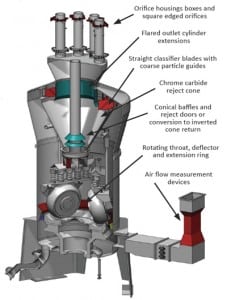
Pulverizers prepare raw fuel by grinding it to a desired fineness and mixing it with the just the right amount of air before sending the mixture to boiler burners for combustion. In Part I of three parts, we’ll examine the essentials of pulverizer capacity, what should be done after a coal pulverizer fire or other incident, and how to tune up pulverizer performance. In future articles we’ll discuss measuring pulverizer performance and performance optimization.
-
 O&M
O&MMarmaduke Award: CFE Extends CTG Universidad Unit 2’s Life with Conversion to Synchronous Condenser
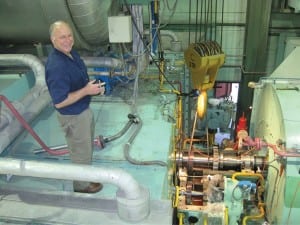
CTG Universidad is a two-unit combustion turbine plant commissioned in late 1970 by the Comisión Federal de Electricidad (CFE) on the north side of Monterrey, Mexico’s third-largest city and an important industrial center. By the 1990s, the two 14-MW turbines were obsolete, used sparingly, and slated for demolition in 2010. However, by 2002, portions of Monterrey began experiencing power restrictions caused by a lack of sufficient reactive power production, and that situation presented an opportunity for the plant. By repurposing an old combustion turbine for use as a synchronous condenser to provide local reactive power, CFE significantly reduced local power supply limitations. For that savvy plant repurposing, CFE’s CTG Universidad Unit 2 is the winner of POWER’s 2011 Marmaduke Award for excellence in power plant problem-solving. The award is named for Marmaduke Surfaceblow, the fictional marine engineer and plant troubleshooter par excellence.
-
 O&M
O&MNatural Gas Conversions of Existing Coal-Fired Boilers
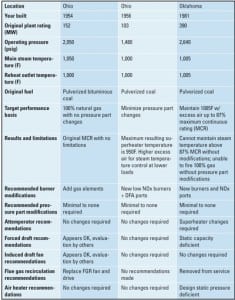
Why should utilities consider converting existing coal-fired plants to burn gas? We explore the rationale for fuel switching, some of the options available for the conversion of coal-fired units, technical considerations related to conversion, and some of the financial considerations that will impact the final decision.
-
 O&M
O&MMake Your Plant Ready for Cycling Operations
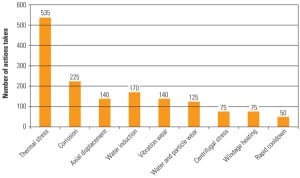
Cycling your steam power plant is inevitable, so now is the time to learn how to minimize equipment damage and assess the true costs of cycling. Whether cycling is required by the grid operator because of renewable integration or other factors, you must be proactive about updating operating processes and upgrade equipment so the transition to cycling operation goes smoothly.
-
 O&M
O&MMitigating the Effects of Flexible Operation on Coal-Fired Power Plants
As coal-fired power plants increasingly operate in cycling modes, many plants are confronting the potential for higher levels of component damage and degraded performance of environmental control equipment. Generators and EPRI are working together to find ways to mitigate the effects of cycling operation and to manage the transition of formerly baseload plants to flexible operation.
-
 O&M
O&MSystems Integration, Flexible Control Reduce Makeup Water Cost
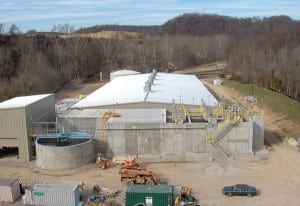
Longview Power, a 695-MW coal-fired power plant now under construction in Maidsville, W.Va., is scheduled to begin commercial operation later this year. The $2 billion project reached 580 MW in early June, just a month after completing the “first fire on coal” schedule milestone. Testing and tuning of the controls and various systems continue.
-
 O&M
O&MImproving the Efficiency of Toronto’s District Heating Plant
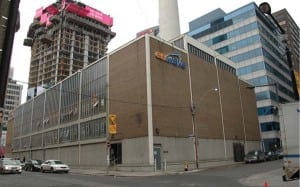
Enwave Energy Corp.’s district heating plants in downtown Toronto will be operating cleaner and more efficiently before the fall 2011 heating season begins when boiler upgrades now under way are completed. Enwave hired Benz Air Engineering (BAE) to design and install upgrades to all eight boilers inside Enwave’s Pearl Street Station. When the $20 million project is completed, the retrofits will produce energy savings exceeding $5 million per year. In addition, the company will receive incentives of $100,000 per boiler from Enbridge, its natural gas provider.
-
O&M
Texas Competitive Model Spreads to Pennsylvania and Illinois
A record 400 attendees participated in KEMA’s 22nd annual Executive Forum in San Antonio, Texas, in late April to debate and discuss the “retail resurgence” of competitive electricity sweeping America.
-
O&M
Predictive Maintenance That Works
This installment of the series continues our review of different conditioning-monitoring techniques commonly in use at power plants using any generation technology. In the May issue we began exploring specific PdM techniques with an examination of electrical surge comparison and motor-current signature analysis.
-
 O&M
O&MDefeating Concrete Reinforcing Steel Corrosion
Four concrete cooling towers at a coal-fired electrical generation plant exhibited reinforcing steel corrosion that was causing concrete deterioration. This case study follows the repairs to those towers—how the corrosion control solution was selected, how repairs were made, and how follow-up tests found the repairs to be effective three years later.