
O&M
-
O&M
Duke Prepares for Testing at Edwardsport IGCC Plant
Duke Energy said in mid-October that testing was under way in preparation for commercial operation next year of its 630-MW integrated gasification combined cycle (IGCC) Edwardsport power plant in Knox County, Ind.
-
O&M
EPRI: Generation Sector Research Update
This synopsis of today’s most interesting research related to power generation gives you a glimpse of what’s possibly coming to your plant in the not-so-distance future. Research under way today will surely determine how power plants are designed, operated, and maintained for many years to come.
-
 O&M
O&MInsulation and Lagging Fundamentals
Insulation and lagging are key to saving energy in a typical steam plant, and plant operators would be well advised to pay close attention to energy losses in their insulation and lagging systems.
-
 O&M
O&MJinzhushan 3: The World’s First PC-Fired Low Mass Flux Vertical Tube Supercritical Boiler, Part 2
The world’s first supercritical pulverized coal–fired low mass flux vertical tube Benson boiler is Jinzhushan 3, located in Hunan Province of the People’s Republic of China. The 600-MW Babcock & Wilcox Power Generation Group Inc. once-through boiler burns Chinese anthracite using downshot pulverized coal (PC) technology. Part 2 of this three-part article discusses the boiler technology. The third and final part will review the plant’s performance test results.
-
O&M
As Cybersecurity Bill Dies, Newly Declassified Report Underscores Grid Vulnerabilities
Despite growing concern about cybersecurity both in and outside of Washington, the Senate’s cybersecurity bill died a second time on Nov. 13. The apparent inability of Congress to pass legislation designed to protect critical U.S. infrastructure could lead to President Barack Obama implementing some of the bill’s provisions via executive order. A day after the bill failed to gain 60 votes for passage, a recently declassified report was released that finds the U.S. power grid is vulnerable to attacks that could be more destructive than natural disasters such as Hurricane Sandy.
-
 O&M
O&MMaximizing Steam Turbine/Compressor Performance with Precise Torque Monitoring at the Coupling
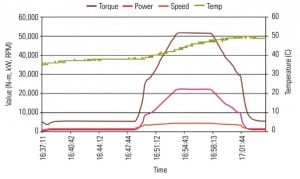
All turbo machinery is subject to degradation that, over time, will affect the system’s efficiency and operational performance. Precise monitoring of turbo machinery performance with continuous torque-monitoring systems can be used to identify gradual efficiency loss. That, in turn, allows a more focused maintenance scope to be developed that can return the system to its optimum operation and efficiency.
-
 O&M
O&MDominion’s North Anna Station Sets New Standard for Earthquake Response
On August 23, 2011, at 1:51 p.m., a magnitude 5.8 earthquake knocked both units at Dominion’s North Anna Power Station off-line—the first time such an event has occurred in the U.S. After 80 days of extensive evaluation and inspection by plant staff and representatives from the U.S. Nuclear Regulatory Commission, both units were back online. What occurred during those days is a remarkable story.
-
 O&M
O&MThe Evolution of Steam Attemperation
The fundamental design principles and process for modern steam desuperheating, or the attemperation of superheated steam in the power generation industry, have been evolving since the early 1930s. Meeting the requirement for steam quantity, quality, and temperature consistency is the foundation of traditional attemperator component design, particularly for fast-response combined cycle plants.
-
O&M
Major Noise Sources and Mitigation Cost Estimates for Gas-Fired Power Facilities
Natural gas–fired power plants can generate substantial amounts of noise. With proper planning and foresight during the design phase, major noise sources can be effectively mitigated, while failing to plan can be very expensive in the long run.
-
O&M
Upgrading Legacy Gas Turbines’ Fuel Control Systems
Relatively simple upgrades to legacy turbine systems can yield big payoffs in efficiency and reduced maintenance.
-
 O&M
O&MFly Ash Erosion Control and Prevention
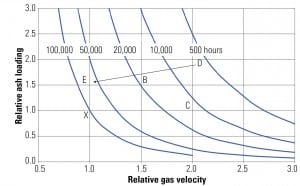
Boiler tube failures (BTFs) are responsible for the largest portion of availability loss (about 4%) in the fossil boiler industry, and approximately 25% of all tube failures are due to fly ash erosion (FAE). An Electric Power Research Institute report indicated that the problem was being managed in U.S. utilities by maintenance activities that were put into effect each time a boiler was taken off-line. The cost of an individual repair was a small fraction of the forced outage cost, and therefore has been considered justified in the past. However, many forced outages continue to be experienced each year due to FAE, and in many cases, these occur at identical locations, indicating that applied solutions relieve, but do not cure, the problem.
-
O&M
Predictive Maintenance That Works
This is the sixth in a series of predictive maintenance (PdM) articles that began in the April 2011 “Focus on O&M” in which the essentials of PdM were introduced. In this occasional segment, we have explored specific PdM techniques, such as motor-current signature analysis, oil analysis and thermographic analysis and their routine use, and ultrasonic and vibration analysis. In this issue we look at lubricating oil wear-particle analysis.
-
 O&M
O&MReducing Ash Agglomeration in JEA’s CFB Boilers
A chronic operational problem with circulating fluidized bed boilers is ash buildup or agglomeration that turns into slag, which forces frequent shutdowns for cleaning. Solving the problem is tricky, because combustion efficiency relies on good fuel quality, but the best fuel for efficiency may not be the best fuel for minimizing furnace and tube fouling and ash plugging.
-
O&M
Unit Cycling Makes the Impossible the Ordinary, EUCG Members Say
Low natural gas prices and still-soft electricity demand are forcing low-load and cycling operations at traditionally baseloaded coal units across the country. The resulting challenges were top of mind at the Electric Utility Cost Group’s (EUCG’s) fall meeting in Denver last week. One member of the EUCG’s fossil generation committee from an Ohio Valley utility said that cycling and low-load operations pose challenges for one of his company’s 1,300-MW coal-fired plants that “two years ago we wouldn’t have considered possible.â€
-
 O&M
O&MCycle Chemistry Commissioning Deserves Its Own Strategy
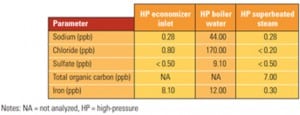
After years of development, design, and construction, your plant is finally nearly ready for startup. But don’t light that cigar yet—at least not until you’ve developed a strategy for commissioning your water cycle chemistry. Root causes of corrosion can be predicted and avoided. The best way to avoid corrosion is to develop and implement plant-specific cycle chemistry commissioning guidelines.
-
 O&M
O&MGive Your Plant a Dust Control Tune-Up
Because Powder River Basin (PRB) coal is smaller, more friable, and contains more fine particulates than bituminous coal, controlling the fugitive dust generated as PRB coal moves from bunker to burner tip is problematic. The challenge for material-handling systems at power plants that have switched coals is to minimize this dust and capture it cost-effectively and without compromising safety.
-
 O&M
O&MPartners in Reliability: Gas and Electricity
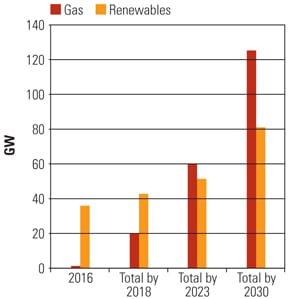
The natural gas and electricity industries have entered into an increasingly codependent relationship as coal-fired electricity gives way to natural gas–fired generation. Both industries are firmly committed to providing reliable service, although each goes about its business in different ways. Utilities, regulators, and stakeholders are searching for ways to align interests and expectations.
-
 O&M
O&MO&M and Human Stresses Caused by Low Gas Prices
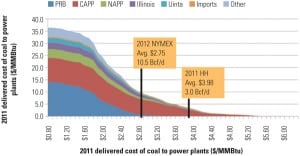
Plentiful supplies of low-cost natural gas have changed unit dispatch orders across the U.S., led to thermal stress–induced maintenance issues at cycling coal plants, and resulted in management challenges at coal and gas units alike. This scenario is unlikely to change so long as gas holds its competitive edge over coal.
-
O&M
Self-Regulating Condensate Pumps Power Austrian CHP
When Verbund Thermal Power needed reliable and flexible condensate pumps for its new combined heat and power plant in Mellach, Austria, it used a new type of self-regulating centrifugal unit.
-
 O&M
O&MBreaking the Cycle of Reactive Maintenance
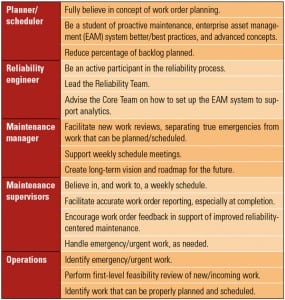
Nobody can schedule unplanned events that will affect power generation. And no one wants to start a day expecting an emergency to occur. But when critical systems fail in the power supply system, it’s time to respond. That’s a given of power plant maintenance.
-
 O&M
O&MPlant of the Year: AES Gener’s Angamos Power Plant Earns POWER’s Highest Honor
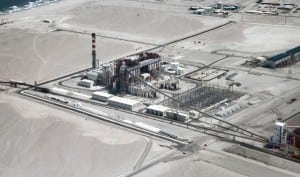
AES Gener recently completed construction of twin coal-fired, 260-MW units in the electricity-starved desert of northern Chile that may serve as models for future hybrid-fossil plant designs. For meeting an aggressive construction schedule, integrating a 20-MW battery energy storage system, embracing desalination, using the first-of-its-kind seawater cooling tower in South America, and employing innovative financing methods, the AES Gener Angamos plant has earned POWER’s 2012 Plant of the Year Award.
-
 O&M
O&MFlow Control Chutes Reduce Fugitive Coal Dust
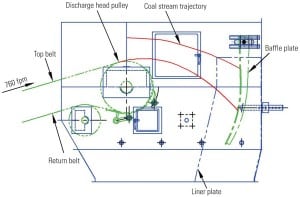
Moving thousands of tons of coal per hour at high speeds through a complex handling system is a main cause of airborne coal dust in a coal-fired plant. Depending upon the coal’s characteristics, that dust can become explosive when its concentration reaches 80 g/m3 and, hence, a threat to life and property. The best option is to stop the dust from becoming airborne in the first place.
-
 O&M
O&MIn-Line Sorbent Milling Improves Dry Sorbent Injection Performance
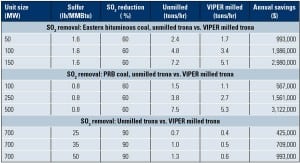
Complying with air emissions rules doesn’t always require construction of a scrubber or SCR. Finely ground trona has proven to be very successful at economically removing SO3, SO2, and HCl from stack gases.
-
O&M
Coal Could Regain Ground from Gas as Summer Demand Ramps Up
Natural gas-fired generation enjoyed a competitive advantage through this past winter and spring as historically low prices for the commodity combined with mild weather and relatively light demand to turn the dispatch stack on its head and favor gas over coal. That advantage is narrowing as summer demand approaches. A senior market analyst with Bentek Energy expects coal-fired generation to be advantaged at least until the fall shoulder season.
-
 O&M
O&MWhy Coal Plants Retire: Power Market Fundamentals as of 2012
Announcements about coal plant retirements have become commonplace. Are new EPA rules completely to blame, or are there other power market pressures at play?
-
 O&M
O&MImproving Slurry Knife Gate Valves in FGD Applications
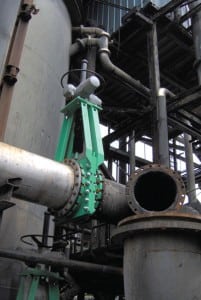
The primary considerations in slurry valve selection are reliability in function and design, abrasion resistance, and ease of maintenance. In addition, valves with a straight-through, unobstructed flow minimize the effect of abrasion and therefore reduce the need for maintenance.
-
O&M
Dusty Trail: The Movie
The season’s blockbuster includes white-hatted heroes, good-natured regulatory sidekicks, bar fights, and a lurking menace named Fugitive Dust.
-
O&M
Making the Switch: Converting a Simple-Cycle Plant to Combined Cycle
A lot goes into the decision to upgrade a simple-cycle plant to combined cycle. Careful planning and analysis can make the difference between a profitable, successful switch and an expensive hassle.
-
 O&M
O&MCombustible Dust Management Training: Rely on Best Practices, Not Shifting Regulatory Winds
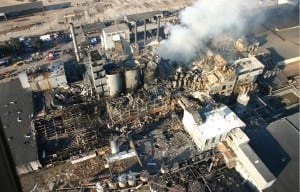
None of you reading this magazine needs an article—or new governmental regulations—to tell you that flash fires and explosions involving coal dust can cause catastrophic incidents, fatalities, facility damage, and financial consequences.
-
 O&M
O&MStartup Purge Credit Benefits Combined Cycle Operations
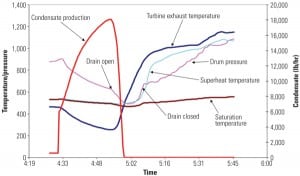
Combined cycle power plants use fuels and other materials that can cause fires or explosions in the combustion turbine, ducting, or heat recovery steam generator. Purging that equipment with ambient air to displace residual combustible gases before starting is a normal safety practice. But when plants are cycled, the disadvantages of purging often outweigh the advantages.