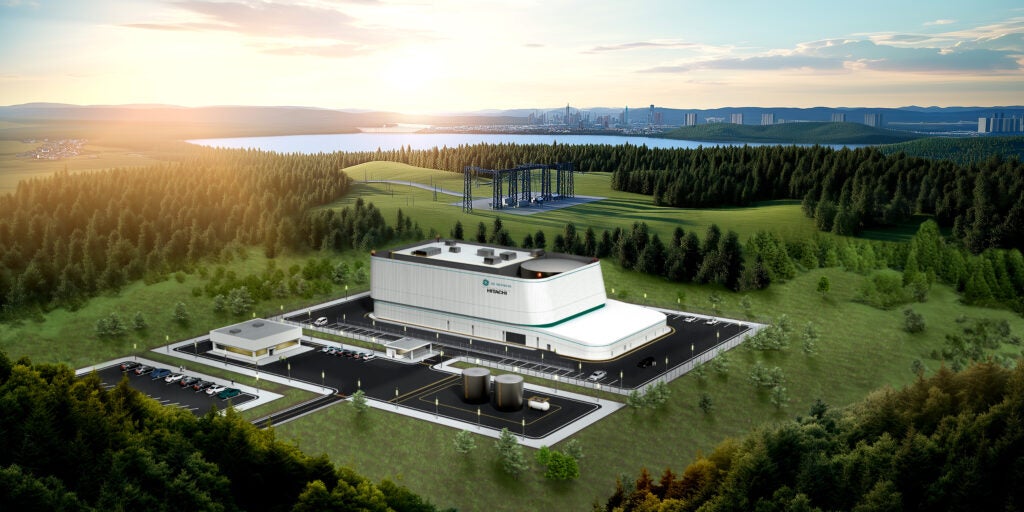
Blue Energy, GE Vernova, and Crusoe are advancing a gas-to-nuclear model that pairs natural gas with SMRs to deliver firm power for AI data centers while reducing nuclear financing risk.
At a recent energy conference, power sector stakeholders agreed that the looming fleet of hyperscale data centers will require vast amounts of clean, firm capacity. But while nuclear looks like the most plausible, relatively mature, and sustainable option to build at scale, every attempted nuclear revival has been undercut by long build times, uncertain schedules, and capital costs that have made it difficult for engineering, procurement, and construction (EPC) contractors to sign fixed-price contracts on megaprojects.
At the core of the conundrum is a financing gridlock—over who ultimately absorbs cost overruns and schedule risk—and, according to Blue Energy CEO and co-founder Jake Jurewicz, it has kept most new nuclear capacity from moving beyond the drawing board. “Right now, everyone’s excited about nuclear power, but the hyperscalers aren’t willing to take cost overrun risk, the utilities aren’t willing to take cost overrun risk, the government’s not willing to take cost overrun risk,” he said in March. “Somebody has to figure out where you can actually allocate risk.”
Over the past year, marking an interesting trend, a handful of developers have moved to address that gridlock by pairing natural gas and nuclear in phased models that promise near-term power without sacrificing a long-term clean energy pathway. In January 2025, Oklo and RPower unveiled a three-stage model that deploys RPower’s natural gas generators over approximately 24 months before transitioning to Oklo’s Aurora powerhouses. Oklo later extended that strategy through a July 2025 alliance with Liberty Energy, which will bring Liberty’s Forte natural gas generation platform to large data center and industrial customers ahead of nuclear baseload.
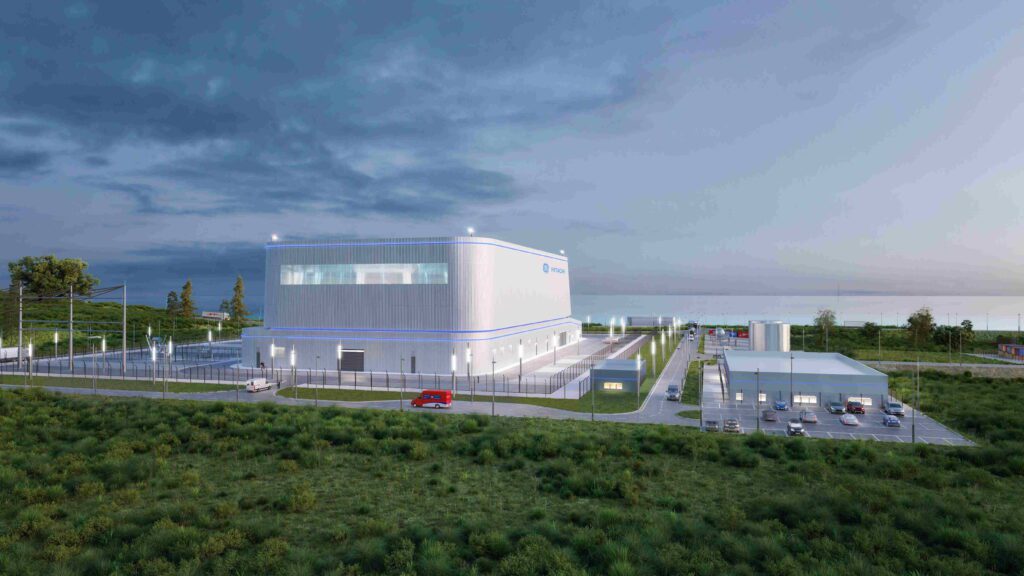
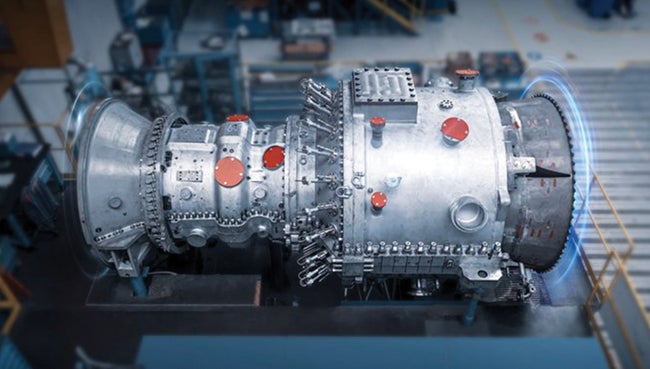
In the latest, and perhaps most prominent pairing to date, Blue Energy and GE Vernova in May 2026 announced a 2.5-GW collaboration to advance what the companies describe as the world’s first gas-plus-nuclear power plant. Planned for a site in the Port of Victoria, Texas—and subject to a final investment decision in 2027—the collaboration moves to combine Blue Energy’s prefabricated construction model and project financing approach with two GE Vernova’s 7HA.02 gas turbines and up to five GE Vernova Hitachi Nuclear Energy’s (GVH) BWRX-300 small modular reactors (SMRs).
To support the project’s advancement, the companies signed a slot reservation agreement for the 2029 delivery of two 7HA.02 gas turbines, which are expected to provide approximately 1 GW of power as early as 2030, before its steam supply is switched and ramped up to approximately 1.5 GW of nuclear power as the BWRX-300s come online as early as 2032.
Financing the Gas Bridge
Blue Energy has said it selected the Port of Victoria site in part for barge-canal access suited to heavy-module delivery, but also because it builds on earlier work by Exelon Nuclear Texas Holdings, which filed a combined construction and operating license application in 2008 for the same 11,500-acre tract, then withdrew it in favor of an early site permit application in 2010, before abandoning that effort entirely in 2012 after low natural gas prices made merchant nuclear uneconomical. Exelon, notably, had planned to build two 1,535-MWe GVH Economic Simplified Boiling Water Reactors (ESBWRs)—the design from which the BWRX-300 derives. Jurewicz said in March that the prior effort left behind substantial site work, including about $100 million of investment and an advanced early-site-permit record. Crucially, the “community is very supportive,” he said.
Founded in 2023 and headquartered in Chevy Chase, Maryland, Blue Energy is a developer of financeable, prefabricated nuclear power plants that stems from MIT’s Nuclear Science & Engineering Department. The company emerged from stealth in October 2024 with a $45 million Series A co-led by Engine Ventures and At One Ventures, with additional investment from Angular Ventures, Tamarack Global, Propeller Ventures, Starlight Ventures, and Nucleation Capital.
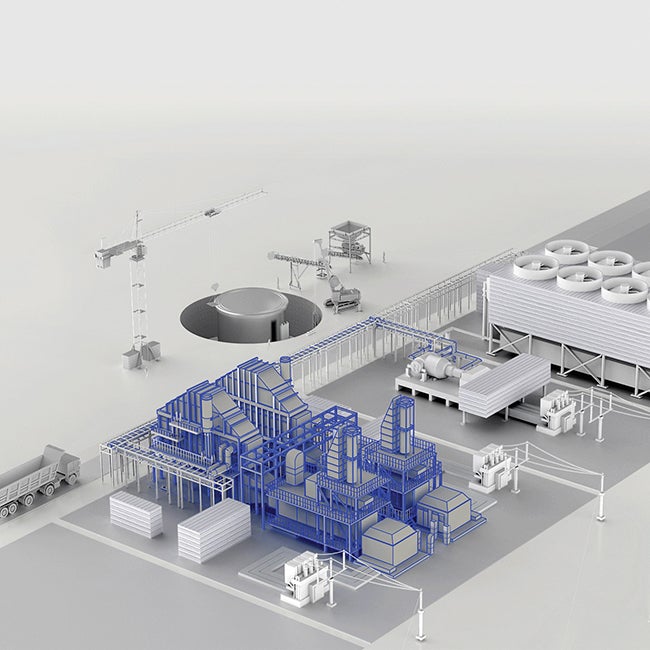
Its core innovation is a reactor-agnostic, modular plant architecture that shifts much of nuclear construction from the field to centralized manufacturing at fabrication yards and existing shipyards, borrowing delivery practices from liquefied natural gas (LNG), offshore oil and gas, and offshore wind. Blue Energy says major modules could be prefabricated and barged to operating sites, reducing construction overhead, improving labor productivity, and increasing the potential for fixed-price contracting. The company has said its model could reduce nuclear plant costs from more than $10,000/kW to about $2,000/kW and shrink build times from roughly a decade to two years. Later company materials target a more ambitious 48-month-or-less time-to-power timeline for the gas-to-nuclear sequence.
The company’s first prominent customer may be Crusoe, an energy-first AI infrastructure company that develops hyperscale “AI factories,” operates a cloud platform, and has increasingly tied its data center growth to a dedicated energy supply. In June 2026, Crusoe said its contracted AI infrastructure capacity had reached 4.9 GW across data center projects and cloud capacity, while its total development pipeline—including contracted projects, sites under active tenant negotiation, and sites in advanced development—exceeded 40 GW.
The Denver-based company’s buildout includes Stargate, the 1.2-GW AI data center campus in Abilene, Texas, built for Oracle, which so far has two buildings operational and six more under construction. The company has also broken ground on a second 900-MW Abilene campus for Microsoft, is contracted to build two additional large-scale campuses in Texas and a fifth in Missouri, and has unveiled a planned 1.8-GW data center project in Wyoming with Tallgrass. Crusoe says each campus is paired with a dedicated power strategy tailored to the energy resources and site requirements of that location.
In October 2025, Blue Energy and Crusoe announced a strategic partnership to develop a nuclear-powered AI data center campus at the Port of Victoria, Texas. Under the agreement, Blue Energy secured a site to design, develop, and operate an advanced nuclear power plant of up to 1.5 GW that would deliver power to Crusoe-developed AI factories on a n secured near Crusoe’s planned 1,600-acre campus in Calhoun County. Crusoe said, notably, that it chose the campus site for its proximity to existing and planned transmission lines, fiber networks, and one of the nation’s largest natural gas pipeline systems. At the time, the companies said Blue Energy’s gas-to-nuclear conversion could supply power to the Crusoe campus as early as 2028 and transition to expected nuclear generation by 2031. The later GE Vernova collaboration eyes gas-fired power as early as 2030, but nuclear power as early as 2032.
For Crusoe, Blue Energy’s gas-to-nuclear approach offers a nearer-term path to power while giving the nuclear phase a credible offtake signal. Crusoe co-founder and Chief Strategy Officer Chase Lochmiller said in March that the company could serve as an early customer for energy innovators when projects meet commercial and operating requirements. “If Jake can provide power in a commercially acceptable envelope, meeting operational requirements,” he said, “then I will formatively say, I’m going to buy a lot of that power, because I want access to clean baseload, affordable power alternatives.”
GE Vernova’s Backlog and SMR Cost Curve
For GE Vernova, the Blue Energy deal aligns with an extraordinary power equipment cycle, which is being driven by data center load growth, baseload gas demand, electrification, and new nuclear orders. CEO Scott Strazik told investors on May 27 that GE Vernova equipment generates “25% of the world’s electricity every day” and “about 50%” of U.S. electricity. The company has already cultivated an installed base of more than 7,000 gas turbines, more than 59,000 wind turbines, more than 60 nuclear plants, and associated electrical equipment. GE Vernova is also fielding an $87 billion services backlog, which is expected to generate about $20 billion of services revenue by 2027, and a $76 billion equipment backlog that has grown 80% since GE Vernova spun out of General Electric in April 2024. Its total backlog has grown from $116 billion at spinout to $163 billion, he said.
Data centers account for about 20% to 25% of GE Vernova’s backlog, but economic growth, national security, decarbonization, and power demand in Asia and the Middle East are also driving orders, Strazik noted. “We really analogized this period of time being most similar to 1945 after World War II,” he said. “It really comes back to the economic growth and the national security dynamics that are being driven by the need for incremental electrons.”
Nonetheless, under current market conditions, gas turbine availability has already become a defining constraint for the industry. Strazik noted that GE Vernova has “100 GW on contract” for gas power, primarily slated for execution through the end of the decade and into 2030 and 2031. Most of that contracted capacity is baseload, which should expand GE Vernova’s service opportunities over time as more units run at higher capacity factors, he said. At the same time, the order cycle also reflects broader construction bottlenecks. Given that U.S. EPC capacity is “definitely the gating item” for many projects, some customers have taken 2030 turbine slots because they could not obtain construction commitments in time to support 2029 deliveries, he said. “There won’t be a pedestal in this country that’s ready for a gas turbine that won’t have a gas turbine on it,” he added.
For now, GE Vernova is also expanding factory output and supplier capacity to meet the cycle. Strazik said the company has installed 305 machines in its gas power factories over roughly the past five quarters and expects to install another 100 by year-end. Suppliers of large castings and forgings are also performing ahead of GE Vernova’s internal expectations, following the company’s early-cycle move to support expanded output, he said. “In the summer of ’24, we went to our suppliers early in the cycle and said, we’re going to need a lot more output,” he explained. “We don’t have a lot of time to debate it. What does it take to get going?” In many cases, GE Vernova provided capital expenditures to help suppliers build capacity, and returns are expected through future volume, he said.
Meanwhile, though GE Vernova’s nuclear business remains smaller, it, too, is beginning to shift from early deployment toward a larger order book. Today, GE Vernova’s nuclear business is a sub-$1 billion revenue business in 2026, focused on the installed base, but, as Strazik noted, the company is installing its first SMR project in Ontario at Darlington with Ontario Power Generation while advancing contracts in the U.S. and Sweden, and conducting an engineering study in Poland. The nuclear business is poised to grow to “many multiples” of its 2026 revenue, he predicted.
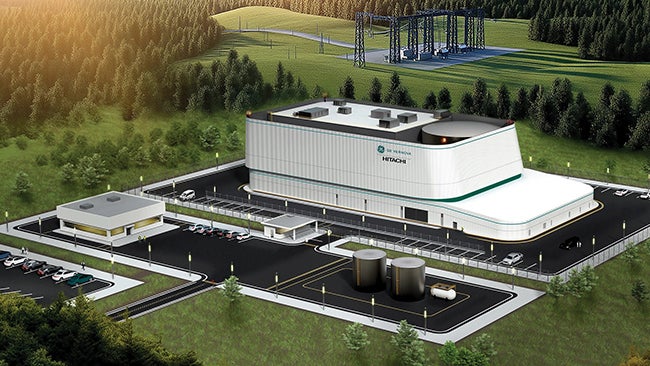
But here, too, Strazik tied the BWRX-300’s cost trajectory to order volume and supply-chain investment. The company could see up to 10 BWRX-300 units on contract in the U.S. before the end of the year, up to five units in Sweden, and additional units at Darlington, he said. In tandem, the U.S. government is using part of the U.S.-Japan trade deal to support up to $40 billion of SMRs for GE Vernova, “which would be about 10 SMRs because the industry needs to be reindustrialized,” he noted.
“When you’ve got 6 GW of SMR on contract, that gives us a whole another level of empowerment to go back to the supply chain and invest in that supply chain for the growth into the next decade,” he said. Still, the first projects remain expensive, he acknowledged, given that the supply chain does not yet exist at scale. But as “As we execute on those things and with that size backlog, you then have an opportunity to start to cut down the cost curve. Because ultimately, what I say every day is style points don’t build infrastructure, economics do.”
According to Starzik, that’s why nuclear’s value may lie in the years to come. “Will it really replace gas? No. But over time, will more customers carbon-dollar-cost-average into some zero-carbon baseload power that will probably still be at a pricing premium relative to unabated gas, yes, in a healthy mix? And there certainly are a set of customers that are willing to pay that premium for zero-carbon baseload power. So we’re excited about nuclear,” he said.
Ultimately, “We see it becoming an important part of the income statement, let’s say, in the next decade. But what you’re really looking for this decade is that we build a contracted book that gives us the best chance to then drive economics with our supply chain so that it’s a competitive economic solution for the world in the next decade.”
NRC Sequencing Becoming Central to the Gas-to-Nuclear Model
Beyond supply chain execution, Blue Energy’s gas-to-nuclear model will hinge distinctly on nuclear regulatory sequencing, the company has acknowledged. In January 2026, the U.S. Nuclear Regulatory Commission (NRC) approved a topical report describing a methodology to separate non-nuclear plant construction from NRC-regulated nuclear island construction.
The filing essentially provides a framework for determining which non-safety-related balance-of-plant structures, systems, and components can be fabricated, installed, or built before a construction permit because they fall outside the NRC’s definition of “construction” under 10 CFR 50.10(a)(1). The methodology, however, does not extend into the nuclear island, and Blue Energy would still need NRC approval, an exemption, a limited work authorization, or a construction permit for balance-of-plant components that meet NRC construction criteria. To use the approach, future submittals must demonstrate that the nuclear island and balance of plant are functionally separate, that pre-permit balance-of-plant components are not credited for accident mitigation, security, fire protection, or emergency planning, and that their failure or actuation would not impair safety-related nuclear island functions.
“Under this model, Blue Energy will separate the nuclear and non-nuclear portions of the plant and begin by fabricating offsite and installing onsite non-nuclear, non-safety-significant infrastructure needed for its natural-gas-to-nuclear conversion,” the company explained. “This enables fabrication and site energization to begin while the nuclear components continue through licensing and construction.”
Jurewicz made a similar point in March, noting that Blue Energy will pursue a standard nuclear licensing process under Part 50 for its “low-risk reactor technology.” It would need an operating license before the nuclear plant can be fueled, he said. Ultimately, the parallel-track goal is to “accelerate deployment of new nuclear power by eliminating at least five years off the conventional decade-plus nuclear timeline, slashing time to power to 48 months or less with a natural gas bridge to gigawatts of nuclear power, and unlock project financing on a large fraction of the capex for the first time on a nuclear power project,” Blue Energy said.
In May, the company said it plans to enter into a “further agreement” with GE Vernova that will establish a collaborative effort to perform site preliminary safety analysis work and other work to support Blue Energy’s nuclear construction permit applications. Early site work for the Texas project, for now, is planned later this year, ahead of the final investment decision in 2027. The next big step in 2027 will be to apply to the NRC for the construction permit. In parallel, the company is advancing discussions with major infrastructure funds while treating the combined-cycle phase as the bankable component that can support high-leverage, lower-cost debt for a meaningful portion of the first SMR’s capex.
Blue Energy’s cost case, Jurewicz argued in March, rests on shifting construction work, schedule risk, and revenue timing into a format amenable to infrastructure investors. The reactor itself accounts for only about 7% of historical nuclear project costs, he said, while field construction overhead and capitalized interest have driven much of the remaining risk. “A third of it is just the capitalized interest on debt, because these projects have historically taken 10 years to build before they generate any revenue at all,” he said. Current large nuclear projects are running at roughly $15,000/kW, while combined-cycle plants are closer to $2,500/kW to $3,000/kW. Blue Energy expects the combined-cycle phase to fall in roughly that gas-plant range, while the nuclear portion of the first project has “a path to below $8,000/kW,” he said.
Further reductions would depend on repeat manufacturing at fab yards and shipyards, using the same labor force and module designs across projects. “By essentially manufacturing everything, we can drive that cost curve down,” he said. “We can put new nuclear onto a learning curve for the first time, akin to what’s been seen with wind, solar, and gas in the last 20 years.”
—Sonal C. Patel is a POWER senior editor (@sonalcpatel, @POWERmagazine).