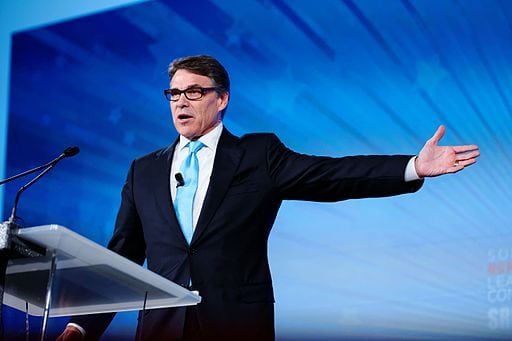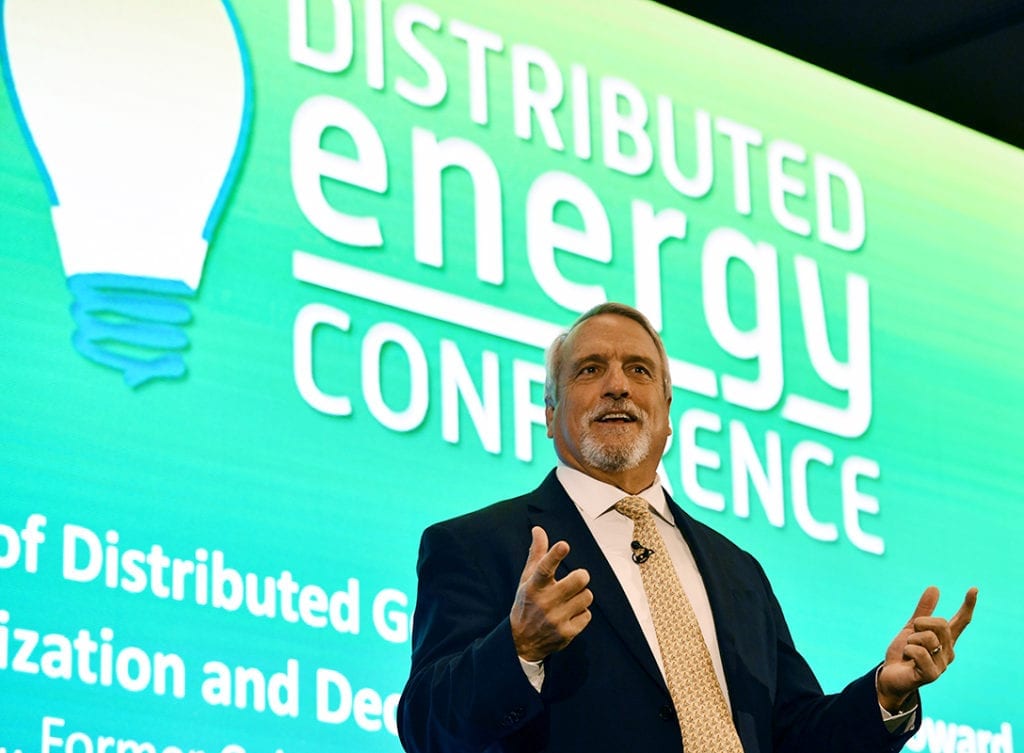

Brian Kemp is a Republican. Katie Hobbs is a Democrat. The governor of Georgia campaigns on tax cuts and a growth agenda; the governor of Arizona calls herself a social worker who came to the job from a different perspective than most of her colleagues. Put them on the same stage and they would disagree about plenty. But on the question consuming the electric power industry right now—how to absorb a surge of data center load without sticking residential customers with the bill—the two are reading from nearly identical scripts.
In keynote sessions on back-to-back days at the Edison Electric Institute (EEI) 2026 event in Las Vegas, Nevada, during the first week of June, both governors landed on common ground: large new loads can pay their own way. It is a striking convergence at a moment when data centers have become a national lightning rod, blamed in statehouse after statehouse for rising bills and strained grids.
Kemp, interviewed by Southern Company Chairman, President, and CEO Chris Womack, leaned hard on Georgia’s record. He noted that Georgia Power is increasing its generating capacity by half over the next several years to serve manufacturers, battery plants, food processors, and data centers alike. The selling point, however, is that households are not paying for it. “We’re not putting that cost on the back of the rate payers,” Kemp said. “We did have their bills frozen, now they’re actually dropping.” He framed that as a competitive weapon: a talking point few other states can offer when courting large energy users.
Hobbs, interviewed by Arizona Public Service Company Chairman, President, and CEO Ted Geisler, made affordability a center point of her pitch. “Affordability is absolutely a non-negotiable,” she said, returning repeatedly to the idea that growth means little if Arizonans can’t afford to live in the state. She credited Geisler with the formulation she now repeats: that “growth has to pay for growth.” Hobbs’ administration proposed having data centers pay their fair share—a proposal that, per her fiscal year 2027 executive budget, ends the data center tax exemption and adds a water usage fee to fund the Colorado River Protection Fund. She has also launched bill-assistance programs—including a $15 million expansion called Power AZ—aimed at working families feeling the squeeze right now.
The mechanics differ, but the logic is shared. Geisler described an industry effort to redesign a rate structure he said is more than a century old, observing that if Thomas Edison returned today, he’d recognize little of the technology on the grid, but would still recognize the rate design. The growth wave, Geisler argued, is the catalyst to modernize it so that new load carries its own costs. On that point, the largest customers are willing partners. Geisler said hyperscalers including Google and Microsoft accept the responsibility to pay their fair share; Hobbs said the same, calling the cost-shift question one the industry must solve through rate design rather than goodwill alone.
Where the two states most clearly rhyme is on the generation mix. Each governor embraced an all-of-the-above approach, and each made a point of defending the pieces their own political base might resist. For Hobbs, that meant natural gas. She has backed a pipeline expansion into Arizona despite pushback, calling it a near-automatic choice given that the state’s existing pipelines are fully subscribed. “I’m committed to an all-of-the-above energy approach, which I’ve heard makes me sound like a Republican, but it doesn’t matter,” she said. “Energy is not Republican. Republicans and Democrats need affordable energy.” She rounded out the portfolio with solar, wind, geothermal, storage, and the Palo Verde nuclear plant, which she recently toured.

In This Issue
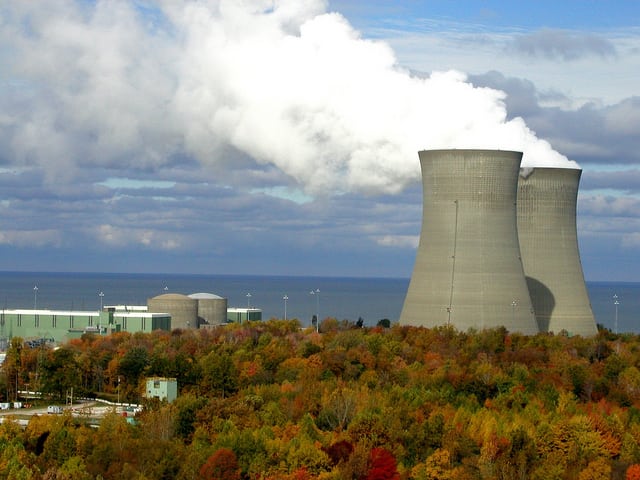
Full issueFor Kemp, the marquee resource is nuclear. He defended the long, costly build of Plant Vogtle’s expansion—shadowed by the Westinghouse bankruptcy and the pandemic—as ultimately worth it, and said he has lobbied alongside other governors for a federal backstop so the next units don’t repeat Georgia’s ratepayer experience. He favors moving first on the proven AP1000 design over small modular reactors that, in his telling, no one has yet figured out. But he, too, warned against over-reliance on any single fuel. A diverse mix, he said, guards against the monopolistic pricing that comes from leaning too hard on gas, coal, or anything else.
Both also dwelled on a problem the rate math alone can’t solve: public acceptance. Kemp argued the industry has done a poor job telling its own story and ceded the narrative to critics, some of them, he claimed, backed by foreign governments that don’t want the U.S. to win the artificial intelligence race. His prescription is bottom-up—he said Georgia won’t force a data center on any community, but will help the rural counties that want one, citing a town that lost a sawmill and 500 jobs, and is now fighting to land a project. Hobbs reached the same place by a different route. Her Arizona Energy Promise Taskforce, she said, brought consumer advocates, environmentalists, large-load users, and utilities to one table and surfaced more common ground than anyone expected. She has been telling fellow governors to copy it.
That, in the end, is the throughline. Two governors who agree on little else have arrived at the same bet: that the data center era is survivable, even desirable, so long as the newcomers pay their own way and ordinary customers see their bills hold or fall. Whether the rate structures hold up under the weight of what’s coming is a question neither could fully answer. But the consensus itself—across the widest partisan gap American politics offers—may be the most telling signal of where the industry’s center of gravity now sits.
—Aaron Larson is POWER’s executive editor.