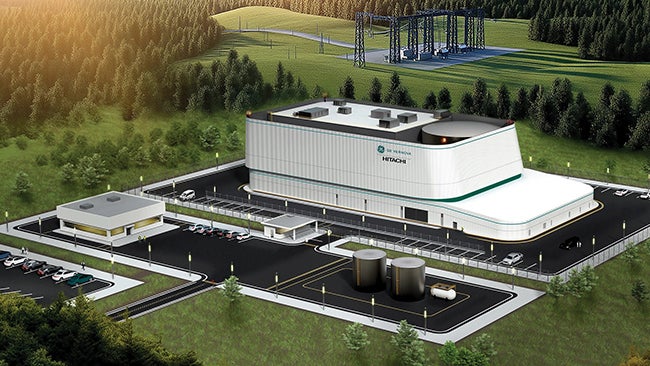
Blue Energy and GE Vernova Hitachi Nuclear Energy (GVH) have signed an agreement to launch the next phase of their collaboration on a planned 2.5-GW gas-plus-nuclear power project in Victoria, Texas, moving the closely watched data-center power concept from an announced collaboration to engineering, licensing, and safety analysis.
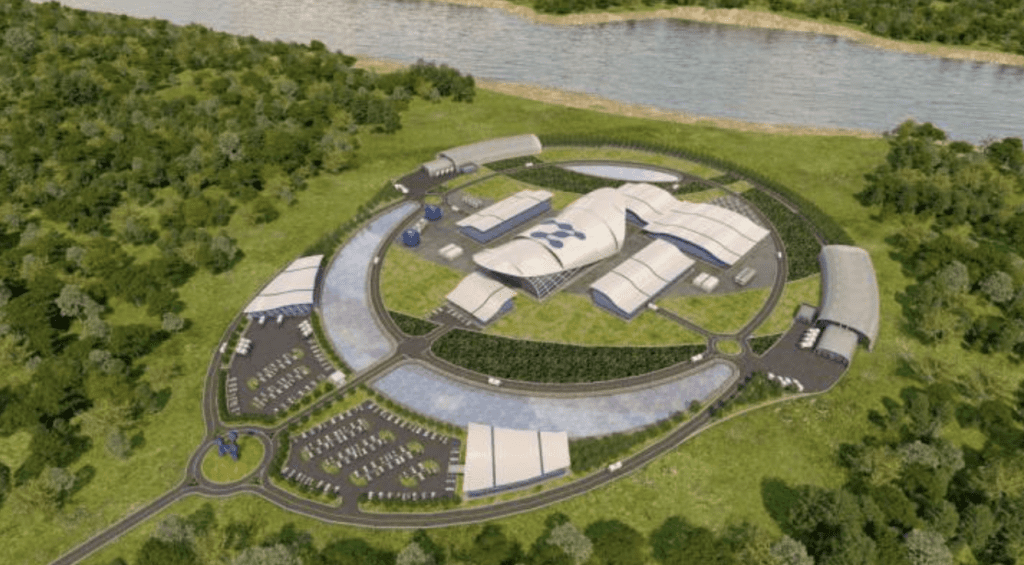
The Aug. 13-announced agreement will advance project definition for a facility that would pair two GE Vernova 7HA.02 gas turbines with up to five GE Vernova Hitachi BWRX-300 small modular reactors (SMRs), the companies said. The project remains subject to a final investment decision in 2027.
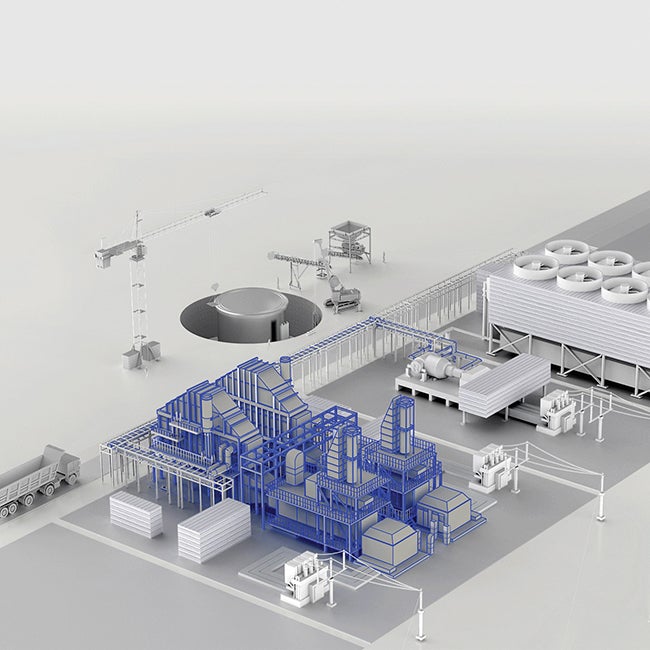
The companies are presenting Victoria as a test case for a hybrid nuclear financing and delivery model that would use mature gas-fired generation to supply earlier power and revenue before adding nuclear capacity as licensing, fabrication, and construction advance. Under the current schedule, Blue Energy would initially supply about 1 GW to a nearby data center in 2030 using two GE Vernova 7HA.02 gas turbines. It would then add another 1.5 GW beginning in 2032 from as many as five BWRX-300 SMRs.
The agreement builds on the gas-plus-nuclear model Blue Energy and GE Vernova outlined earlier this year. As POWER reported in detail in July, the Victoria project is intended to address one of the central challenges facing new nuclear by providing a revenue path for a long-lead, capital-intensive project before the nuclear units begin operating. The gas phase is designed to provide earlier site energization and a nearer-term revenue stream while the nuclear portion advances through licensing and construction.
“This agreement with GE Vernova Hitachi keeps Blue Energy confidently moving forward to build our nuclear energy production line that will unlock the promise of abundant nuclear energy,” said Jake Jurewicz, Blue Energy CEO and co-founder, on Aug. 13. “We are shifting from the old way of building large reactor nuclear power to instead do it the ‘Blue Way’ that slashes costs and time to power and finally makes nuclear a financeable, repeatable product.”
Blue Energy’s “Blue Way” is the company’s term for an integrated deployment model centered on prefabrication, transportation, and assembly. The approach builds on the standardized BWRX-300 design but shifts a larger portion of project execution away from traditional field construction and into controlled fabrication environments. Blue Energy says the model is intended to improve schedule certainty, cost predictability, quality assurance, and project delivery through off-site fabrication, logistics planning, and assembly of large “super modules.”
In a video released Aug. 13, Jason Cooper, CEO of GE Vernova Hitachi Nuclear Energy, described the model as a way to connect H-class gas turbines with nuclear small modular reactor technology. “There’s a lot of innovation basically connecting the H-class gas turbines with a nuclear SMR technology, able to bring electrons to the grid faster, basically bridging between gas and nuclear timelines for project delivery,” he said.
Jurewicz said that timing is central to the Victoria project’s role for data centers and utilities. “It’s about speed, which particularly the data center community and the utilities need right now,” he said. “But it’s also equally as much about de-risking and bringing project finance to bear.” Starting with a mature gas-fired product could show markets “what bringing gas and nuclear together can mean,” while advancing Blue Energy’s larger objective of getting new nuclear built and scaled, he said.
Blue Energy’s super-module concept involves “big 1,000-ton modules plus” that arrive with mechanical, electrical, and plumbing systems pre-installed. “It’s more than just bringing a bigger Lego piece to the site,” Jurewicz also noted. “It’s about being able to wrap the risk and the guarantees and the warranties, and it drastically shortens the build time. It drastically shortens the risk.”
Moving more construction activity into fabrication facilities could improve control over quality and safety, Cooper said. “The ability to transfer so much of that construction into a fabrication facility, controlling quality, managing safety more closely, et cetera, it’s all a win,” he said. Jurewicz added that the approach is “better for safety,” improves quality assurance, reduces risk, and addresses some current labor challenges.
Jurewicz also described the model as part of a broader shift in nuclear delivery. “This is the first opportunity to move nuclear from a construction world into a manufacturing world,” he said. Cooper said the approach becomes “more of an engineer, procure, and assemble model versus EPC.” Jurewicz added: “It’s a very different approach to how to build nuclear than what we’ve seen in the past. Contractually. Financially. Technically.”
GE Vernova has linked the project to a broader power-market moment shaped by rising electricity demand from artificial intelligence and advanced manufacturing. “Meeting the surging demand for electricity requires proven, scalable technologies and the ability to bring them together as integrated solutions,” said Eric Gray, CEO of GE Vernova’s Power segment. “Our work with Blue Energy combines GE Vernova’s flagship HA gas turbine technology with GE Vernova Hitachi’s advanced nuclear SMR technology, while supporting Blue Energy’s innovative project model. Together, we are establishing a blueprint for deploying reliable baseload power at the scale and speed customers need.”
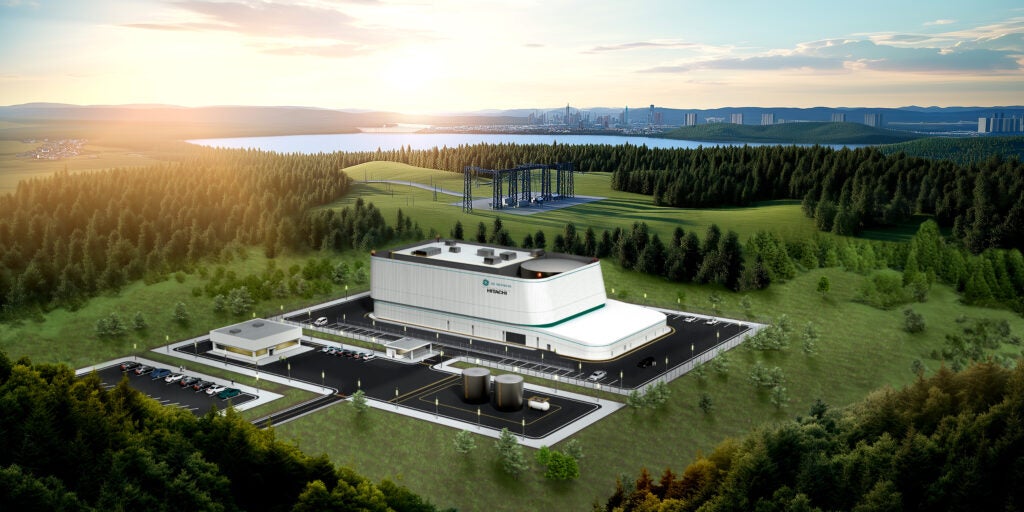
The nuclear portion of the Victoria project would use GE Vernova Hitachi’s BWRX-300, a 300-MW-class boiling water SMR derived from the ESBWR design. The first BWRX-300 is under construction at Ontario Power Generation’s Darlington site in Canada, where completion is expected by the end of the decade. GE Vernova Hitachi has described that unit as the first grid-scale SMR in the Western world.
—Sonal C. Patel is a POWER senior editor (@sonalcpatel, @POWERmagazine).