Battery energy storage promises fast response, grid flexibility, and predictable output, yet most discussions rely on modeled projections rather than actual operating data. This article presents first year performance results from Caballero, a 100-MW/400-MWh battery energy storage system (BESS) active in the California Independent System Operator (CAISO) grid since early 2025. It also examines a question that modeled projections alone can’t answer: what responsible engineering and safety design looks like for utility-scale storage, and what it costs.
Project Background
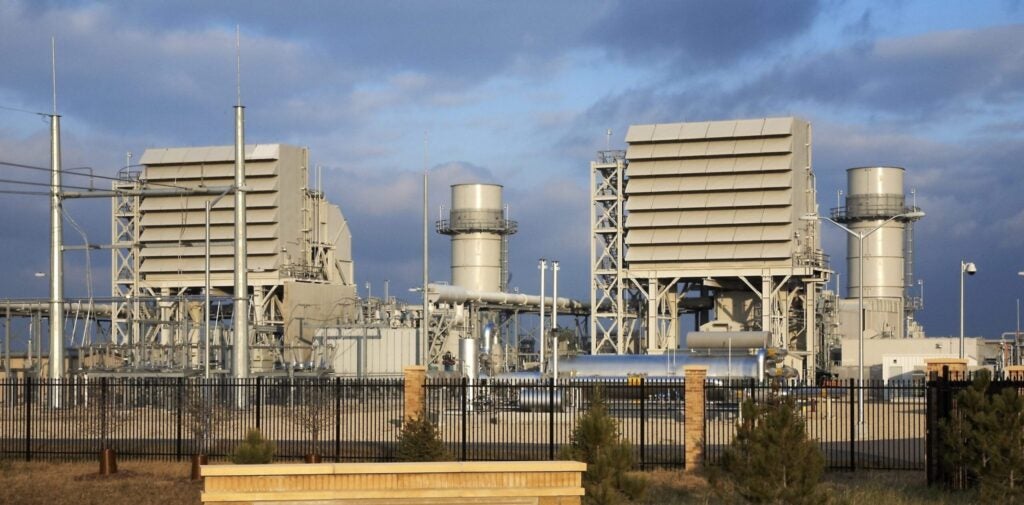
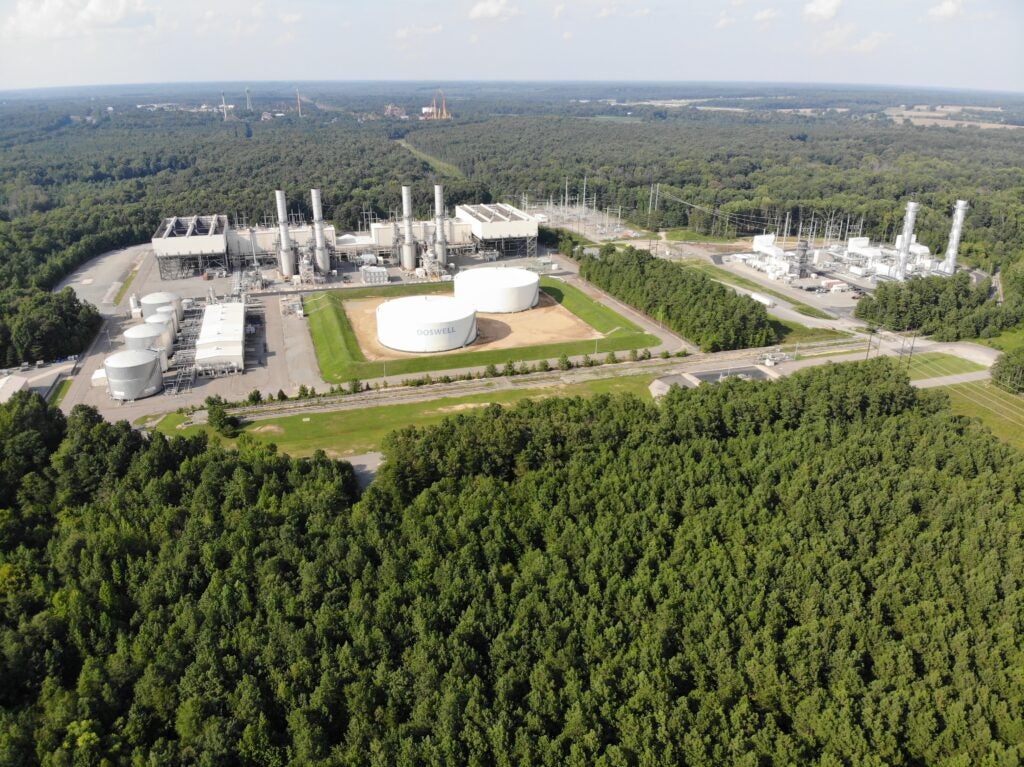
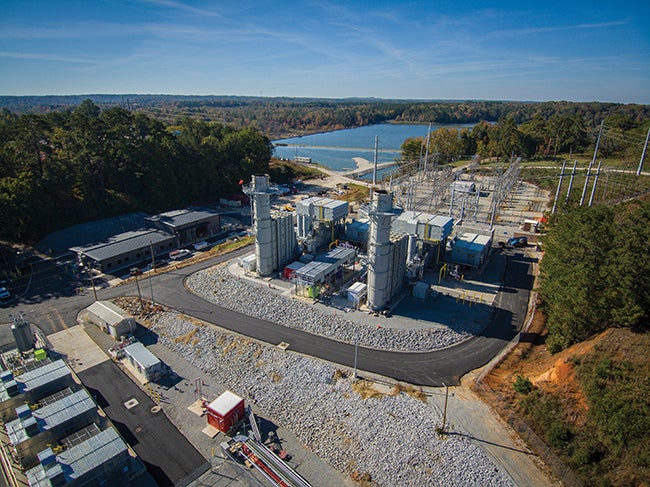
Caballero (Figure 1) is in Nipomo, San Luis Obispo County, California, roughly 90 miles south of the Moss Landing facility whose January 2025 fire drew national scrutiny to utility-scale lithium-ion storage. Caballero was amid hot commissioning during this event and took steps to reflect on lessons learned from that incident in a county that was highly attentive.
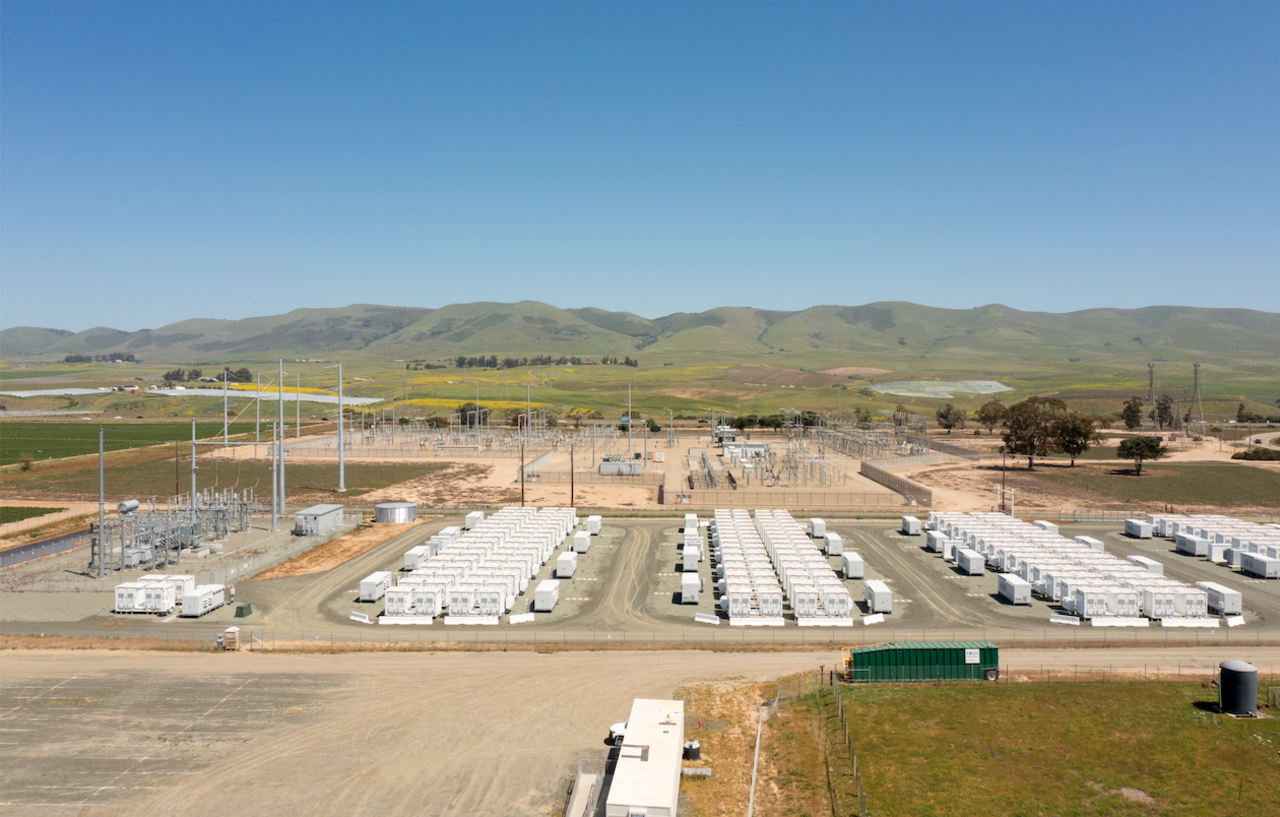
Developed by Alpha Omega Power (AOP), a BESS-focused independent power producer, Caballero operates under a resource adequacy (RA) contract with a California load-serving entity, and earns additional revenue from the CAISO markets. Although Caballero can deliver up to 465 MWh, AOP conservatively rates it at 400 MWh. The four-hour duration profile was selected specifically to qualify for RA procurement, a design decision addressed in the duration sizing section below.
First-Year Performance
The table below summarizes Caballero’s measured performance across the first 12 months of commercial operation.
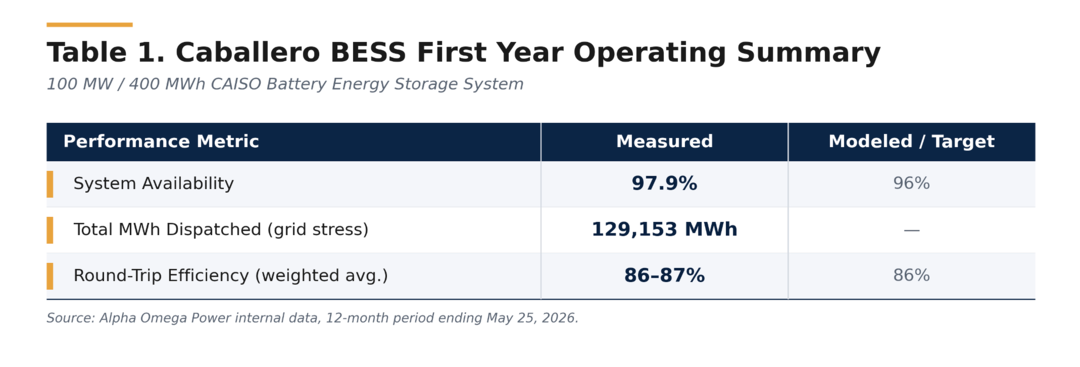
Availability held at 97.9% across the period, supported by a rolling planned-maintenance strategy that caused minimal operational disruption. Round-trip efficiency was in the 86%–87% range. Response time to CAISO automatic generation control (AGC) dispatch signals was well within the grid operator’s required window.
These results place Caballero among the strongest-performing BESS assets in CAISO for availability, reliability, and energy-arbitrage performance.
Designing for Fire Safety
The aftermath of several BESS fire events in 2023–2024 raised a direct question for every BESS developer working in California: what does responsible engineering look like? No level of safety is excessive in Central California, where the California Department of Forestry and Fire Protection (CAL FIRE) fights 10,000-acre-plus fires each summer. For AOP, the answer shaped Caballero’s design from the cell level up. The following reflects the engineering approach adopted for the project.
Step 1. Fire safety must be the #1 focus on all aspects of design, construction, and operations.
Step 2. The National Fire Protection Association (NFPA) has established the world’s leading task force in battery safety. Caballero followed all NFPA requirements from 2023 and pre-emptively planned for newer requirements that were expected in 2026.
Step 3. Fire risk can be greatly reduced when combining:
- Lithium-ion cell durability.
- 24/7 intelligent monitoring, escalating from cell to battery management system (BMS) to unit to site to first responders.
- Fire prevention systems installation and regular test/inspection.
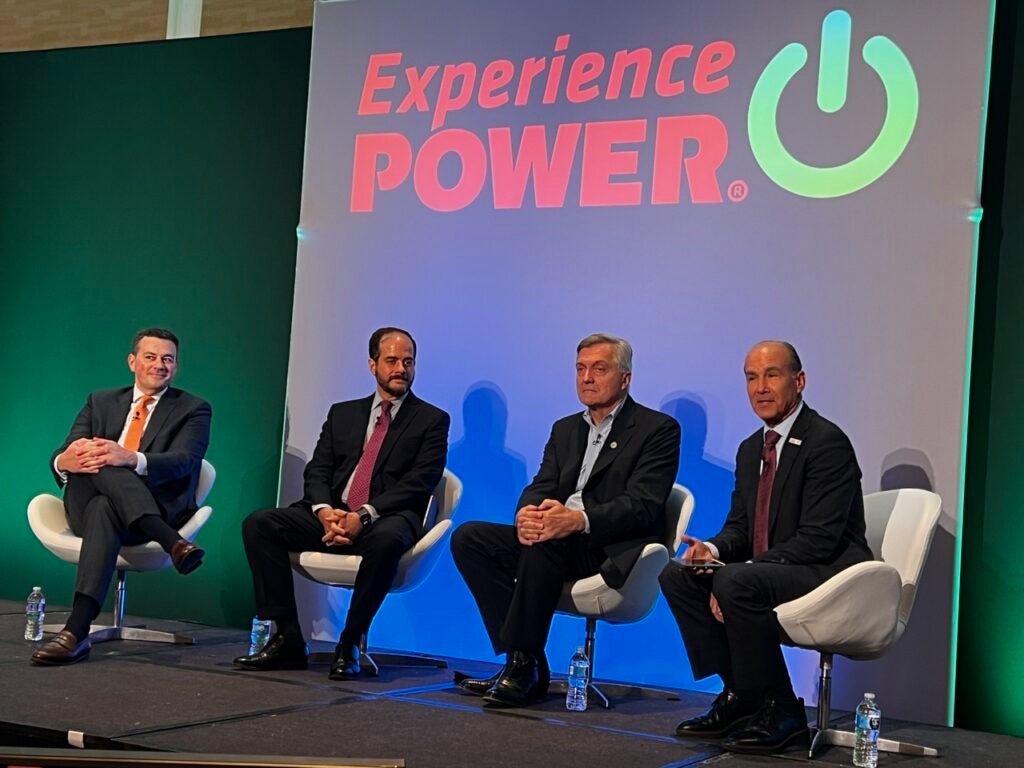
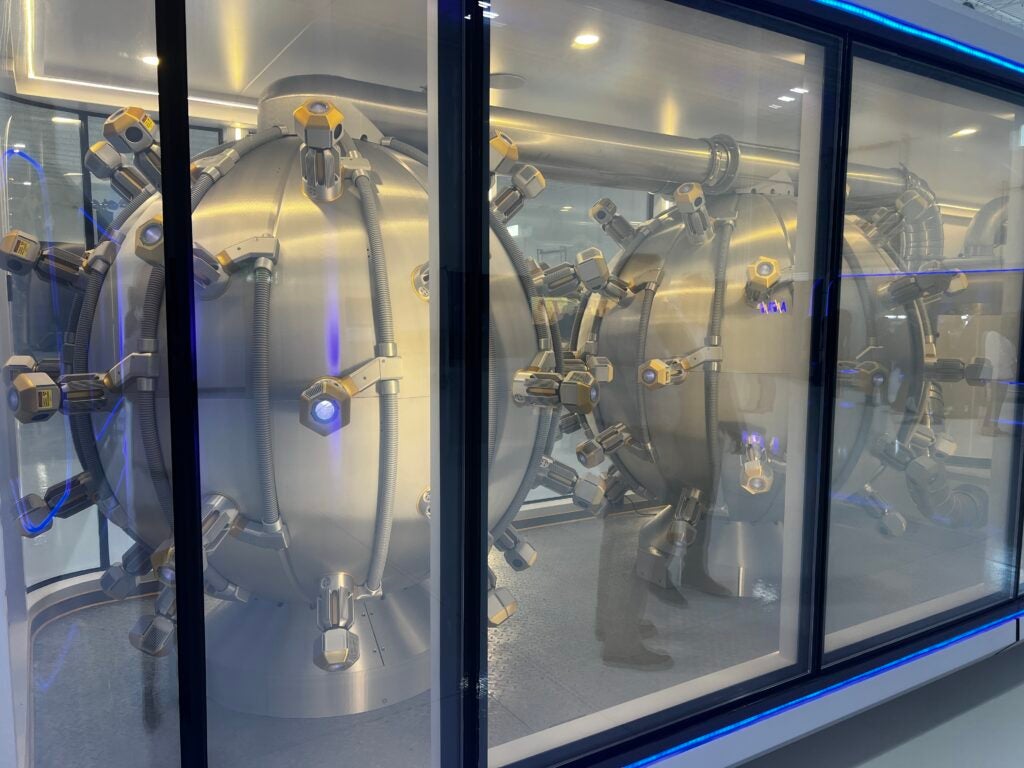
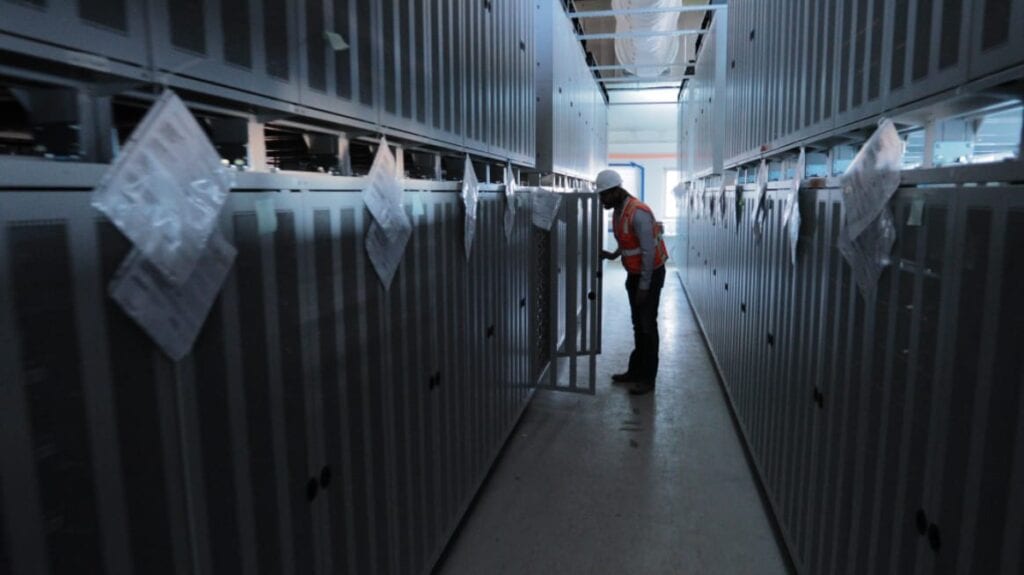
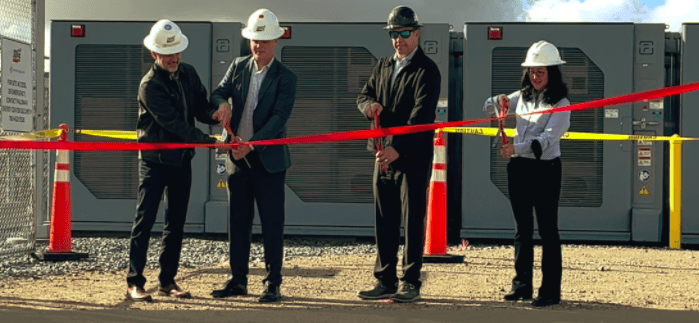
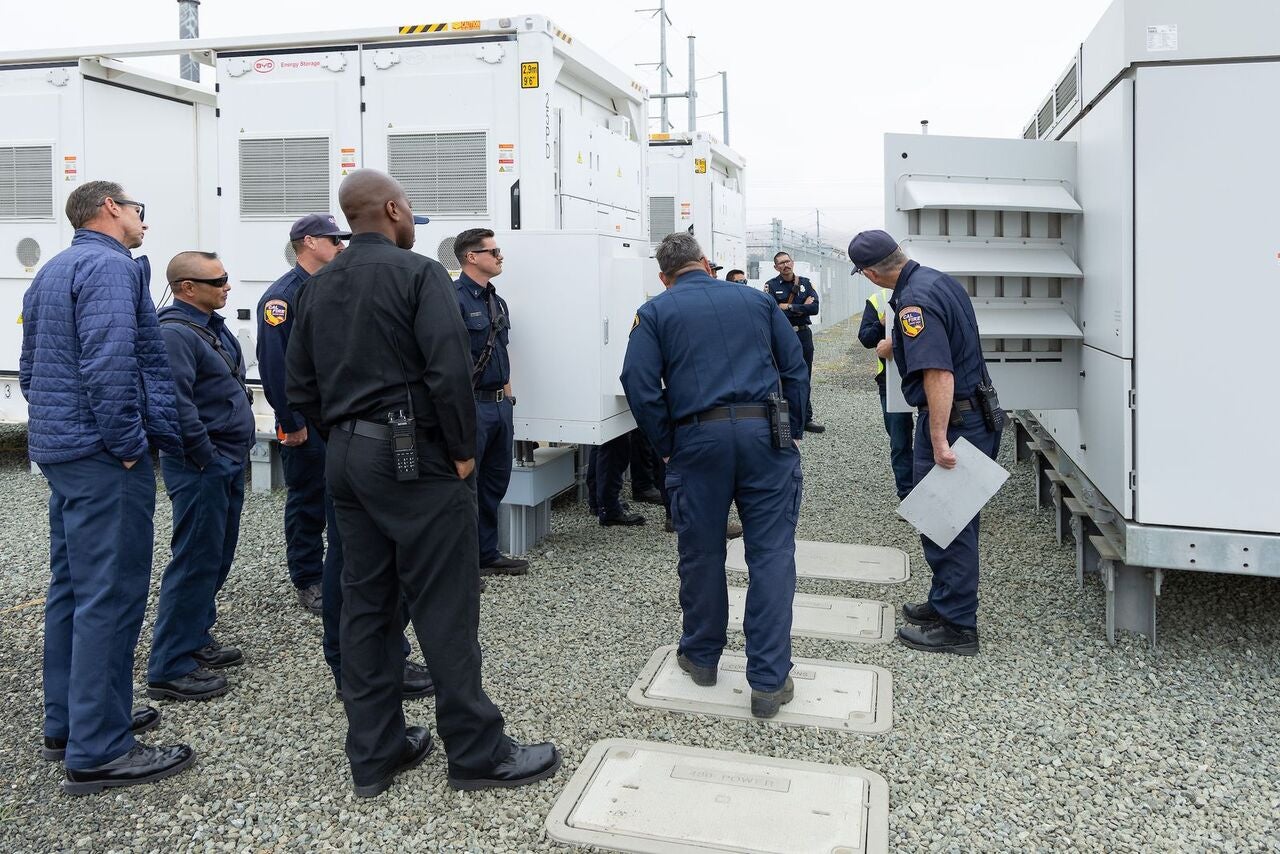
Step 4. Communication. Caballero achieved commercial operations with an actively engaged group at CAL FIRE as we demonstrated compliance at all levels, from design to lab test and field systems audits (Figure 2).
When Is Four-Hour Storage the Right Answer?
The duration choice is among the most critical aspects of BESS project development and is often treated as a standard option rather than a deliberate design decision. The case for four hours in CAISO is specific: California’s RA framework requires load-serving entities to procure capacity sufficient to meet peak demand, and four-hour capable resources qualify for RA contracts that shorter-duration assets do not. The four-hour profile at Caballero aligns with CAISO’s peak-demand window, the late afternoon hours when solar output is declining and residential load is peaking. AOP is actively monitoring grid demand/supply dynamics and has designed Caballero with ready-to-build headroom for up to six-hour storage duration. It is widely believed that the optimal duration will increase from four toward eight hours over the coming decade.
Four-hour storage cannot handle multi-day weather events or replace dispatchable generation during prolonged grid stress. It primarily addresses the high-value daily peak demand in a high-solar grid, but it does not solve all issues.
Next Applications: ERCOT and Grid-Forming Storage
The operating record from Caballero is now informing AOP’s next projects. In the Electric Reliability Council of Texas (ERCOT) grid, AOP is constructing Vertus (200-MW/400-MWh, Galveston County, Texas), which will operate under the restructured performance standards introduced by Texas Senate Bill 6. Vertus will serve as a test case for how large-scale BESS assets are dispatched and compensated under ERCOT’s reformed reliability framework, complementing the CAISO data Caballero has established.
AOP is advancing grid-forming battery projects with 100% domestically assembled systems that meet the Inflation Reduction Act’s thresholds. The newer generation inverters installed at Vertus operate with voltage and frequency references to provide better ride-through capabilities. These specific inverters use the latest advances in nanomaterials for ultra-fast responsiveness, higher efficiency, and better durability. Their resulting grid-forming capabilities tolerate high overload, disrupted voltage, and frequency shifts to support the grid operator ERCOT in emergency situations. When in operations, Vertus will be one of the world’s first large-scale deployments of true synthetic inertia, a concept that is slated to shape the grids of the future.
What the Data Supports—and What It Doesn’t
Caballero’s first operating year produced a performance record that supports several practical conclusions for BESS developers and grid planners. Measured availability, round-trip efficiency, and dispatch response met or exceeded modeled targets. The NFPA-era engineering standards adopted for the project contributed to a clean safety record. The four-hour duration profile delivered the grid value it was designed to provide.
The data also shows honest limitations. Round-trip efficiency losses, however modest, affect revenue-stacking assumptions and warrant scrutiny in future project models. A four-hour duration is the right answer for a specific grid problem. The engineering solutions that reduce thermal risk incur real costs that operators and financiers need to price accurately.
—Guillaume Dufay is co-founder and Chief Technology Officer for Alpha Omega Power.