As utility-scale battery energy storage systems (BESS) scale from megawatts to gigawatts, the engineering complexity grows exponentially. Higher-voltage architectures and denser rack configurations are pushing the limits of conventional component design and exposing gaps that can compromise system performance and site safety. For the electrical engineers and systems integrators building these projects, the cells, fire safety systems, and inverters get the scrutiny. The quieter challenge is whether every interface between them can stand up to real-world operation.
Connector and interface design sits at the center of that challenge. In a large-scale BESS installation, hundreds or even thousands of connection points must perform reliably across decades of charge cycles, wide temperature swings, and demanding maintenance schedules. A connector that fails to meet ingress protection requirements or introduces unwanted resistance can trigger arc faults or force costly project delays. As deployments accelerate, engineering teams need to treat connectivity as a first-order design decision, not a procurement afterthought.
The Stakes of Grid-Scale Energy Storage
Global BESS deployments are on track to add hundreds of gigawatt-hours of new capacity over the next several years, driven by grid modernization mandates, corporate clean energy commitments, and the accelerating retirement of fossil fuel peakers. U.S. energy storage installations surged 52% in 2025 over the prior year, and the industry projects that it will deploy more than 500 GWh of new domestic capacity between 2026 and 2031—a 250% increase over the preceding five-year period. Some pipeline developments today are pushing well past a gigawatt-hour of storage capacity.
At that scale, the cost of a design flaw compounds quickly. A component failure that might be a minor inconvenience in a small commercial installation, any safety protection or design incompatibilities, can cascade into a full system shutdown on a utility-scale site, triggering damages, grid reliability penalties and reputational damage for the engineering firms involved. Nearly one in five BESS projects experience reduced returns due to technical issues and unplanned downtime, and insurance underwriters and project financiers are increasingly scrutinizing technical risk at the component level, which means design decisions that were once treated as routine are now subject to much greater due diligence.
Engineering Challenges on the Ground
Unlike conventional electrical infrastructure, battery storage systems combine high-voltage DC circuits, sensitive battery management electronics and thermal management hardware in tightly integrated enclosures, often deployed in outdoor environments with exposure to dust, moisture and wide ambient temperature ranges. Every connection point in that environment is a potential failure mode if the underlying design doesn’t account for real operating conditions from the start.

In This Issue
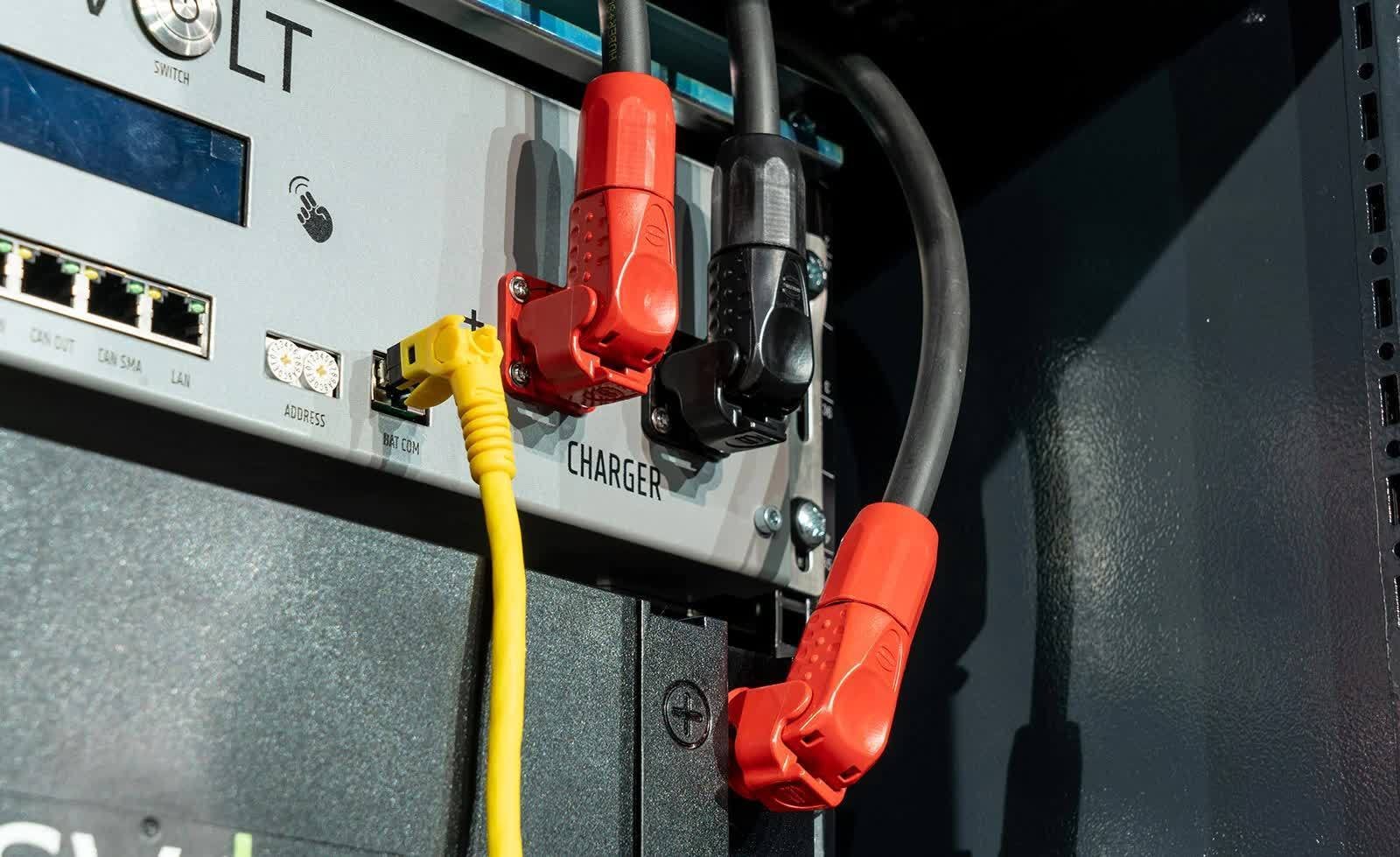
Full issueField installation speed is one of the most persistent pressure points. Commissioning delays on BESS projects frequently range from one to two months—and in some cases stretch to nine months or more—driven by supply chain gaps and extended system testing requirements. As project timelines compress and labor costs rise, engineering teams are under pressure to reduce installation time on site without introducing errors. Connectors that require extensive tooling, precise torque specifications or complex wiring sequences slow down commissioning and increase the likelihood of installation mistakes that only surface after the system goes live. Designs that allow for tool-free mating, clear polarity orientation and visual confirmation of a secure connection can meaningfully reduce that risk.
Maintenance access is likewise an equally important consideration that often gets underweighted during the design phase. In a densely packed BESS enclosure, a connector that is difficult to reach. Common operational triggers, including automatic shutdowns, recurring safety alerts and rack-level imbalances, are frequently traced back to procurement and commissioning gaps rather than battery chemistry alone. As operating portfolios grow and asset owners push for higher system availability, the serviceability of individual components is becoming a more prominent factor in procurement decisions.
Designing for Speed Without Sacrificing Safety
Accelerating deployment timelines and maintaining rigorous safety standards are often framed as competing priorities, but connector design is one area where the two can reinforce each other. Engineered mating systems with defined insertion forces, integrated locking mechanisms and coded configurations reduce the window for installation error while keeping commissioning crews moving efficiently through a site. When a connector is designed to go together correctly the first time, speed and safety move in the same direction.
That alignment matters more than ever given today’s cost environment. BloombergNEF’s 2025 battery price survey found that pack prices fell 8% year-over-year to a record low of $108/kWh, with packs for stationary storage dropping 45% to $70/kWh—the sharpest decline of any segment. Yet utility-scale battery system prices rose 23% year-over-year in 2025, per the same U.S. Energy Storage Monitor Report—a rise analysts attribute largely to tariff exposure and supply chain pressures and tariff exposure. For engineering teams, that divergence means cell cost savings are being absorbed elsewhere in the project stack, and component-level efficiency gains are one of the few remaining levers available to protect project economics.
Standards compliance is a foundational requirement in this space, and one that is growing more complex as BESS projects cross jurisdictions. IEC, UL and regional certification requirements can vary significantly, and a connector specified for one market may require re-evaluation for another. Working with component suppliers who carry multi-market certifications and can provide documentation support early in the design phase removes a common source of project delay that tends to surface at the worst possible moment—during final inspection or grid interconnection approval.
Interoperability is an increasingly important design consideration as system architectures evolve. Battery storage platforms are being asked to integrate with a wider range of inverter topologies, thermal systems and monitoring hardware than ever before. Connector systems that support modular, scalable configurations give engineering teams the flexibility to adapt a design as project scope changes, without revisiting the entire interface specification from scratch.
The Case for Localized Design and In-Region Manufacturing
Supply chain disruptions over the past several years have changed how engineering teams think about component sourcing. Long lead times on critical electrical components have delayed project completions, inflated costs, and in some cases forced design changes late in the construction phase. For grid-scale BESS projects operating under tight interconnection windows and contractual milestones, that kind of schedule exposure carries real financial consequences.
The domestic manufacturing picture is improving—but capitalizing on it requires deliberate sourcing decisions. According to the U.S. Energy Storage Coalition, the U.S. now has the capacity to supply 100% of domestic energy storage project demand with American-built systems, with factories producing roughly 69 GWh of finished grid storage systems annually as of end-2025 and on pace to reach 164 GWh by end of 2027. For engineering teams, that means in-region supply is increasingly available—but only to those who plan their component sourcing early enough to take advantage of it.
Localized design support adds another layer of value that procurement decisions don’t always capture. A supplier with engineers on the ground in the same region as the project can engage earlier in the design process, flag compatibility issues before they reach the field and respond more quickly when a specification needs to change. As energy storage projects grow in scale and complexity, that kind of close technical partnership is becoming less of a differentiator and more of a baseline expectation among experienced EPCs and asset owners.
What Comes Next for Grid-Scale Connectivity
The demands placed on energy storage systems will continue to intensify as the grid evolves. Higher voltage platforms, longer project lifespans and greater system density are already shaping the next generation of BESS design—and the components that connect those systems together will need to keep pace. Connector manufacturers that invest in higher-rated, more modular solutions today are positioning themselves as long-term partners in an industry that has little tolerance for components that become obsolete mid-project lifecycle.
For engineering teams, the near-term opportunity is in raising connectivity earlier in the project conversation. Engaging component suppliers at the concept stage—rather than during detailed design—creates space to optimize interface specifications before constraints accumulate. The projects that move fastest from design to commissioning tend to be the ones where those conversations happened early.
The energy transition is putting unprecedented pressure on every layer of the grid infrastructure stack. Connectivity may not be the most visible part of a battery storage system, but it is one of the most consequential. Engineering teams that treat it as a strategic design decision will be better positioned to deliver projects that perform as designed — and hold up over the long term.
—Emily Kenny is Product & Application Manager for Han and Industrial Connectors, part of HARTING.