
POWER
-
 Gas
GasDOE Expedition Confirms Resource- Quality Gas Hydrate in the Gulf of Mexico
Gas hydrate, a potentially immense energy resource, occurs at high saturations within reservoir-quality sands in the Gulf of Mexico, an expedition by the U.S. Department of Energy has discovered.
-
 News
NewsVacuum Pump and Compressor Series Upgrade
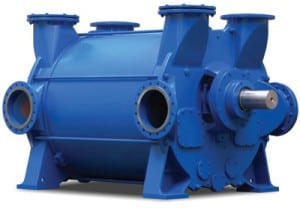
GD Nash introduced the new 2BE4 series vacuum pumps and compressors, a redesign and upgrade of the existing 2BE3 series. The 2BE4 series includes optimized inlet and discharge porting for enhanced performance, and cylindrical roller bearings for improved load ratings and increased reliability (bearing upgrade is possible in existing 2BE3s). The series also includes optional […]
-
 Hydro
HydroThe Backpack Power Plant
Soldiers could one day carry 600-W power plants on their backs, or set up arrays of up to 20 kW in streams deeper than 4 feet, if a prototype being developed by California-based Bourne Energy comes to fruition.
-
 News
NewsMobile Water Desalination Technology for Rent
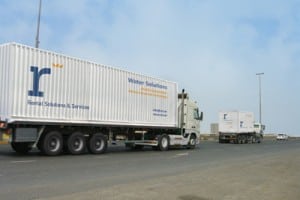
Rental Solutions & Services (RSS), a global provider of rental power and cooling, recently launched its latest product offering, temporary desalination, or mobile water. The company, which recently opened a new office in Cyprus to serve the Mediterranean market, says its rental desalination, or mobile water technology has various applications, especially where freshwater is scarce […]
-
Business
POWER Digest (June 2010)
AES Secures PPA with Electricity Vietnam for 1,200-MW Coal Plant. AES Corp. subsidiary AES VCM Mong Duong Power Co. Ltd. in April signed a power purchase agreement (PPA) with state power company Electricity Vietnam (EVN) for Mong Duong II, a proposed 1,200-MW coal-fired power plant. In support of this agreement, AES VCM has also entered […]
-
 News
NewsAdvanced Generator Set for Distributed, CHP Generation
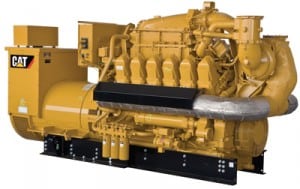
Caterpillar introduced the G3512E, an advanced natural gas–fueled generator set that was designed for maximum efficiency in extended-duty distributed generation and combined heat and power (CHP) applications. Driven by a Caterpillar electronically controlled, lean-burn gaseous-fueled reciprocating engine, the G3512E generator set offers high power density and fuel efficiency while maintaining tight NOx control. It provides […]
-
 O&M
O&MVariable-Frequency Drives Upgrade Reactor Circulating Pumps
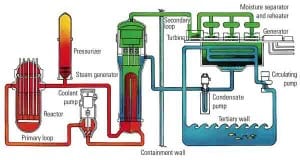
A recent trend in nuclear power plant upgrades has been the replacement of the motor-generator (MG) sets that drive the reactor circulating pumps with variable-frequency drives (VFD). Siemens’ first application of VFDs in this industry began in 2000 with an installation of six VFDs at the Browns Ferry Nuclear Plant. The use of the VFD continues to expand, and upgrades were recently completed at several U.S. plants, including the Hatch Nuclear Plant in Georgia.
-
 News
NewsSmall Gantry Cutting Machine
ESAB Cutting Systems launched the Falcon FXA, a small gantry-cutting machine that is designed for improved cutting performance. The machine features heavy-duty gantry, rack-and-pinion drives, digital AC drive amplifiers, and AC brushless motors. It comes with three tools—two oxy-fuel torches and one plasma—and covers a 6-inch by 12-inch working area. These process tools allow the […]
-
 Business
KEMA Conference Report: Competition Strengthens as Wholesale Power Prices Fall
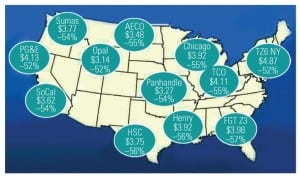
Since the collapse of Enron and the wholesale power markets, the vitality of competition in retail markets for electricity has waned in most regions of the U.S., with the exception of Texas. At KEMA’s 21st annual Executive Forum in late March, 300 attendees converged on Dallas to discuss and debate the dynamics and changes now facing residential and commercial customers in most regions of the U.S. and Canada. Founded in 1927, KEMA is a global provider of business and technical consulting, operational support, measurement and inspection, and testing and certification for the energy and utility industry. A summary of the many presentations follows.
-
 Commentary
The Second Wave of the Smart Grid
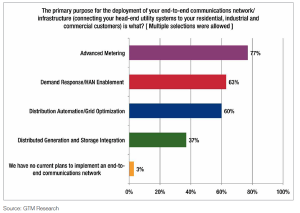
Now that U.S. utilities have taken federal stimulus funds and seamlessly built out two-way advanced metering infrastructure (AMI) connecting utility control centers and end users (ok, not completely, but let’s assume that the “stall-ulus” becomes a true stimulus), the question becomes, what’s next? At the moment, this new “comm layer” or “platform” has utilities planning in two directions: upstream and downstream from the smart meters.
-
 News
NewsDesign of Experiments Reduces Time to Market
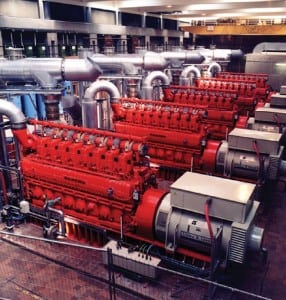
Dresser Waukesha is a familiar name associated with large, gas-fueled stationary engines for power generation and gas compression applications around the world. Each new project location presents a unique set of site variables that must be taken into consideration—such as fuel quality, air/fuel ratio, temperature, humidity, altitude, load, and exhaust after-treatment—when providing the customer a meaningful performance guarantee. To fully characterize every engine option with such a wide range of fuel types and quality and in widely varying environmental conditions across the global is an impossible chore.
-
 News
NewsKeep Oil Leaks Under Control
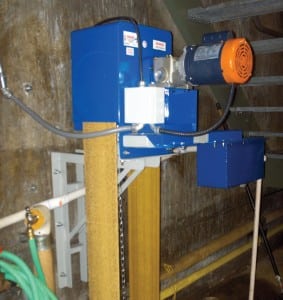
An oil skimmer could simplify your plant water maintenance activiites.
-
Legal & Regulatory
Energy Storage: Renewables’ Necessary Partner
Timing is everything in the world of electric power generation. The timing of the delivery of electricity is affected by both the users’ demand and the speed with which a variety of energy sources supply power to the transmission system. Modern grids require reliable energy sources to instantly meet the needs of their users.
-
 Gas
GasEconomic Operation of Fast-Starting HRSGs
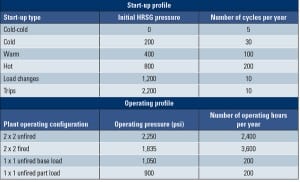
Fast-starting combined-cycle plants are designed for a certain operating life based on a customer-specified set of operating scenarios. During that design phase, periodic inspection and maintenance procedures to benchmark equipment actual wear and tear should be developed, but seldom are. Without an accurate assessment of remaining equipment life for components subjected to fast and frequent […]
-
 Gas
GasKawasaki Plant Claims Efficiency Record
Tokyo Electric Power Co.’s new Kawasaki Thermal Power Plant claims the title of having the highest combined-cycle efficiency in the world: 59.1%. The new gas-fired facility is equipped with three 500-MW single-shaft combined-cycle blocks. Each block is based on the MHI M701G2 gas turbine, which is the largest gas turbine currently in commercial operation.
-
News
Scientific Calculator
Carol Browner, director of the White House Office of Energy and Climate Change Policy, trusts the latest Intergovernmental Panel on Climate Change (IPCC) report’s conclusions that anthropogenic carbon emissions are the primary cause of climate change. When pressed, the customary response of Browner and other proponents has been to rely on that oft-cited list of 2,500 scientists said to have given their full support of the report’s conclusions. Browner should check her facts.
-
 Water
WaterAppraising Our Future Cooling Water Options
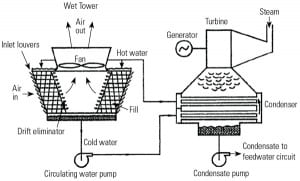
Ensuring the availability of water for power plants is a matter of both water quantity and quality. As freshwater becomes less available for power plant use, new supplies from marginal or impaired sources will require new cooling technologies. We look at cooling equipment options and how water availability and quality affect cooling system design and cost.
-
 Coal
CoalAdding Desalination to Solar Hybrid and Fossil Plants
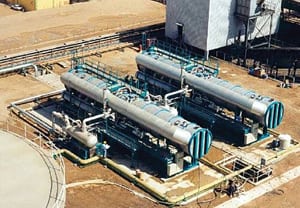
Shrinking water supplies will unquestionably constrain the development of future power plants. A hybrid system consisting of concentrated solar thermal power and desalination to produce water for a plant, integrated with a combined cycle or conventional steam plant, may be the simple solution.
-
 Environmental
Dry Injection of Trona for SO3 Control
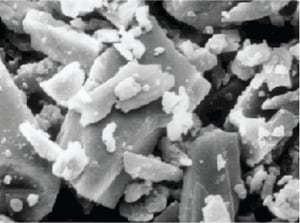
In 2006 and 2007, POWER ran a three-part series on the formation of SO3, O&M issues caused by SO3, and sorbent injection control for SO3 control. Three years later, many plants still struggle with their SO 3 mitigation systems or remain undecided on which mitigation path to follow. This article explores the advantages of dry sorbent injection technology.
-
 Nuclear
Resurrecting Nuclear: "We Have to Get It Right"
Offers of nuclear loan guarantees are pending, construction permit applications are at an industry high, and the political stars seem to be properly aligned. However, there remains one obstacle in the development path of the next-generation of nuclear plants: How will these plants be financed?
-
 News
NewsCombo Temp and Humidity Sensor
E Instruments has just released its TH300 humidity and temperature sensor, which is ideal for applications that require a single, high-accuracy instrument. The sensor measures relative and absolute humidity, dew point, wet and dry temperatures, and enthalpy. The range of measurement is from 0% to 100% relative humidity and – 40F to 356F. Accuracy is […]
-
News
Bridge to a Dead End
The Brattle Group released a provocative study paper in March in which the authors postulate that using more natural gas for generating electricity could reduce our dependence on coal-fired generation and reduce carbon emissions. Also discussed is an unexpected side effect: Renewables could push natural gas plants down in the dispatch mix in the future. Just because natural gas reserves are at a record high and the price is at historic lows doesn’t mean that gas demand will increase.
-
Commentary
How Green Is Green Power?
The demand for "green" electricity — electricity produced from renewable sources like wind, solar, hydropower, geothermal, and biofuels — is at an all-time high in the U.S. Over the past decade, solar and wind capacity have increased dramatically due largely to mandatory renewable portfolio standards (RPS), which have now been adopted by 27 states.
-
 Business
CERAWeek 2010: "Energy: Building a New Future"
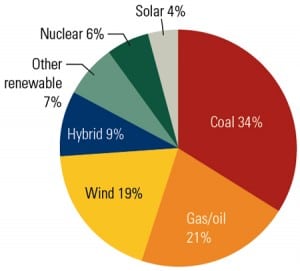
For the past 26 years, Cambridge Energy Research Associates (CERA) has hosted an annual CERAWeek conference in Houston that is renowned for high-profile attendees from around the world. During the week of March 8, security was tight as oil ministers from the Middle East and CEOs from the largest oil and gas companies and electric utilities rolled into Houston to exchange ideas and forecasts. More than 1,200 delegates from 55 countries attended to hear more than 100 distinguished speakers discuss a business that seems to have renewed optimism about the future.
-
 O&M
O&MLaser Hole-Shaping Improves Combustion Turbine Efficiency
Laser shaping technology has evolved from a two-step process into a single process that drills and shapes holes through a TBC, bond coat, and airfoil base metal to create a finished product.
-
O&M
Competitive Maintenance Strategies, Part III
This third and final installment addresses three more areas where an investment in good maintenance practices pays operating availability dividends.
-
 News
NewsWireless Clamp Meter
Extech Instruments introduced the EX845, a 1,000A AC/DC CAT IV clamp meter with new METERLiNK technology and a built-in infrared thermometer. METERLiNK wirelessly connects FLIR infrared cameras to Extech meters via Bluetooth to simplify inspections. During infrared inspections of electrical components, users can transmit key electrical readings such as current or voltage from an Extech […]
-
Legal & Regulatory
Defining the Elephant: Smart Grid Status Check
There is no doubt that the year-plus since passage of the American Recovery and Reinvestment Act of 2009 (Recovery Act) has borne witness to a great deal of activity among the diverse groups of smart grid stakeholders.
-
 News
NewsLimitorque Adds DC Inputs
Flowserve Corp. has added 24- to 48-volt DC-input power for all sizes of Flowserve Limitorque QX electronic valve actuators. The QX offers reliability for remote applications that require an uninterrupted power supply but cannot use single- or three-phase AC volts. The electronic controls in the Limitorque QX actuators with DC volt capability are 100% digital […]
-
 Nuclear
The U.S. Spent Nuclear Fuel Policy: Road to Nowhere
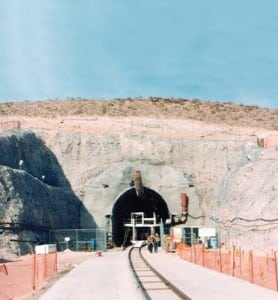
The Nuclear Waste Policy Act and Amendments of 1982 and 1987 established a national policy and schedule for developing geologic repositories for the disposal of spent nuclear fuel and high-level radioactive wastes. Those deadlines have come and gone; the cancellation of Yucca Mountain was only the latest failure of this policy to become reality. The task of finding a new storage location is now a political committee’s homework assignment. History tells us that committee members have been given an impossible task.