
POWER
-
 Nuclear
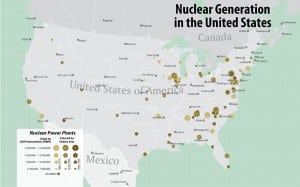
Map of Nuclear Generation in the United States
Courtesy: Platts Data source: POWERmap All rights reserved. No reproduction allowed. For full-sized maps, contact Platts.
-
 Nuclear
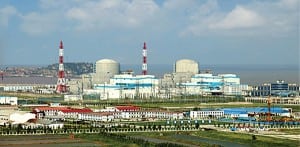
Russia Powers On, Boosting Nuclear Reactor Sales
Atomstroyexport, the Russian Federation’s nuclear power equipment and services export monopoly, in September signed a US$1.8 billion contract with the Chinese government for development of the second stage of the Tianwan nuclear power plant in Lianyungang City. Under the agreement, Units 3 and 4 are to be built in a way similar to construction of the first stage of Tianwan—two Russian-designed VVER-1000 reactors that came online in 2007, each with a rated capacity of 1,060 MW.
-
 Nuclear
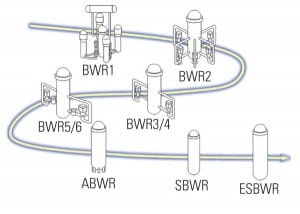
The Evolution of the ESBWR
The commercial nuclear industry is in the midst of developing multiple reactor technology options. Next in our series of articles exploring competing reactor technologies are GE Hitachi Nuclear Energy’s Advanced Boiling Water Reactor (ABWR) and Economic Simplified Boiling Water Reactor (ESBWR). The design improvements incorporated into these reactors include passive safety systems, design and construction simplification, and component standardization to reduce construction and operating costs.
-
 Nuclear
China Begins Operation of First CPR-1000
The first unit of Ling Ao phase II (Unit 3) in Guangdong Province, China, entered commercial operation in late September. The 1,080-MW reactor is the first CPR-1000—a Chinese design—to be built, and its start-up marks a major milestone in the country’s concerted nuclear power expansion.
-
 Gas
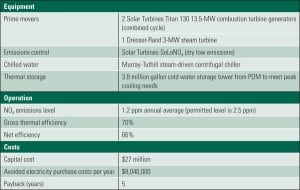
GasSmart Power Generation at UCSD
The University of California, San Diego has been accumulating awards for its savvy use of a constellation of power generation and energy-saving technologies. The campus already controls a fully functioning microgrid—including a cogeneration plant—and, as befits a research institution, is constantly looking for new ways to make its energy system smarter. This “living laboratory,” as campus leaders like to call it, demonstrates what it takes to build a smarter grid and why the effort is worth it.
-
 Wind
WindWorld’s Largest Offshore Wind Farm Opens in the UK
Swedish company Vattenfall in late September officially opened the 300-MW Thanet Offshore Wind Farm in southeast England. Covering an area of 35 square kilometers, the installation comprising 100 Vestas V90 turbines, each 115 meters (m) high, is the largest offshore wind farm in the world to date.
-
 Gas
GasMicroturbine Technology Matures
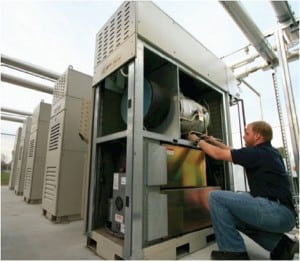
Microturbine technology has evolved from early systems of 30 kW to 70 kW to today’s systems, which can have individual ratings of 200 kW to 250 kW. Packages up to 1 MW are now available that can be assembled into multipac units for projects of 5 MW to 10 MW. These modern units are packaged with integrated digital protection, synchronization, and controls; they produce high combined heat and power efficiencies; and they are capable of using multiple fuels.
-
 Coal
CoalSouthern Co. Captures Carbon Dioxide at Plant Yates Pilot
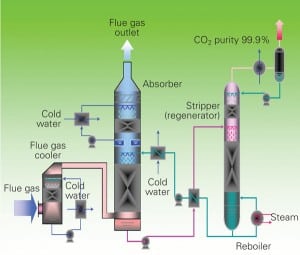
The pilot-scale project at Georgia Power’s Plant Yates near Newnan, Ga.—the first step in one of the industry’s largest demonstrations of a start-to-finish coal-fired power plant carbon capture and storage system—reached a significant milestone this September, capturing the greenhouse gas for the first time.
-
 Nuclear
Are Smaller Reactors Better?
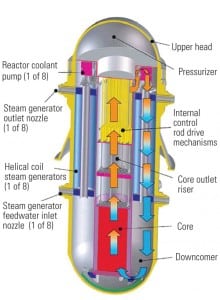
Is a paradigm shift—an economic and engineering earthquake—in nuclear power plant design on the horizon? For most of the past 50 years, the mantra in planning new nuclear plants has been “bigger is better.” But a growing number of nuclear power engineers and designers are contemplating a world where small is beautiful.
-
Business
Turkey Joins European Grid
Turkey, a country that has long vied to become part of the European Union, is finally part of its grid, at least. The nation’s power system was synchronized with Continental Europe’s interconnected grid this September, marking the beginning of a year-long trial period in which security and performance will be monitored.
-
 Nuclear
Benchmarking Nuclear Plant Capital Requirements
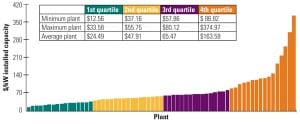
The EUCG Nuclear Committee’s primary goal is to optimize the costs and reliability performance of participating plants by publishing for its members a comprehensive database of performance metrics and best practices derived through surveys of its membership. Earlier reports examined staffing and performance data. In this exclusive EUCG report, we examine nuclear plant capital requirements.
-
 Coal
CoalFrog-Inspired Artificial Foam Could Help Trap CO2
In August, researchers from the University of Cincinnati who are working on creating an artificial foam that could absorb carbon dioxide (CO2) from the flue gas at power plants and convert it into biofuel won the grand prize at the 2010 Earth Awards in London.
-
 Nuclear
The Best of U.S. Nuclear Developments 2010: Uprates and Loan Guarantees
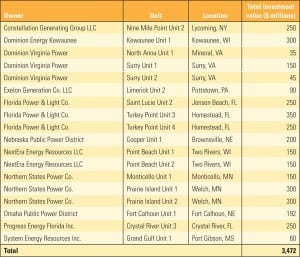
Utilities are spending billions of dollars on nuclear plant uprate projects, and Southern Company has been offered $8.3 billion in federal loan guarantees to build Vogtle Units 3 and 4 (although the final deal has yet to be signed). Meanwhile, other nuclear developers have slashed preconstruction spending as the cost of the “nuclear renaissance” becomes evident.
-
Business
POWER Digest (November 2010)
TVA’s 550-MW Combined-Cycle Plant Starts Operations. The Tennessee Valley Authority (TVA) on Sept. 30 officially began operating the Lagoon Creek Combined Cycle Plant, a 550-MW natural gas–fired plant, near Brownsville, Tenn. The federal utility said that the new plant, the first new power generation source built by TVA since 2002, would provide power during days […]
-
 O&M
O&MRetrofitting BWR Recirculation Pumps with Adjustable-Speed Drives
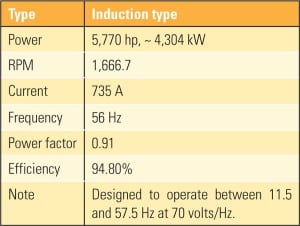
Exelon Nuclear recently replaced the original motor-generator sets for its boiling water reactor (BWR) recirculation pumps at its Quad Cities Generating Station Unit 1 with adjustable-speed drives. We examine the actual energy savings, motor-starting characteristics, control accuracy and stability, and motor and cable thermal behavior of this retrofit project.
-
Business
Lessons Learned in Reliability Standards Compliance
It has been three years and a few months since the North American Electric Reliability Council (NERC) Reliability Standards (Standards) became mandatory and noncompliance became subject to sanctions by the Federal Energy Regulatory Commission (FERC). You might assume that because we have had no further instances of widespread cascading outages that the Standards are working. You may also assume that—considering the database of documented noncompliance with the Standards—the industry as a whole is puzzled, unprepared, or negligent in carrying out its responsibility to keep the high-voltage electric grids reliable and secure. The truth likely lies somewhere in the middle.
-
 Coal
CoalU.S. Coal-Fired Power Development: Down but Not Out
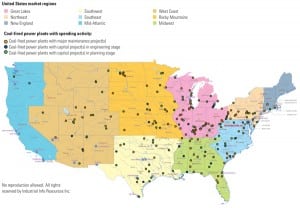
Environmentalists renewed their attacks on coal-fired power development in 2010. At the same time, Congress dithered on cap-and-trade legislation while the Environmental Protection Agency marched forward rules to reduce carbon emissions from coal-fired power plants. Couple the regulatory uncertainty with lean economic times that have flatlined electricity demand growth plus low natural gas prices, and the result is predictable: New coal-fired plant construction is in the doldrums.
-
Smart Grid
Smart Grid Cyber Security Guidelines Released
The National Institute of Standards and Technology (NIST) has finalized its initial set of smart grid cyber security guidelines. NIST’s Guidelines for Smart Grid Cyber Security (NISTIR 7628) includes high-level security requirements, a framework for assessing risks, an evaluation of privacy issues in personal residences, and other information for organizations to use as they craft strategies to protect the modernizing power grid from attacks, malicious code, cascading errors, and other threats, according to NIST’s press release.
-
Commentary
The Nexus of Energy and Water
The age-old adage “water and electricity don’t mix” does not apply to 21st-century infrastructure planning. The two entities can no longer be viewed as separate commodities. The demands on both are intertwined, so solutions for meeting new and growing challenges associated with water scarcity and carbon regulations must also be integrated. Water is essential to […]
-
O&M
Innovative Cleaning of Air Preheater Coils with Pressurized Liquid Nitrogen
Cleaning air heaters in power plants or recovery boilers has traditionally involved using high-pressure water, chemicals, or steam. These techniques, though effective on moderate airside fouling of heat exchange surfaces, are usually ineffective on the more tenacious deposits that can develop in coal-fired plants. If these deposits are not removed by periodic cleaning, heat transfer in the heaters is reduced, which in turn reduces boiler efficiency and increases a unit’s heat rate. Severe fouling on air preheaters (APHs) can even reduce a unit’s power output.
-
 News
NewsMass Vortex Flow Meter for Cryogenic Fluids
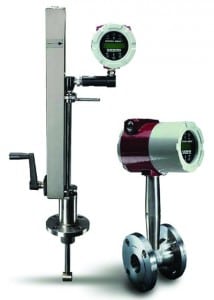
Sierra Instruments has introduced a new cryogenic version of its Innova-Mass multivariable mass vortex flow meter for measuring mass flow rates of cryogenic fluids down to –328F (–200C). Using a special cryogenic temperature RTD, mass calculations are done with the latest density equations of state for liquid oxygen, nitrogen, argon, and carbon dioxide. The multivariable […]
-
Legal & Regulatory
QF Contracts and 21st-Century Economics
Many power purchase agreements entered into between qualifying facilities (QF) and electric utilities during the 1980s and 1990s have several years remaining on their terms. These contracts typically require the generator to comply with the Federal Energy Regulatory Commission (FERC) regulations promulgated pursuant to the Public Utility Regulatory Policies Act (PURPA). The foremost FERC requirement […]
-
 News
NewsDust Collector Pulse Timer Saves Energy
The new IntelliPULSE pulse jet timer for baghouses and dust collectors from FilterSense reduces energy costs and offers direct connection to programmable logic controllers with user-specified fieldbus communications such as Devicenet, Ethernet, Modbus, and Profibus. The intelligent pulse-cleaning control technology is said to minimize compressed air use during filter cleaning, significantly reducing energy consumption. No […]
-
 Coal
CoalTop Plant: ADM Clinton Cogeneration Plant, Clinton, Iowa
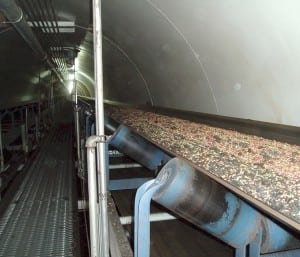
In the heart of corn country, Archer Daniels Midland is using seed corn that is no longer suitable for planting, along with coal, to power its 180-MW Clinton cogeneration plant. The cogeneration plant, which began operations in 2008, supports ADM’s Clinton corn processing plant, one of the largest corn wet mills in the world. It also supports ADM’s facility that produces renewable plastic from corn sugar. Firing up to 20% biomass along with coal, the new cogeneration plant is capable of providing 100% of the steam and electrical power needs of both facilities.
-
 News
NewsPersonal Cooling Water Analytics
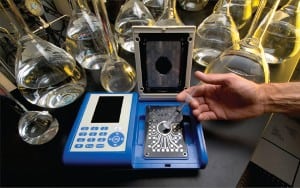
Power plant operators must keep the corrosion, deposition, and microbiological fouling affecting cooling water systems at bay to avoid damage to equipment and system inefficiencies. One possible solution is GE’s newly released TrueSense, a technology platform that enables users to monitor and control cooling water systems. TrueSense integrates three functionalities into one platform: online monitoring […]
-
 Coal
CoalTop Plant: Brandon Shores Generating Station, Pasadena, Maryland
Constellation Energy Constellation Energy recently completed a series of air quality upgrades on both units at its Brandon Shores Generating Station that included flue gas desulfurization (FGD), baghouse, SO3 control, and mercury reduction by activated carbon injection. The plant’s unique arrangement required long duct runs to the air quality system and a mile-long conveyor for moving barge-delivered limestone to the plant. Treated municipal wastewater was used as wet FGD supply water, and effluent treatment included first-of-its-kind nitrogen removal before discharge to the Chesapeake Bay watershed.
-
 News
NewsEnd Prep Machine Tool
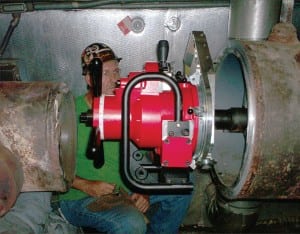
E.H. Wachs introduced the EP424 Speed Prep Autofeed System, an inside diameter–mount end prep machine tool designed to bevel, compound bevel, J-prep, face, and counterbore pipe, fittings, and valves. With the Speed Prep, the user sets the bevel angle and land thickness that works best. The machine feeds simultaneously in the axial and radial planes […]
-
 Coal
CoalTop Plant: Brunner Island Power Plant, York Haven, York County, Pennsylvania
The 1,456-MW Brunner Island coal-fired plant has implemented advanced environmental improvements in order to be a good neighbor to the residents of south central Pennsylvania. For example, between 2006 and 2010, PPL invested more than $860 million in pollution control upgrades for air, water, and solid waste treatment at the facility.
-
 News
NewsSafety Bolt Bag
Ergodyne’s new Arsenal 5725 Safety Bolt Bag is designed to safely store tools, fasteners, and equipment at any vertigo-inducing job site. Featuring a loop design and wide-body, one-handed cinch top, this safety bolt bag increases aerial job safety and productivity by keeping loose gear securely stored in a durable canvas pouch. The bag has a […]
-
 Coal
CoalTop Plant: Dickerson Generating Station, Dickerson, Maryland
Owner/operator: Mirant Corp. Dickerson Generating Station, a 50-year-old facility servicing Maryland and Washington, D.C., was recently upgraded with a flue gas desulfurization system and a unique draft system that allows an electrostatic precipitator and a baghouse to share flue gas cleanup chores on each unit. In addition, state-of-the-art equipment monitoring and diagnostics keep plant reliability high for this baseload unit.