
POWER
-
O&M
Halar-Lined Chimney Remains Maintenance-Free
A fiberglass-reinforced plastic (FRP) Halar stack liner was installed at Vattenfall’s 300-MW Unit 2 at the Nordjylland Power Station in 1995. The 112-meter-high (367-ft) stack, protected from corrosion by the ECTFE liner, is still in excellent condition and has not required any repairs during more than 13 years of service. (ECTFE is short for ethylene chlorotrifluoroethlyene polymer, marketed under the brand name Halar ECTFE [Halar] by Solvay Solexis.)
-
O&M
Rebuilding Feedwater Heaters While a Plant Is Online
Rebuilding aged feedwater heaters can make better economic sense than buying new ones, because rebuilding reduces capital cost and plant outage expenses. At one Texas generating station, rebuilding saved one-third the cost of a new feedwater heater while improving the plant’s heat rate.
-
 News
NewsAutomated Tube Bundle Water Jet System
The ATL-5000 — a new, fully automated water jet system from NLB Corp. — cleans tube bundles three times faster than manual methods and features an adjustable lance stroke that allows the system to be configured for bundles of various lengths, up to 30 feet. The diesel-powered system has five rigid lances, each with a […]
-
Legal & Regulatory
A Flood of Climate Change Tort Cases
On October 16, the Fifth Circuit Court of Appeals revived a lawsuit filed by residents along the Mississippi Gulf coast against several corporations in the energy, fossil fuels, and chemicals industries alleging that the defendants were responsible for property damage caused by Hurricane Katrina — Comer v. Murphy Oil USA, et al., No. 07-60756 (5th Cir. Oct. 16, 2009).
-
 News
NewsScavenger Conveyor System
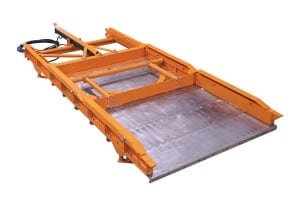
Martin Engineering introduced the Carryback Capture System, a scavenger conveyor system that transfers belt-cleaning residue back into the material stream, avoiding cleanup labor, injury potential, and dust hazards associated with buildup. The 13-inch-high system’s modular design uses an electrically driven hydraulic cylinder to push a steel cleaning blade — or, in a longer scavenger, a […]
-
 Hydro
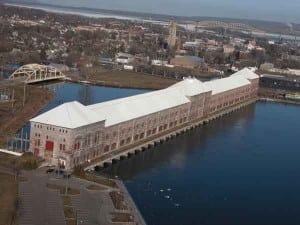
HydroTop Plants: Edison Sault Hydroelectric Plant Sault Ste. Marie, Michigan
Located on the border with Canada and operational since 1902, the Edison Sault Hydroelectric Plant is one of the oldest continuously operating power plants in North America. This pioneer plant continues to generate between 25 to 30 MW when operating at full capacity. Modern wind and solar projects have captured the public’s interest, but this century-old hydroelectric project shows that time is the ultimate arbiter of a technology’s value to society.
-
 News
NewsPortable Combustion Analyzer
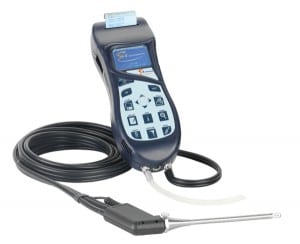
The updated E2200 Portable Combustion Analyzer from E Instruments is an all-in-one unit for boiler, burner, engine, turbine, furnace, and other combustion applications. Precalibrated and field-replaceable sensors allow for easy diagnostics and replacements to reduce downtime and costly repair charges. The analyzer includes sensors for oxygen (0% – 25%), carbon monoxide (0 – 8,000 ppm), […]
-
 Solar
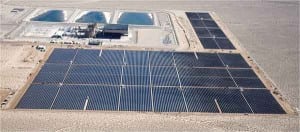
SolarTop Plants: El Dorado Energy’s Solar Facility, Boulder City, Nevada
Sempra Generation has conjured up a market plan for producing merchant photovoltaic (PV) power that is inspired. Working with First Solar, Sempra has developed a finely tuned and standardized 1-MW PV power block that can be replicated as needed. Sempra built the modular PV plant on land adjacent to an existing gas-fired plant to shorten the development period, piggyback the power directly to the grid, and enable existing staff to manage the combined plants’ operation.
-
News
Belgium, Germany Edge Toward Nuclear Future
A host of European countries have recently made concessions on long-standing nuclear policies. In February this year, for example, Sweden proposed to lift a nearly 30-year-old ban on nuclear power and annulled its nuclear phase-out. And in May 2008, Italy announced it would resume building nuclear plants—two decades after public referendum banned nuclear power and the nation deactivated all of its reactors.
-
 Wind
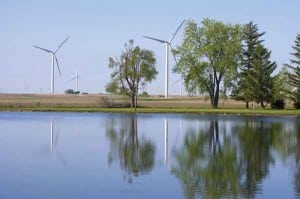
WindTop Plants: Fowler Ridge Wind Farm, Benton County, Indiana
The tractors and combines on Indiana’s farms are getting some competition from a new harvesting technology — powerful turbines that harvest wind. This March the Fowler Ridge Wind Farm opened its first phase, which consists of 222 wind turbines with a total capacity of 400 MW. Phase II is currently under construction and will use 133 wind turbines with a total capacity of 200 MW. A future, third phase will add another 150 MW and give the completed facility a total capacity of 750 MW, which will make it one of the largest wind farms in the world.
-
 Waste to Energy
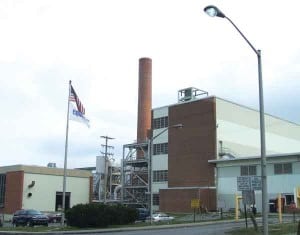
Top Plants: Harrisburg Resource Recovery Facility, Harrisburg, Pennsylvania
After decades of struggling with serious air contamination issues and large financial losses, this Pennsylvania waste-to-energy facility, which was built in 1972, was in need of an extreme makeover. In the wake of an unsuccessful $84 million retrofit attempt in 2005, the faltering facility’s last hope lay with a Covanta project team that took over its operation in 2007. After almost two years of hard work, the facility is now producing up to 17 MW while achieving its environmental compliance goals and earning substantial revenues.
-
O&M
Modeling and Simulation Tools Reduce Plant Outage Duration
Replacing equipment inside a nuclear power plant requires careful planning that begins many months before the plant outage. Entergy has adopted advanced modeling and simulation tools that allow engineers to "walk through" the entire outage in a virtual model, thus avoiding unanticipated surprises.
-
 News
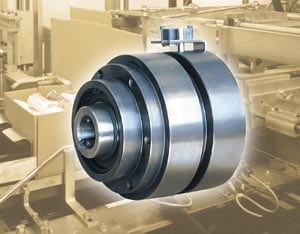
NewsPneumatic Torque Limiter
Nexen has launched the TL Series, a pneumatically engaged, single-position torque limiter for improved overload protection for industrial machinery. The TL Series uses a ball/detent interface and proximity sensor to immediately disengage the machine shaft when excessive torque or a machine jam occurs, effectively protecting downstream equipment and product from damage and decreasing downtime. Upon […]
-
Nuclear
New Nuclear Plants Are on the Horizon
Most of the big utilities, with an eye to ensuring a good mix of future generation resources, have a new nuclear plant in development. Even though federal loan guarantees are slow to materialize and financing these multi-billion-dollar projects has become a bet-the-company investment, the NRC has more than 40 applications from generators that continue to believe in the future of nuclear power.
-
 News
NewsAmbient Temperature Black Body
Wahl Instruments introduced the Heat Spy Portable Calibration Black Body, an ambient temperature black body used for single-point calibration verification and checking of thermal imaging cameras and point infrared thermometers. The easy-to-use device features an accuracy of ±0.3F (0.2C) over the entire range, and it is housed in a watertight IP67 carrying case. The Wahl […]
-
 Nuclear
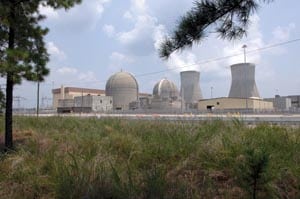
Plant Vogtle Leads the Next Nuclear Generation
In August 2009, the Nuclear Regulatory Commission (NRC) issued its fourth Early Site Permit for two new units at Southern Nuclear’s Vogtle site and its first for the Westinghouse AP1000 pressurized water reactor design. The two new units planned for Vogtle also became the reference plant for the AP1000 under NuStart in June 2009. This means Vogtle Units 3 and 4 will be the first licensed installations of the new AP1000 reactor design in the U.S. Plant Vogtle is expected to get the NRC’s approval to begin construction in 2011.
-
 Nuclear
Modularizing Containment Vessels in New Nuclear Power Plants
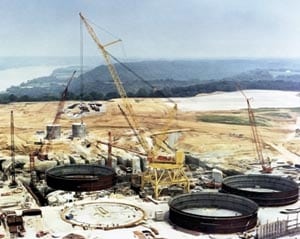
Using modularization in the construction of nuclear containment vessels can be one way to control both cost and schedule when building the next generation of U.S. nuclear power plants. Although the advantages of modularization can be significant, each new reactor design and plant site poses unique construction challenges and must be individually analyzed to determine the benefits of this approach.
-
Commentary
The New Nuclear Fuel Market
If the planned expansion of nuclear power materializes, it will amplify demands on a nuclear fuel supply system that is only beginning to recover from decades of neglect.
-
 Nuclear
World’s First EPR Gets a Roof
Olkiluoto 3, the world’s first EPR whose construction in Finland has been plagued by major delays, in September reached a significant milestone as its 200 – metric ton, 47-meter-diameter steel dome was hoisted into position 44 meters above the ground.
-
 Coal
CoalThree CCS Tests Worldwide
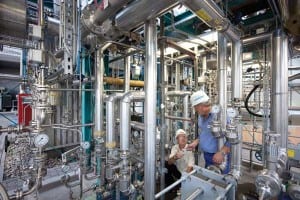
This September — a year after Vattenfall launched the world’s first oxyfuel pilot plant for carbon capture and sequestration (CCS) at the Schwarze Pumpe lignite-fired plant south of Berlin, Germany — three high-profile and long-awaited carbon capture tests started operation around the world.
-
News
Time Flies
July 17, 1955, was the first time electricity generated by a U.S. nuclear power plant flowed into a utility grid. The experiment required Utah Power & Light to disconnect itself from the power lines to the 1,200 residents of Arco, Idaho, and plug in the Argonne National Laboratory experimental boiler water reactor, BORAX-III. The plant produced merely 2 megawatts for more than an hour, as planned, after which linemen reconnected the town’s grid to the utility. Since then, the U.S. nuclear industry has demonstrated excellence in operations, but more than 50 years after that first nuclear power supply, it is lagging far behind even developing nations in new construction.
-
 Nuclear
India Designs Thorium-Fueled Reactor for Export
While the global spotlight is fixed on India’s massive coal-fired power capacity expansion, the country with meager uranium reserves has been pressing on with a unique long-term program that pushes for research and development of nuclear reactors using all three main fissionable materials.
-
-
Environmental
New Pressurized CCS System Could Cut Energy Penalty
Researchers at the Massachusetts Institute of Technology (MIT) looking into new power generation cycles have designed an innovative oxyfuel system that uses a pressurized coal combustor to capture and concentrate carbon dioxide emissions for direct injection into deep geological formations.
-
 O&M
O&MScale Model Testing Confirms Adequate Refueling Water Storage Tank Vortex Allowance
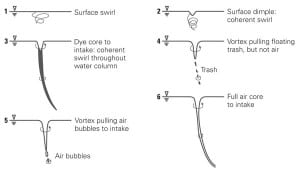
Recent Nuclear Regulatory Commission (NRC) Component Design Bases Inspection activities have scrutinized empirical approaches used to determine vortex allowances for emergency core cooling system (ECCS) suction sources.
-
 Wind
WindEurope’s Offshore Wind Race
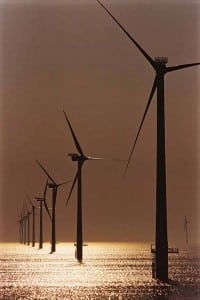
Denmark in September inaugurated a 209-MW offshore wind park — the world’s largest to date — off the west coast of Jutland, in the North Sea.
-
Legal & Regulatory
Conn. v. AEP: Call for Congressional Action
In September, the Second Circuit Court of Appeals reversed the district court ruling in Connecticut v. American Electric Power ("Decision"), a lawsuit initiated by eight states, New York City, and environmental organizations against six power-generating utilities. The plaintiffs allege that carbon dioxide emissions from the defendants’ fossil fuel – fired power plants in 20 states are contributing to a public nuisance — climate change and global warming.
-
 O&M
O&MCatching Faults with Centralized Condition Monitoring
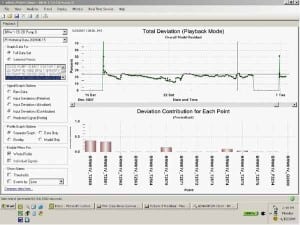
In 2007, Exelon Corp. began the Centralized Performance Monitoring (CPM) pilot program. The goal was to reduce downtime costs and lost revenue associated with the 25% of unplanned forced losses across its fleet of 17 nuclear power units without additionally taxing existing personnel or adding new personnel.
-
 Nuclear
Top Plants: Diablo Canyon Power Plant San Luis Obispo County, California
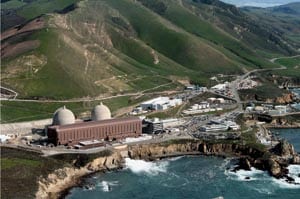
Diablo Canyon Power Plant, which is situated in a postcard-perfect location on the central California coastline, generates electricity for more than three million households in central and northern California. In 2009 the project team at the dual-unit Westinghouse pressurized water reactor facility replaced four steam generators at Unit 1 in just 58 days. Through meticulous planning and excellent project execution, performance on this Unit 1 project was an improvement on the earlier Unit 2 steam generator replacement project.
-
 O&M
O&MHDPE Replaces Carbon Steel in Safety-Related Pipe System
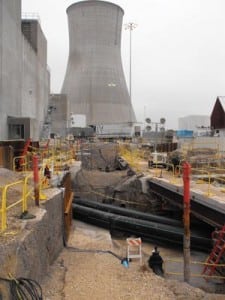
Corrosion of steel water pipes in the safety-related piping systems of aging U.S. nuclear power plants is fast becoming a safety concern and a significant operational cost, not to mention an indication of potential future liability for nuclear utilities currently constructing new plants or retrofitting existing sites.