
POWER
-
Legal & Regulatory
What Legal & Regulatory Issues Are at the Top of Your Mind?
All of our legal column writers have this issue off (they’ll be back in the March issue), so we are using this opportunity to invite readers to share their legal and regulatory (L&R) concerns.
-
 Business
The Great Solar Storm of 2012?
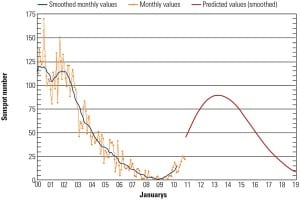
The 2009 blockbuster movie 2012 about a global cataclysm combined Hollywood special effects with supposed predictions by Nostradamus; a Mayan calendar that ends on December 21, 2012; and a very rare planetary alignment that supposedly occurs on the same day. Hollywood producers seldom let technical accuracy get in the way of a good story, but suppose, this one time, the story has an element of truth.
-
Water
Readers Write
In the September and October 2010 issues, POWER Contributing Editor David Daniels explored the causes and damage mechanisms of condenser tube leaks (“Taming Condenser Tube Leaks,” Part I and Part II). Dennis J. Schumerth, Valtimet’s director of business development, took issue with several of Daniels’ statements regarding the proper use of titanium condenser tubes. We have given Schumerth the opportunity to express his concerns and for Daniels to reply.
-
 O&M
O&MIncreasing Generation Ramp Rate at Morgantown Generating Station’s Coal-Fired Units
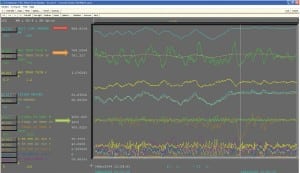
At Morgantown Generating Station, plant personnel used innovative methods to combine model predictive control with distributed control system–based process control algorithms to improve waterwall temperature control and main steam temperature control and to enhance unit ramp rate capability. The previous heat rate and NOx optimization performance gains were retained. Focusing beyond basic loops of feedwater, air, and O2, the project considered issues such as PID controller override configuration and limitations. The techniques used to overcome these challenges improved unit ramp rate capability beyond any previous unit performance.
-
Business
POWER Digest (Feb. 2011)
MHI to Continue Pre-Construction Work for North Anna Unit. Mitsubishi Heavy Industries Ltd. (MHI), through Mitsubishi Nuclear Energy Systems Inc., and Dominion subsidiary Virginia Electric and Power Co. on Dec. 27 said they had reached an agreement to continue pre-construction, engineering, and planning work in preparation for a third unit at Dominion’s North Anna Nuclear […]
-
 Nuclear
I&C Update on Plant Vogtle Units 3 and 4
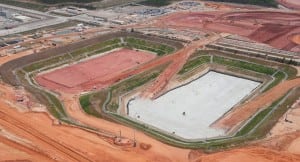
Development of Vogtle Electric Generating Station Units 3 and 4—the first new nuclear power plant units in the U.S. in decades—has generated considerable excitement. The next generation of nuclear plants, represented by these units, includes at least two major improvements: the use of passive safety systems and a reliance on digital control systems. The latter represents a gigantic leap in modernization and a fundamental change in control of the plant.
-
 O&M
O&MNew Tools for Diagnosing and Troubleshooting Power Plant Equipment Faults
The Electric Power Research Institute has developed a pair of diagnostic tools that combine and integrate features from multiple sources of plant information. The Diagnostic Advisor and the Asset Fault Signature Database will improve diagnostics for and troubleshooting of equipment faults by providing a holistic view of the condition of plant equipment.
-
 Gas
GasAutomated Exhaust Temperature Control for Simple-Cycle Power Plants
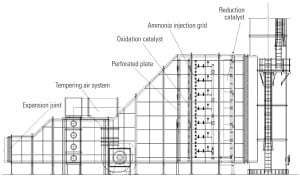
A common concern for gas turbine power plants is treating exhaust gases to comply with laws restricting pollutants present in the gases that are emitted into the ambient atmosphere. The challenge for designers is to control the exhaust gas operating temperature within a range that maximizes performance of the oxidation and reduction catalysts.
-
 Instrumentation & Controls
Thermocouple Response Time Study for Steam Temperature Control
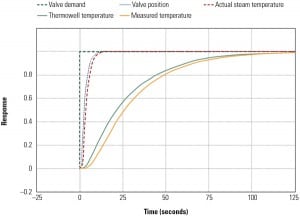
One important factor in power plant control system performance is the response time of the process measurement used in the control system. The response time of boiler steam temperature sensors and thermowells is examined, as is those sensors’ and thermowells’ effect on desuperheater temperature response time and, therefore, steam temperature control performance.
-
 Instrumentation & Controls
Concerns About Temperature-Equalizing Columns Used for Steam Drum Level Measurement
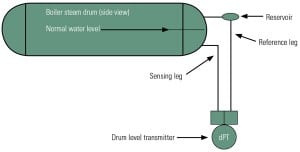
In the 1950s, temperature-equalizing columns were commonly used in steam drum differential pressure–based devices for measuring water level. However, these columns are problematic because a portion of the reference leg can flash to steam on a pressure decrease (load increase), and this will result in a temporary, false, high-level measurement, which adds to the swell effect. The columns can also result in measurement inaccuracies. It’s time to replace these antiquated instruments with a more modern reference leg.
-
 Coal
CoalDesigning Fuel Systems for Large Biomass Plants
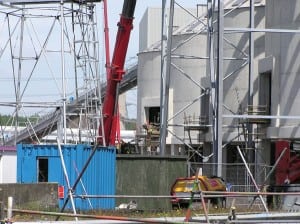
Compared with other solid fuel–fired plants, the systems and components required for handling and processing biomass appear quite familiar, but important fuel differences must be considered. A successful biomass plant design must provide flexibility for handling the expected wide range of biomass fuel properties and characteristics.
-
 Coal
CoalReaching Retirement
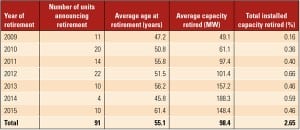
A recent Washington Post article attacks coal as a fuel with a dim future. The author points to the large number of plant retirements as evidence of its impending demise. Checking the actual data reveals a much different story.
-
 News
NewsSelf-Propelled Trailers for In-Plant Use
Wheelift Systems introduced its self-propelled trailers (SPT) in capacities up to 100 tons. They were developed for in-plant operation in congested, confined areas and in narrow intersecting aisles. Highly maneuverable, the Wheelift SPTs feature computerized independent steering, on-center rotating front axles, remote control operation, low-profile design, and on-board power generation. Each SPT has two on-center […]
-
 Nuclear
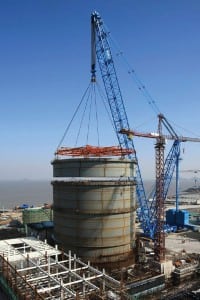
Major Milestones for the AP1000 Reactor
Westinghouse’s AP1000 reactor design hit several milestones in recent months, prompting speculation that it could take the coveted lead in the charge to deploy the world’s third-generation nuclear power plants.
-
 News
News500-kV Proximity Voltage Detector
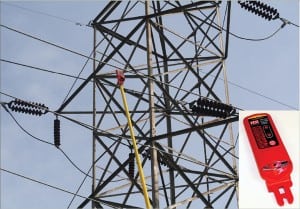
HD Electric Co.’s new PRX-500 Proximity Voltage Detector is an addition to its voltage detector product line. With nine selectable voltage ranges from 120 V to 500 kV, the PRX Proximity Voltage Detector features an easy-to-use electronic touch pad with large buttons. The PRX provides an audible and visual indication of voltage detected from elbow […]
-
Legal & Regulatory
Solving the Renewable Integration Puzzle
In November, California voters overwhelmingly rejected an initiative that would have put the brakes on AB 32, the state’s ambitious greenhouse gas (GHG) emissions reduction law. Given the role that California has played in climate change policy, that such a vote took place only four years into the law’s implementation process and 10 years before the emissions reduction targets were to be met was a reality check on climate change policy for those on both sides of the issue.
-
 Coal
CoalThe U.S. Power Industry 2011: The Sequel
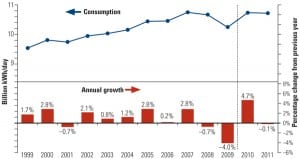
If Hollywood were scripting the power industry story for 2011, it would be a sequel to 2010—more of the same, but just not quite as good. Natural gas gets top billing and the accolades, wind power drops to a supporting role, and new nuclear answers the casting call but has yet to get a speaking part. Coal is like Mel Gibson—a talented Oscar winner unlikely to get another leading role. In this, our fifth annual industry forecast report, the story may be familiar, but the price of admission is going way up.
-
 Business
Strong Technology Portfolio Positions Alstom for a Strong 2011
Timothy Curran, head of power for Alstom Power, USA, recently shared his company’s view of 2011 and beyond with POWER’s editor-in-chief.
-
 O&M
O&MEPRI Identifies Four Breakthrough Technologies for 2011
The Electric Power Research Institute (EPRI) has identified four breakthrough technologies and funded them through its Strategic Research and Development Portfolio. EPRI expects to accelerate development of these innovations because they are likely to have significant effects on how electricity is generated and delivered.
-
 Business
GE Leverages Leading-Edge Technology and a Balanced Product Portfolio in 2011
Paul Browning, vice president, thermal products for GE Power & Water, sees the greatest short-term business opportunities beyond the U.S., in “high-speed” countries.
-
 Smart Grid
Which Side of the Meter Are You On?
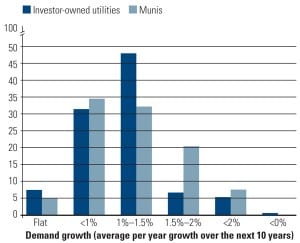
Utilities have achieved success by supplying electricity from central station plants (the supply side) to a grid that carries electricity to customers (the demand side). One way to improve the efficiency of this supply chain is by adopting smart grid technology. The weak link in that chain is convincing customers to use, and regulators to invest in, the smart grid.
-
Distributed Energy
Smart Grid 2011: More than Meters
The concept of a smart grid may have been born in the U.S.A., but it’s hitting an adolescent growth spurt just about everywhere else first. Meanwhile, in the U.S., both the regulators and companies that see great potential in a smarter grid are realizing that making substantial smart grid progress will first require making both people and policies smarter. There’s one exception, one piece of the smart grid, that could face fewer obstacles to adoption, and that’s because it offers more obvious and visible benefits to its users: electric vehicles (EVs).
-
 Business
Mitsubishi Looks to High-Efficiency Combustion and Wind Turbines in 2011
Bill Newsom—vice president, sales & marketing, Mitsubishi Power Systems Americas Inc.—talks about taking the long view with the company’s U.S. investments.
-
Business
POWER Digest (Jan. 2011)
TANE and Shaw to Provide EPC Services for South Texas Expansion. Nuclear Innovation North America LLC (NINA), the nuclear development company jointly owned by NRG Energy and Toshiba Corp., on Nov. 29 announced that it awarded the engineering, procurement, and construction (EPC) contract for South Texas Projects Units 3 and 4 to a restructured EPC […]
-
 Coal
CoalCoal Plants Challenged as Gas Plants Surge
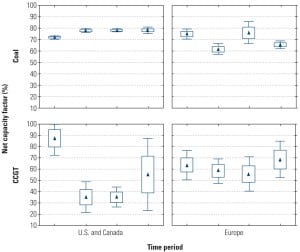
European carbon trading is gradually pushing down coal-fired capacity factors, and operating costs are rising. The U.S. may not have a carbon market, but increasing regulatory requirements are having the same effect on coal-fired generation capacity factors and operating costs. In the meantime, gas-fired assets are enjoying increased usage and lower unit costs.
-
 Hydro
HydroGerman Researchers Develop Cost-Efficient Small Hydro Plant
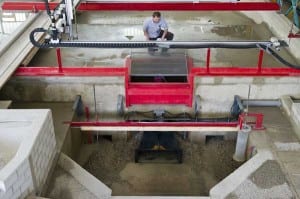
Researchers at Germany’s Technische Universitaet Muenchen (TUM) claim to have developed a small-scale hydroelectric power plant that is capable of operating profitably even at modest dam heights while minimizing impact on waterways.
-
 Business
Siemens Energy Introduces Efficient and Flexible Products in 2011
Dr. Michael Weinhold, chief technology officer of Siemens Energy, discusses the company’s 2011 business plans and the role of the smart grid in the future’s energy infrastructure.
-
News
My Top 10 Predictions for 2011
It’s time to pull my crystal ball out of storage, polish it up, and give you another round of U.S. industry predictions for 2011. I graded last year’s predictions B+ (for a complete rundown of how I graded each prediction, see page 32), but I’m convinced I’ll do better in 2011.
-
 Coal
CoalOxy-Combustion: A Promising Technology for Coal-Fired Plants
For more than a decade Babcock & Wilcox Power Generation Group Inc. and Air Liquide have been developing oxyfuel technology with the goal of using it to concentrate CO2 from pulverized coal-fired power plants and achieve up to 90% CO2 capture and storage. This technology was recently selected for demonstration as part of FutureGen 2.0.
-
 Coal
CoalIEA: Global Power Demand to Surge 2.2% Annually Through 2035
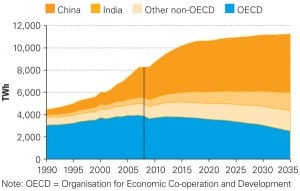
Though electricity generation has entered a key period of transition—as investment shifts to low-carbon technologies—world electricity demand is set to grow faster than any other “final form of energy,” the International Energy Agency (IEA) says in its latest annual World Energy Outlook.