
POWER
-
 News
NewsDeep Excavation Support Systems Speed Plant Construction
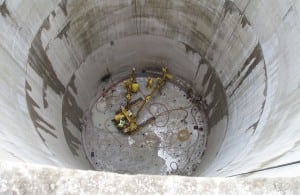
As part of constructing the recently commissioned We Energies’ Oak Creek Power Plant Elm Road units, four remarkable below-ground structures were built. Each unique structure required creative designs and meticulous construction techniques to meet the project’s distinctive requirements.
-
Business
Lessons Learned in Reliability Standards Compliance
It has been three years and a few months since the North American Electric Reliability Council (NERC) Reliability Standards (Standards) became mandatory and noncompliance became subject to sanctions by the Federal Energy Regulatory Commission (FERC). You might assume that because we have had no further instances of widespread cascading outages that the Standards are working. You may also assume that—considering the database of documented noncompliance with the Standards—the industry as a whole is puzzled, unprepared, or negligent in carrying out its responsibility to keep the high-voltage electric grids reliable and secure. The truth likely lies somewhere in the middle.
-
 Coal
CoalU.S. Coal-Fired Power Development: Down but Not Out
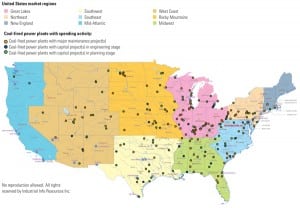
Environmentalists renewed their attacks on coal-fired power development in 2010. At the same time, Congress dithered on cap-and-trade legislation while the Environmental Protection Agency marched forward rules to reduce carbon emissions from coal-fired power plants. Couple the regulatory uncertainty with lean economic times that have flatlined electricity demand growth plus low natural gas prices, and the result is predictable: New coal-fired plant construction is in the doldrums.
-
Smart Grid
Smart Grid Cyber Security Guidelines Released
The National Institute of Standards and Technology (NIST) has finalized its initial set of smart grid cyber security guidelines. NIST’s Guidelines for Smart Grid Cyber Security (NISTIR 7628) includes high-level security requirements, a framework for assessing risks, an evaluation of privacy issues in personal residences, and other information for organizations to use as they craft strategies to protect the modernizing power grid from attacks, malicious code, cascading errors, and other threats, according to NIST’s press release.
-
Commentary
The Nexus of Energy and Water
The age-old adage “water and electricity don’t mix” does not apply to 21st-century infrastructure planning. The two entities can no longer be viewed as separate commodities. The demands on both are intertwined, so solutions for meeting new and growing challenges associated with water scarcity and carbon regulations must also be integrated. Water is essential to […]
-
O&M
Innovative Cleaning of Air Preheater Coils with Pressurized Liquid Nitrogen
Cleaning air heaters in power plants or recovery boilers has traditionally involved using high-pressure water, chemicals, or steam. These techniques, though effective on moderate airside fouling of heat exchange surfaces, are usually ineffective on the more tenacious deposits that can develop in coal-fired plants. If these deposits are not removed by periodic cleaning, heat transfer in the heaters is reduced, which in turn reduces boiler efficiency and increases a unit’s heat rate. Severe fouling on air preheaters (APHs) can even reduce a unit’s power output.
-
 News
NewsMass Vortex Flow Meter for Cryogenic Fluids
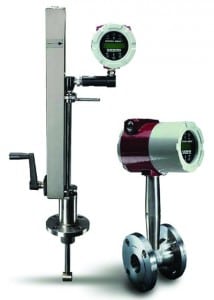
Sierra Instruments has introduced a new cryogenic version of its Innova-Mass multivariable mass vortex flow meter for measuring mass flow rates of cryogenic fluids down to –328F (–200C). Using a special cryogenic temperature RTD, mass calculations are done with the latest density equations of state for liquid oxygen, nitrogen, argon, and carbon dioxide. The multivariable […]
-
Legal & Regulatory
QF Contracts and 21st-Century Economics
Many power purchase agreements entered into between qualifying facilities (QF) and electric utilities during the 1980s and 1990s have several years remaining on their terms. These contracts typically require the generator to comply with the Federal Energy Regulatory Commission (FERC) regulations promulgated pursuant to the Public Utility Regulatory Policies Act (PURPA). The foremost FERC requirement […]
-
 News
NewsDust Collector Pulse Timer Saves Energy
The new IntelliPULSE pulse jet timer for baghouses and dust collectors from FilterSense reduces energy costs and offers direct connection to programmable logic controllers with user-specified fieldbus communications such as Devicenet, Ethernet, Modbus, and Profibus. The intelligent pulse-cleaning control technology is said to minimize compressed air use during filter cleaning, significantly reducing energy consumption. No […]
-
 Coal
CoalTop Plant: ADM Clinton Cogeneration Plant, Clinton, Iowa
In the heart of corn country, Archer Daniels Midland is using seed corn that is no longer suitable for planting, along with coal, to power its 180-MW Clinton cogeneration plant. The cogeneration plant, which began operations in 2008, supports ADM’s Clinton corn processing plant, one of the largest corn wet mills in the world. It also supports ADM’s facility that produces renewable plastic from corn sugar. Firing up to 20% biomass along with coal, the new cogeneration plant is capable of providing 100% of the steam and electrical power needs of both facilities.
-
 News
NewsPersonal Cooling Water Analytics
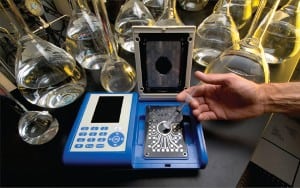
Power plant operators must keep the corrosion, deposition, and microbiological fouling affecting cooling water systems at bay to avoid damage to equipment and system inefficiencies. One possible solution is GE’s newly released TrueSense, a technology platform that enables users to monitor and control cooling water systems. TrueSense integrates three functionalities into one platform: online monitoring […]
-
 Coal
CoalTop Plant: Brandon Shores Generating Station, Pasadena, Maryland
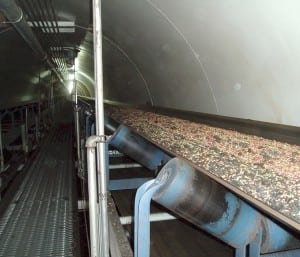
Constellation Energy Constellation Energy recently completed a series of air quality upgrades on both units at its Brandon Shores Generating Station that included flue gas desulfurization (FGD), baghouse, SO3 control, and mercury reduction by activated carbon injection. The plant’s unique arrangement required long duct runs to the air quality system and a mile-long conveyor for moving barge-delivered limestone to the plant. Treated municipal wastewater was used as wet FGD supply water, and effluent treatment included first-of-its-kind nitrogen removal before discharge to the Chesapeake Bay watershed.
-
 News
NewsEnd Prep Machine Tool
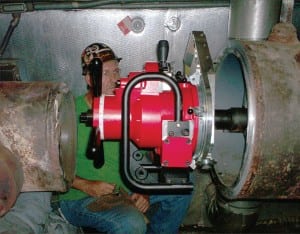
E.H. Wachs introduced the EP424 Speed Prep Autofeed System, an inside diameter–mount end prep machine tool designed to bevel, compound bevel, J-prep, face, and counterbore pipe, fittings, and valves. With the Speed Prep, the user sets the bevel angle and land thickness that works best. The machine feeds simultaneously in the axial and radial planes […]
-
 Coal
CoalTop Plant: Brunner Island Power Plant, York Haven, York County, Pennsylvania
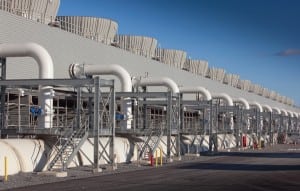
The 1,456-MW Brunner Island coal-fired plant has implemented advanced environmental improvements in order to be a good neighbor to the residents of south central Pennsylvania. For example, between 2006 and 2010, PPL invested more than $860 million in pollution control upgrades for air, water, and solid waste treatment at the facility.
-
 News
NewsSafety Bolt Bag
Ergodyne’s new Arsenal 5725 Safety Bolt Bag is designed to safely store tools, fasteners, and equipment at any vertigo-inducing job site. Featuring a loop design and wide-body, one-handed cinch top, this safety bolt bag increases aerial job safety and productivity by keeping loose gear securely stored in a durable canvas pouch. The bag has a […]
-
 Coal
CoalTop Plant: Dickerson Generating Station, Dickerson, Maryland
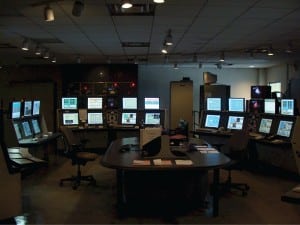
Owner/operator: Mirant Corp. Dickerson Generating Station, a 50-year-old facility servicing Maryland and Washington, D.C., was recently upgraded with a flue gas desulfurization system and a unique draft system that allows an electrostatic precipitator and a baghouse to share flue gas cleanup chores on each unit. In addition, state-of-the-art equipment monitoring and diagnostics keep plant reliability high for this baseload unit.
-
 News
NewsMachine Positional Change–Measuring Application
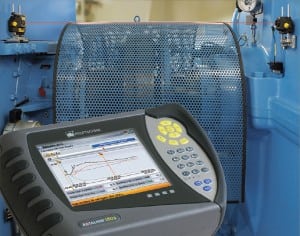
LUDECA launched the ROTALIGN Ultra Live Trend, a short-term continuous-monitoring application that helps to accurately determine the relative positional changes between coupled machines during run-up or shutdown. It utilizes the unique ROTALIGN five-axis sensor to monitor continuously, in real time and simultaneously, both the vertical and horizontal parallel and angular displacement of rotating machinery, from cold […]
-
 Gas
GasTop Plant: Langage Combined Cycle Power Plant, Plymouth, Devon, UK
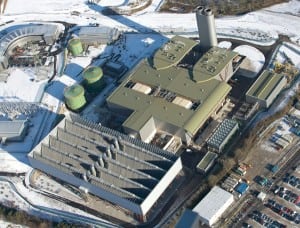
The UK grid, focused on adding valuable renewable generation, will rely on natural gas–fired generation for many years to come. One of the most recent additions is the Langage Power Plant, designed for quick response and low load “parking” at night while remaining below air emissions limits. With an extraordinary architectural design that blends into the natural surroundings, Langage is now a local landmark.
-
 Gas
GasTop Plant: Panoche Energy Center, Firebaugh, California
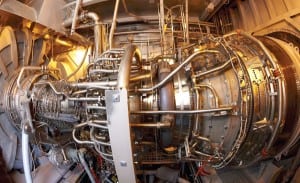
The Panoche Energy Center is a 400-MW simple-cycle power plant using four of General Electric’s GE LMS100s with fast-start capability. Dispatched by Pacific Gas & Electric to meet regional power and grid stabilization needs, the project entered commercial service two months earlier than planned. Panoche is the largest LMS100 peaking facility in the U.S.
-
 Gas
GasTop Plant: Ras Laffan Power and Water Plant, Ras Laffan Industrial City, Qatar
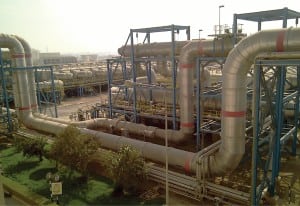
At the Ras Laffan Power Co. facility, the 756-MW net combined-cycle plant and the integrated 40 million gallons per day desalination plant are working in tandem to provide abundant, reliable electricity and desalinated water to residents of the State of Qatar, the most prosperous nation in the Middle East.
-
 Gas
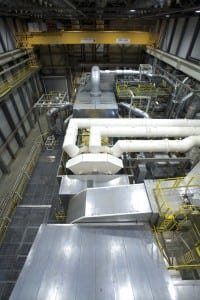
GasTop Plant: Sloe Centrale Power Plant, Vlissingen-Oost, Zeeland Province, Netherlands
There’s nothing slow about the fast-track operations at the new 870-MW Sloe Centrale Power Plant. The combined-cycle plant is designed for 250 starts per year and is capable of supplying power to the grid within a mere 30 to 40 minutes. In addition to its impressive rapid load response, the gas-fired plant produces low CO2 and NOx emissions by using the latest technology. It also attains an efficiency of 59%.
-
News
Cap and Trade Is Dead
Cap and trade officially died on July 22 when Senate Majority Leader Harry Reid announced at a news conference that the Democratic Caucus was unable to reach a consensus on any form of energy bill, even a recent short-lived version that proposed reducing carbon emissions from only the utility sector. I predict that carbon cap and trade is now dead for at least a decade, maybe longer.
-
 Gas
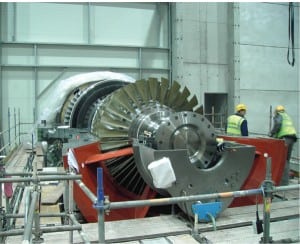
GasTop Plant: Timelkam Power Plant Vöcklabruck District, Upper Austria, Austria
Now that the 412-MW Timelkam Power Plant has replaced a 47-year-old coal-fired power plant located in the Vöcklabruck District, northern Austrians can bid auf wiedersehen (goodbye) to high levels of air pollution. Compared to its predecessor, the new gas-fired combined-cycle plant has dramatically cut CO2 and NOx emissions and produces seven times more energy.
-
Legal & Regulatory
Coal Ash Regulation: Playing the Name Game
What’s in a name? Would coal ash labeled as “special” hazardous waste be as easily recycled as that labeled nonhazardous waste?
-
 Gas
GasTop Plant: West County Energy Center, Palm Beach County, Florida
The 3,600-MW West County Energy Center, with two recently commissioned power blocks and a third just entering start-up, is the first “greenfield” combined-cycle plant constructed by FPL since the 1970s. Thanks to FPL’s long history with repowering projects, the project team commissioned Unit 2 seven months early, with no operator errors during start-up. At just over $600/kW, the cost of the plant was a bargain.
-
Commentary
The Hidden Agendas Behind Citizen Suits
The enforcement mechanisms of the environmental statutes in the 1960s were both cumbersome and ineffective.
-
 Gas
GasFlexible Turbine Operation Is Vital for a Robust Grid
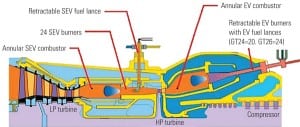
Renewable electricity generation has many environmental advantages, but adding large amounts of far-flung renewable resources to a grid requires increased operating flexibility from dispatchable generators when the wind doesn’t blow or the sun doesn’t shine. One promising option: A combined-cycle plant based on Alstom’s GT24/GT26 combustion turbine can be “parked” at approximately 20% plant load while producing emissions comparable to those during baseload operation—with little loss in thermal efficiency. When demand returns, the combined cycle can return to baseload within minutes.
-
 Business
China Completes Ultra-High-Voltage Transmission Superhighway
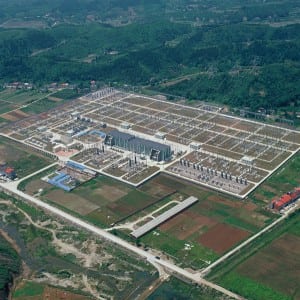
The State Grid Corp. of China (SGCC) in July put into operation the world’s first ultra-high-voltage direct current (UHVDC) superhighway when it commissioned the Xiangjiaba-Shanghai link. The ±800 kV project, completed in 30 months—a year ahead of schedule—has the capacity to transmit up to 7,200 MW from the Xiangjiaba hydropower plant in southwest China to Shanghai, the country’s leading industrial and commercial center, about 2,000 kilometers (km) away.
-
 O&M
O&MTaming Condenser Tube Leaks, Part I
Summer peaks are still with us, and every unit on your system must be prepared to operate at a moment’s notice. Spot power prices are so high that you expect phone calls asking for a few more megawatts from your units. Then your plant chemistry lab calls to report a condenser tube leak. Your options are few: Shut down immediately and get charged with a forced outage, ignore the leak and keeping running until fall, or schedule a maintenance outage next weekend and hope the leak can be found and fixed. In Part I, we examine what you need to know in order to make an informed decision. In Part II, we’ll explore the actual damage mechanisms.
-
 Coal
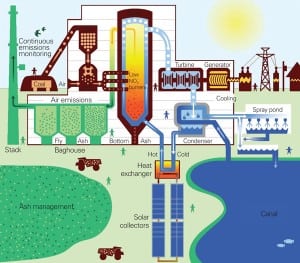
CoalXcel Energy Fires Up Solar/Coal Hybrid Demonstration
At the end of June, Xcel Energy fired up a demonstration project that integrates a 4-MW parabolic trough solar technology with an existing 44-MW coal-fired power plant.