
POWER
-
 Coal
CoalThe U.S. Power Industry 2011: The Sequel
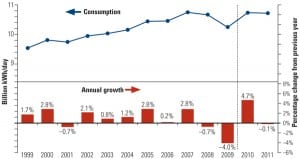
If Hollywood were scripting the power industry story for 2011, it would be a sequel to 2010—more of the same, but just not quite as good. Natural gas gets top billing and the accolades, wind power drops to a supporting role, and new nuclear answers the casting call but has yet to get a speaking part. Coal is like Mel Gibson—a talented Oscar winner unlikely to get another leading role. In this, our fifth annual industry forecast report, the story may be familiar, but the price of admission is going way up.
-
 Business
Strong Technology Portfolio Positions Alstom for a Strong 2011
Timothy Curran, head of power for Alstom Power, USA, recently shared his company’s view of 2011 and beyond with POWER’s editor-in-chief.
-
 O&M
O&MEPRI Identifies Four Breakthrough Technologies for 2011
The Electric Power Research Institute (EPRI) has identified four breakthrough technologies and funded them through its Strategic Research and Development Portfolio. EPRI expects to accelerate development of these innovations because they are likely to have significant effects on how electricity is generated and delivered.
-
 Business
GE Leverages Leading-Edge Technology and a Balanced Product Portfolio in 2011
Paul Browning, vice president, thermal products for GE Power & Water, sees the greatest short-term business opportunities beyond the U.S., in “high-speed” countries.
-
 Smart Grid
Which Side of the Meter Are You On?
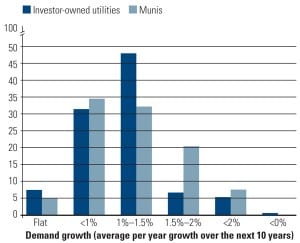
Utilities have achieved success by supplying electricity from central station plants (the supply side) to a grid that carries electricity to customers (the demand side). One way to improve the efficiency of this supply chain is by adopting smart grid technology. The weak link in that chain is convincing customers to use, and regulators to invest in, the smart grid.
-
Distributed Energy
Smart Grid 2011: More than Meters
The concept of a smart grid may have been born in the U.S.A., but it’s hitting an adolescent growth spurt just about everywhere else first. Meanwhile, in the U.S., both the regulators and companies that see great potential in a smarter grid are realizing that making substantial smart grid progress will first require making both people and policies smarter. There’s one exception, one piece of the smart grid, that could face fewer obstacles to adoption, and that’s because it offers more obvious and visible benefits to its users: electric vehicles (EVs).
-
 Business
Mitsubishi Looks to High-Efficiency Combustion and Wind Turbines in 2011
Bill Newsom—vice president, sales & marketing, Mitsubishi Power Systems Americas Inc.—talks about taking the long view with the company’s U.S. investments.
-
Business
POWER Digest (Jan. 2011)
TANE and Shaw to Provide EPC Services for South Texas Expansion. Nuclear Innovation North America LLC (NINA), the nuclear development company jointly owned by NRG Energy and Toshiba Corp., on Nov. 29 announced that it awarded the engineering, procurement, and construction (EPC) contract for South Texas Projects Units 3 and 4 to a restructured EPC […]
-
 Coal
CoalCoal Plants Challenged as Gas Plants Surge
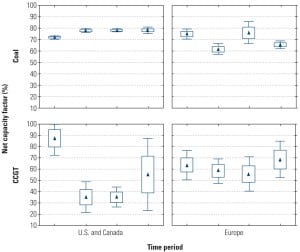
European carbon trading is gradually pushing down coal-fired capacity factors, and operating costs are rising. The U.S. may not have a carbon market, but increasing regulatory requirements are having the same effect on coal-fired generation capacity factors and operating costs. In the meantime, gas-fired assets are enjoying increased usage and lower unit costs.
-
 Solar
SolarMIT Researchers Invent Self-Renewing PV Technology
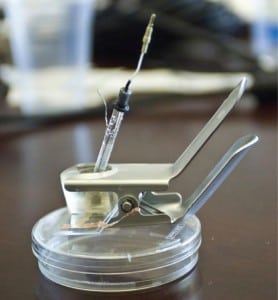
Scientists at the Massachusetts Institute of Technology (MIT) have a created a set of self-assembling molecules that can turn sunlight into power, and which can repeatedly be broken down and reassembled by adding or removing solution. The scientific breakthrough—inspired by a natural process used by plants to renew light-capturing molecules that have been degraded by the sun—could mean that researchers are closer to creating a self-healing photovoltaic (PV) technology that can keep repairing itself to avoid loss in performance.
-
 Solar
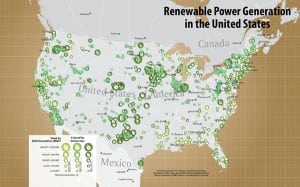
SolarMap of Renewable Power Generation in the United States
For a full-size map, contact Platts. Courtesy: Platts Data source: POWERmap All rights reserved. No reproduction allowed.
-
 Gas
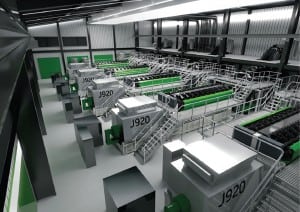
GasGE Launches 9.5-MW Engine for Distributed Generation
A 9.5-MW gas engine unveiled by GE this October for decentralized, independent power producers in remote, hot, or high-altitude regions features a 48.7% electrical efficiency and promises to reduce lifecycle costs by lowering fuel consumption.
-
 Hydro
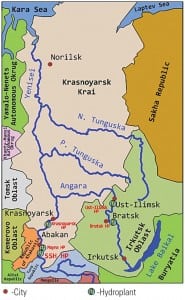
HydroInvestigating the Sayano-Shushenskaya Hydro Power Plant Disaster
The destruction of the turbines and auxiliary equipment at Russia’s Sayano-Shushenskaya Hydro Power Plant in August 2009 claimed the lives of 75 workers and wrecked an indispensable source of electricity that will take years to fully restore. The disaster, as this report explains, was predictable and preventable.
-
 Hydro
HydroUK Cancels Tidal Barrage Plans, Approves Key Nuclear Sites
The UK government in late October shelved plans to build the Severn barrage—a project that would have involved building a 10-mile dam across the mouth of the Severn River—after a two-year-long feasibility study failed to convince ministers to use public funds to build it. The Department of Energy and Climate Change instead gave its long-awaited approval to eight sites for new nuclear reactors, saying that private companies could begin building the country’s new fleet of reactors, provided no public subsidy is involved.
-
 Wind
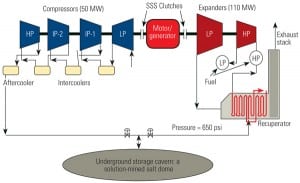
WindCould CAES Answer Wind Reliability Concerns?
As wind and solar energy capacity in the U.S. continues to grow, compressed air energy storage (CAES) and other bulk energy storage technologies will increasingly be used to help balance electrical supply and demand.
-
Hydro
Massive Energy Storage Facility Planned for Mexico-U.S. Border
Dubai-based energy firm Rubenius in October proposed to build a $4 billion energy storage facility based on sodium sulfur (NaS) technology on a 345-acre site in the Mexican state of Baja California, close to the U.S. border. If it comes to fruition, the facility—dubbed a “mega region energy warehouse” by Mexico’s President Felipe Calderon—will feature 1,000 MW of battery storage and offer “storage space” to energy companies and utilities in both Mexico and the U.S.
-
 Wind
WindNew Design Tool Improves Manufacture of Composite Wind Turbine Blades
Composite materials are ideal for producing wind turbine blades because of their strength, light weight, and ability to be tailored to provide the precise mechanical properties needed for any blade design. Now, best practices originally developed for rotorcraft blade manufacturing can be applied to designing and manufacturing wind turbine blades that are constructed from composites.
-
Smart Grid
How the U.S. Grid’s Unpredictability Increases Its Security
Experts have decried congressional and academic reliance on a mathematical model for understanding complex systems that suggests an attack on a small part of the U.S. power grid could disrupt the entire power system network.
-
 Solar
SolarA Winning Combination: Government and Utilities Partner on Renewable Energy Projects
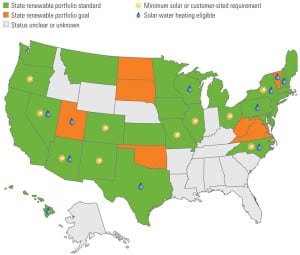
Recent mandates require government facilities to develop energy policies that enable energy conservation, increase the use of renewable energy, and improve energy security. Utilities with government facilities in their service territory may have opportunities to develop solar and other renewable energy projects that help them meet state renewable portfolio standards while increasing a government facility’s usage of renewable energy. The key to such a win-win proposition is careful structuring of the project agreement to leverage each party’s assets.
-
Business
POWER Digest (December 2010)
Iberdrola Renovables Starts Up National Wind Turbine Control Center. Iberdrola Renovables, a company that owns 41 operating wind farms (3,900 MW in nameplate capacity) in the U.S., on Sept. 26 began operating its National Control Center (NCC), a facility based in Portland, Ore., that has operational control over some 800,000 inputs from 2,500 wind turbines […]
-
 Hydro
HydroThe Rush to Renewables
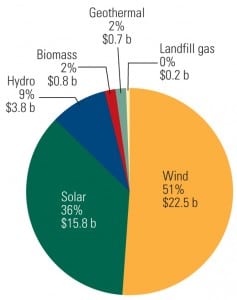
In 2010 investment in wind power continued to accelerate, particularly in California and Texas. California also entered several solar projects in the race for financing. The finish line that renewable power developers and their partners are racing to meet is a December 31 deadline to qualify for federal cash grants.
-
 Wind
WindFinding Fault: Improving Wind Farm Availability
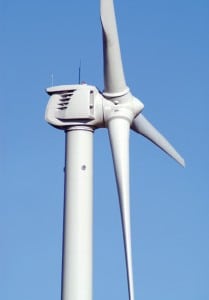
Survey wind turbine manufacturers about how to calculate wind farm availability and you will get countless different definitions and exceptions to the rule.
-
 News
NewsShaft-Grounding Ring for Wind Turbines
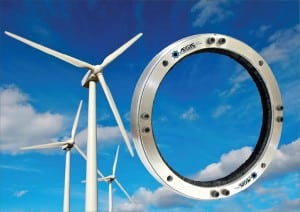
Electro Static Technology’s AEGIS WTG wind turbine grounding ring seeks to prevent bearing damage that could otherwise cause generator failure by safely channeling harmful shaft currents away from bearings to the ground. Maintenance-free, effective at any wind turbine speed, and available for any-size generator, the ring is designed for OEM installation or easy up-tower retrofit. […]
-
 O&M
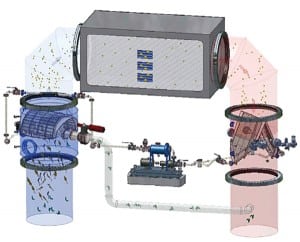
O&MKeeping Condensers Clean
The quality of the cooling water intake and the amount of debris in that water affects the operation and performance of the condenser and therefore the thermal performance of the typical steam plant.
-
 News
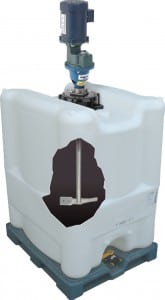
NewsMixers for IBC and Tote Applications
Neptune Mixer Co., a division of Neptune Chemical Pump Co., announced that its Series HGL mixers are now available in both electric and air-driven models. The Series HGL mixers are ideal for intermediate bulk container (IBC) and poly tote applications found within the wastewater treatment and chemical industries. Explosion-proof models are also available. Neptune’s HGL […]
-
 O&M
O&MExpanding the Use of Predictive Maintenance as a Business Strategy
The Linde Group is a world-leading gases and engineering company operating in more than 100 countries. It’s no surprise that the company uses a variety of advanced monitoring techniques and equipment to keep its plants operating reliably. In the U.S. and UK particularly, Linde plants have used online machine condition monitoring for a number of years. At its Shanghai headquarters, Linde has formed a large and impressive remote operations center where it monitors and tracks the process operations of all its major gas plants in China 24 hours a day.
-
 News
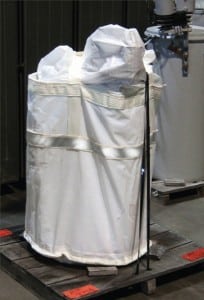
NewsContainment Bags for Safe Transformer Transport
New Pig Corp. recently introduced PIG Transformer Containment Bags, carriers designed exclusively for the safe transport of polychlorinated biphenyls (PCBs) and mineral oils. The bags feature high-capacity straps to ensure safe lifting of up to 4,800 pounds for transport on diamond-plate truck beds without rips or wear. To provide ultimate weather, puncture, and tear protection […]
-
Legal & Regulatory
Regulatory Options for Feed-in Tariffs
Feed-in tariffs (FITs) have been used by European countries to foster the growth of renewable generation resources, notably solar. These tariffs generally require electric distribution companies to purchase power produced by a specified class of generators at above-market rates. The object of the tariffs is to encourage development of the favored generation resources by ensuring the existence of a profitable market for their power production.
-
 News
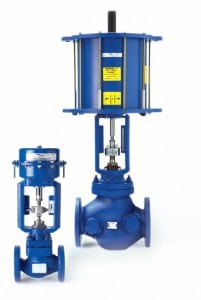
NewsExtended Control Valve Range
Spirax Sarco released a new control valve range, SPIRA-TROL, in 6- and 8-inch sizes and with more control options. The company says the valves are easy to maintain and do not require any special tooling due to the “clamp-in-seat” design, resulting in reduced downtime and cost of ownership. Valve size ranges have been extended due […]
-
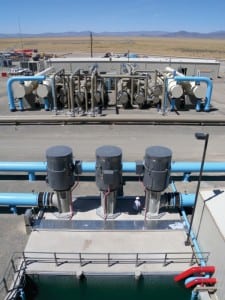 Geothermal
Top Plant: Blue Mountain Faulkner 1 Geothermal Power Plant, Humboldt County, Nevada
Completed in 2009 and partially funded under the American Reinvestment and Recovery Act, the 50-MW Blue Mountain Faulkner 1 Geothermal Power Plant is harnessing large amounts of renewable energy by tapping into an underground geothermal reservoir in northern Nevada. This subterranean source of heat allows the binary plant to generate pollution-free baseload electricity.