
POWER
-
 O&M
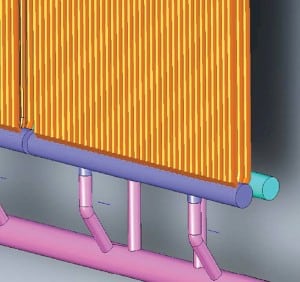
O&MTen Years of Experience with FAC in HRSGs
We first reported on combined-cycle plant reliability concerns due to erosive wear and flow accelerated corrosion (FAC) in heat-recovery steam generator (HRSG) pressure parts at the 1999 EPRI Maintenance Conference. More than 10 years later, these damage mechanisms remain significant contributors to forced outages, pressure part repairs, and major component replacement.
-
 Gas
GasIndustry Trends: Map of Natural Gas Generation in North America
Courtesy: Platts Data source: POWERmap All rights reserved. No reproduction allowed.
-
 Water
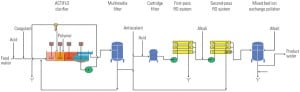
WaterMine Drainage: An Alternative Source of Water
Although mining practices often vary greatly according to the material produced and the value of the deposit, one common denominator is that mining of materials containing sulfide minerals creates acid mine drainage (AMD). AMD is one of the mining industry’s major environmental challenges.
-
 Solar
SolarFeed-in-Tariffs Around the World
Feed-in-tariffs (FITs)—above-retail rates paid for renewable power that producers "feed" into the grid—are gaining momentum all over the world as a means of driving project growth. Here are some of those established and proposed FITs.
-
 Gas
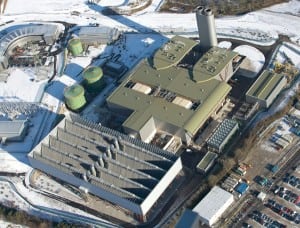
GasTop Plant: Langage Combined Cycle Power Plant, Plymouth, Devon, UK
The UK grid, focused on adding valuable renewable generation, will rely on natural gas–fired generation for many years to come. One of the most recent additions is the Langage Power Plant, designed for quick response and low load “parking” at night while remaining below air emissions limits. With an extraordinary architectural design that blends into the natural surroundings, Langage is now a local landmark.
-
 Gas
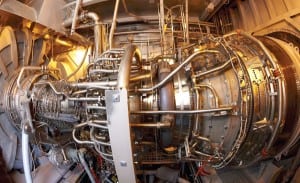
GasTop Plant: Panoche Energy Center, Firebaugh, California
The Panoche Energy Center is a 400-MW simple-cycle power plant using four of General Electric’s GE LMS100s with fast-start capability. Dispatched by Pacific Gas & Electric to meet regional power and grid stabilization needs, the project entered commercial service two months earlier than planned. Panoche is the largest LMS100 peaking facility in the U.S.
-
 Gas
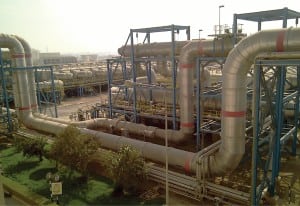
GasTop Plant: Ras Laffan Power and Water Plant, Ras Laffan Industrial City, Qatar
At the Ras Laffan Power Co. facility, the 756-MW net combined-cycle plant and the integrated 40 million gallons per day desalination plant are working in tandem to provide abundant, reliable electricity and desalinated water to residents of the State of Qatar, the most prosperous nation in the Middle East.
-
 Gas
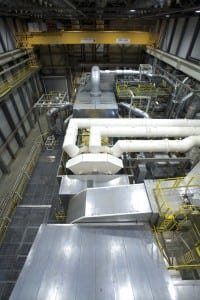
GasTop Plant: Sloe Centrale Power Plant, Vlissingen-Oost, Zeeland Province, Netherlands
There’s nothing slow about the fast-track operations at the new 870-MW Sloe Centrale Power Plant. The combined-cycle plant is designed for 250 starts per year and is capable of supplying power to the grid within a mere 30 to 40 minutes. In addition to its impressive rapid load response, the gas-fired plant produces low CO2 and NOx emissions by using the latest technology. It also attains an efficiency of 59%.
-
News
Cap and Trade Is Dead
Cap and trade officially died on July 22 when Senate Majority Leader Harry Reid announced at a news conference that the Democratic Caucus was unable to reach a consensus on any form of energy bill, even a recent short-lived version that proposed reducing carbon emissions from only the utility sector. I predict that carbon cap and trade is now dead for at least a decade, maybe longer.
-
 Gas
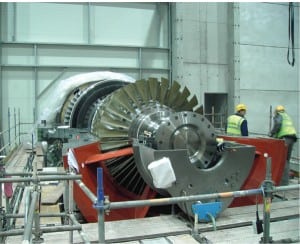
GasTop Plant: Timelkam Power Plant Vöcklabruck District, Upper Austria, Austria
Now that the 412-MW Timelkam Power Plant has replaced a 47-year-old coal-fired power plant located in the Vöcklabruck District, northern Austrians can bid auf wiedersehen (goodbye) to high levels of air pollution. Compared to its predecessor, the new gas-fired combined-cycle plant has dramatically cut CO2 and NOx emissions and produces seven times more energy.
-
Legal & Regulatory
Coal Ash Regulation: Playing the Name Game
What’s in a name? Would coal ash labeled as “special” hazardous waste be as easily recycled as that labeled nonhazardous waste?
-
 Gas
GasTop Plant: West County Energy Center, Palm Beach County, Florida
The 3,600-MW West County Energy Center, with two recently commissioned power blocks and a third just entering start-up, is the first “greenfield” combined-cycle plant constructed by FPL since the 1970s. Thanks to FPL’s long history with repowering projects, the project team commissioned Unit 2 seven months early, with no operator errors during start-up. At just over $600/kW, the cost of the plant was a bargain.
-
Commentary
The Hidden Agendas Behind Citizen Suits
The enforcement mechanisms of the environmental statutes in the 1960s were both cumbersome and ineffective.
-
 Gas
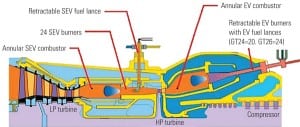
GasFlexible Turbine Operation Is Vital for a Robust Grid
Renewable electricity generation has many environmental advantages, but adding large amounts of far-flung renewable resources to a grid requires increased operating flexibility from dispatchable generators when the wind doesn’t blow or the sun doesn’t shine. One promising option: A combined-cycle plant based on Alstom’s GT24/GT26 combustion turbine can be “parked” at approximately 20% plant load while producing emissions comparable to those during baseload operation—with little loss in thermal efficiency. When demand returns, the combined cycle can return to baseload within minutes.
-
 Business
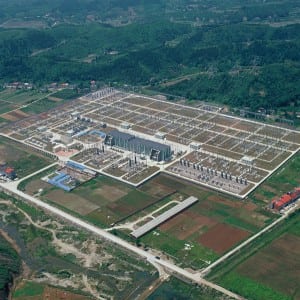
China Completes Ultra-High-Voltage Transmission Superhighway
The State Grid Corp. of China (SGCC) in July put into operation the world’s first ultra-high-voltage direct current (UHVDC) superhighway when it commissioned the Xiangjiaba-Shanghai link. The ±800 kV project, completed in 30 months—a year ahead of schedule—has the capacity to transmit up to 7,200 MW from the Xiangjiaba hydropower plant in southwest China to Shanghai, the country’s leading industrial and commercial center, about 2,000 kilometers (km) away.
-
 O&M
O&MTaming Condenser Tube Leaks, Part I
Summer peaks are still with us, and every unit on your system must be prepared to operate at a moment’s notice. Spot power prices are so high that you expect phone calls asking for a few more megawatts from your units. Then your plant chemistry lab calls to report a condenser tube leak. Your options are few: Shut down immediately and get charged with a forced outage, ignore the leak and keeping running until fall, or schedule a maintenance outage next weekend and hope the leak can be found and fixed. In Part I, we examine what you need to know in order to make an informed decision. In Part II, we’ll explore the actual damage mechanisms.
-
 Gas
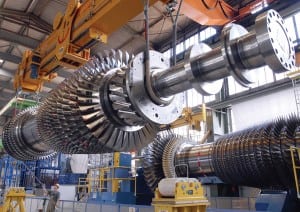
GasHigh-Efficiency Gas Turbines Go to Market
This May, following two years of construction, Siemens Energy put into operation Irsching 5, an 847-MW advanced combined-cycle power plant near Ingolstadt, Germany. The plant’s owner, Gemeinschaftskraftwerke Irsching GmbH—a joint venture of E.ON, Mainova, and HEAG Südhessische Energie—features two SGT5-4000F gas turbines, one SST5-5000 steam turbine, three hydrogen-cooled generators, electrical systems, and Siemens’ SPPA-T3000 instrumentation and control system.
-
Coal
Advanced SCR Catalysts Tune Oxidized Mercury Removal
Catalysts used in selective catalytic reduction (SCR) systems in utility boilers provide high NOx removal efficiencies that routinely exceed 90%. A major co-benefit of applying SCR to coal-fired power plants is that the SCR catalyst also oxidizes the vapor phase mercury from an elemental form to a soluble ionic form, which can be readily captured in a downstream flue gas desulfurization process. Mitsubishi Heavy Industries and Cormetech have developed an advanced SCR catalyst technology with high mercury oxidation activity capable of achieving 95% oxidized mercury over a wide range of operating conditions.
-
 Nuclear
Russia’s Nuclear Mission
Nearly a quarter-century after the Chernobyl nuclear power station disaster in Soviet Ukraine, Russia has been making deals with energy-starved nations all over the globe to help them build new nuclear power plants using Russian second-generation reactor technology.
-
O&M
Work Process Optimization: Meeting the Challenge of Change
The competitive push for more efficient power generation prompted the management of East Kentucky Power Cooperative’s Spurlock Station to provide training and to implement standardized work processes in order to achieve higher productivity. To that end, Spurlock’s management collaborated with salaried and hourly personnel to design and implement work process optimization. Two years later, their proactive, operations-driven culture is promoting continuous improvement at this facility.
-
 Coal
CoalCanada to Shutter Older Coal Plants
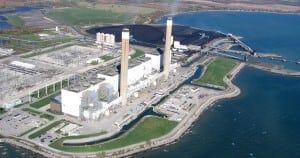
While the U.S. awaits congressional action on a cap-and-trade program that could possibly be limited to just the utility sector, Canada is moving, starting in 2011, to phase out older coal power plants and replace them with natural gas–fired plants. The announcement, made this June by Environment Minister Jim Prentice prior to the G8 and G20 summits, could have serious implications for coal-fired generators in the country.
-
Marmaduke
Marmy, a Horse, and Compressors
Steve Elonka began chronicling the exploits of Marmaduke Surfaceblow—a six-foot-four marine engineer with a steel brush mustache and a foghorn voice—in POWER in 1948, when Marmaduke raised the wooden mast of the SS Asia Sun with the help of two cobras and a case of Sandpaper Gin. Marmy’s simple solutions to seemingly intractable plant problems remain timeless. This Classic Marmaduke story, originally published more than 50 years ago, illustrates that although solutions may be easy to identify, the challenge is often in the implementation. Sometimes a little horse sense is all that is necessary.
-
 Nuclear
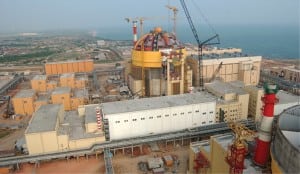
AREVA Installs Finnish EPR Reactor Vessel
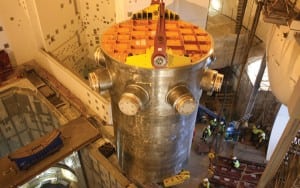
This June, AREVA installed the reactor pressure vessel (Figure 6)—the core of the unit—at the world’s first EPR project, which is under construction in Finland. Now the company will engage in a flurry of installation activities for heavy nuclear components, including lifting into the reactor the first of the four steam generators. Most of the work is expected to be completed by the end of 2012, with power production beginning in 2013.
-
 Coal
CoalLean Construction Principles Eliminate Waste
Eliminate waste in coal, gas, or nuclear power plant construction through a holistic application of lean principles.
-
 Hydro
HydroWave Energy Device to Tap Marine Energy in Gulf of Mexico
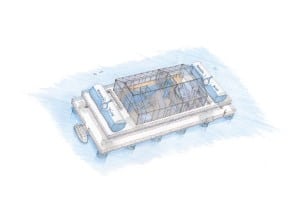
The U.S. Army Corps of Engineers earlier this year awarded its first Section 10 permit ever to a commercial wave-powered demonstration facility planned for installation in the Gulf of Mexico. The novel offshore platform, dubbed the SEADOG, will use a buoy and piston mechanism combined with a water wheel to generate electricity and desalinate water.
-
 News
NewsOptimized Pressure Transmitter
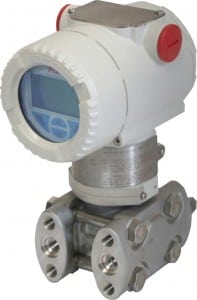
ABB’s new 266 series is an optimized pressure transmitter family that combines modern electronic pressure measurement with the company’s unique human machine interface (HMI) in one common product series, providing base accuracy from ±0.025% to ±0.06%. The series offers the industry’s best draft range, ABB claims. For combustion airflows, this means exceptional resolution with tighter […]
-
News
POWER Digest (August 2010)
Sweden Reverses Ban, Approves Nuclear Reactor Replacements Sweden’s parliament on June 18 reversed an earlier decision and passed the center-right coalition government’s landmark proposal, made last year, that allows for the replacement of the country’s nuclear reactors at the end of their life span. The country had voted in 1980 to phase out its 12 […]
-
 News
NewsPhase Rotation Meter
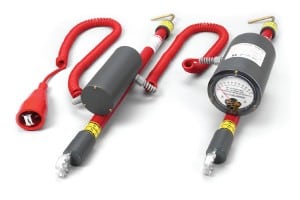
HD Electric Co.’s Phase Rotation Meter (PRM) is used to determine the leading phase of any two phases in a three-phase conductor system. The PRM is a dual-range 0 to 5 kV and 0 to 15 kV device that can be used as high as 45 kV when optional resistor sticks are added. It consists of two […]
-
 News
NewsPortable Power Quality Monitoring
The SEL-734P Portable PQ Meter is a new metering solution from Schweitzer Engineering Laboratories (SEL) that addresses the need for complete and portable power quality monitoring. In addition to the meter, the kit includes three-phase voltage and current inputs, voltage leads, and split-core CTs, all secured in a ruggedized case. ACSELerator QuickSet SEL-5030 software, included […]
-
 Coal
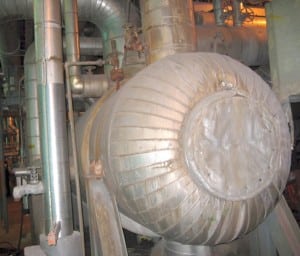
CoalBreathing Added Life into Failing Heat Exchangers
When heat exchanger tubes—sometimes numbering a thousand or more per unit—begin to crack or wear, the effects can lead to a cascade of subsequent failures in adjacent tubes. If too many tubes are plugged, heat exchanger effectiveness is compromised, and power generation may be curtailed. If conventional mechanical plugs are used, they can break loose, leak, and fail. At that point, the replacement of a very costly heat exchanger is imminent.