
POWER
-
 Coal
CoalAdvanced Refractory Lining Improves Gasifier Reliability
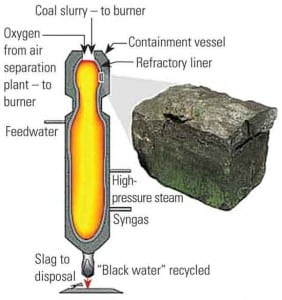
Successful testing of a new refractory lining material developed by the Office of Fossil Energy’s National Energy Technology Laboratory (NETL) could lead to higher reliability and improved economics of gasification technology.
-
 Coal
CoalThe Resurrection of Underground Coal Gasification
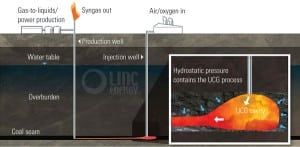
News this past November that Australian company Cougar Energy had begun developing a pilot project to generate power from coal still underground has reignited interest in the 100-year-old alternative energy technology. The company’s planned A$8 million program — expected to be started in the first quarter of 2010 — will be conducted 10 kilometers south of Kingaroy, in southern Queensland. If it is successful, it could lead to the establishment of a 400-MW baseload power station, Cougar Energy officials say.
-
 Nuclear
High-Temperature Gas-Cooled Reactor Concept Moves Forward
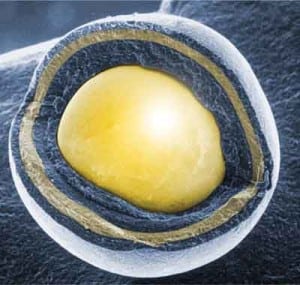
Researchers from the Idaho National Laboratory (INL) say they have developed a new type of nuclear fuel for use in next-generation high-temperature gas reactors that produces less waste — a major step forward for the Next Generation Nuclear Plant (NGNP).
-
O&M
Replacing an HP/IP Rotor
Today’s power plant owners face many challenges, including the aging and degradation of equipment. Steam turbines at times may be condemned due to operating inefficiency or rising vibration levels. In such cases the options may be few because the turbine may require a full or partial rotor section replacement. The good news is that a rotor section replacement can be performed in a relatively short time, depending upon the original rotor configuration. Here’s one example.
-
News
Predicting Hurricane-Related Outages
Researchers from John Hopkins and Texas A&M universities say that they have found a way to accurately predict power outages in advance of a hurricane. Computer models developed using data from Hurricane Katrina and four other destructive storms could save utilities substantial amounts of money and help facilitate rapid restoration of power after a storm, they say.
-
Legal & Regulatory
GHG Emissions Reporting Begins Jan. 1
Last fall, the U.S. Environmental Protection Agency (EPA) issued a rule creating a mandatory national system for reporting greenhouse gas (GHG) emissions. The agency requires regulated entities to begin monitoring GHG emissions January 1, 2010, and to submit their first annual emissions reports March 31, 2011. This is a key step toward federal regulation of GHG emissions (a step that may have major implications regarding "major sources" and permitting requirements for new sources). It’s also an opportunity for power producers to implement their inventory management plans.
-
O&M
Sealing Transformer Oil and SF6 Leaks Quickly and Effectively
Transformers, which are prone to leaking, are an excellent example of where using the right materials and techniques can quickly reduce cleanup costs and potential environmental damage from a fluid leak. Transformer leaks are most commonly caused by degrading cork gaskets or holes in the radiator fins or the steel tank. Often these leaks are slow drips, but occasionally a catastrophic leak will occur, spilling hundreds of gallons of mineral oil into the environment and causing the transformer to short-circuit, causing further health and safety concerns. These dangers, coupled with transformers’ isolated locations, make inspection, repair, and maintenance a major challenge.
-
 O&M
O&MThe U.S. Gas Rebound
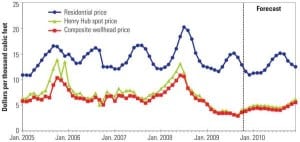
"It’s déjà vu all over again," said Yogi Berra. The Hall of Fame catcher could easily have been predicting the coming resurgence of natural gas – fired generation. Yes, a few more coal plants will be completed this year, but don’t expect any new plant announcements. A couple of nuclear plants may actually break ground, but don’t hold your breath. Many more wind turbines will dot the landscape as renewable portfolio standards dictate resource planning, but their peak generation contribution will be small. The dash for gas in the U.S. has begun, again.
-
O&M
When to Use an Oil Skimmer
Oil skimmers are very effective in removing oil from wastewater before discharge but are also perhaps the most efficient and economical approach.
-
 Environmental
A New Regulatory and Environmental Milieu
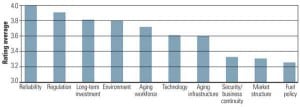
There will be no shortage of important issues to keep utility executives and their staffs busy throughout 2010. Few of these will be surprises, although a number will emerge quickly and assume larger-than-life significance. The confluence of the great recession and the sturm und drang of environmental legislation will create the liveliest of the debates, but more subtle trends will drive additional stressors. The results of Black & Veatch’s 2009 fourth annual industry strategic directions survey can offer guidance as to how these issues will affect the industry in the coming year.
-
 News
NewsThin, Flange-Style Magnetic Encoders
Baumer introduced the new MOR 90 and MOR 105 magnetic incremental encoders for improved speed and position control on electric motors, drives, gearboxes, and conveyors. Measuring just 14 mm thick, these extremely thin, flange-style encoders are virtually imperceptible when positioned between the motor and the gearbox and have little effect on the overall size of […]
-
 Coal
CoalThe Impact of Carbon Trading on Performance: What Europe’s Experience Can Teach North American Generators
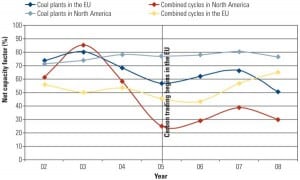
The European carbon trading system experience suggests that North American generators should expect severely altered coal-fired power plant operating profiles if cap-and-trade legislation becomes law. In a groundbreaking study, Solomon Associates predicts the reduction in mean run time that North American generators should expect. The trends outlined in this study provide an overview of some of the broad challenges facing generators in moving to a carbon-constrained market environment.
-
 News
NewsMiniature Stainless Steel Pressure Switch
Ashcroft A-Series pressure switches are designed for tough OEM and industrial applications that require a durable, high-quality miniature switch. Available with explosion-proof and watertight enclosures, the pressure switch features a refined piston actuator that can be ranged up to 2,000 psi while enduring a working pressure of 5,000 psi. Small dimensions, a choice of connections, […]
-
Coal
What Is BACT for CO2?
Assume, for the moment, that the U.S. Congress is unable to agree on legislation aimed at reducing carbon emissions from industry, vehicles, and power plants (the carrot approach). Further, assume that the Environmental Protection Agency (EPA) eventually promulgates rules that require power plants to reduce carbon emissions (the stick approach). Have you given any thought to the range of possible best available control technologies (BACT) that the EPA might require under the Clean Air Act (CAA)?
-
-
 Nuclear
NRC Concerns About AP1000 Structural Strength Could Delay Projects
Concerns raised by the U.S. Nuclear Regulatory Commission (NRC) about the structural strength of Westinghouse Electric Co.’s AP1000 reactor could cause delays for several nuclear plants that planned to use the design in the U.S. — and it raises questions for new builds started or proposed in China and the UK.
-
O&M
Halar-Lined Chimney Remains Maintenance-Free
A fiberglass-reinforced plastic (FRP) Halar stack liner was installed at Vattenfall’s 300-MW Unit 2 at the Nordjylland Power Station in 1995. The 112-meter-high (367-ft) stack, protected from corrosion by the ECTFE liner, is still in excellent condition and has not required any repairs during more than 13 years of service. (ECTFE is short for ethylene chlorotrifluoroethlyene polymer, marketed under the brand name Halar ECTFE [Halar] by Solvay Solexis.)
-
O&M
Rebuilding Feedwater Heaters While a Plant Is Online
Rebuilding aged feedwater heaters can make better economic sense than buying new ones, because rebuilding reduces capital cost and plant outage expenses. At one Texas generating station, rebuilding saved one-third the cost of a new feedwater heater while improving the plant’s heat rate.
-
 News
NewsAutomated Tube Bundle Water Jet System
The ATL-5000 — a new, fully automated water jet system from NLB Corp. — cleans tube bundles three times faster than manual methods and features an adjustable lance stroke that allows the system to be configured for bundles of various lengths, up to 30 feet. The diesel-powered system has five rigid lances, each with a […]
-
Legal & Regulatory
A Flood of Climate Change Tort Cases
On October 16, the Fifth Circuit Court of Appeals revived a lawsuit filed by residents along the Mississippi Gulf coast against several corporations in the energy, fossil fuels, and chemicals industries alleging that the defendants were responsible for property damage caused by Hurricane Katrina — Comer v. Murphy Oil USA, et al., No. 07-60756 (5th Cir. Oct. 16, 2009).
-
 News
NewsScavenger Conveyor System
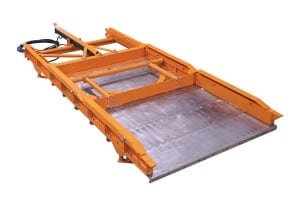
Martin Engineering introduced the Carryback Capture System, a scavenger conveyor system that transfers belt-cleaning residue back into the material stream, avoiding cleanup labor, injury potential, and dust hazards associated with buildup. The 13-inch-high system’s modular design uses an electrically driven hydraulic cylinder to push a steel cleaning blade — or, in a longer scavenger, a […]
-
 Hydro
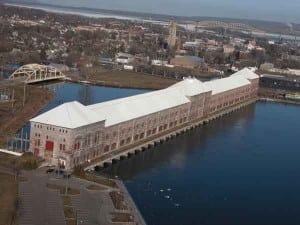
HydroTop Plants: Edison Sault Hydroelectric Plant Sault Ste. Marie, Michigan
Located on the border with Canada and operational since 1902, the Edison Sault Hydroelectric Plant is one of the oldest continuously operating power plants in North America. This pioneer plant continues to generate between 25 to 30 MW when operating at full capacity. Modern wind and solar projects have captured the public’s interest, but this century-old hydroelectric project shows that time is the ultimate arbiter of a technology’s value to society.
-
 News
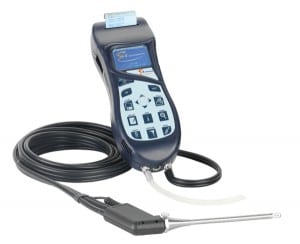
NewsPortable Combustion Analyzer
The updated E2200 Portable Combustion Analyzer from E Instruments is an all-in-one unit for boiler, burner, engine, turbine, furnace, and other combustion applications. Precalibrated and field-replaceable sensors allow for easy diagnostics and replacements to reduce downtime and costly repair charges. The analyzer includes sensors for oxygen (0% – 25%), carbon monoxide (0 – 8,000 ppm), […]
-
 Solar
SolarTop Plants: El Dorado Energy’s Solar Facility, Boulder City, Nevada
Sempra Generation has conjured up a market plan for producing merchant photovoltaic (PV) power that is inspired. Working with First Solar, Sempra has developed a finely tuned and standardized 1-MW PV power block that can be replicated as needed. Sempra built the modular PV plant on land adjacent to an existing gas-fired plant to shorten the development period, piggyback the power directly to the grid, and enable existing staff to manage the combined plants’ operation.
-
News
Belgium, Germany Edge Toward Nuclear Future
A host of European countries have recently made concessions on long-standing nuclear policies. In February this year, for example, Sweden proposed to lift a nearly 30-year-old ban on nuclear power and annulled its nuclear phase-out. And in May 2008, Italy announced it would resume building nuclear plants—two decades after public referendum banned nuclear power and the nation deactivated all of its reactors.
-
 Wind
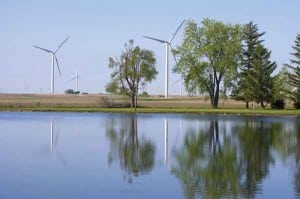
WindTop Plants: Fowler Ridge Wind Farm, Benton County, Indiana
The tractors and combines on Indiana’s farms are getting some competition from a new harvesting technology — powerful turbines that harvest wind. This March the Fowler Ridge Wind Farm opened its first phase, which consists of 222 wind turbines with a total capacity of 400 MW. Phase II is currently under construction and will use 133 wind turbines with a total capacity of 200 MW. A future, third phase will add another 150 MW and give the completed facility a total capacity of 750 MW, which will make it one of the largest wind farms in the world.
-
 Waste to Energy
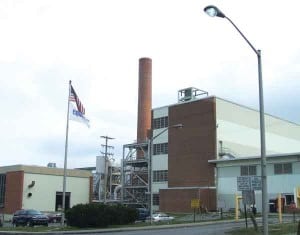
Top Plants: Harrisburg Resource Recovery Facility, Harrisburg, Pennsylvania
After decades of struggling with serious air contamination issues and large financial losses, this Pennsylvania waste-to-energy facility, which was built in 1972, was in need of an extreme makeover. In the wake of an unsuccessful $84 million retrofit attempt in 2005, the faltering facility’s last hope lay with a Covanta project team that took over its operation in 2007. After almost two years of hard work, the facility is now producing up to 17 MW while achieving its environmental compliance goals and earning substantial revenues.
-
 Wind
WindTop Plants: Hywind Floating Wind Turbine, North Sea, Norway
In June, the 2.3-MW Hywind facility, the world’s first large-scale floating wind turbine, was towed to a North Sea location with a water depth of about 220 meters (722 feet) and began operation. Over the next two years this turbine will be subjected to strong wind and waves in a harsh ocean environment in an effort to thoroughly test the innovative technology.
-
 Waste to Energy
Top Plants: Rio Bravo Rocklin Power Station, Lincoln, California
By 2008, the 19-year-old wood-fired Rio Bravo Rocklin Power Station’s operating performance had been significantly degraded by boiler erosion and corrosion caused by (among many other problems) poor fuel. After much consideration, the plant owners elected to invest in a comprehensive upgrade to restore the plant to its as-built performance. Today, the plant operates very reliably. A newly implemented predictive maintenance program should continue to drive down operating costs and further reduce the number of forced outages.
-
Geothermal
The Future of Geothermal
(Web supplement to "Assessing the Earthquake Risk of Enhanced Geothermal Systems.") The future of geothermal energy will be driven by six primary technologies, but each will pose its own challenges.