
POWER
-
 News
NewsCompact Centrifugal Pump
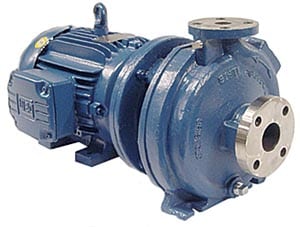
Acknowledging that ANSI centrifugal pumps often need to be installed in areas where space is at a premium, Griswold Pump Co. has developed the 811CC (Close Coupled) ANSI centrifugal pump. This pump offers the features and flexibility of standard Griswold 811 ANSI pumps but with a smaller electrical motor encased in a compact package. Despite […]
-
 Business
How to Get Heard in a Crowded Green World
With everything from baby food to SUVs (hybrids of course!) competing for “green mindshare,” audiences are inundated with a barrage of green claims. Although environmental awareness is at an all-time high, a growing sense of skepticism has crept into the conversation. Whereas even a couple of years ago audiences eagerly gobbled up green claims, people today are more uncertain and retain a higher degree of doubt when confronted with messages of sustainability and environmental stewardship.
-
 Business
Financing Your Biomass Project
Biofuels projects present a variety of risks in today’s business climate that must be mitigated or hedged in order for project financing to proceed. With the contraction in the capital markets, credit quality has become increasingly important.
-
 Business
Energy-from-Waste is a Win-Win for People and the Environment
Instead of just forgetting about their trash when they leave it at the curb, people increasingly are recognizing that municipal solid waste is a valuable resource. For more than 25 years, Covanta Energy has viewed waste as an important resource not to be thrown away. Waste materials have a tremendous amount of potential energy. Waste materials in landfills release significant amounts of methane, a potent greenhouse gas. Recycling and Energy-from-Waste (EfW) together, as part of an integrated waste management approach, make the best use of this resource, reducing our greenhouse gas emissions while turning waste into steam to heat our homes and businesses and electricity to power our cities and towns.
-
 Business
EarthEra®: Official Clean Energy Partner for RETECH 2010
ACORE is pleased to partner with EarthEra to balance the carbon emissions of this year’s conference. EarthEra is an innovative new program from NextEra Energy Resources, North America’s largest producer of wind and solar power. The EarthEra program provides a powerful new way for everyone, from large organizations to individual consumers to reduce their carbon footprint and help build a clean energy future. 100% of revenue received by EarthEra is directed to the EarthEra Renewable Energy Trust and used to build new renewable energy facilities.
-
 Business
DOE to Invest up to $12 Million to Support Early-Stage Solar Technologies
U.S. Department of Energy Secretary Steven Chu announced last week that the DOE’s National Renewable Energy Laboratory (NREL) will invest up to $12 million in total funding ($10 million from the American Recovery and Reinvestment Act) in four companies to support the development of early-stage solar energy technologies and help them advance to full commercial scale. The goal of this effort is to help further expand a clean energy economy and make solar energy more cost-competitive with conventional forms of electricity.
-
 Business
The Volvo Group and Sustainable Mobility
Efficient transport plays a crucial role in the development of society and its economy and, in many respects, commercial transport solutions are the lifeblood of the economy. At the same time, transportation has a negative impact on society, not least in the form of emissions and congestion. "The key is to strengthen the positive aspects of the transport system while working to combat the negative ones," says Stefan Lorentzson, President of Volvo Group North America. "The Volvo Group is continually developing new engine technologies which reduce emissions and increase fuel efficiency."
-
 Business
Alliance Promotes Federal Renewable Energy Standard
The RES Alliance for Jobs is a coalition of businesses and organizations that support Congressional enactment of a strong federal renewable energy standard (RES). The group’s members include companies and associations representing the wind, solar, biomass, waste-to-energy and hydro power business lines. The Alliance seeks to demonstrate that a strong RES would create sustainable growth in the renewable energy industries, enabling manufacturers to invest billions of dollars in the U.S. economy and create hundreds of thousands of high-quality American jobs that cannot be outsourced.
-
Business
Climate Change Pledge Is No Easy Sell on Hill
One day before the Copenhagen climate change summit was scheduled to end, negotiations had deadlocked. Developing nations led by China were demanding that rich countries pledge as much as $200 billion a year to help them cope with drought, rising sea levels and other ravages of global warming already afflicting some of the poorest countries on Earth. For its part, the United States was insisting on international verification of carbon emission reductions, a condition anathema to China but viewed as essential to gain Congress’ approval.
-
 Business
How Sugarcane Ethanol Contributes to a Cleaner World
Over the past three decades, the Brazilian sugarcane industry has experienced major and continuous technological improvement. Today, sugarcane is the basic input for an extraordinarily diverse range of value-added products including food, animal feed, chemicals, biofuels and electricity coming from modern, integrated biorefineries that produce sugar, ethanol, bioelectricity and bioplastics in Brazil.
-
 Business
Lockheed Martin—Helping Our Federal Customers Save Energy
The support of energy savings performance contracts helps customers achieve goals.
The federal government is the largest single user of energy in the United States. Energy efficiency is the cleanest, cheapest and fastest source of energy. Put the two together and you have the Federal Energy Management Program (FEMP).
-
 Business
Ocean Thermal Energy Conversion: Renewable, Reliable Power
Renewable and reliable alternative energy is a critical need as the world’s oil supplies are depleted. Using its globally renowned expertise in engineering and systems integration, Lockheed Martin is successfully pioneering new ways to leverage solar, wind, and wave energy as alternatives to fossil fuels.
-
 Business
The Energy Crisis Boosted District Heating Development in Denmark
District heating in Denmark was developing in the same manner as in other countries before the energy crisis hit the western countries in 1973/74. However, by the beginning of the 21st century, the Danish energy consumption per capita for space heating had dropped more than 50% compared to 1973.
-
 Business
Waste-to-Energy in Denmark
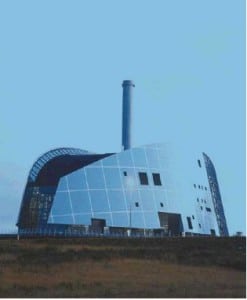
Owing to visionary environmental and energy policies combined with coherent public planning, Denmark has developed the most efficient waste management system in Europe.
-
 Business
Merger and Acquisition “Truths”
Many representatives and advisors of renewable energy businesses believe (or at least hope) that 2010 will witness a significant “uptick” in merger and acquisition (M&A) activity across all renewable energy industries. As renewable energy businesses continue to attract funding and benefit from favorable governmental policies (or, conversely, as funding slows down or governmental policies change), such businesses should be in a position to attract suitors and/or explore growth opportunities. To the extent you are looking for or experience M&A opportunities, below are a few “M&A Truths.”
-
 Solar
SolarWhich Country’s Grid Is the Smartest?
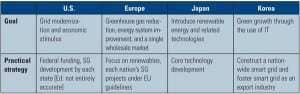
The U.S. isn’t the only country evaluating and implementing elements of smart grid technology. In fact, it could be argued that other nations are much farther along the path to a comprehensive, technically advanced system for integrating renewables, managing load, and creating a more flexible power grid.
-
 Solar
SolarChina’s Largest PV Maker to Set Up in Arizona
China’s largest solar panel maker, Suntech Power, in mid-November announced plans to open a photovoltaic (PV) manufacturing facility in Phoenix, Ariz., in the third quarter of 2010. Roger Efrid, Suntech’s managing director, was widely quoted as saying that the company — which holds 12% of U.S. market share and is looking to reach 20% by 2010 — chose to establish a plant nearer to customers. This was smart business, even though panels would be made from solar cells imported from China, because solar panels are heavy, he told The New York Times: "As the price of solar panels has reduced dramatically in the last 12 months, the shipping costs have become a larger and larger portion of the overall cost of getting these projects to market."
-
Smart Grid
My Top 10 Predictions for 2010
David Letterman has entertained us with his "Late Show" Top Ten list since 1985. In keeping with this issue’s theme of forecasting the future of the power industry, I’m going to step out with my top 10 list of what to expect in the next 12 months. 10. New Nuclear Will Progress Slowly. I don’t […]
-
 Coal
CoalAdvanced Refractory Lining Improves Gasifier Reliability
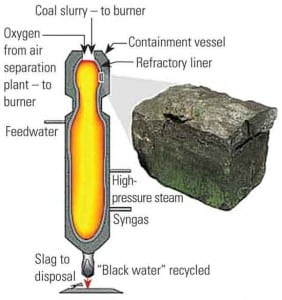
Successful testing of a new refractory lining material developed by the Office of Fossil Energy’s National Energy Technology Laboratory (NETL) could lead to higher reliability and improved economics of gasification technology.
-
 Coal
CoalThe Resurrection of Underground Coal Gasification
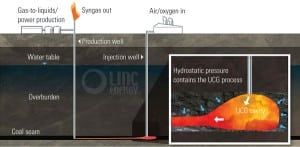
News this past November that Australian company Cougar Energy had begun developing a pilot project to generate power from coal still underground has reignited interest in the 100-year-old alternative energy technology. The company’s planned A$8 million program — expected to be started in the first quarter of 2010 — will be conducted 10 kilometers south of Kingaroy, in southern Queensland. If it is successful, it could lead to the establishment of a 400-MW baseload power station, Cougar Energy officials say.
-
 Nuclear
High-Temperature Gas-Cooled Reactor Concept Moves Forward
Researchers from the Idaho National Laboratory (INL) say they have developed a new type of nuclear fuel for use in next-generation high-temperature gas reactors that produces less waste — a major step forward for the Next Generation Nuclear Plant (NGNP).
-
O&M
Replacing an HP/IP Rotor
Today’s power plant owners face many challenges, including the aging and degradation of equipment. Steam turbines at times may be condemned due to operating inefficiency or rising vibration levels. In such cases the options may be few because the turbine may require a full or partial rotor section replacement. The good news is that a rotor section replacement can be performed in a relatively short time, depending upon the original rotor configuration. Here’s one example.
-
News
Predicting Hurricane-Related Outages
Researchers from John Hopkins and Texas A&M universities say that they have found a way to accurately predict power outages in advance of a hurricane. Computer models developed using data from Hurricane Katrina and four other destructive storms could save utilities substantial amounts of money and help facilitate rapid restoration of power after a storm, they say.
-
Legal & Regulatory
GHG Emissions Reporting Begins Jan. 1
Last fall, the U.S. Environmental Protection Agency (EPA) issued a rule creating a mandatory national system for reporting greenhouse gas (GHG) emissions. The agency requires regulated entities to begin monitoring GHG emissions January 1, 2010, and to submit their first annual emissions reports March 31, 2011. This is a key step toward federal regulation of GHG emissions (a step that may have major implications regarding "major sources" and permitting requirements for new sources). It’s also an opportunity for power producers to implement their inventory management plans.
-
O&M
Sealing Transformer Oil and SF6 Leaks Quickly and Effectively
Transformers, which are prone to leaking, are an excellent example of where using the right materials and techniques can quickly reduce cleanup costs and potential environmental damage from a fluid leak. Transformer leaks are most commonly caused by degrading cork gaskets or holes in the radiator fins or the steel tank. Often these leaks are slow drips, but occasionally a catastrophic leak will occur, spilling hundreds of gallons of mineral oil into the environment and causing the transformer to short-circuit, causing further health and safety concerns. These dangers, coupled with transformers’ isolated locations, make inspection, repair, and maintenance a major challenge.
-
 O&M
O&MThe U.S. Gas Rebound
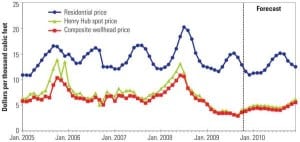
"It’s déjà vu all over again," said Yogi Berra. The Hall of Fame catcher could easily have been predicting the coming resurgence of natural gas – fired generation. Yes, a few more coal plants will be completed this year, but don’t expect any new plant announcements. A couple of nuclear plants may actually break ground, but don’t hold your breath. Many more wind turbines will dot the landscape as renewable portfolio standards dictate resource planning, but their peak generation contribution will be small. The dash for gas in the U.S. has begun, again.
-
O&M
When to Use an Oil Skimmer
Oil skimmers are very effective in removing oil from wastewater before discharge but are also perhaps the most efficient and economical approach.
-
 Environmental
A New Regulatory and Environmental Milieu
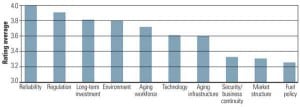
There will be no shortage of important issues to keep utility executives and their staffs busy throughout 2010. Few of these will be surprises, although a number will emerge quickly and assume larger-than-life significance. The confluence of the great recession and the sturm und drang of environmental legislation will create the liveliest of the debates, but more subtle trends will drive additional stressors. The results of Black & Veatch’s 2009 fourth annual industry strategic directions survey can offer guidance as to how these issues will affect the industry in the coming year.
-
 News
NewsThin, Flange-Style Magnetic Encoders
Baumer introduced the new MOR 90 and MOR 105 magnetic incremental encoders for improved speed and position control on electric motors, drives, gearboxes, and conveyors. Measuring just 14 mm thick, these extremely thin, flange-style encoders are virtually imperceptible when positioned between the motor and the gearbox and have little effect on the overall size of […]
-
 Coal
CoalThe Impact of Carbon Trading on Performance: What Europe’s Experience Can Teach North American Generators
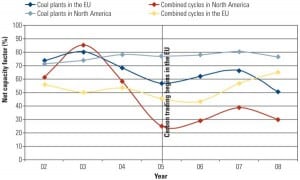
The European carbon trading system experience suggests that North American generators should expect severely altered coal-fired power plant operating profiles if cap-and-trade legislation becomes law. In a groundbreaking study, Solomon Associates predicts the reduction in mean run time that North American generators should expect. The trends outlined in this study provide an overview of some of the broad challenges facing generators in moving to a carbon-constrained market environment.