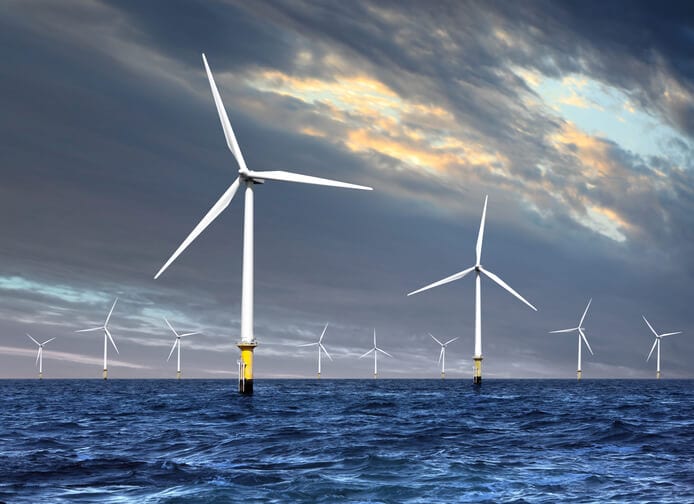
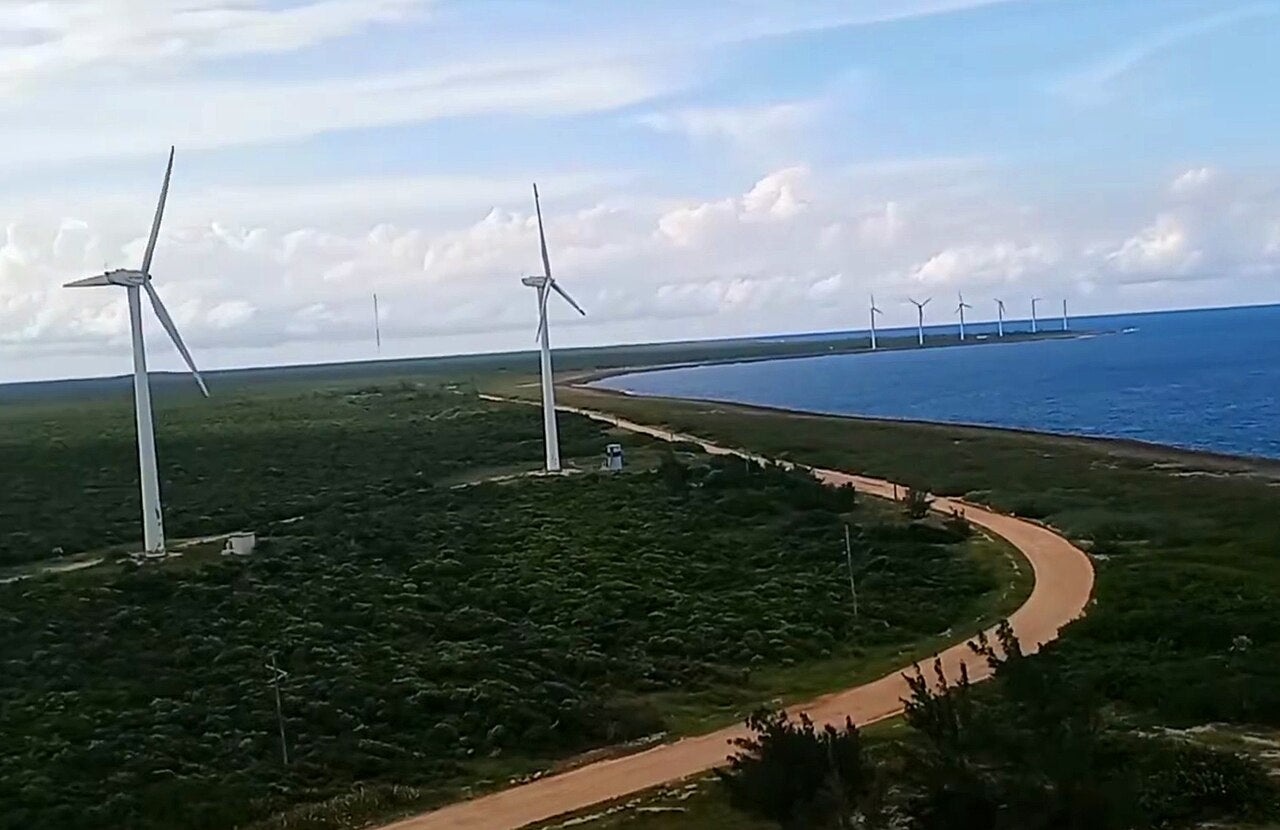
After more than a decade of construction setbacks, Cuba has begun erecting turbines at the Herradura 1 wind farm in the eastern province of Las Tunas—the largest wind project ever attempted on the island. Vicente de la O Levy, Cuba’s Minister of Energy and Mines, said the facility will be brought online this year, with all equipment, technical assistance, and cranes on site, and tower assembly under way since late April.
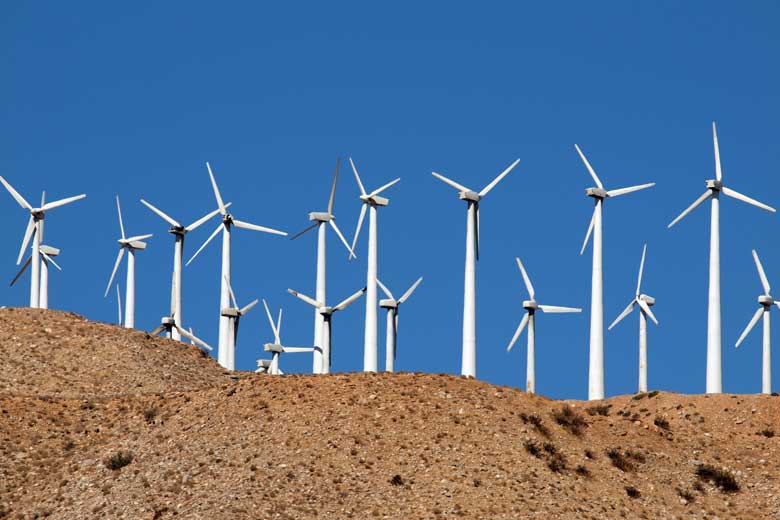
As originally designed, the project comprises 34 Goldwind GW77/1500 turbines from China—each rated at 1.5 MW with a 76.9-meter rotor diameter—for a combined nameplate capacity of 51 MW. The towers will be taller than those at the Gibara wind farms (Figure 1) in Holguín province, currently Cuba’s largest operating wind installations.
According to Carlos Arias Sobrino, director of the Electric Company in Las Tunas, the first commissioning phase will install 22 of the 34 planned turbines, producing roughly 34 MW at maximum output. He did not rule out adding the remaining 12 turbines later to reach the full 51 MW envisioned at the project’s outset, but no schedule has been announced for that expansion. De la O Levy, in his recent public statements, has continued to cite the original 34-turbine, 51-MW design when describing this year’s completion target.
Herradura 1 has been under development for more than 10 years, with progress repeatedly stalled by missing technology and supply-chain constraints for major components. Despite the delays, work on supporting infrastructure proceeded throughout: an electrical substation and a specialized maintenance center are both complete and ready to support continuous turbine operation.
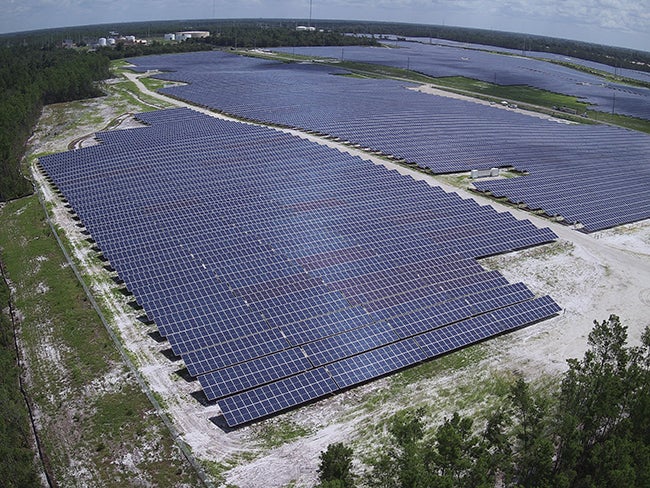
Las Tunas already operates eight solar parks with combined capacity exceeding 60 MW, and Herradura 1 will significantly diversify the province’s renewable mix. The northern coast of Las Tunas, where the project is located, offers some of the strongest sustained wind resources on the island.
In a recent appearance on Cuban television, De la O Levy laid out a three-stage energy transition program. The first stage targets 24% renewable penetration by 2030—up from an estimated 10% today, with an interim goal of 15% this year. The second stage aims for 40% by 2035, which the minister said would eliminate Cuba’s fuel imports. The third stage envisions 100% renewable generation by 2050, what officials describe as full energy sovereignty.
The minister said the country’s Renewable Energy and Energy Efficiency Policy, originally approved in 2014, has been substantially expanded in scope. “Starting in 2024 and 2025, this policy is conceived as an investment process, a complete cultural transformation. It begins in schools, involves children, and aims to utilize all of Cuba’s energy potential, which is considerable,” he said.
De la O Levy also emphasized recovering and repurposing technologies developed during Cuba’s Special Period—the post-Soviet economic crisis of the 1990s that forced wide adoption of low-tech, low-input solutions across the island. He noted that 5,673 of Cuba’s 7,827 traditional water-pumping windmills remain available for use, and that 124 of 409 biogas plants are currently operational. The broader goal, he said, is a cultural and investment transformation that draws on every available resource on the path to full energy sovereignty by 2050.
—Amaury Pérez Sánchez (amauryps@nauta.cu) is a chemical engineer at the University of Camagüey in Cuba.