
Articles By

-
 Coal
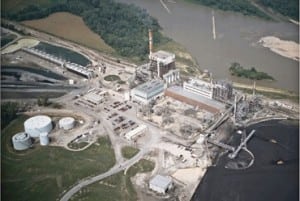
CoalWestar’s Lawrence Energy Center wins for not blinking on safety
It took Westar Energy eight years to upgrade the Lawrence Energy Center to burn Powder River Basin coal. Its zero lost-time accident record during the million-man-hour project is a testament to Westar’s commitment to workplace safety. Here’s your backstage pass to meet the PRB Coal Users’ Group 2006 Plant of the Year.
-
 Instrumentation & Controls
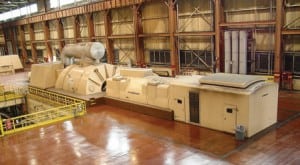
Finding and fixing leakage within combined HP-IP steam turbines: Part I
By design, combined HP-IP turbines have a small amount of internal leakage from the high-pressure turbine to the intermediate-pressure turbine. When turbines are new, the amount of this leakage is close to the design heat balance. But as turbines age, the leakage increases considerably, causing a heat rate penalty and possibly a reliability problem. In Part I, we explore the symptoms and causes of excessive leakage within GE steam turbines and how to correct the problem. Part II, in next month’s issue, will examine the same issues for Westinghouse and Allis-Chalmers turbines.
-
 Coal
CoalNavigating a carbon-constrained world
Scientific debate on the validity of global warming science continues, but the issue has yet had little impact on individuals. That impact is being negotiated in Washington, where a regulatory framework that would mandate reductions of greenhouse gases (GHGs) is taking shape. Legislative options under consideration would redefine what power plants must do-and not do-to […]
-
Environmental
The bumpy road to federal carbon dioxide caps
There are often five stages to enacting major legislative reforms: Initial enthusiasm, a sobering recognition of the complex issues to be solved, excruciating negotiations over those issues, hand-to-hand combat with supporters of the status quo, and resignation that the final product only deals with part of the problem. Congress has reached Stage 2 as it considers a cap-and-trade system for reducing carbon emissions. Now the real work begins.
-
 Coal
CoalDynamic classifiers improve pulverizer performance and more
Keeping coal-fired steam plants running efficiently and cleanly is a daily struggle. An article in the February 2007 issue of POWER explained that one way to improve the combustion and emissions performance of a plant is to optimize the performance of its coal pulverizers. By adding a dynamic classifier to the pulverizers, you can better control coal particle sizing and fineness—and increase pulverizer capacity to boot.
-
 Coal
CoalWhat’s that scrubber going to cost?
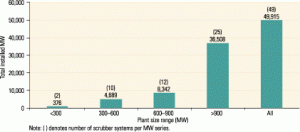
The latest benchmarking study by the EUCG examines the technology and costs of 49 flue gas desulfurization systems currently under design or construction by 12 of the nation’s largest utilities. Although the study’s detailed results are proprietary to EUCG members that participated in it, POWER was given access to the top-level findings. To get details at the plant/unit level, you’ll have to join the EUCG and participate in the study, which is ongoing.
-
This month in POWER…
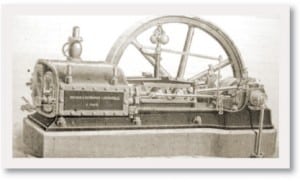
July 1886 POWER reported on the latest steam engine technology offered to the power generation market, this time by France. The Boulet engine (Figure 1) was described as a "French horizontal compound condensing receiver engine, having cranks at right angles, cylinders side by side, and live steam jacket. The valves are double slides, giving small […]
-
 Commentary
Third time the charm for unbiased open access?
The Federal Energy Regulatory Commission (FERC) recently issued major rules that address for the third time "discrimination" issues remaining after FERC’s 1996 landmark Order 888, which ushered in mandatory open access to transmission. The order was intended to give all power sellers equal access to power lines and thus increase wholesale price competition. Earlier […]
-
 Coal
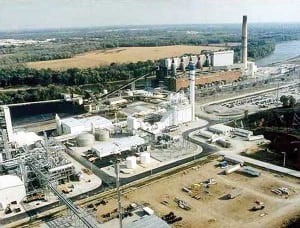
CoalThe Coal Patrol: Coal to Synfuels: Deal or No Deal?
Synfuels’ political bubble has burst in Washington, but the market may step in where Congress fears to tread. When coal industry interests, in the form of the CTL Coalition, got a bill with strong federal support for coal-to-liquids technology before the Senate this spring, it appeared that the political skids were greased for some kind […]
-
 O&M
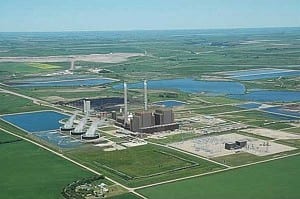
O&MLignite Drying: New Coal-Drying Technology Promises Higher Efficiency Plus Lower Costs and Emissions
The U.S. Department of Energy (DOE) and Great River Energy are testing a new coal-drying technology that could dramatically reduce the emissions of lignite-burning power plants. The project was selected for funding during Round I of the DOE’s Clean Coal Power Initiative (CCPI), a series of competitions to demonstrate a range of promising clean-coal technologies. […]
-
 Coal
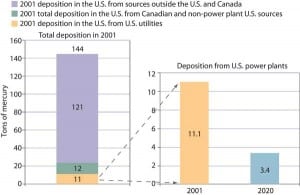
CoalMercury Control: Capturing Mercury in Wet Scrubbers: Part I
Are you using your flue gas desulfurization (FGD) system to its highest potential? You might not be if you’re not making it do double duty. It seems that million-dollar wet scrubber you installed to rid your flue gases of sulfur dioxide also can do a decent job of capturing mercury — under the right conditions. […]
-
Coal
Speaking of Coal Power: IGCC Sticker Shock
Former Illinois Senator Everett Dirksen once observed, "A billion here and a billion there, and pretty soon you’re talking real money." The same can be said about skyrocketing estimated costs of integrated gasification combined-cycle (IGCC) plants as their designs are fleshed out. The higher price tags shouldn’t be a surprise — the more you learn […]
-
 O&M
O&MPRB Tech Notes: Lawrence Energy Center Showcases Winning Plant
Lawrence Energy Center (LEC) proudly hosted about 60 representatives of the Powder River Basin Coal Users’ Group (PRBCUG) at its July 24th open house, luncheon, and plant tour. LEC was named the PRBCUG’s 2007 Plant of the Year at this year’s ELECTRIC POWER Conference and Exhibition in Chicago, May 1 – 3. Traditionally, the winning […]
-
O&M
Coal Plant O&M: Smart Sootblower Tailors Cleaning to Need for It / Blending’s Impact on Coal Quality
The 1990 amendments to the Clean Air Act require coal-fired power plants to reduce their emissions of the pollutant SO2. To do so, many have switched to, or are considering switching to, Powder River Basin (PRB) coal. Unfortunately, PRB coal has a tendency to leave excessive and tenacious deposits on boiler heat-exchange surfaces. Complicating the problem, the distribution of the deposits is far from uniform.
-
 Coal
CoalGlobal Monitor (June 2007)
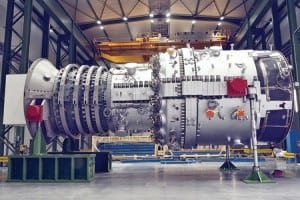
Siemens, E.ON to test world’s largest GTG / Midwest to add 76-MW peaker in Kansas / Tapping the sun near Phoenix / Georgia Tech developing 3-D PV nanocells / Wind farms with hydrogen backup? / BNSF , union come to terms / IPL to buy 200-MW wind project / India to improve environmental monitoring / POWER digest
-
 O&M
O&MFocus on O&M (June 2007)
Ready for your NERC close-up? / Synthetic oils for industrial applications
-
 Legal & Regulatory
Politicians and state PUCs must shape energy policy together
Historically, states have delegated responsibility for establishing and implementing their energy policy to a public utilities commission (PUC). During most of the 20th century, state PUCs operated with relatively little interference from state legislators. In California, for example, the PUC, created by the state constitution, was vested with the broad authority to independently regulate […]
-
 Business
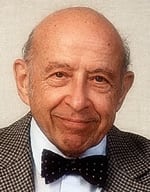
Chauncey Starr: A personal memoir
Chauncey Starr, founder of EPRI—the Electric Power Research Institute—and its first CEO, passed away on April 17, 2007. The previous day, a celebration of his recent 95th birthday had been held at EPRI, where Chauncey held forth for more than an hour on his life experiences and lessons learned. He was in fine fettle. Chauncey […]
-
 Instrumentation & Controls
Old plant, new mission
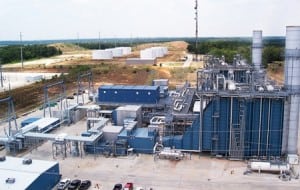
Since 1999, the Texas grid operator ERCOT has given plant owners economic incentives to upgrade and extend the life of their generating units. Lower Colorado River Authority has seized the opportunity to modernize the control systems of its 1970s-vintage Sim Gideon natural gas–fired steam plant. Sophisticated control schemes now calculate the toll taken by running units under severe service conditions—including the high ramp rates that a plant must execute to sell ancillary services.
-
 O&M
O&MDrum pressure the key to managing boiler stored energy
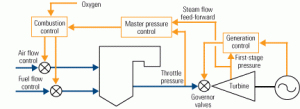
At the heart of most boiler combustion control systems (and most coordinated boiler/turbine control systems as well) is throttle pressure correction, usually applied by the "master controller." Throttle pressure is considered a key variable to control because it represents the energy balance between the boiler and the turbine. When throttle pressure is constant, the boiler […]
-
 Coal
CoalKimberlina: A zero-emissions demonstration plant
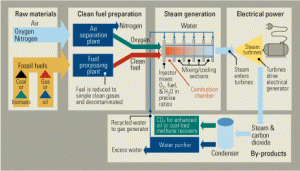
FutureGen may be getting the headlines, but it’s not the only superclean demonstration plant in town. In fact, you could argue that other technologies are further down the evolutionary timeline. Case in point: Clean Energy Systems’ adaptation of rocket engine technology to radically change the way fuel is burned. The result is a true zero-emissions power plant.
-
 Gas
GasSiemens G-Class technology builds for the future
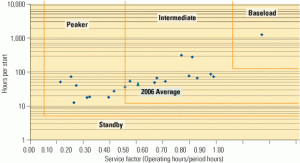
Gas turbine manufacturers aren’t selling as many machines today as they did in the hyperactive 1990s. But they are still continuing to refine G-Class technology. It has been about eight years since the first steam-cooled SGT6-6000G from Siemens Power Generation entered service. Take a quick tour of what must now be considered a mature gas turbine technology.
-
 Business
How to make VARs—and a buck
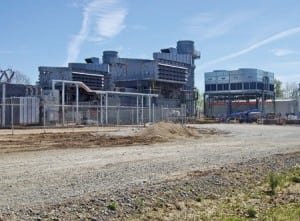
Last month, POWER weighed the pros and cons of the various grid interconnection options available to distributed generation plants. This month we explore the technology choices for generating reactive power, or volt-amperes reactive (VARs), which utilities are willing to pay for as an ancillary service.
-
 Coal
CoalGlobal warming, rising costs complicate capacity additions
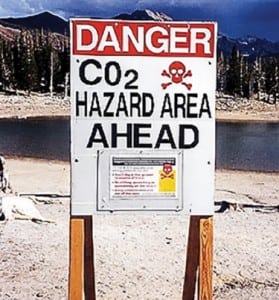
If little else is clear about the future of the U.S. power industry, this much is: Electricity rates are going up across the country, and will continue to. None of the esteemed panelists at the CEO session of the ELECTRIC POWER 2007 Conference & Exhibition in Chicago last month actually said those words. But much […]
-
 Coal
CoalPRB Coal Users’ Group grapples with supply chain challenges
Consumption of Powder River Basin coal continues to grow, from 28 million tons annually in the mid-1970s to what is now 400 million tons per year. Existing plants as far east as Nova Scotia burn the low-sulfur coal to comply with increasingly stringent limits on SO2 emissions, and PRB coal has become the fuel of […]
-
Nuclear
Flies in the nuclear power ointment: Supply chain complexity, shortage of skilled labor
Perhaps the most interesting aspect of the nuclear track at the ELECTRIC POWER 2007 Conference & Exhibition (EP07) in Chicago last month was the attendance. For the most part, its sessions were jammed, leading session chairmen to mention how different this was from prior years. Clearly, nuclear has buzz. The environment looks promising: The regulators […]
-
 Coal
CoalClimate change concerns drive projects to curb CO2
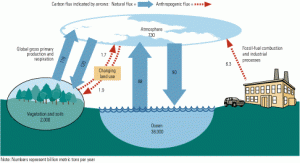
In a carbon-constrained world, CO2 capture and storage (CCS), although considered the most radical of the carbon abatement technologies (CATs), seems to be favored over combustion and steam cycle improvements alone. However, CCS is the least commercially developed of the CAT options; at present, there are only field prototypes for its various forms. Nonetheless, most […]
-
 Smart Grid
Smart grid still just a "vision thing"
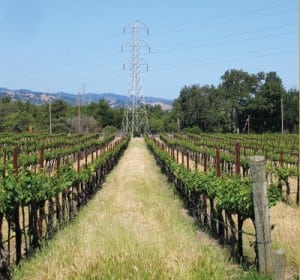
T&D systems with embedded intelligence have a great future, and they always will. Too many powerful forces—politics, money, and power—remain to be reconciled before consumers and utilities can work together, seamlessly, to reduce electricity demand and eliminate delivery system bottlenecks.
-
 News
NewsRetrospective
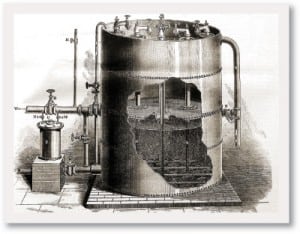
June 1886 POWER reported on the art and science of water treatment and its effect on boiler performance in the cover story this month. "Dr. J.G. Rogers, an authority on steam generation, is quoted as stating that one-sixteenth of an inch of scale in a boiler will require the extra consumption of 15% more fuel; […]
-

New math
James Thurber once said that it is "easier to ask some of the questions than to come up with all the answers." As a magazine editor, I get to ask lots of questions and make plenty of suggestions. Not everyone likes my suggestions, but I trust the readers of POWER to make their own studied […]