
Articles By

-
 Instrumentation & Controls
Old plant, new mission
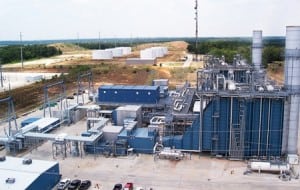
Since 1999, the Texas grid operator ERCOT has given plant owners economic incentives to upgrade and extend the life of their generating units. Lower Colorado River Authority has seized the opportunity to modernize the control systems of its 1970s-vintage Sim Gideon natural gas–fired steam plant. Sophisticated control schemes now calculate the toll taken by running units under severe service conditions—including the high ramp rates that a plant must execute to sell ancillary services.
-
 O&M
O&MDrum pressure the key to managing boiler stored energy
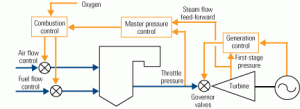
At the heart of most boiler combustion control systems (and most coordinated boiler/turbine control systems as well) is throttle pressure correction, usually applied by the "master controller." Throttle pressure is considered a key variable to control because it represents the energy balance between the boiler and the turbine. When throttle pressure is constant, the boiler […]
-
 Coal
CoalKimberlina: A zero-emissions demonstration plant
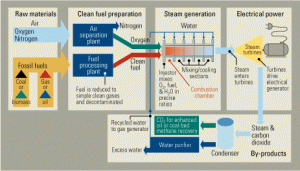
FutureGen may be getting the headlines, but it’s not the only superclean demonstration plant in town. In fact, you could argue that other technologies are further down the evolutionary timeline. Case in point: Clean Energy Systems’ adaptation of rocket engine technology to radically change the way fuel is burned. The result is a true zero-emissions power plant.
-
 Gas
GasSiemens G-Class technology builds for the future
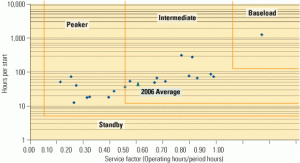
Gas turbine manufacturers aren’t selling as many machines today as they did in the hyperactive 1990s. But they are still continuing to refine G-Class technology. It has been about eight years since the first steam-cooled SGT6-6000G from Siemens Power Generation entered service. Take a quick tour of what must now be considered a mature gas turbine technology.
-
 Business
How to make VARs—and a buck
Last month, POWER weighed the pros and cons of the various grid interconnection options available to distributed generation plants. This month we explore the technology choices for generating reactive power, or volt-amperes reactive (VARs), which utilities are willing to pay for as an ancillary service.
-
 Coal
CoalGlobal warming, rising costs complicate capacity additions
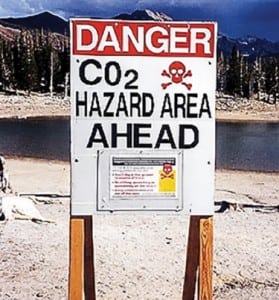
If little else is clear about the future of the U.S. power industry, this much is: Electricity rates are going up across the country, and will continue to. None of the esteemed panelists at the CEO session of the ELECTRIC POWER 2007 Conference & Exhibition in Chicago last month actually said those words. But much […]
-
 Coal
CoalPRB Coal Users’ Group grapples with supply chain challenges
Consumption of Powder River Basin coal continues to grow, from 28 million tons annually in the mid-1970s to what is now 400 million tons per year. Existing plants as far east as Nova Scotia burn the low-sulfur coal to comply with increasingly stringent limits on SO2 emissions, and PRB coal has become the fuel of […]
-
Nuclear
Flies in the nuclear power ointment: Supply chain complexity, shortage of skilled labor
Perhaps the most interesting aspect of the nuclear track at the ELECTRIC POWER 2007 Conference & Exhibition (EP07) in Chicago last month was the attendance. For the most part, its sessions were jammed, leading session chairmen to mention how different this was from prior years. Clearly, nuclear has buzz. The environment looks promising: The regulators […]
-
 Coal
CoalClimate change concerns drive projects to curb CO2
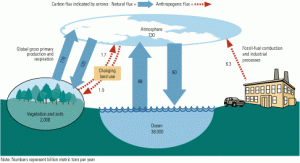
In a carbon-constrained world, CO2 capture and storage (CCS), although considered the most radical of the carbon abatement technologies (CATs), seems to be favored over combustion and steam cycle improvements alone. However, CCS is the least commercially developed of the CAT options; at present, there are only field prototypes for its various forms. Nonetheless, most […]
-
 Smart Grid
Smart grid still just a "vision thing"
T&D systems with embedded intelligence have a great future, and they always will. Too many powerful forces—politics, money, and power—remain to be reconciled before consumers and utilities can work together, seamlessly, to reduce electricity demand and eliminate delivery system bottlenecks.
-
 News
NewsRetrospective
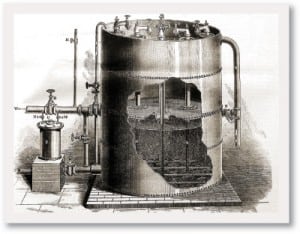
June 1886 POWER reported on the art and science of water treatment and its effect on boiler performance in the cover story this month. "Dr. J.G. Rogers, an authority on steam generation, is quoted as stating that one-sixteenth of an inch of scale in a boiler will require the extra consumption of 15% more fuel; […]
-

New math
James Thurber once said that it is "easier to ask some of the questions than to come up with all the answers." As a magazine editor, I get to ask lots of questions and make plenty of suggestions. Not everyone likes my suggestions, but I trust the readers of POWER to make their own studied […]
-
 Commentary
The electricity challenge of the 21st century
When tackling a problem, engineers bring both skepticism and optimism to the task. As the nation’s electric power engineers look to fill America’s looming capacity gap, they will need to apply healthy doses of both. The U.S. Department of Energy’s Energy Information Administration (EIA) projects a 50% increase in electricity demand over the next 25 […]
-
 Coal
CoalGlobal Monitor (June 2007)
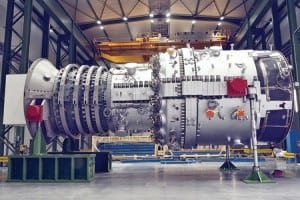
Siemens, E.ON to test world’s largest GTG / Midwest to add 76-MW peaker in Kansas / Tapping the sun near Phoenix / Georgia Tech developing 3-D PV nanocells / Wind farms with hydrogen backup? / BNSF , union come to terms / IPL to buy 200-MW wind project / India to improve environmental monitoring / POWER digest
-
 O&M
O&MFocus on O&M (June 2007)
Ready for your NERC close-up? / Synthetic oils for industrial applications
-
 Legal & Regulatory
Politicians and state PUCs must shape energy policy together
Historically, states have delegated responsibility for establishing and implementing their energy policy to a public utilities commission (PUC). During most of the 20th century, state PUCs operated with relatively little interference from state legislators. In California, for example, the PUC, created by the state constitution, was vested with the broad authority to independently regulate […]
-
 Business
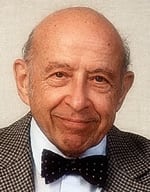
Chauncey Starr: A personal memoir
Chauncey Starr, founder of EPRI—the Electric Power Research Institute—and its first CEO, passed away on April 17, 2007. The previous day, a celebration of his recent 95th birthday had been held at EPRI, where Chauncey held forth for more than an hour on his life experiences and lessons learned. He was in fine fettle. Chauncey […]
-
 Business
The history of POWER is the history of power
This month we officially commemorate the 125th anniversary of the magazine that has been essential reading for owners and operators of power generating plants. As you read this brief history, you’ll see that—although we’re looking back at an illustrious past—the secret of POWER’s success has been its commitment to the future. As we look forward to the next milestone anniversary, we anticipate covering the latest developments in a new generation of power technologies. As always, our mission is to provide the best information and advice in the service of safely and efficiently powering the global energy industry.
-
 Waste to Energy
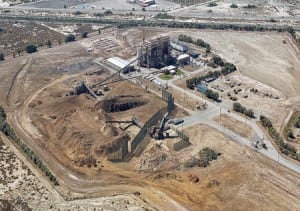
Experts ponder future of biomass industry
This month we officially commemorate the 125th anniversary of the magazine that has been essential reading for owners and operators of power generating plants. As you read this brief history, you’ll see that—although we’re looking back at an illustrious past—the secret of POWER’s success has been its commitment to the future. As we look forward to the next milestone anniversary, we anticipate covering the latest developments in a new generation of power technologies. As always, our mission is to provide the best information and advice in the service of safely and efficiently powering the global energy industry.
-
 Nuclear
Transfer ABWR construction techniques to U.S. shores
Advanced boiling water reactor (ABWR) construction practices honed in Japan aren’t just impressive, they’re also eminently suitable for the fleet of new units planned for the U.S. Conceptually, these techniques show the transition from "construction" to "manufacturing" that has already taken place in other industries.
-
 Instrumentation & Controls
Reduce stress with proper on-line rotor temperature monitoring
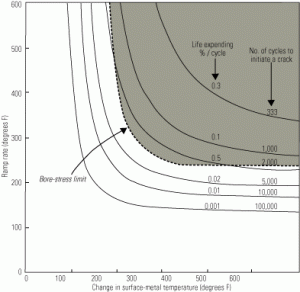
On-line temperature monitoring of steam turbine rotors must be based on modeling thermodynamic processes—not direct temperature measurements. Good operating decisions can significantly extend the life of aging turbines, particularly those that are routinely cycled or operated at their maximum ramp rates.
-
 Instrumentation & Controls
Water chemistry an important factor to consider for cycling HRSGs
Operators of combined-cycle plants that have been pressed into cycling service should make sure that the aqueous diet of their steam generators—especially heat-recovery steam generators—fits the plants’ more active lifestyle. Following are some tips for keeping your HRSGs’ water treatment regimen in tip-top shape. These prescriptions can keep the units vital longer and make them subject to fewer unexpected failures.
-
 Instrumentation & Controls
DG interconnection standards remain elusive
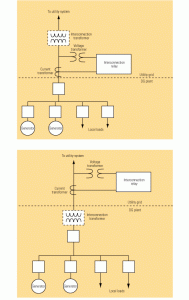
The state of interconnection standards for distributed generation plants remains disconcerting to many prospective owners of such plants. IEEE 1547 has been in place for several years and appears to be the best option in a field of competing standards. But IEEE 1547 is an imperfect standard; it holds at least six holes. Here are some suggestions for filling them.
-
 Instrumentation & Controls
Controlling shaft voltages
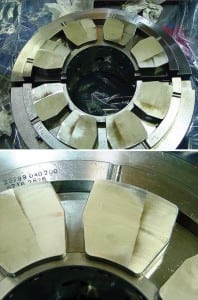
Contrary to public belief, the most common electrical phenomenon produced by a power plant’s steam turbines, turbine-driven compressors, and pumps isn’t sparks or lightning bolts. It’s static electricity. The physical effects of static electricity—greater vibration and higher temperatures—can damage bearings, shaft journals, couplings, and gears enough to cause a forced outage. A few inexpensive instruments in the hands of a well-trained technician can prevent "frosting" and "worm tracks" in your babbitt bearings. We’ll start the training right now.
-
 Business
Could SuperCables deliver both hydrogen and electricity via a SuperGrid?
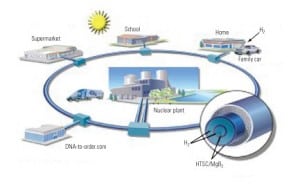
Transporting large quantities of electric power over long distances via superconducting DC cables was first considered more than 40 years ago by two IBM scientists. With the recent advent of long-length commercial high-temperature superconductors (HTSCs) and the desire to move the U.S. to a hydrogen-based economy, SuperCables could revolutionize the marketing of electricity. Using HTSCs cooled by hydrogen, a SuperCable could simultaneously deliver electricity and hydrogen to end users for domestic and industrial consumption and to power fuel cell cars.
-
 Marmaduke
Marmy’s Egyptian nightmare
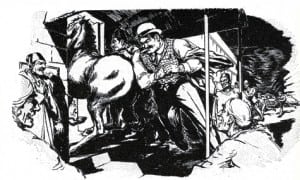
Steve Elonka began chronicling the exploits of Marmaduke Surfaceblow—a six-foot-four marine engineer with a steel-brush mustache and a foghorn voice—in POWER in 1948, when he raised the wooden mast of the SS Asia Sun with the help of two cobras and a case of Sandpaper Gin. Marmy’s simple solutions to seemingly intractable plant problems remain timeless. This story originally appeared in 1950. Two years later, one of its key characters, King Farouk, abdicated the Egyptian throne to his infant son following a military coup.
-
 Business
This month in POWER…
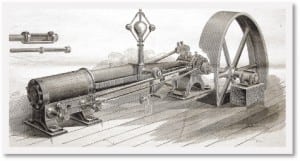
May 1885 POWER reported on the latest Twist Automatic Engine (Figure 1) in its cover story for the May 1885 issue. The editor explained that "each end of the cylinder has one main valve, for admission and exhaust, and one cut-off valve; all being plugs with partial rotary movement; and the cut-off valves being within […]
-
 Commentary
Keep grid modernization a national priority
As the possibility of national climate change legislation increases on Capitol Hill and captures the attention of the electric power community, I am concerned that regulators, legislators, and utility executives will forget the urgency of modernizing the U.S. electricity delivery infrastructure. On the surface, the issues of reducing greenhouse gas emissions and upgrading and […]
-
 News
NewsNot your grandfather’s power industry
In 1882, Americans talked of John L. Sullivan, the bare-knuckles boxing heavyweight champion of the world, as horse-drawn carriages jingled along city streets. The spidery cables of the Brooklyn Bridge spanned the East River and hundreds of workmen scrambled to complete the great project. Railroads crossed the continent, but sporadic Indian warfare still plagued […]
-
 Business
A rearview mirror and bright headlights
This month’s issue of POWER commemorates 125 years of continuous publishing for the power generation business. The anniversary gives us all a chance to assess where we’ve been and where we’re going as a publication and as an industry. As power industry professionals, we all know the value of a rearview mirror—of remembering lessons […]