Articles By

-
 Coal
CoalPleasant Prairie Power Plant Air Quality Control Upgrade Project, Pleasant Prairie, Wisconsin
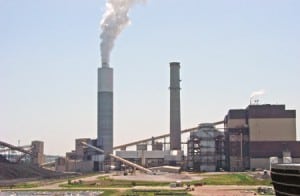
We Energies’ Pleasant Prairie Power Plant is a good example of how existing plants retrofitted with NOx and SO2 removal systems benefit from early planning and action. P4, as everyone calls it, recently completed a multiyear project to add a selective catalytic reduction system to one of its two units and a scrubber to both. The unique design and contracting aspects of the project make Pleasant Prairie one of POWER’s top coal-fired plants of 2007.
-
 Coal
CoalPolk Power Station Unit 1, Mulberry, Florida
Ten years ago, POWER selected Tampa Electric’s 250-MW Polk Power Station and its revolutionary integrated gasification combined-cycle demonstration project as the magazine’s 1997 Plant of the Year. Although no new commercial IGCC projects have been built since then, interest in deploying the coal-gasification technology is getting traction in some parts of the U.S. In 2007, POWER recognizes Polk Unit 1 as a Top Plant for developing trailblazing O&M practices and technical improvements that enable it to operate today as reliably as a modern pulverized coal plant, with lower pollutant emissions.
-
 Coal
CoalR.E. Burger Plant, Shadyside, Ohio
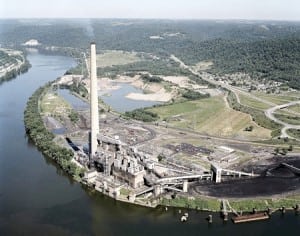
FirstEnergy’s R.E. Burger Plant has hosted a number of R&D projects over the years, but none as large as the demonstration of Powerspan’s 50-MW Electro-Catalytic Oxidation (ECO) multipollutant removal process a few years ago. Credit Powerspan for scaling up the demo unit and for adding CO2 as a target of a new pilot process called ECO2. And don’t forget the behind-the-scenes support of Burger’s plant staff and their willingness to incubate R&D projects while producing power. That’s what makes R.E. Burger a Top Plant in our book.
-
 Water
WaterBiofouling control options for cooling systems
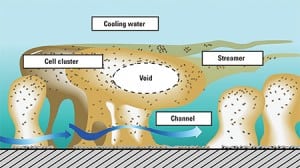
The infrequent or improper introduction of biocides into a plant cooling system may make fouling within it worse, by creating thick biofilms that can foster corrosion, reduce heat transfer, and increase water pumps’ operating costs. At the other end of the spectrum, overuse of biocides can waste expensive chemicals. Optimizing the quantity, frequency, and type of dosage can improve both the health of a cooling system and its plant’s bottom line.
-
Instrumentation & Controls
Integrated software platform eludes many owner/operators
Ongoing research into experience with plant- and fleet-level software reveals that these applications work side by side but do not necessarily function as an integrated “knowledge management” system. On the supplier side, the industry continues to be fragmented, with individual programs governing a narrow part of the overall plant.
-
 News
NewsThis month in POWER . . .
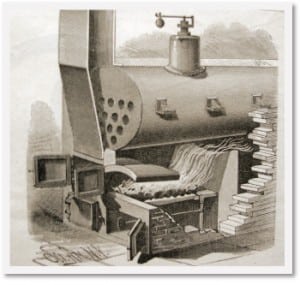
September 1886 Four years after this magazine was launched, the editors reviewed the latest improvements to industrial boilers, beginning with the Backus furnace (Figure 1). 1. The Backus furnace. “This furnace is provided with a brick arch placed just back of the fire-doors, that is intended to deflect the currents of air that are admitted […]
-
 Commentary
It’s time to rebalance America’s electricity strategy
Not long ago, most utility investors considered California’s electricity policies too iconoclastic to support. Driven by far-left environmentalists and overzealous regulators, those policies have made it nearly impossible to build new power plants in the state, despite the urgent need for them. Now, however, with growing proof that global warming is real and with Americans […]
-
 Nuclear
Nuclear plants: Something old, something new
The recent restart of Tennessee Valley Authority’s (TVA’s) Brown’s Ferry Unit 1 following a five-year renovation brings to 104 the number of nuclear plants operating in the U.S. Their 100 gigawatts of capacity represent about 20% of the nation’s electricity supply. If American electricity demand doubles by 2030 (as the U.S. Energy Information Administration predicts), […]
-
 Coal
CoalGlobal Monitor (September 2007)
Constellation files partial COL / IAEA scrutinizes shaken Japanese nuke / Wave energy of the future? / New GE plant reigns in Spain / Solar house competition heats up / Oxygen-blown IGCC, at micro-scale / Turning corncobs into ethanol / Court blocks gas attack on coal project / New advanced energy initiatives / POWER digest
-
 O&M
O&MFocus on O&M (September 2007)
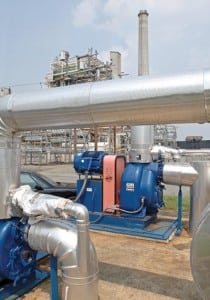
Replace pumps, cut repair bills / New bolts show their stress level / Up a certain creek, without a filter / Hang up those cables and hoses
-
 Legal & Regulatory
Carbon-neutral status shouldn’t be for sale
While elected officials in Washington debate the politics of climate change, state legislators and regulators have been busy putting in place programs to reduce greenhouse gas emissions. For the most part, the goals of the programs reflect desired changes to power supply and consumption: increasing the efficiency of electricity generation and delivery, using less fossil […]
-
 Gas
GasAl Ezzel Power Plant, Isle of Muharraq, Bahrain
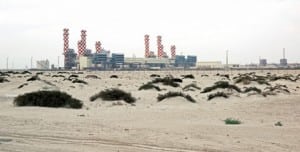
Bahrain began privatizing its electricity and water-supply sectors three years ago, and the Al Ezzel Power Plant represents the first fruit of that strategic shift. The 950-MW plant, powered by two identical 2 x 1 combined-cycle units that burn natural gas, went commercial in May of this year. The plant now supplies about half of the national grid’s demand. The success of this fast-track project demonstrates the advantages of free markets and the wisdom of bringing in experts to build new capacity.
-
 Gas
GasGroton Generating Station, Groton, South Dakota
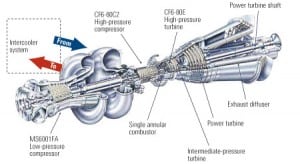
This plant’s main claim to fame: It marks the commercial debut of GE’s 100-MW LMS100 gas turbine-generator. According to Basin Electric, over the unit’s first year of service it has demonstrated top-notch operating flexibility in peaking, mid-range, and baseload service, thanks to capabilities such as 10-minute cold start-ups and minimal impact on heat rate at partial loads. In addition to hosting the first LMS100, Groton Generating Station earns recognition as one of POWER’s Top Plants for the attention its design pays to reliability and resource planning.
-
 Gas
GasGTAA Cogeneration Complex, Mississauga, Ontario, Canada
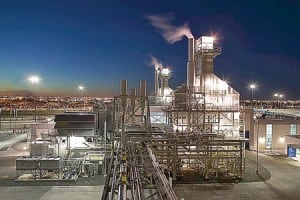
When a blackout shuts down a factory, the impact isn’t apparent to the public. But lose power at an international airport, and thousands of angry travelers and the people waiting for them won’t be interested in excuses. The Greater Toronto Airports Authority learned that lesson in August 2003. Ten months later, it began building a 117-MW cogeneration plant that is now capable of supplying all of its energy needs—not just electricity, but space heating and chilled water as well.
-
 Gas
GasPort Arthur II Integrated Hydrogen/Cogeneration Facility, Port Arthur, Texas
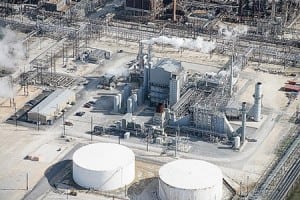
The rationale for a typical cogeneration plant is clear: Supply some power, and maybe some steam, to an industrial host and save energy dollars on both sides of the fence. But integrating a cogen plant that also produces hydrogen with a major refinery that operates 24/7 is a job best left to a company with diverse and proven technology skills. The Air Products Port Arthur II project proves that such a job can be done right. Accordingly, it is one of POWER’s natural gas–fired Top Plants of 2007.
-
 Gas
GasPort Westward Generating Plant, Clatskanie, Oregon
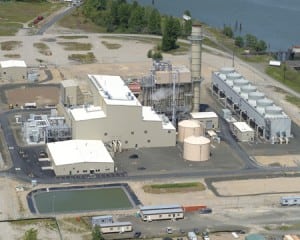
Since going commercial this June, Port Westward Generating Plant has taken its rightful place as one of America’s most efficient power stations. It is now helping to satisfy Portland General Electric’s summer demand reliably and cost-effectively. What differentiates Port Westward is its pioneering use in the U.S. of Mitsubishi Heavy Industries’ G1 class combined-cycle combustion turbine.
-
 Gas
GasTenaska Virginia Generating Station, Scottsville, Virginia
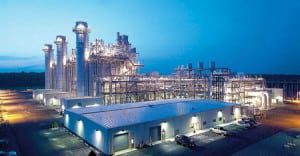
Not every facility that POWER singles out as a Top Plant has a unique design. Some, like this one, may be recognized for an excellent operations record and being a good corporate citizen. At Tenaska Virginia Generating Station, a formal program to make O&M personnel aware of best industry practices—and apply them on the job—has shortened the plant’s start-up time and elevated its availability, making it much more dispatchable and profitable.
-
 Coal
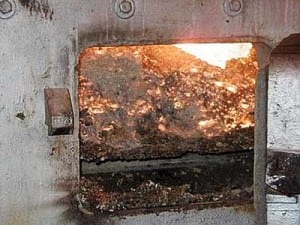
CoalCoal Plant O&M: How Switching to PRB Lowered O&M Costs
Lansing Board of Water & Light (LBW&L), which has generated electricity since 1892 and steam since 1919 in mid-Michigan, primarily serves the city of Lansing’s business district and all state government buildings in the downtown area. But one of the municipal utility’s plants, Moores Park, has an additional and very important steam customer: General Motors’ […]
-
 Coal
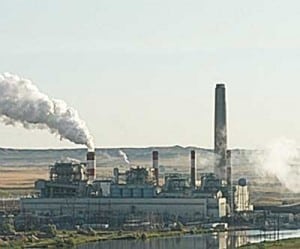
CoalCoal Plant O&M: SmartAsh Proves Its Worth
Every day, while driving to his job at PacifiCorp Energy’s Dave Johnston plant near Glenrock, Wyoming, Cole Harris used to wonder as he neared the station how opaque Unit 3’s stack emissions would look. Until a few years ago, Unit 3 (Figure 3) had trouble staying at or below opacity limits set by the state. […]
-
 O&M
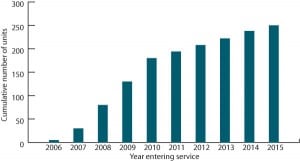
O&MPlant Economics: The Impact of Shortages on FGD Prices
Since ratification of the Clean Air Act (CAA) in 1970, U.S. utilities have made steady efforts to install pollution control equipment to curb power plant stack emissions. The CAA Amendments of 1990 raised concerns at the time about the industry’s ability to install a large number of flue gas desulfurization (FGD) systems, or scrubbers, in […]
-
 O&M
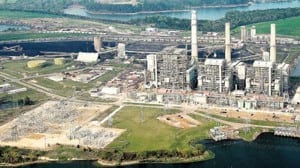
O&MMercury Control: Capturing Mercury in Wet Scrubbers: Part II
In Part I of this two-part report ( COAL POWER, July/August 2007, p. 22), we introduced the integrated R&D effort by the U.S. Department of Energy’s National Energy Technology Laboratory (DOE/NETL) to improve understanding of the mechanisms of mercury (Hg) capture and retention in flue gas desulfurization (FGD) systems and the fate of Hg in […]
-
 Coal
CoalThe Coal Pile: Steam Blast Rocks Big Apple
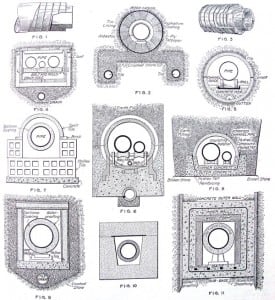
This July, an underground steam pipe near Manhattan’s Grand Central Terminal ruptured and spewed a scalding brown geyser of steam and debris higher than the nearby 77-story Chrysler Building. The blast, which injured 30 people, created a 40-foot crater at street level that swallowed a tow truck. A similar explosion in 1989 killed three people. […]
-
Coal
Speaking of Coal Power: BACT to the Future
This August, Peabody Energy’s 1,600-MW Prairie State Energy Campus project in Illinois won a major federal appeals court decision, removing the last obstacle to groundbreaking. The six-year regulatory review process ended with an unsuccessful Sierra Club challenge to the $2.9 billion project’s air permit. The decision is sure to reverberate across the nation, and I […]
-
O&M
The Coal Patrol: Mine Safety Deserves More Than Lip Service
Every step forward in underground U.S. mine safety in the 20th and 21st centuries has been on the backs of mangled and dead coal miners. That grisly observation is unassailable. Following the August tragedy at the Crandall Canyon mine in Utah that killed six miners and three would-be rescuers, the federal Mine Safety and Health […]
-
 Coal
CoalPRB Tech Notes: AmerenUE Teams with Charah and Home Depot to Market Ash for Concrete Mix
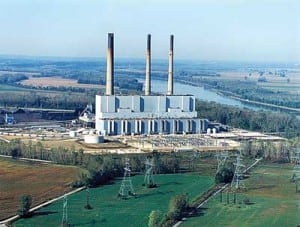
Burning Powder River Basin (PRB) coal can be a curse or a blessing, depending on your attention to the details of plant design and operations. One disadvantage of PRB coal combustion is the abundance of bottom ash and flyash generated as a by-product. Handling and properly disposing of the ash can be challenging and costly. […]
-
 O&M
O&MDetecting and solving lube oil varnish problems
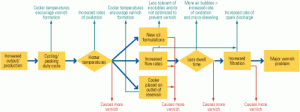
Have you bought electrostatic or agglomeration equipment to rid your turbine oil of varnish deposits, but its varnish potential rating failed to improve? Or, after an initial drop, has the varnish potential returned to its previous level? Even worse, have you had recurring valve sticking problems after making a sizeable investment to "solve" this problem? Welcome to the world of soluble varnish caused by autodegradation. Read the unvarnished truth about varnish and how to get rid of it for good.
-
 Marmaduke
Marmy’s loose rivets
Steve Elonka began chronicling the exploits of Marmaduke Surfaceblow—a six-foot-four marine engineer with a steel brush mustache and a foghorn voice—in POWER in 1948, when he raised the wooden mast of the SS Asia Sun with the help of two cobras and a case of Sandpaper Gin. Marmy’s simple solutions to seemingly intractable plant problems remain timeless. This Classic Marmaduke story, originally published in 1958, illustrates that big problems often have simple, but ingenious, solutions.
-
 News
NewsRetrospective
August 1886 POWER reported on one of the first twin-cylinder "Otto" natural gas–fired engines that had recently appeared in the U.S. power market. The report notes that "engines of 100 horsepower are being now economically used where gas is low in price, as in England and other European countries" (Figure 1). 1. A twin-cylinder "Otto" […]