Articles By

-
 Gas
GasGlobal Monitor (May 2006)
Nuclear hot streak continues/Who’s winning in U.S. wind power?/ Canadian wind picking up too/ Brazilian port powers itself/ Biomass meets CHP in Sweden/ Power surfing from Scotland to Germany
-
 Water
WaterFocus on O&M (May 2006)
Desalination, Italian style; How to minimize DI operating costs; Advanced flow meter works with shorter pipe runs; Why tubing beats piping.
-
 Legal & Regulatory
State monitoring fails the cost/benefit test
Steven F. Greenwald and Christopher A. Hilen Utility regulators in California and other states have begun subjecting power plants to extensive oversight of their O&M activities. These oversight programs are a response to allegations that generators purposely shut operational plants down to drive electricity prices up during the 2000–2001 energy crisis. These state initiatives […]
-
 Water
WaterRecycling, reuse define future plant designs
The Valley of the Sun went off the water wagon on March 4, ending a record 136 consecutive days without measurable rainfall. That first 0.05-inch sip, followed by a 0.18-inch gulp the next day, only left residents yearning for more. But Mother Nature was only teasing, because the rest of March remained dry. On March […]
-
 Coal
CoalPreparation keyed Entergy’s responses to Katrina, Rita
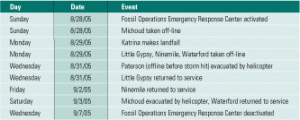
With the 2006 hurricane season about to begin, climatologists are predicting that the Atlantic Ocean will spawn 17 “named” storms this summer and fall, with 9 categorized as hurricanes and 5 expected to be “intense.” Whether or not your plant lies in a vulnerable coastal area, you’d do well to learn a few lessons from Entergy’s unique experience last year.
-
 O&M
O&MHow important is IR detector resolution?
Stretching meager maintenance dollars is a way of life for most maintenance staff. In past years, the cost of an infrared (IR) camera usually came down to a choice between a low-resolution 160 x 120-pixel camera or no camera at all. If the camera was chosen, it usually became clear before long that low resolution […]
-
Legal & Regulatory
Facilitate plant siting by relaxing ratemaking constraints
The U.S. needs new generating capacity in coming decades to meet growing electricity demand. The increasing scarcity of land within utility load centers, combined with environmental opposition to the siting of plants, often limits siting options to remote locations. Restricting power plants to distant sites necessitates additional transmission facilities, increases delivery costs and electric bills, […]
-
 Business
Balancing people, plants, and practices
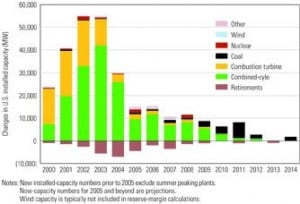
An essential ingredient in the success of any business endeavor is thorough planning. We’ve all heard the axiom "proper prior planning prevents poor performance" or a variation on that theme. Why the need for peak performance? Competition within the industry has never been as intense, with utilities combining in search of economies of scale. The […]
-
 Instrumentation & Controls
Steam turbine upgrading: Low-hanging fruit
In 1500, Leonardo Da Vinci drew sketches of a device that rotated when hot air going up a chimney passed through a set of fan-like blades. Leonardo called his invention a "chimney jack," and although it only turned a roasting skewer, it gave birth to the idea of mounting blades on a shaft to convert […]
-
 O&M
O&MKeeping condensers clean
There’s a relatively easy way to make a steam plant more efficient and reliable: keep the tubes of its condenser(s) clean. According to George Saxon, Jr., VP of international sales and marketing for Conco Systems Inc. (Verona, Pa.)—a company whose specialty is cleaning and maintaining condenser tubes—"There are two major problems that result from dirty […]
-
 Instrumentation & Controls
A permanent solution to generator vibration problems
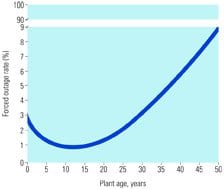
Remember the slogan, "Never trust anyone over thirty?" Chances are you’ve joined the ranks of the over-thirty generation and are dealing with your own personal "maintenance" issues—not unlike the fleet of generators at larger U.S. power plants, whose average age is about 30. Given the continuing growth in U.S. electricity demand and the cost and […]
-
 Instrumentation & Controls
Brain surgery breathes new life into aging plants
Age is wreaking havoc on the U.S. generation industry, especially the coal-fired sector. Industry conferences are replete with hand-wringing over the "brain drain," the lack of skilled personnel, the meager number of students pursuing engineering degrees, and the accelerated retirement of the older workers who make up the industry’s experience base. On top of this, […]
-
 Instrumentation & Controls
Designing steam cycles to avoid corrosion
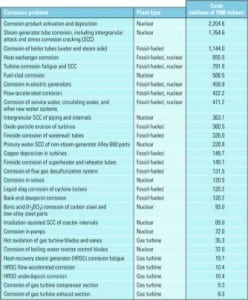
U.S. power producers and owners of industrial steam systems each spend about $15.4 billion annually to combat corrosion in their plants. Scale and deposits are thought to be responsible for another $20 billion a year in reduced plant efficiency and lost generation capacity. Corrosion is the primary cause of every other forced outage, and the […]
-

Western coal rush
—Dr. Robert Peltier, PE Editor-in-Chief The hot hand in coal-fired power plant development is undoubtedly held by Nevada. In a departure from Sin City’s latest marketing slogan, "What happens in Vegas, stays in Vegas," most of the 5,500 MW to be generated by plants proposed for the state is destined for use elsewhere, principally […]
-
 Instrumentation & Controls
Air heater leakage: Worse than you think
Rotary regenerative air heaters capture and recycle about 60% of the heat energy exiting the boiler—energy that would otherwise go up the stack. For a 500-MW coal-fired plant, the recycled energy amounts to about 1.5 billion Btu per hour, and reusing it reduces fuel consumption by about 1,500 tons per day. Although most performance engineers […]
-
Howdy . . . and welcome!
During the 17 years I’ve lived in Texas, I don’t know that I’ve actually heard anyone say, "Howdy!" but it seemed like the most appropriate word to associate POWER with its new headquarters in Houston. As you may have heard, POWER magazine and related properties were purchased by The TradeFair Group from McGraw-Hill on March […]
-
 Coal
CoalWhy new U.S. supercritical units should consider T/P92 piping
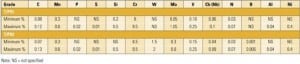
T/P92 is being heralded as a superior and lower-cost alternative to T/P91 for new power plants with pressures above 3,600 psi and temperatures above 1,100F—such as the supercritical and ultra-supercritical units proposed to be built in the U.S. over the next few years. The switch from T/P91 to T/P92 would represent the next step in […]
-
 Gas
GasGiant GE GT goes global
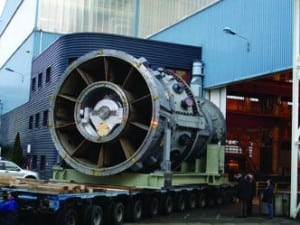
In late February, the largest gas turbine ever manufactured by GE Energy at its Belfort plant in France began a 30-day journey by land and sea that will take it to a new power plant in Spain. The Frame 9FB gas turbine—which is also the first built completely in Belfort—was loaded onto a special, wide-load […]
-
Marmaduke
Marmy stops dreaming
Steve Elonka began chronicling the exploits of Marmaduke Surfaceblow—a six-foot-four, steel brush-mustached marine engineer with a foghorn voice—in the pages of POWER in 1948. That was the year that Marmy raised the wooden mast of the SS Asia Sun with the aid of two cobras and a case of Sandpaper Gin. This classic episode, written in the late 1960s, shows that even minor consequences of a steam turbine overhaul can cause problems. And as Marmaduke shows, solving any problem requires equal parts judgment, logic, and experience. Enjoy.
-
 Instrumentation & Controls
Siemens units keep pace
Earlier this February, Siemens Power Generation’s (SPG’s) factory in Berlin delivered its 500th gas turbine. The SGT5-4000F (Figure 2), formerly called the V94.3A, is nominally rated at 270 MW and weighs in at about 300 metric tons. With this shipment, the Berlin facility can boast of having built gas turbines with a cumulative capacity of […]
-
 Commentary
Economic dispatch done best when done locally
Both the states and the federal government are looking at who should decide which power plants are used at any given moment to meet demand. In question is which approach will reliably serve customers with the lowest-cost electricity. The Energy Policy Act of 2005 (EPAct) raised the issue when it directed the Federal Energy Regulatory […]
-
 Nuclear
Monster moisture separators
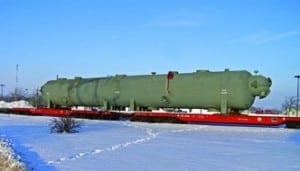
Thermal Engineering International (TEI) (USA) Inc. (Santa Fe Springs, Calif.)—a subsidiary of Babcock Power Inc. (Danvers, Mass.)—recently shipped two of the largest pressure vessels in the company’s 90-year history. The pair of huge (13-ft-diameter, 110-ft-long) moisture separator reheaters (MSRs) were designed at corporate headquarters and built in TEI’s factory in Sapulpa, Okla. The 300-ton MSRs […]
-
 Coal
CoalBig bucks for carbon sequestration
The California Energy Commission (CEC) recently awarded about $14 million for carbon sequestration projects to be overseen by the West Coast Regional Carbon Sequestration Partnership. Westcarb, as the partnership is known, is part of the U.S. DOE’s effort to deploy technologies through its Regional Carbon Sequestration Partnership (RCSP) program. New members Alberta and British Columbia […]
-
 O&M
O&MSWAT team helps shorten forced outage
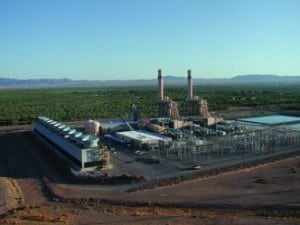
Calpine Corp.’s South Point Energy Center in Mohave County, Ariz. (Figure 1) is a 520-MW natural gas-fired, combined-cycle facility with two Siemens Westinghouse 501FD gas turbines and one steam turbine-generator with a BB33 high-pressure (HP) section, a BB65 intermediate-pressure section (IP), and a 65CC intermediate/low-pressure (LP) section. The plant entered commercial service in June 2001. […]
-
 O&M
O&MWireless vibration monitoring shows benefits
The 1,768-MW Baldwin Energy Complex in Illinois was the site of a joint-venture pilot project to demonstrate a wireless vibration-monitoring system for a coal pulverizer. The partners in the project were EPRI and the plant’s owner, Houston-based Dynegy Midwest Generation. A key objective of the project was to identify a reliable wireless system capable of […]
-
-
 News
NewsPearl Harbor cable links past, future
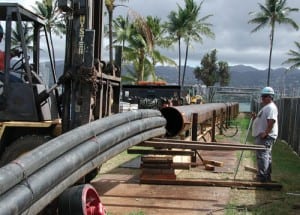
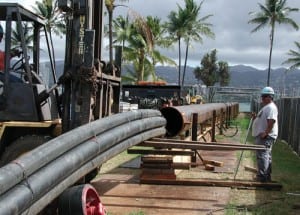
A new, mile-long submarine transmission cable in Pearl Harbor (Figure 3, p. 10) will facilitate the U.S. Navy’s plan to renovate and expand historic Ford Island. Honolulu-based Hawaiian Electric Co. Inc. (HECO) recently laid two new 46-kV lines beneath the bridge connecting the island to Oahu. The trickiest part of the installation was avoiding the […]
-
-
 News
NewsA breakthrough in hydroturbine design
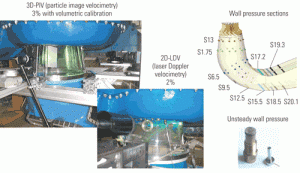
One of the distinguishing characteristics of deregulated power markets is variable demand. The ability to operate efficiently at partial loads can determine whether a plant is profitable or not. This need creates special challenges for hydroelectric turbines, because at partial loads they often exhibit strong swirl in the draft tube at the outlet of the […]
-