Articles By

-
 O&M
O&MEliminating oil whip–induced vibration after a steam turbine retrofit
Nobody expected driveline vibration to occur after a flawless retrofit of a 200-MW steam turbine. But when it did, Mitsubishi Power Systems and Exelon vibration specialists identified the symptoms and rapidly narrowed the list of possible causes. Confounding factors made the root cause difficult to identify, but the experts pinpointed the problem, made necessary hardware modifications, and placed the turbine back in service in a week.
-
 O&M
O&MProtecting plant equipment from voltage sags
Immunity from voltage sags is vital for reliable operation of our ever-more-sophisticated electronic controls and equipment. Every electrical product should be able to ride through typical voltage sags, but in many cases the first sag test occurs after equipment is installed and in operation. Select the appropriate sag immunity specification and equipment compliance testing, and you’ll be glad you did.
-
Business
Workforce analysis: Replacing management by fad with management certainty
The biggest problem facing industrial managers is ensuring that they’ll continue to have a skilled workforce. With so many people nearing retirement, organizational skills are at risk, which poses a direct threat to operations. Many companies are making big investments to capture the unique knowledge and experience of graybeards before they move on. But that is just one aspect of a far more complex issue.
-
 Commentary
U.S. nuclear power’s time has come—again
In the U.S. today, there are continual discussions about energy independence, energy security, and ways to slow climate change. But meeting the nation’s projected 40% increase in electricity demand by 2030, while reducing overall power plant CO2 emissions, will require much more than talk. During the 1990s, American utilities increased their gas-fired generating capacity because […]
-
 Coal
CoalThe Coal Patrol: Growth in PRB Coal Use Will Be Fueled by New Projects
Production from Wyoming Powder River Basin (PRB) coal mines ended last year with a increase of only about 1.1%, reflecting a record 451.3 million tons, according to the Department of Energy’s Energy Information Administration. Production of PRB coal spiked with a record 10% growth in 2006 following two derailments on the PRB’s main triple-track line […]
-
 O&M
O&MThe Coal Patrol: Court Rejects Industry Suit Targeting Miner Safety Rules
A federal appeals court has rejected a National Mining Association (NMA) suit seeking to throw out new regulations issued by the Mine Safety and Health Administration (MSHA). The rules were to improve protection for miners in the wake of accidents at two West Virginia coal mines in January 2006 that killed 15. (See COAL POWER […]
-
Coal
Tech Notes: Giving PRB Coal the Respect It Deserves, Part 1
Use of Powder River Basin (PRB) coal for power generation set another record in 2007. In fact, PRB coal now accounts for about 40% of all the coal fired in the U.S. to produce electricity. Yet we have barely dented the estimated 800 billion tons of the fuel’s proven reserves in Wyoming. The size of […]
-
 O&M
O&MCoal Plant O & M: Condition Monitoring Cuts Mirant Mid-Atlantic’s Costs
Condition monitoring (CM) has become an increasingly important aspect of power plant maintenance philosophy. Today many utilities are using a variety of predictive maintenance (PM) techniques like CM to lower their operation and maintenance expenses. Over the years, gencos have developed a diverse collection of CM programs of various breadth, depth, and formality. All are […]
-
 Coal
CoalFutureGen: FutureGen Finds a Home But Can’t Pay the Mortgage
The FutureGen Industrial Alliance Inc. selected Mattoon, Ill., as the site of the $1.8 billion FutureGen project just before Christmas, but the plant may never move off the drawing board.. FutureGen, the proposed prototype of a near-zero-emissions coal plant, is to demonstrate advanced technologies for coal gasification, electricity production, emissions control, CO 2 capture and […]
-
 Coal
CoalIGCC: IGCC’s Future Hinges on a Workable Carbon Framework
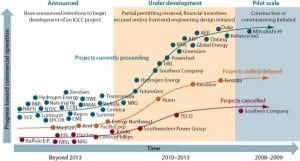
Integrated gasification combined-cycle (IGCC) technology, a process of gasifying coal that allows the capture of carbon dioxide emissions, has tremendous potential for meeting future baseload generation demand. Though it is one of the leading alternatives for producing clean power from coal, IGCC faces a precarious future due to rising capital costs and regulatory uncertainty. We’re […]
-
 O&M
O&MSafety: Worker Health and Safety Now Top Priorities for Alabama Power
Employees of Alabama Power, a Southern Company subsidiary, routinely work near energized wires, intense heat, nuclear fuel, heavy equipment, moving vehicles, and pressurized equipment, as well as under other conditions that require exceptional safety attitudes and measures. Though it is vitally important to provide electricity to customers, neither company believes that doing so is worth […]
-
 Commentary
Storming the Gates
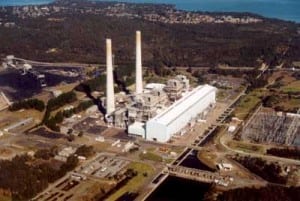
Visiting power plants is one of the perks of being a COAL POWER editor. Some plants are located in metropolitan areas; others are closer to east nowhere, especially those mine-mouth plants. Each is unique and worth the travel time to visit and meet plant staff.
-
Coal
Speaking of Coal Power: With Chaos Comes Opportunity
Combat veterans use the phrase "fog of war" to explain why carefully prepared battle plans are quickly overwhelmed by chaos once the first bullet is fired. Survivors often describe experiences that are markedly different from those of others standing only yards away. The fog of our industry’s battle to build new generating plants permeates the […]
-
 Legal & Regulatory
Rigid COD deadlines do more harm than good
A utility executive responsible for procuring renewable power recently lamented that, at the time of contract execution, renewable “projects” are typically at a very preliminary stage of development, offering scant information about project specifics. Regulatory or other objectives often cause the utility to require that the power purchase agreement be executed before critical permits have […]
-
 Wind
WindBurbo Bank Offshore Wind Farm, Liverpool Bay, UK
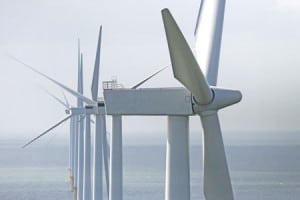
POWER congratulates DONG Energy and Siemens Power Generation on the October 18 inauguration of their 90-MW Burbo Bank Offshore Wind Farm. This project was the first commercial application of Siemens’ new 3.6-MW wind turbine and exemplifies how the right developer and supplier team can quickly add much-needed offshore wind power to a country’s generation mix.
-
 Waste to Energy
Central Vermont Public Service, Cow Power Program
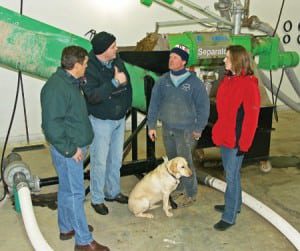
Central Vermont Public Service developed the nation’s first farm-to-consumer renewable energy choice by using cow manure to generate electricity. CVPS gave beleaguered farms new economic hope; developed a generation system that provides clean, renewable energy; and helped solve numerous manure management environmental challenges. CVPS and Cow Power’s four member dairies are recognized as a 2007 Top Plant for generating renewable energy one cow at a time.
-
 Solar
SolarNevada Solar One, Boulder City, Nevada
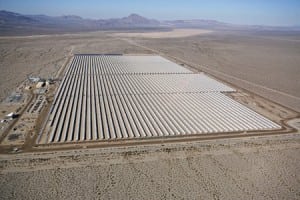
Concentrating solar thermal projects fell out of favor more than 15 years ago, when the last SEGS plant was commissioned. But advances in reflective mirror, thermal receiver, and tracking system technologies have significantly improved the systems’ energy conversion efficiency at a much lower capital cost. POWER recognizes Nevada Solar One as a 2007 Top Plant for pushing the limits of solar thermal technology and for being the first of a new generation of concentrating solar projects now being developed around the world.
-
 Geothermal
Raft River Geothermal Project, Malta, Idaho
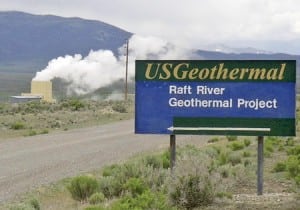
Geothermal power is a unique renewable energy because it has the best potential capacity factor and is perhaps the only option for baseload power generation. U.S. Geothermal has constructed the first geothermal plant in Idaho in a generation by restoring an abandoned DOE demonstration project site that may possess a development potential of over 100 MW using proven power generation technology. The success of Raft River may well determine the future of geothermal energy production in Idaho.
-
 Wind
WindSteel Winds Project, Lackawanna, New York
This year, for the first time, the U.S. wind power industry is poised to push past the 3,000 MW installed per year milestone. At 20 MW, Steel Winds may seem like a footnote, but its importance is measured in more meaningful terms than just size. Steel Winds is the first commercial deployment of the Clipper Windpower 2.5-MW Liberty turbine, the first installation on a former Superfund site, and is said to be the largest wind farm in the U.S. developed in an urban setting. In addition, the project anchors Lackawanna’s redevelopment of a former industrial site along Lake Erie for public use.
-
 Wind
WindDeveloping wind projects in California—or anywhere
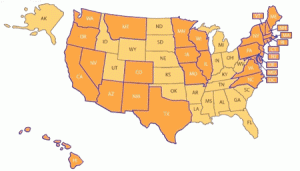
Acquiring capacity from renewable resources is now mandatory for many electric utilities, and nowhere is green generation being pursued with more vigor than in California. Regulators there want power from renewables to account for at least 20% of utilities’ annual sales by 2010, and Governor Schwarzenegger is proposing increasing the minimum to 33% by 2020. Wind power appears to have the lowest technical risks of the renewables options, but don’t ignore the rising development risks. Here’s a primer on developing wind projects in the Golden State—and elsewhere.
-
 Water
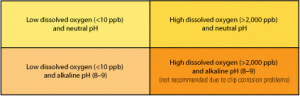
WaterForgotten water: Stator cooling water chemistry
Stator cooling water treatment is often ignored—until the generator fails. Proper treatment and monitoring is essential to keeping the copper in your stators, where it belongs.
-
 Business
This month in POWER…
During this 125th anniversary year, Retrospective has surveyed the evolution of the power industry as chronicled in POWER. The magazine’s original focus in the 1880s was to fill the fledgling industry’s technical information vacuum and share common operating experiences. Our goals today are remarkably similar, as technology continues to change and operators continue to learn […]
-

Carbon credits and debits
Carbon control legislation made it out of a subcommittee of the U.S. Senate Committee on Environment and Public Works in late October, but no one is happy with it. The bill, S. 2191, America’s Climate Security Act of 2007, would direct the U.S. EPA to establish a program to decrease emissions of greenhouse gases (GHGs). […]
-
 Gas
GasGlobal Monitor (December 2007)
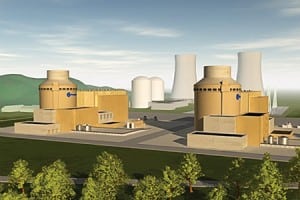
TVA may revive Bellefonte / GE’s globetrotting Jenbaches / Largest PV plant taking shape / When will PV be competitive? / Siemens goes to the wall with solar / Breakthrough in metamaterials / POWER digest
-
Commentary
The mother of all energy crises
POWER readers today face severe problems in the electricity supply business. But a much bigger problem will soon burst on the scene: the peaking of world oil production. Experts have forecast peaking since shortly after the first U.S. well began production in 1859, and many subsequent forecasts of peaking have proven incorrect. Oil reserves dip […]
-
 O&M
O&MFocus on O&M (December 2007)
The web: Ideal for skills development / Upgrading a New Orleans pumping station / Turn plant failures into successes
-
 Coal
CoalGlobal Monitor (November 2007)
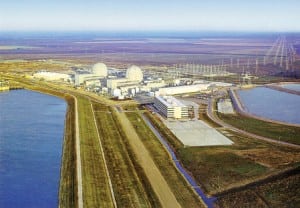
NRG applies for first COL / TVA green-lights Watts Bar 2 / Southern Co. and Florida muni launch IGCC project / UK approves wave energy "hub" / New Jersey-New York HV system launched / Membrane strips CO2 from methane faster / POWER digest
-
 O&M
O&MFocus on O&M (November 2007)
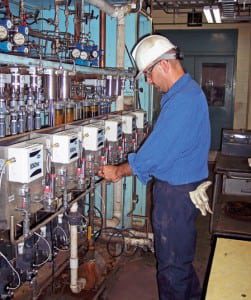
The NERC auditors are coming / Winning encore for on-line pH monitoring / Using baloons as temporary barriers / How data logging can cut power bills
-
 Legal & Regulatory
Can FERC deliver transmission?
This May, the Arizona Corporation Commission (ACC) rejected a proposal by Southern California Edison (SCE) to build Devers-Palo Verde No. 2 (DPV2)—a 230-mile-long, high-voltage transmission line connecting California and Arizona. The line, approved by the California Public Utilities Commission (CPUC) four months earlier, would enable SCE to import additional low-cost electricity from Arizona. The ACC’s rejection of DPV2 highlights a significant challenge for state and regional resource planners—weighing state interests against the regional benefits of interstate electricity commerce.