
Cover Stories
-
 Business
A rearview mirror and bright headlights
This month’s issue of POWER commemorates 125 years of continuous publishing for the power generation business. The anniversary gives us all a chance to assess where we’ve been and where we’re going as a publication and as an industry. As power industry professionals, we all know the value of a rearview mirror—of remembering lessons […]
-
 Business
The history of POWER is the history of power
This month we officially commemorate the 125th anniversary of the magazine that has been essential reading for owners and operators of power generating plants. As you read this brief history, you’ll see that—although we’re looking back at an illustrious past—the secret of POWER’s success has been its commitment to the future. As we look forward to the next milestone anniversary, we anticipate covering the latest developments in a new generation of power technologies. As always, our mission is to provide the best information and advice in the service of safely and efficiently powering the global energy industry.
-
 Nuclear
Charlie Brown, nukes, and the football
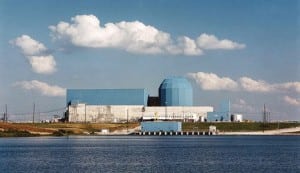
The term "nuclear renaissance" is on the lips of many in the nuclear power industry today, for good reason. The federal executive branch is friendly to nukes; a nationwide shortage of baseload generation looms; the nuclear industry has vastly improved its performance in running its 20th-century plants; and a new generation of plant designs is ready for the road.
-
 Water
WaterReclaimed cooling water’s impact on surface condensers and heat exchangers
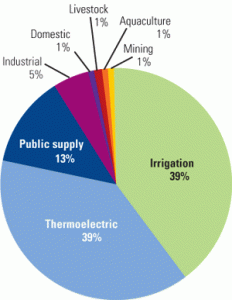
Because water is more precious than power in many regions of the U.S., plant designers are more frequently specifying the use of treated wastewater for plant cooling. Using "gray water" poses its own challenges for critical service equipment like condensers and heat exchangers. Some problems—like corrosion—are familiar, whereas others are rare. But so far, none has been a match for the ingenuity of multidisciplinary design experts.
-
 Nuclear
Arc flash protection should be job No. 1
Arc flash is arguably the most deadly and least understood hazard faced daily by plant personnel. Research indicates that even the best safety plan, training regimen, and protective equipment may be no match for the heat and blast effects of an arc flash. Consider this article a wakeup call to retrofit every switchgear cubicle in your plant with a properly designed remote racking system. Forewarned is forearmed.
-
 Coal
CoalInvestment in generation is heavy, but important needs remain
Forecasting the direction of the U.S. electric power industry for 2007, much less the distant future, is like defining a velocity vector; doing so requires a direction and speed to delineate progress. In this special report, POWER’s first stab at prognostication, the editors look at current industry indicators and draw conclusions based on their more than 100 years of experience. To borrow verbatim the title of basketball legend Charles Barkley’s book: I May Be Wrong but I Doubt It.
-
Coal
Near-term capital spending in the North American power industry
Following the money invested in projects is a viable way to compare growth trends for power projects using the four major generation types: coal, natural gas, nuclear, and renewable.
-
 Instrumentation & Controls
The long and short of last-stage blades
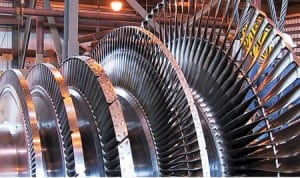
The use of longer steam turbine last-stage blades (LSBs) reduces the number of low-pressure casings and, thus, a turbine’s total installed cost. In many cases longer blades extract more energy from low-pressure steam before it enters the condenser and improve a turbine’s overall thermodynamic efficiency. But creating longer blades requires forsaking conventional design techniques for complex aerodynamic analysis of stationary vanes and rotating blades. Has the market push for longer LSBs exceeded current technology limits? Does the industry conduct proper analysis to determine when using longer blades is beneficial or not?
-
 O&M
O&MApply the fundamentals to improve emissions performance
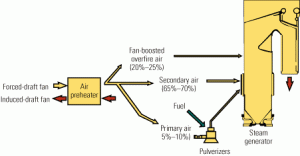
The O&M staff of AES Westover Station wisely took a holistic approach to optimizing combustion within Unit 8’s boiler in order to reduce its NOx emissions while maintaining acceptable levels of carbon-in-ash content. The results of major modifications—centered on the addition of a fan-boosted overfire air system—were a 60% reduction in NOx levels, improved unit reliability, and a project payback period measured in months rather than years. As this project proved, the whole is more than the sum of its parts.
-
 Coal
CoalDesigning and upgrading plants to blend coal
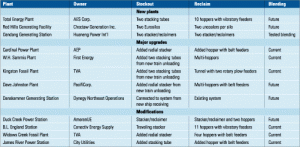
Fuel flexibility isn’t free. Whether you’re equipping a new power plant to burn more than one type of coal or retrofitting an existing plant to handle coal blends, you’ll have to spend time and money to ensure that all three functions performed by its coal-handling system—unloading, stockout, and reclaim—are up to the task. The first half of this article lays out the available options for configuring each subsystem to support blending. The second half describes, in words and pictures, how 12 power plants—both new and old—address the issue.
-
 Coal
CoalExpert systems optimize boiler performance, extend plant life
Slagging and fouling of furnaces and boilers’ convective pass top the list of costly coal plant O&M problems. Although sootblowing is a tried and true solution, running sootblowers too often can erode boiler tubes. Lehigh University’s Energy Research Center has developed an "expert" sootblowing system that has outperformed experienced operators’ "seat of their pants" sootblowing procedures on two head-to-head field tests.
-
 Coal
CoalTri-State Generation and Transmission Association’s Springerville Unit 3 earns POWER’s highest honor
It’s said that pioneers take the arrows. In the case of Springerville Unit 3—a 418-MW (net) expansion of a Tucson Electric Power facility in Arizona and the first pulverized coal–fired unit built in the U.S. in more than a decade—the arrows were many. Although Tri-State (the developer), Tucson Electric (the host), and Bechtel Power (the EPC contractor) were wounded by delayed deliveries of major equipment, bankruptcy of a major supplier, and a labor shortage, the companies showed their pioneering spirit and completed the project ahead of schedule. For ushering in a new generation of clean and desperately needed baseload capacity, Springerville Unit 3 is POWER magazine’s 2006 Plant of the Year.
-
 Gas
GasMountainview Power Plant, Redlands, California
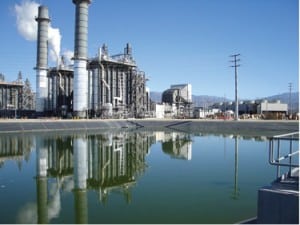
Southern California Edison and Bechtel resurrected the 1,054-MW Mountainview power project after a two-year hiatus while meeting aggressive budget and schedule constraints. Edison exercised its option to purchase the project after regulatory approvals were received at light speed, and construction resumed the very day approval was granted. Residents of California’s Inland Empire will enjoy their air conditioners this summer because Mountainview was transformed from a wasteland into a productive plant.
-
 Gas
GasNYPA Astoria Project, Astoria, New York
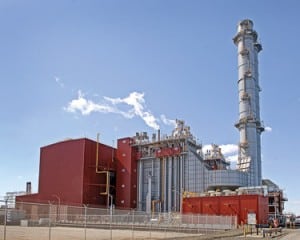
New York City has an insatiable appetite for power, but supplying that power from plants inside the city’s five boroughs (where 80% of its peak demand must come from) is tough. So it’s nothing short of miraculous that a 500-MW combined-cycle plant in Astoria, Queens, began commercial operation at the end of 2005. What did it take to bring this plant on-line? The largest state-owned power organization in the U.S.—The New York Power Authority.
-
 Solar
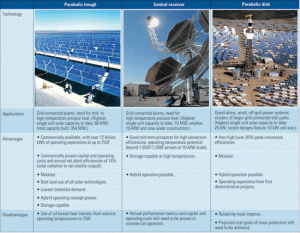
SolarSaguaro Solar Power Plant, Red Rock, Arizona
We tend to forget that today’s super-sized power plant designs began life as small prototypes that grew in size only as fast as technology and economics allowed. Arizona Public Service, a long-time leader in solar energy development, has invested in the development of one such technology that is compatible with the sunny Southwest and certain to become more cost-competitive in the near future. This successful demonstration of a 1-MW concentrated solar power, trough-style energy system is the first to have put power on the grid since 1988. But it certainly won’t be the last.
-
 Waste to Energy
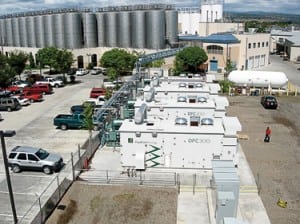
1-MW fuel cell cogeneration project, Sierra Nevada Brewing Co., Chico, California
Beer drinkers know and love Sierra Nevada Brewing Co.’s dedication to bottling premium beers, and that commitment has earned it numerous tasting awards. But it would also win awards on the basis of using clean, high-tech brewing technologies. Sierra Nevada has chosen to minimize its environment footprint by investing in a reuse/reduce/recycle beer-making process. The company has found a way to make its "closed-cycle brewery" a good corporate citizen without compromising bottom-line results.
-
 News
NewsPOWER magazine’s Top Plants of 2006
On the following pages, we introduce the magazine’s 12 Top Plants of 2006. Among this year’s winners are two solar energy plants and another that marries fuel cells with heat and waste gas recovery. As those projects make clear, a plant doesn’t have to be big to earn kudos from us. What we typically like […]
-
 Gas
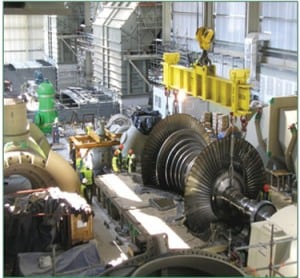
GasArcos de la Frontera Grupo III Combined-Cycle Plant, Cádiz, Spain
Iberdrola is rapidly making a name for itself on the world stage for building large, very efficient combined-cycle plants and for being the largest owner and operator of wind power plants. The utility’s most recent achievement was the successful commissioning of the Arcos de la Frontera Group III project, which marks the commercial debut of General Electric’s Frame 9FB gas turbine.
-
 Solar
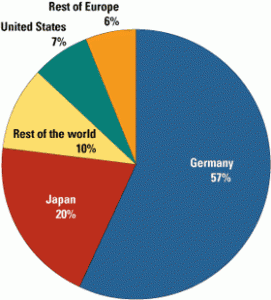
SolarBavaria Solarpark, Germany
The world’s largest solar electric system was dedicated in June 2005 in Mühlhausen, Germany. The 10-MW system comprises three separate but interconnected photovoltaic parks in different cities that use an innovative sun-tracking system to maximize their outputs. After one year of operation, all three parks are still going strong—as you’d expect, due to their dearth of moving parts.
-
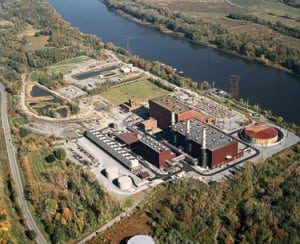 Coal
CoalBethlehem Energy Center, Glenmont, New York
A great location, a fish-friendly cooling system, and the extent of environmental remediation needed to permit it distinguish this repowering project on the Hudson River just south of the New York State capital.
-
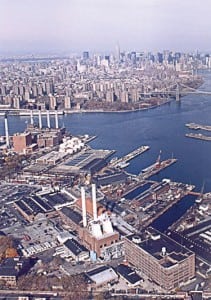 Gas
GasBrooklyn Navy Yard Cogeneration Facility, Brooklyn, New York
The Brooklyn Navy Yard Cogeneration facility supplies critical electricity and steam to New York City. Situated on an historic site, the plant has earned a series of awards and was the first cogeneration plant to be accepted into both the U.S. EPA National Environmental Performance Track and OSHA’s Voluntary Protection Program in 2005. Through Delta Power’s unique asset management approach that brings added value to projects, BNYC has reinvented itself from a struggling, prematurely aging facility into one of the nation’s leading plants.
-
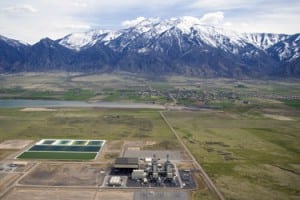 Coal
CoalCurrant Creek Power Plant, Mona, Utah
Commercial operation of PacifiCorp’s first new power plant in more than 20 years coincided with the company’s acquisition by MidAmerican Energy Holdings Company this past March. Currant Creek treads lightly on the environment, provides needed power to PacifiCorp’s eastern control area, and has demonstrated its commitment to be a good corporate citizen of the local community. By any account, Currant Creek is a model for how to develop a power project.
-
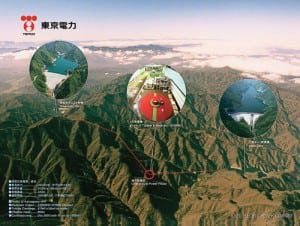 Hydro
HydroKannagawa Hydropower Plant, Japan
With the commercial debut of the first of six planned 470-MW turbines in December 2005, the time has come to pay homage to the sheer size (2,820 MW) and longevity (13 years and counting) of TEPCO’s Kannagawa Hydropower Plant. By the time Unit 2 is commissioned in 2010, and Units 3 through 6 go on-line "in and after 2016," two generations of engineers, technicians, and builders will have worked on the "pure" pumped-storage project since its inception. As if those stats weren’t impressive enough, Kannagawa marks the debut of "splitter runners" for pump-turbines. They increase the effective head of the plant to the highest in the world: 2,142 feet, at a flow of 135,000 gallons/second. That’s a very large pump-turbine, indeed.
-
 Gas
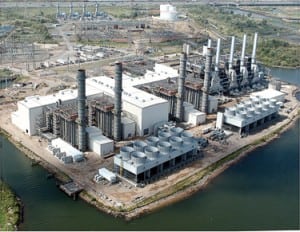
GasLinden Generating Station, Linden, New Jersey
It would be easy to dismiss Linden—which is powered by now-ubiquitous GE 7FA gas turbines and D11 steam turbines—as just another cookie-cutter combined-cycle plant. But its size (1,240 MW), key location near New York City, and use of reclaimed water for all cooling water needs makes Linden deserving of recognition as one of POWER’s Top Plants of 2006. Perhaps its most interesting story is how the project survived more than five years from groundbreaking to commissioning.
-
 Coal
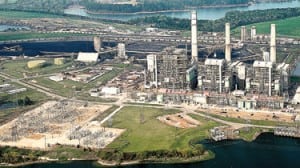
CoalMonticello Steam Electric Station, Mount Pleasant, Texas
Why does Monticello, a 30-year-old plant, deserve recognition as one of POWER’s Top Plants of 2006? Because TXU has been blending Powder River Basin (PRB) coal with local lignite at the plant for the past decade, and steady reductions in air-pollutant emission rates have been the result. That positive experience has made the company confident enough to propose building nearly 9,100 MW of new coal- or lignite-fired capacity in Texas by 2010 at a cost of $10 billion. Read on to share some of the lessons that TXU has learned about handling PRB coal safely.
-
 Business
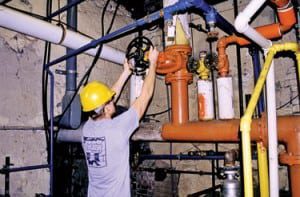
World-class teaching lab prepares next generation of plant operators
The Williamson Free School of Mechanical Trades near Philadelphia has been training power plant operations professionals for 112 years, and its graduates hold top positions at many major gencos, refineries, equipment suppliers, and design and construction companies. Testimonials indicate that it provides one of the best models for training tomorrow’s plant operators.
-
 Water
WaterRecycling, reuse define future plant designs
The Valley of the Sun went off the water wagon on March 4, ending a record 136 consecutive days without measurable rainfall. That first 0.05-inch sip, followed by a 0.18-inch gulp the next day, only left residents yearning for more. But Mother Nature was only teasing, because the rest of March remained dry. On March […]
-
 Coal
CoalPreparation keyed Entergy’s responses to Katrina, Rita
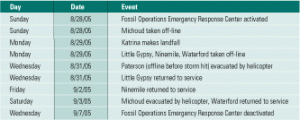
With the 2006 hurricane season about to begin, climatologists are predicting that the Atlantic Ocean will spawn 17 “named” storms this summer and fall, with 9 categorized as hurricanes and 5 expected to be “intense.” Whether or not your plant lies in a vulnerable coastal area, you’d do well to learn a few lessons from Entergy’s unique experience last year.
-
 Coal
CoalCurbing the blue plume: SO3 formation and mitigation
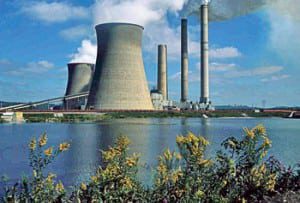
Understanding why stack emissions become opaque leads to better choices of systems for controlling SO3 and other pollutants, based on current and future plant operating configurations.
-
 Business
Balancing people, plants, and practices
An essential ingredient in the success of any business endeavor is thorough planning. We’ve all heard the axiom "proper prior planning prevents poor performance" or a variation on that theme. Why the need for peak performance? Competition within the industry has never been as intense, with utilities combining in search of economies of scale. The […]