
Cover Stories
-
 O&M
O&MTECO’s San José Plant Models Safe and Sustainable Practices
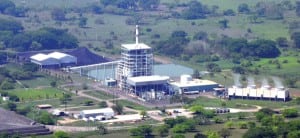
In operation since 2000, TECO Energy Inc.’s 132-MW San José Power Station was the first coal-fired power plant built in Central America and is still the largest one. Used as a baseload plant, the facility successfully combines high availability with a business model that promotes sustainable environmental practices and a safe workplace.
-
 Business
The Great Solar Storm of 2012?
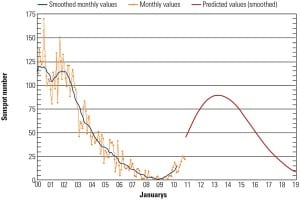
The 2009 blockbuster movie 2012 about a global cataclysm combined Hollywood special effects with supposed predictions by Nostradamus; a Mayan calendar that ends on December 21, 2012; and a very rare planetary alignment that supposedly occurs on the same day. Hollywood producers seldom let technical accuracy get in the way of a good story, but suppose, this one time, the story has an element of truth.
-
 Coal
CoalThe U.S. Power Industry 2011: The Sequel
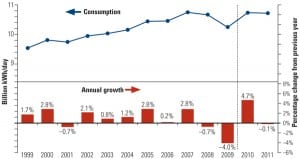
If Hollywood were scripting the power industry story for 2011, it would be a sequel to 2010—more of the same, but just not quite as good. Natural gas gets top billing and the accolades, wind power drops to a supporting role, and new nuclear answers the casting call but has yet to get a speaking part. Coal is like Mel Gibson—a talented Oscar winner unlikely to get another leading role. In this, our fifth annual industry forecast report, the story may be familiar, but the price of admission is going way up.
-
 Business
Strong Technology Portfolio Positions Alstom for a Strong 2011
Timothy Curran, head of power for Alstom Power, USA, recently shared his company’s view of 2011 and beyond with POWER’s editor-in-chief.
-
 O&M
O&MEPRI Identifies Four Breakthrough Technologies for 2011
The Electric Power Research Institute (EPRI) has identified four breakthrough technologies and funded them through its Strategic Research and Development Portfolio. EPRI expects to accelerate development of these innovations because they are likely to have significant effects on how electricity is generated and delivered.
-
 Business
GE Leverages Leading-Edge Technology and a Balanced Product Portfolio in 2011
Paul Browning, vice president, thermal products for GE Power & Water, sees the greatest short-term business opportunities beyond the U.S., in “high-speed” countries.
-
 Smart Grid
Which Side of the Meter Are You On?
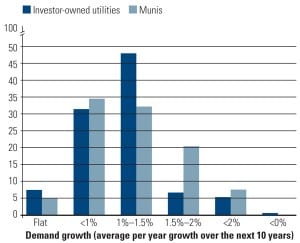
Utilities have achieved success by supplying electricity from central station plants (the supply side) to a grid that carries electricity to customers (the demand side). One way to improve the efficiency of this supply chain is by adopting smart grid technology. The weak link in that chain is convincing customers to use, and regulators to invest in, the smart grid.
-
 Business
Mitsubishi Looks to High-Efficiency Combustion and Wind Turbines in 2011
Bill Newsom—vice president, sales & marketing, Mitsubishi Power Systems Americas Inc.—talks about taking the long view with the company’s U.S. investments.
-
 Coal
CoalCoal Plants Challenged as Gas Plants Surge
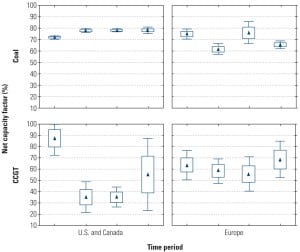
European carbon trading is gradually pushing down coal-fired capacity factors, and operating costs are rising. The U.S. may not have a carbon market, but increasing regulatory requirements are having the same effect on coal-fired generation capacity factors and operating costs. In the meantime, gas-fired assets are enjoying increased usage and lower unit costs.
-
 Business
Siemens Energy Introduces Efficient and Flexible Products in 2011
Dr. Michael Weinhold, chief technology officer of Siemens Energy, discusses the company’s 2011 business plans and the role of the smart grid in the future’s energy infrastructure.
-
Distributed Energy
Smart Grid 2011: More than Meters
The concept of a smart grid may have been born in the U.S.A., but it’s hitting an adolescent growth spurt just about everywhere else first. Meanwhile, in the U.S., both the regulators and companies that see great potential in a smarter grid are realizing that making substantial smart grid progress will first require making both people and policies smarter. There’s one exception, one piece of the smart grid, that could face fewer obstacles to adoption, and that’s because it offers more obvious and visible benefits to its users: electric vehicles (EVs).
-
 Geothermal
Top Plant: Blue Mountain Faulkner 1 Geothermal Power Plant, Humboldt County, Nevada
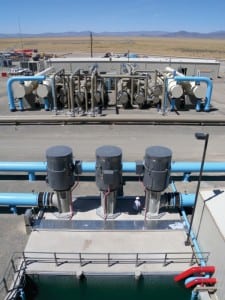
Completed in 2009 and partially funded under the American Reinvestment and Recovery Act, the 50-MW Blue Mountain Faulkner 1 Geothermal Power Plant is harnessing large amounts of renewable energy by tapping into an underground geothermal reservoir in northern Nevada. This subterranean source of heat allows the binary plant to generate pollution-free baseload electricity.
-
 Waste to Energy
Top Plant: Colmac Energy Inc.’s Biomass- Fueled Power Plant, Mecca, California
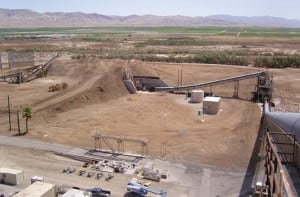
The 47-MW Colmac Energy facility is the largest biomass-fueled power plant in California. Colmac operates with a capacity factor consistently in the 92% to 95% range and at a net plant heat rate comparable to waste coal facilities. Colmac Energy has demonstrated that biomass plants using urban wood wastes as fuel can generate significant environmental benefits, including reduced air pollutants from open-air burning and lowered demand for landfill space.
-
 Solar
SolarTop Plant: DeSoto Next Generation Solar Energy Center, DeSoto County, Florida
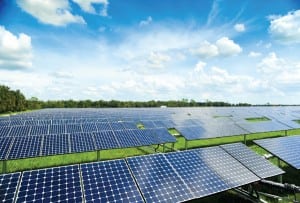
The forecast is looking sunny for the 25-MW DeSoto Next Generation Solar Energy Center, which has more than 90,000 photovoltaic (PV) panels and is the largest solar PV plant in the U.S. Completed in October 2009, it is a sustainable energy solution with minimal maintenance costs. The site uses no fuel, consumes no cooling water, has no air emissions, and creates no waste products.
-
 Waste to Energy
Top Plant: Kajang Waste-to-Energy Plant, Semenyih, Malaysia
At Malaysia’s first waste-to-energy plant, municipal solid waste (MSW) is converted into refuse-derived fuel for use in an integrated steam power plant. This facility was designed to achieve the twin objectives of environmentally friendly MSW disposal and generating renewable power.
-
 Waste to Energy
Top Plant: Kaukaan Voima Oy Biomass-Fired Power Plant, Lappeenranta, Finland
Located in the heavily forested country of Finland, the Kaukaan Voima biomass-fueled power plant produces process steam and electricity for UPM’s Kaukas pulp and paper mill as well as electricity and district heating for Lappeenrannan Energia, a city-owned power company. Launched in 2009, the plant can provide 125 MW of electricity, 110 MWth of district heat, and 150 MWth of process steam thanks to one of the world’s largest wood-fired fluidized bed boilers.
-
 Wind
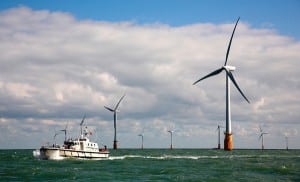
WindTop Plant: Thanet Offshore Wind Farm, Isle of Thanet, UK
In September, the 300-MW Thanet Offshore Wind Farm, the world’s largest offshore wind energy facility, began operation off the southeastern coast of England. The wind farm has 100 3-MW turbines manufactured by Vestas. The facility will generate electricity equivalent to the annual consumption of more than 200,000 British households.
-
 Solar
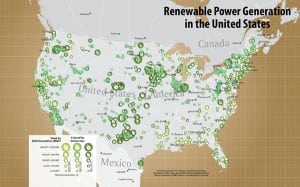
SolarMap of Renewable Power Generation in the United States
For a full-size map, contact Platts. Courtesy: Platts Data source: POWERmap All rights reserved. No reproduction allowed.
-
 Nuclear
Collaborative Team Investigates Long-Term Nuclear Operations
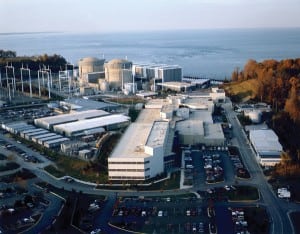
The Atomic Energy Act originally established the length of a U.S. commercial nuclear reactor license as 40 years and made it renewable for another 20 years. The U.S. Nuclear Regulatory Commission has stated that it bases the length of these licenses (and the 50+ renewed licenses granted to date) not on any particular technical limitation but on whether the plant meets current safety requirements. Does this mean there could be reactor life after 60?
-
 Nuclear
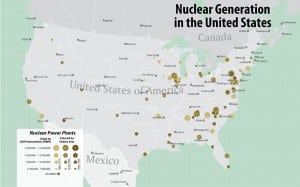
Map of Nuclear Generation in the United States
Courtesy: Platts Data source: POWERmap All rights reserved. No reproduction allowed. For full-sized maps, contact Platts.
-
 Coal
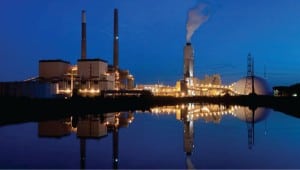
CoalTop Plant: Brandon Shores Generating Station, Pasadena, Maryland
Constellation Energy Constellation Energy recently completed a series of air quality upgrades on both units at its Brandon Shores Generating Station that included flue gas desulfurization (FGD), baghouse, SO3 control, and mercury reduction by activated carbon injection. The plant’s unique arrangement required long duct runs to the air quality system and a mile-long conveyor for moving barge-delivered limestone to the plant. Treated municipal wastewater was used as wet FGD supply water, and effluent treatment included first-of-its-kind nitrogen removal before discharge to the Chesapeake Bay watershed.
-
 Coal
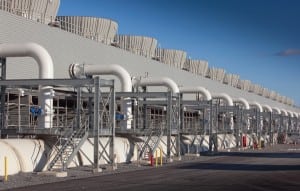
CoalTop Plant: Brunner Island Power Plant, York Haven, York County, Pennsylvania
The 1,456-MW Brunner Island coal-fired plant has implemented advanced environmental improvements in order to be a good neighbor to the residents of south central Pennsylvania. For example, between 2006 and 2010, PPL invested more than $860 million in pollution control upgrades for air, water, and solid waste treatment at the facility.
-
 Coal
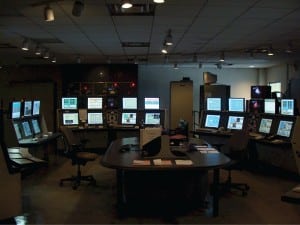
CoalTop Plant: Dickerson Generating Station, Dickerson, Maryland
Owner/operator: Mirant Corp. Dickerson Generating Station, a 50-year-old facility servicing Maryland and Washington, D.C., was recently upgraded with a flue gas desulfurization system and a unique draft system that allows an electrostatic precipitator and a baghouse to share flue gas cleanup chores on each unit. In addition, state-of-the-art equipment monitoring and diagnostics keep plant reliability high for this baseload unit.
-
 Coal
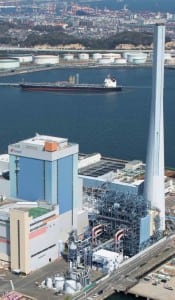
CoalTop Plant: Isogo Thermal Power Station Unit 2, Yokohama, Japan
Unit 2 at J-POWER’s Isogo Thermal Power Station entered commercial service in July 2009. The 600-MW ultrasupercritical unit joins an earlier, similar plant built in 2002. Together, these two new plants replaced 1960s-vintage coal-fired plants and doubled power generation from the small project site. In addition, the new unit improves the plant’s gross thermal efficiency to about 45% while reducing air emissions to those of a gas-fired combined-cycle plant.
-
 Coal
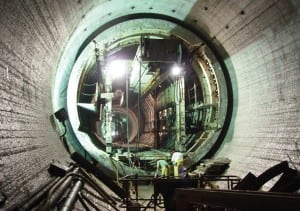
CoalTop Plant: Oak Creek Power Plant, Elm Road Units 1 and 2, Milwaukee and Racine Counties, Wisconsin
Adding two 615-MW supercritical pulverized coal units to the 1,135-MW Oak Creek Power Plant is part of We Energies’ ongoing master plan to “Power the Future” of Wisconsin well into the 21st century. The new Elm Road Unit 1 went into service in February, and Unit 2 is expected to start operations during the fourth quarter of 2010. With operations marked by high efficiency and low emissions, these new units will provide large amounts of cleaner energy to the Great Lakes area.
-
 Coal
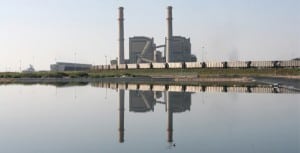
CoalTop Plant: Tolk Station, Earth, Texas
Located in a semi-arid region, this “Texas tough” coal-fired power plant uses a number of smart practices to increase water-use efficiency. For example, a pipeline was constructed to send blowdown water from nearby Plant X for treatment and recycling at the 1,080-MW Tolk Station, making both plants “zero-discharge” facilities. For its environmental stewardship and superior plant operations, the Powder River Coal Users’ Group named Tolk Station its 2010 Plant of the Year.
-
 Coal
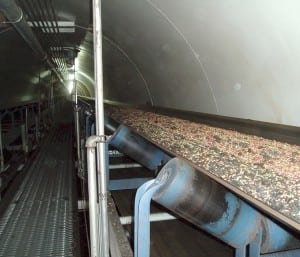
CoalTop Plant: ADM Clinton Cogeneration Plant, Clinton, Iowa
In the heart of corn country, Archer Daniels Midland is using seed corn that is no longer suitable for planting, along with coal, to power its 180-MW Clinton cogeneration plant. The cogeneration plant, which began operations in 2008, supports ADM’s Clinton corn processing plant, one of the largest corn wet mills in the world. It also supports ADM’s facility that produces renewable plastic from corn sugar. Firing up to 20% biomass along with coal, the new cogeneration plant is capable of providing 100% of the steam and electrical power needs of both facilities.
-
 Gas
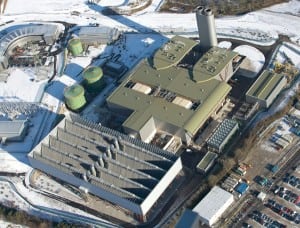
GasTop Plant: Langage Combined Cycle Power Plant, Plymouth, Devon, UK
The UK grid, focused on adding valuable renewable generation, will rely on natural gas–fired generation for many years to come. One of the most recent additions is the Langage Power Plant, designed for quick response and low load “parking” at night while remaining below air emissions limits. With an extraordinary architectural design that blends into the natural surroundings, Langage is now a local landmark.
-
 Gas
GasTop Plant: Panoche Energy Center, Firebaugh, California
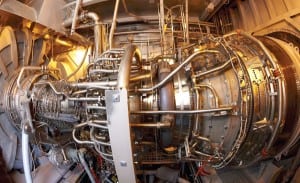
The Panoche Energy Center is a 400-MW simple-cycle power plant using four of General Electric’s GE LMS100s with fast-start capability. Dispatched by Pacific Gas & Electric to meet regional power and grid stabilization needs, the project entered commercial service two months earlier than planned. Panoche is the largest LMS100 peaking facility in the U.S.
-
 Gas
GasTop Plant: Ras Laffan Power and Water Plant, Ras Laffan Industrial City, Qatar
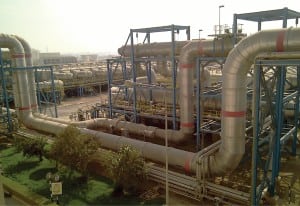
At the Ras Laffan Power Co. facility, the 756-MW net combined-cycle plant and the integrated 40 million gallons per day desalination plant are working in tandem to provide abundant, reliable electricity and desalinated water to residents of the State of Qatar, the most prosperous nation in the Middle East.