
Cover Stories
-
 Gas
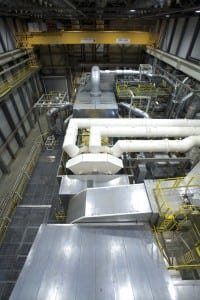
GasTop Plant: Sloe Centrale Power Plant, Vlissingen-Oost, Zeeland Province, Netherlands
There’s nothing slow about the fast-track operations at the new 870-MW Sloe Centrale Power Plant. The combined-cycle plant is designed for 250 starts per year and is capable of supplying power to the grid within a mere 30 to 40 minutes. In addition to its impressive rapid load response, the gas-fired plant produces low CO2 and NOx emissions by using the latest technology. It also attains an efficiency of 59%.
-
 Gas
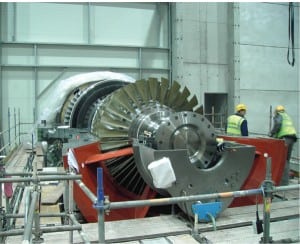
GasTop Plant: Timelkam Power Plant Vöcklabruck District, Upper Austria, Austria
Now that the 412-MW Timelkam Power Plant has replaced a 47-year-old coal-fired power plant located in the Vöcklabruck District, northern Austrians can bid auf wiedersehen (goodbye) to high levels of air pollution. Compared to its predecessor, the new gas-fired combined-cycle plant has dramatically cut CO2 and NOx emissions and produces seven times more energy.
-
 Gas
GasTop Plant: West County Energy Center, Palm Beach County, Florida
The 3,600-MW West County Energy Center, with two recently commissioned power blocks and a third just entering start-up, is the first “greenfield” combined-cycle plant constructed by FPL since the 1970s. Thanks to FPL’s long history with repowering projects, the project team commissioned Unit 2 seven months early, with no operator errors during start-up. At just over $600/kW, the cost of the plant was a bargain.
-
 Coal
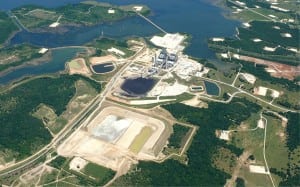
CoalLuminant’s Oak Grove Power Plant Earns POWER’s Highest Honor
Luminant used remnants of the ill-fated Twin Oaks and Forest Grove plants (which were mothballed more than 30 years ago) to build the new two-unit 1,600-MW Oak Grove Plant. Though outfitted with equipment from those old plants, Oak Grove also sports an array of modern air quality control equipment and is the nation’s first 100% lignite-fired plant to adopt selective catalytic reduction for NOx control and activated carbon sorbent injection technology to remove mercury. For melding two different steam generators into a single project, adopting a unique and efficient “push-pull” fuel delivery system, assembling a tightly integrated team that completed the project on time and within budget, and for completing what was started almost four decades ago, Oak Grove Power Plant is awarded POWER magazine’s 2010 Plant of the Year award.
-
 Environmental
Determining AQCS Mercury Removal Co-Benefits
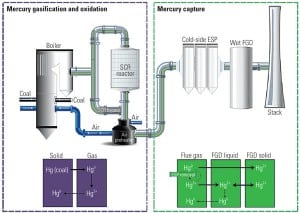
The U.S. Environmental Protection Agency is expected to propose an emissions standard for mercury and other hazardous air pollutants emitted by coal- and oil-fired electric generating units in March of 2011. The anticipated rule would require emission control to meet the various standards using maximum achievable control technology, as determined by the prescriptive requirements of the Clean Air Act. In response to the expected rule-making, utilities will be required to make technology decisions in order to ensure compliance. One cost-effective approach to compliance may be the use of “co-benefits” from air quality control systems (AQCSs) already in service that are designed to remove other pollutants.
-
 Gas
GasEconomic Operation of Fast-Starting HRSGs
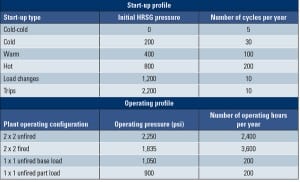
Fast-starting combined-cycle plants are designed for a certain operating life based on a customer-specified set of operating scenarios. During that design phase, periodic inspection and maintenance procedures to benchmark equipment actual wear and tear should be developed, but seldom are. Without an accurate assessment of remaining equipment life for components subjected to fast and frequent […]
-
 Nuclear
The U.S. Spent Nuclear Fuel Policy: Road to Nowhere
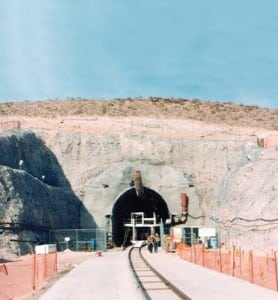
The Nuclear Waste Policy Act and Amendments of 1982 and 1987 established a national policy and schedule for developing geologic repositories for the disposal of spent nuclear fuel and high-level radioactive wastes. Those deadlines have come and gone; the cancellation of Yucca Mountain was only the latest failure of this policy to become reality. The task of finding a new storage location is now a political committee’s homework assignment. History tells us that committee members have been given an impossible task.
-
 Wind
WindWind Destroyed and Now Powers Greensburg, Kansas
Greensburg was destroyed by an EF5 tornado on May 4, 2007. Instead of abandoning the Kansas town, the community quickly embraced the task of rebuilding it from the ground up, maximizing the use of renewable energy sources and energy efficient building techniques. Rebuilding continues, but the future of Greensburg has never been stronger.
-
 Coal
CoalBig Bend’s Multi-Unit SCR Retrofit
Tampa Electric will soon complete a comprehensive selective catalytic reduction project on all four units at its Big Bend Power Station that will make Big Bend among the cleanest coal plants in the U.S. The project — the centerpiece of the company’s 10-year, $1.2 billion air quality improvement program — is on schedule to meet all of its air quality improvement goals by mid-2010.
-
 Coal
CoalBig Stone Remodels ESP into Pulse Jet Fabric Filter
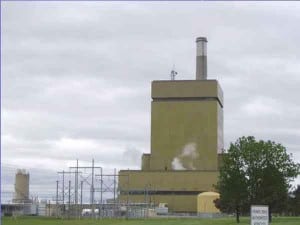
Short of replacement, what are your options when your original electrostatic precipitator fails to meet your current emissions and opacity requirements? The management of Big Stone Plant chose the unconventional, yet economic approach of building a pulse jet fabric filter inside the casing of the old electrostatic precipitator. The upgrades restored plant availability and prepare the plant to meet the next regulated reductions in particulate matter emissions.
-
 Nuclear
Concerns About Electromagnetic Interference in Nuclear Plants Related to Digital Upgrades
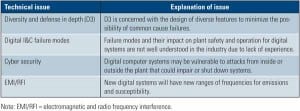
In order to operate aging nuclear power plant instrumentation and control systems for up to 60 more years or longer, there must be a smooth transition from existing analog technologies to advanced digital platforms. For this to occur, electromagnetic compatibility concerns related to both qualification testing and the electromagnetic environment must be addressed to ensure safe and reliable operation of these systems within the plant’s electromagnetic and radio frequency interference environment. By understanding the regulatory requirements and sharing implementation experience, digital system upgrades can be installed successfully.
-
 Nuclear
The Advanced Digital Fieldbus Option for Nuclear Plants
Digital fieldbus technologies, including Foundation fieldbus and Profibus, are increasingly being used with success in the nuclear and fossil fuel power industries. This article compares a conventional control system with a Foundation fieldbus – based digital control system used in a typical circulating water system in a nuclear power plant. As shown in this example, using digital fieldbus technologies can result in significant savings in terms of installation and hardware costs.
-
 O&M
O&MLow-Cost Wireless Sensors Can Improve Monitoring in Fossil-Fueled Power Plants
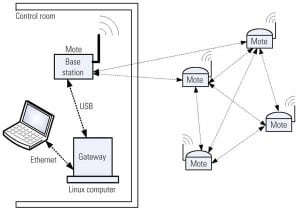
As equipment ages in fossil-fueled power plants, component wear leading to machinery failure increases as a result. Extending equipment life requires increased attention to maintenance, and one way to improve maintenance planning is to detect faults prior to failure so maintenance can be scheduled at the most cost-effective, opportune time. This type of strategy benefits from the use of additional sensors, and wireless ones can often be installed with the least time and cost.
-
O&M
How to Avoid Alarm Overload with Centralized Alarm Management
In 1999, the Engineering Equipment and Materials Users’ Association (EEMUA) released its general guide to the design, management, and procurement of alarm systems for industrial plants. The guidance document (EEMUA 191), however, is vague about applications to specific facilities, such as electric power plants. This article specifies EEMUA 191 standards and practices applicable to the electric power industry and spells out specific variations in alarming practices that are tailored for today’s power plants.
-
Nuclear
Nontechnical Issues Affecting Digital Upgrades at Nuclear Power Plants
Existing nuclear power plants are increasingly facing the conversion to digital instrumentation and controls technology. Meanwhile, new nuclear designs have digital technology integrated throughout the plant. Digital controls will soon be inevitable, so how do we make the transition as smooth as possible? Without losing focus on the technical solutions, organizations have to pay attention to the nontechnical issues as well.
-
Coal
Digital Plant Controls Provide an Essential Edge
It’s a digital world, and even aging power plants are experiencing the benefits of digital controls technologies. The following cover stories provide insight into the latest options and inspiration for your own plant controls projects.
-
Smart Grid
What Do Customers Expect from the Smart Grid?
Xcel Energy’s SmartGridCity enterprise in Boulder, Colo., is one of the most talked-about smart grid projects. Here’s what some Boulder utility customers are saying about it.
-
 Solar
SolarWhich Country’s Grid Is the Smartest?
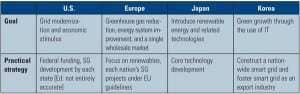
The U.S. isn’t the only country evaluating and implementing elements of smart grid technology. In fact, it could be argued that other nations are much farther along the path to a comprehensive, technically advanced system for integrating renewables, managing load, and creating a more flexible power grid.
-
 O&M
O&MThe U.S. Gas Rebound
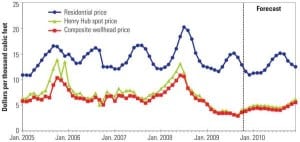
"It’s déjà vu all over again," said Yogi Berra. The Hall of Fame catcher could easily have been predicting the coming resurgence of natural gas – fired generation. Yes, a few more coal plants will be completed this year, but don’t expect any new plant announcements. A couple of nuclear plants may actually break ground, but don’t hold your breath. Many more wind turbines will dot the landscape as renewable portfolio standards dictate resource planning, but their peak generation contribution will be small. The dash for gas in the U.S. has begun, again.
-
 Environmental
A New Regulatory and Environmental Milieu
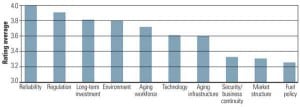
There will be no shortage of important issues to keep utility executives and their staffs busy throughout 2010. Few of these will be surprises, although a number will emerge quickly and assume larger-than-life significance. The confluence of the great recession and the sturm und drang of environmental legislation will create the liveliest of the debates, but more subtle trends will drive additional stressors. The results of Black & Veatch’s 2009 fourth annual industry strategic directions survey can offer guidance as to how these issues will affect the industry in the coming year.
-
 Coal
CoalThe Impact of Carbon Trading on Performance: What Europe’s Experience Can Teach North American Generators
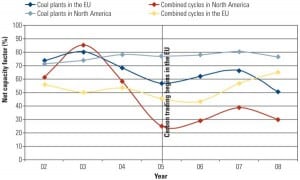
The European carbon trading system experience suggests that North American generators should expect severely altered coal-fired power plant operating profiles if cap-and-trade legislation becomes law. In a groundbreaking study, Solomon Associates predicts the reduction in mean run time that North American generators should expect. The trends outlined in this study provide an overview of some of the broad challenges facing generators in moving to a carbon-constrained market environment.
-
 Solar
SolarA New Foundation for Future Growth
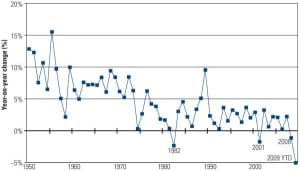
As the economy begins to grow again, the banking industry continues to stabilize, and lawmakers work on finalizing climate change legislation, the decisions made in 2010 will lay the foundation for the power industry for decades to come.
-
 Business
Dollars and Dirt: Investing in Infrastructure
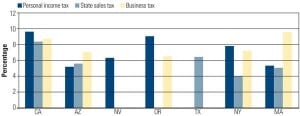
The familiar saying "as goes California, so goes the nation" seems to apply to the many states that have been unable to invest in infrastructure improvements because they are crushed by debt and shrinking revenues. Will California and energy project developers continue to invest in energy infrastructure in 2010 given the limited availability of private capital, shaky state finances, and shifting regulatory climate?
-
Smart Grid
The Smart Grid Has a Growth Spurt
Which country has the smartest grid? Which U.S. state has the most smart meters? What’s Google got to do with the grid? Answers to these questions and more can be found in our web exclusives. Here’s a taste of what you’ll find online.
-
Smart Grid
U.S. Smart Grid Forecast: Flurries of Activity
A number of factors are coalescing to create the most hospitable climate for smart grid development activities that has yet been seen in the U.S. Here’s a look at those elements and at the different models and motivations for smart grid project development across the country.
-
 Hydro
HydroTop Plants: Edison Sault Hydroelectric Plant Sault Ste. Marie, Michigan
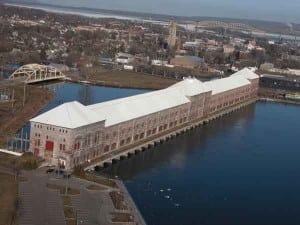
Located on the border with Canada and operational since 1902, the Edison Sault Hydroelectric Plant is one of the oldest continuously operating power plants in North America. This pioneer plant continues to generate between 25 to 30 MW when operating at full capacity. Modern wind and solar projects have captured the public’s interest, but this century-old hydroelectric project shows that time is the ultimate arbiter of a technology’s value to society.
-
 Solar
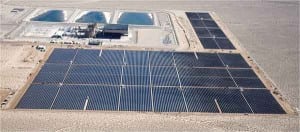
SolarTop Plants: El Dorado Energy’s Solar Facility, Boulder City, Nevada
Sempra Generation has conjured up a market plan for producing merchant photovoltaic (PV) power that is inspired. Working with First Solar, Sempra has developed a finely tuned and standardized 1-MW PV power block that can be replicated as needed. Sempra built the modular PV plant on land adjacent to an existing gas-fired plant to shorten the development period, piggyback the power directly to the grid, and enable existing staff to manage the combined plants’ operation.
-
 Wind
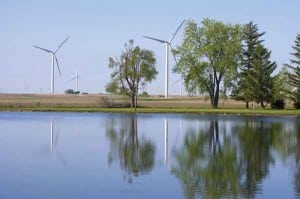
WindTop Plants: Fowler Ridge Wind Farm, Benton County, Indiana
The tractors and combines on Indiana’s farms are getting some competition from a new harvesting technology — powerful turbines that harvest wind. This March the Fowler Ridge Wind Farm opened its first phase, which consists of 222 wind turbines with a total capacity of 400 MW. Phase II is currently under construction and will use 133 wind turbines with a total capacity of 200 MW. A future, third phase will add another 150 MW and give the completed facility a total capacity of 750 MW, which will make it one of the largest wind farms in the world.
-
 Waste to Energy
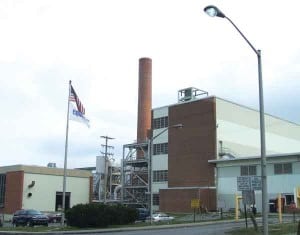
Top Plants: Harrisburg Resource Recovery Facility, Harrisburg, Pennsylvania
After decades of struggling with serious air contamination issues and large financial losses, this Pennsylvania waste-to-energy facility, which was built in 1972, was in need of an extreme makeover. In the wake of an unsuccessful $84 million retrofit attempt in 2005, the faltering facility’s last hope lay with a Covanta project team that took over its operation in 2007. After almost two years of hard work, the facility is now producing up to 17 MW while achieving its environmental compliance goals and earning substantial revenues.
-
 Wind
WindTop Plants: Hywind Floating Wind Turbine, North Sea, Norway
In June, the 2.3-MW Hywind facility, the world’s first large-scale floating wind turbine, was towed to a North Sea location with a water depth of about 220 meters (722 feet) and began operation. Over the next two years this turbine will be subjected to strong wind and waves in a harsh ocean environment in an effort to thoroughly test the innovative technology.