Cover Stories
-
 O&M
O&M2009 Industry Forecast: Existing Generating Assets Squeezed as New Project Starts Slow
Most forecasting reports concentrate on political or regulatory events to predict future industry trends. Frequently overlooked are the more empirical performance trends of the principal power generation technologies. Solomon & Associates queried its many power plant performance databases and crunched some numbers for us to identify those trends.
-
 Business
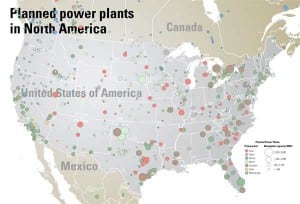
Planned Power Plants in North America
Courtesy: Platts Data source: Platts Energy Advantage and POWERmap. All rights reserved.
-
 Gas
Gas2009 Industry Forecast: New Power Politics Will Determine Generation’s Path
The U.S. power industry’s story in 2009 will be all about change, to borrow a now-familiar theme. Though the new administration’s policy specifics hadn’t been revealed as POWER editors prepared this report, it appears that flat load growth in 2009 will give the new administration a unique opportunity to formulate new energy policy without risking that the lights will go out.
-
 Business
2009 Industry Forecast: A Challenging Year Lies Ahead
The power industry will be challenged in the coming year to chart its strategic direction and meet investor expectations, although business conditions should take a turn for the better going into 2010.
-
 Waste to Energy
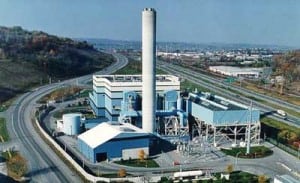
Top Plants: Covanta Onondaga Waste-to-Energy Plant, Jamesville, New York
Covanta Energy Corp. doesn’t believe in wasting waste. Since 1995 the Covanta Onondaga waste-to-energy (WTE) plant has converted approximately 4 million tons of solid waste into 3 million MWh of clean electricity. Additionally, unlike power plants that use wind or solar energy, this 39-MW WTE facility operates 24/7, making it and similar WTE plants among the most continuously reliable sources of renewable electricity generation currently in operation.
-
 Solar
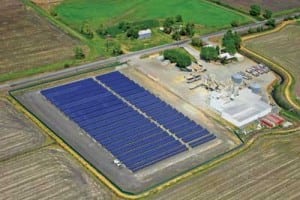
SolarTop Plants: Far West Rice Mill with solar electric system, Nelson, California
Many companies are finding that with solar energy, the sky’s the limit. As costs fall and mandates for renewable energy rise, solar energy is becoming an increasingly competitive source of power generation. Far West Rice Mill is a forward-thinking business that is taking advantage of this economic opportunity by powering its operations with a 1-MW photovoltaic system.
-
 Wind
WindTop Plants: La Collada Wind Farm, Tarragona Province, Spain
Ironically, the Spanish province of Tarragona — well known for its many Roman and Medieval ruins, archeological digs, and multiple World Heritage Sites — now has one of the most cutting-edge wind farms in the world. This wind farm recently added an innovative 3-MW wind turbine, which stands 140 meters (459 feet) high and is the largest nationally manufactured wind turbine installed in Spain to date.
-
 Wind
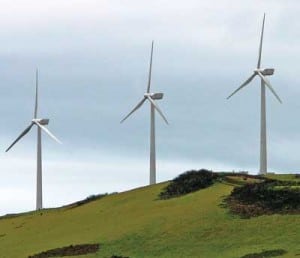
WindTop Plants: San Cristobal Wind Project, Galapagos Islands, Ecuador
The Galapagos Islands, home of the unusual flora and fauna that inspired naturalist Charles Darwin’s groundbreaking work on evolution, are striving to promote clean energy that protects the area’s unique biodiversity. Part of that effort is the 2.4-MW San Cristobal Wind Project, which displaces diesel-powered electricity generation. This new energy source will cut greenhouse gas emissions and reduce the risk of devastating diesel-fuel tanker spills in a highly protected environment.
-
 Geothermal
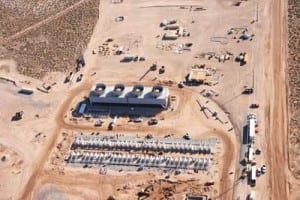
Top Plants: Thermo Plant, Beaver County, Utah
Geothermal energy projects are gaining steam in many parts of the western U.S., in large part because geothermal power has the advantage of being a renewable energy source that provides baseload power with no emissions and no waste by-products. One example of the latest developments in geothermal power generation is the recently completed 10-MW geothermal plant in rural Utah, which uses innovative modular power generation units.
-
 Wind
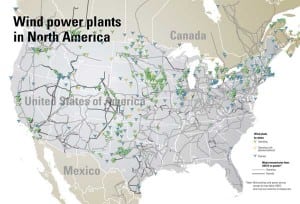
WindMap of wind power plants in North America
Courtesy: Platts Data source: Platts Energy Advantage and POWERmap. All rights reserved.
-
 Nuclear
Map of nuclear power plants in North America
Courtesy: Platts Data source: Platts Energy Advantage and POWERmap. All rights reserved.
-
 Nuclear
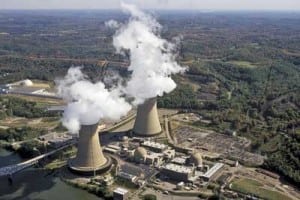
Beaver Valley Power Station, Shippingport, Pennsylvania
Top Plant: Nuclear plant owners understand the economic importance of squeezing every last megawatt-hour from their power generation assets and minimizing outage durations. When First Energy assumed operating responsibility for Beaver Valley, the plant’s operating record was unspectacular, but today the plant has established itself as a routine top-quartile performer, thanks in part to its Full Potential Program.
-
 Nuclear
St. Lucie Nuclear Generating Station, Unit 2, Hutchinson Island, Florida
Top Plant: The team that handled this reactor vessel head and steam generator replacement project set a new industry standard for integrating a highly complex maintenance outage.
-
 Coal
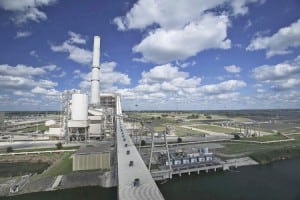
CoalJ.K. Spruce Power Plant, Unit 1, San Antonio, Texas
Top Plant: CPS Energy’s J.K. Spruce Power Plant, Unit 1 was recently recognized by the EUCG Fossil Productivity Committee as the best performer in the large coal plant category over the 2002-2006 evaluation period. The competition was tough, with more than 80 plants in the running, but Unit 1 emerged as the clear winner by earning top points for high plant reliability and very low nonfuel O&M costs.
-
 Coal
CoalTS Power Plant, Eureka County, Nevada
Top Plant: Not all coal-fired power plants are constructed by investor-owned utilities or independent power producers selling to wholesale markets. When Newmont Mining Corp. recognized that local power supplies were inadequate and too expensive to meet long-term electricity needs for its major gold- and copper-mining operations in northern Nevada, it built its own generation. What’s more, Newmont’s privately owned 200-MW net coal-fired plant features power plant technologies that will surely become industry standards. Newmont’s investment in power and technology is also golden: The capital cost will be paid back in about eight years.
-
 Coal
CoalRawhide Energy Station, Fort Collins, Colorado
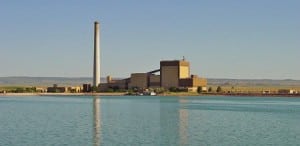
Top Plant: The staff of the Rawhide Energy Station have been racking up operating stats and an environmental performance record that is the envy of other plant managers. In the past decade Rawhide has enjoyed an equivalent availability factor in the mid- to high 90s and an average capacity factor approaching 90%. Still not content with this performance, Rawhide invested in new technology and equipment upgrades to further optimize performance, reduce emissions, and keep cost competitive.
-
 Coal
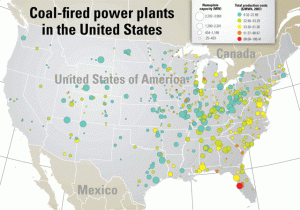
CoalMap of Coal-fired Power Plants in the United States
Courtesy: Platts Data source: Platts Energy Advantage and POWERmap. All rights reserved.
-
 Coal
CoalBoryeong Thermal Power Complex, Boryeong-Si, Chungcheongnam-do Province, South Korea
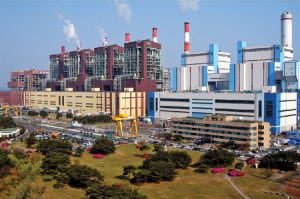
Top Plant: From tall skyscrapers and flashing neon signs to Buddhist temples and pagodas, South Korea is a mixture of the new and old Asia. Doing its part to help modernize this country, the Boryeong Thermal Power Complex operates six coal-fired 500-MW units that provide electricity to power South Korea’s economic growth. One of the important reasons for this facility’s overall success is its operational reliability. An example of this is Boryeong Unit 3’s outstanding achievement of 3,000 days of trouble-free operation.
-
 Coal
CoalDubuque Generating Station, Dubuque, Iowa
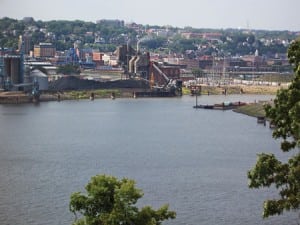
Top Plant: Alliant Energy’s Dubuque Generating Station is a fine example of why small doesn’t mean insignificant in the power generation industry. This winner of the EUCG Best Performer award in the small plant category shows that its operating excellence towers over that of many larger and much newer coal-fired power plants.
-
 Gas
GasBugok II Power Plant, Dangjin County, South Korea
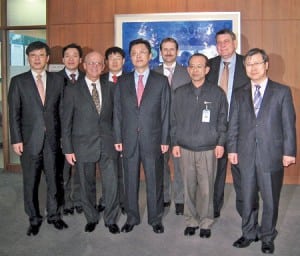
South Korea, one of the “Four Asian Tigers” known for their aggressive economies, is boosting its electrical capacity with the recent addition of the Bugok II Power Plant. Ranked as the top plant in South Korea because of its efficient, environmentally friendly operation, the 565-MW plant is powered by combined-cycle units that burn natural gas. Part of this project’s success derives from the fact that Bugok I and II were the first projects awarded to a foreign company by a South Korean independent power producer.
-
 Gas
GasFrank A. Tracy Combined Cycle Plant, Reno, Nevada
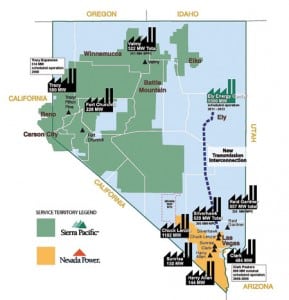
At 564 MW, Sierra Pacific Resources’ Frank A. Tracy Combined Cycle Plant is the largest power project constructed in northern Nevada in 24 years and will reduce the state’s dependence on expensive power purchases from out-of-state suppliers. The project achieved a significant safety milestone by expending 1.5 million safe work hours during construction with zero lost-time accidents.
-
 Gas
GasHigh Bridge Combined Cycle Project St. Paul, Minnesota
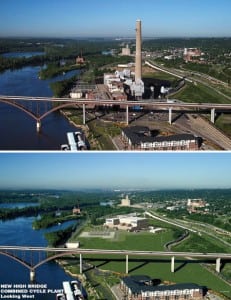
With greenhouse gas caps on the horizon, more U.S. utilities now have another reason–besides tightening air pollution limits–to consider replacing some of their old coal-fired plants with less-carbon-intensive gas-fired capacity. Even local residents are pleased with the results of an Xcel Energy project to do just that in St. Paul, Minnesota. For Xcel, the key ingredient in the recipe for its recently commissioned High Bridge plant was hiring an EPC contractor smart enough to overcome formidable site constraints.
-
 Gas
GasKårstø Power Plant, Stavanger, Norway
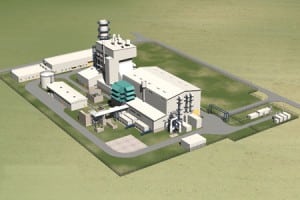
Power supplies are looking brighter these days in the Land of the Midnight Sun now that the Kårstø combined-cycle power plant has begun commercial operation. Kårstø is Norway’s first commercial onshore gas-fired combined-cycle plant. Combining Scandinavian savvy with German engineering, this 420-MW plant showcases maximum efficiency coupled with minimal emissions.
-
 Gas
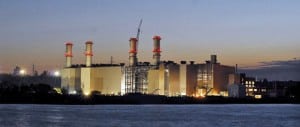
GasPort Washington Generating Station, Phase 2, Port Washington, Wisconsin
We Energies’ Port Washington Generating Station Phase 2 is recognized as a 2008 POWER Top Plant for its design innovation and strong teamwork among the owner, contractor, and craft personnel that ensured project completion on time, on budget, and with a stellar safety record. While staying true to its historical roots, the plant will remain a good neighbor and a reliable provider of intermediate-load power to the region for many years to come.
-
 Coal
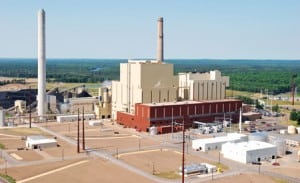
CoalWisconsin Public Service Corp.’s Weston 4 earns POWER’s highest honor
Wisconsin Public Service Corp. placed its world-class Weston 4 into commercial service on June 30 and is now enjoying the benefits of coal-fired supercritical technology’s inherently higher efficiency, operating flexibility, and lower CO2 emissions. For its unequalled environmental protection credentials, well-integrated project team, and employing without a doubt the most advanced coal-fired steam generation technology in the U.S. today, Weston 4 is awarded POWER magazine’s 2008 Plant of the Year award.
-
 Business
Generation next: Strategies for recruiting younger workers
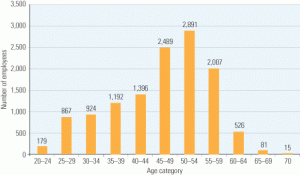
In our April 2008 issue, the article “The aging workforce: Panic is not a strategy” focused on how to reconfigure human resource practices in order to find enough well-trained new personnel to replace the large number of baby boomers who will be retiring in the next few years. This month we profile several utilities that are using innovative approaches to recruit younger technical staff and skilled craft labor to fill positions being vacated in growing numbers by retiring employees.
-
 Smart Grid
Microgrids promise improved power quality and reliability
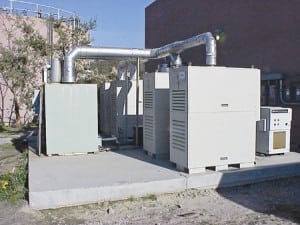
Last month, POWER explored the growing importance of the smart grid, which is envisioned as using digital technologies to enable integrated, real-time control of all the system’s elements, from generation to end use. This month we focus on the emerging technology of microgrids: controlled groupings of dispersed generation sources that are connected to the main electrical grid but that can function independent of it. We examine their benefits and their potential impact on 21st-century utilities and their customers.
-
 Wind
WindRegulating wind power into a dispatchable resource
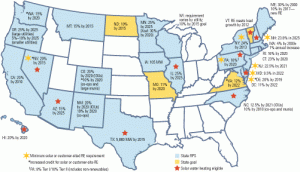
Perhaps the biggest shortcoming of wind power is its unreliability. Unconcerned with human needs, Mother Nature has decided that the wind usually blows strongest at just the wrong times, when electricity demand is lowest. However, using savvy negotiations to exploit a new provision in California’s renewable energy regulatory regime could make wind power more dispatchable during peak-demand periods and increase the capacity of wind farms at the same time.
-
 Nuclear
Super Tuesday, Super Bowl XLII, and the nukes
The nuclear renaissance is likely to slow next year with a new tenant in the White House and many key regulatory positions in flux. Nuclear industry leaders are especially concerned that rules for construction loan guarantees will fall victim to the “wait and see” disease that infects those inside the Beltway every four years. If those rules aren’t in place before this November’s election, the nuclear renaissance may revert to the Dark Ages.