
Cover Stories
-
 Instrumentation & Controls
Brain surgery breathes new life into aging plants
Age is wreaking havoc on the U.S. generation industry, especially the coal-fired sector. Industry conferences are replete with hand-wringing over the "brain drain," the lack of skilled personnel, the meager number of students pursuing engineering degrees, and the accelerated retirement of the older workers who make up the industry’s experience base. On top of this, […]
-
 Instrumentation & Controls
Air heater leakage: Worse than you think
Rotary regenerative air heaters capture and recycle about 60% of the heat energy exiting the boiler—energy that would otherwise go up the stack. For a 500-MW coal-fired plant, the recycled energy amounts to about 1.5 billion Btu per hour, and reusing it reduces fuel consumption by about 1,500 tons per day. Although most performance engineers […]
-
 Business
Balancing people, plants, and practices
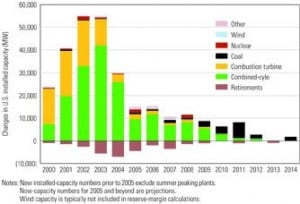
An essential ingredient in the success of any business endeavor is thorough planning. We’ve all heard the axiom "proper prior planning prevents poor performance" or a variation on that theme. Why the need for peak performance? Competition within the industry has never been as intense, with utilities combining in search of economies of scale. The […]
-
 Instrumentation & Controls
Steam turbine upgrading: Low-hanging fruit
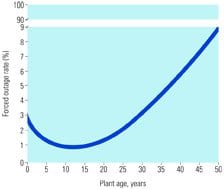
In 1500, Leonardo Da Vinci drew sketches of a device that rotated when hot air going up a chimney passed through a set of fan-like blades. Leonardo called his invention a "chimney jack," and although it only turned a roasting skewer, it gave birth to the idea of mounting blades on a shaft to convert […]
-
 O&M
O&MKeeping condensers clean
There’s a relatively easy way to make a steam plant more efficient and reliable: keep the tubes of its condenser(s) clean. According to George Saxon, Jr., VP of international sales and marketing for Conco Systems Inc. (Verona, Pa.)—a company whose specialty is cleaning and maintaining condenser tubes—"There are two major problems that result from dirty […]
-
 Coal
CoalDesigning wet duct/stack systems for coal-fired plants
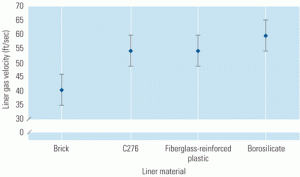
A multitude of variables must be accounted for during the design and development of a wet-stack flue gas desulfurization system. The five-phase process detailed below has proven effective on more than 60 wet-stack system design studies. A basic understanding of these concepts will help inform early design decisions and produce a system amenable to wet operation.
-
Legal & Regulatory
Get involved!
The Combined Cycle Users’ Group (CCUG) was formed to address issues of importance to users, particularly the interactions among the major systems of combined-cycle power plants: the steam turbine, combustion turbine(s), and heat-recovery steam generator. The added value of becoming a CCUG member is the opportunity to interact with other operators, as well as designers, […]
-
 Instrumentation & Controls
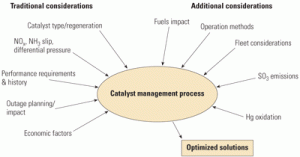
Long-term catalyst health care
Now that many U.S. selective catalytic reduction (SCR) systems are in their fifth or sixth year of operation, a number of utilities are shifting their attention from implementing the technology to operating and maintaining it. Catalyst management and performance are key to the successful operation of any SCR system.
-
 Business
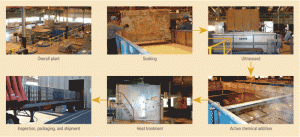
Catalyst regeneration: The business case
As an alternative to purchasing new catalyst, technological and economic advantages make a compelling case for regenerating rather than replacing the metal or ceramic that enables selective catalytic reduction systems to capture NOx.
-
 Coal
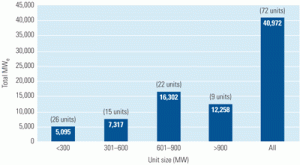
CoalEstimating SCR installation costs
The EUCG surveyed 72 separate installations of selective catalytic reduction (SCR) systems at coal-fired units totaling 41 GW of capacity to identify the systems’ major cost drivers. The results, summarized in this article, provide excellent first-order estimates and guidance for utilities considering installing the downstream emissions-control technology.