
Cover Stories
-
 Gas
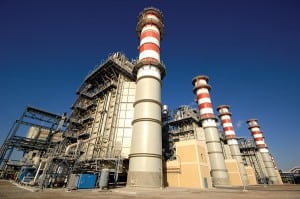
GasThe Need for Alternate PM2.5 Emission Factors for Gas-Fired Combustion Units
The Environmental Protection Agency’s emission factor resource, AP-42, is not your only option for developing particulate matter (PM) emission rates. Results of a prominent PM emissions measurement research program for gas-fired plants have been successfully used to support development and application of alternate PM2.5 emission factors by both regulatory agencies and permit applicants The regulatory […]
-
 Coal
CoalUsing an Optical PM CEMS with Wet FGD for MATS Compliance
Of the three ways to comply with the Mercury and Air Toxics Standards for particulate matter (PM) measurement, using an optical PM continuous emissions monitoring system (CEMS) also delivers valuable side benefits, especially for units using wet flue gas desulfurization (FGD). Editor’s Note: This issue was published before the June 29, 2015, ruling by the […]
-
 O&M
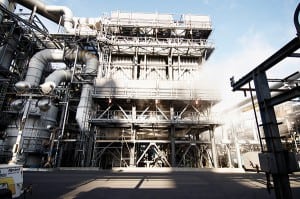
O&MContinuous Water Washing in Wet Electrostatic Precipitators Reduces Capital Cost in the Chinese Market
As the Chinese government lowers the particulate matter (PM2.5) limits to 5 mg/Nm3 or less in coal-fired power plants, wet electrostatic precipitators are one of the key environmental components utilities select to meet this requirement. Optimization of continuous water washing of electrodes allows lower-cost alloys to be used, reducing capital expenditures. Wet electrostatic precipitators (WESPs) […]
-
HR
Resources for Women in Power Generation
This resource list is a web-only supplement to the June 2015 issue of POWER feature story on women in the power generation sector and results of our April 2015 survey of women in the power industry. Although coal and gas provide a larger percentage of U.S. electricity than nuclear, wind, or solar energy, the fossil […]
-
 Finance
Women Are Essential to a Thriving Power Generation Sector
With the increasing number of technical and economic changes affecting the power industry, the value of women in the workforce has never been higher. This follow-up to our 2008 special report, “Workforce Management Lessons from Women in Power Generation,” looks at how having women visible throughout the industry can make it more successful. For our […]
-
 HR
HRPower Plant Boot Camp: Training the Next Generation of Leaders and Managers
At every stage along the power plant promotion track, individuals assuming new leadership positions can find themselves unprepared to deal with new responsibilities. From contracts and regulatory and financial responsibilities to managing those who used to be peers, this article addresses common challenges and best practice solutions to ensure the success of your team. […]
-
 HR
HRPOWER’s 2015 Women in Power Generation Survey
How do women in the power generation business—in power plants and in the vendor community—view their jobs in this male-dominated industry? In what is likely the first survey open to women across the industry, they told us. The November 2008 issue of POWER included an industry-first in-depth look at women in the power industry, “Workforce […]
-
 Energy Storage
Batteries Are Carving Out Space on the Grid
Falling prices and technological improvements have brought battery storage systems into direct competition with traditional distributed generation, demand response, and peaking generation resources. But making one work efficiently and profitably is not just plug and play. Last fall, Southern California Edison (SCE) had some big decisions to make. The giant utility, which serves 14 […]
-
 Distributed Energy
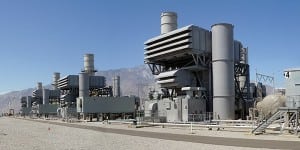
Distributed Power’s Rising Importance for U.S. Electrical Infrastructure
Renewable generation may be the most talked-about form of distributed power these days. However, historically, engine- and turbine-based smaller-scale generation—strategically located where needed by loads or for grid support—has supplied valuable distributed power. For many reasons, the roles for distributed power provided by rotating and reciprocating equipment continue to increase. The U.S. utility industry is […]
-
Legal & Regulatory
New York’s Reforming the Energy Vision
The digital economy has changed the way we shop for clothing, travel, communicate with friends and family, consume news, and watch television—among so many other things. But the innovative potential of the digital economy has not yet found a place within the electric system. With that important goal in mind, New York has embarked on […]
-
 Renewables
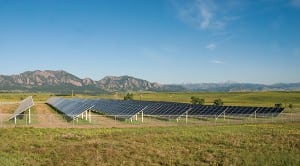
Solar Gardens: A Fast-Growing Approach to Photovoltaic Power
How to give electricity customers who can’t take advantage of rooftop solar access to the sun? Community solar—a shared resource—is a fast-growing segment of the renewable energy market, making solar photovoltaic power more accessible while offering another approach to distributed generation. Mention “solar energy” and the image that probably comes to mind is an array […]
-
 O&M
O&MDoing More with Less: New Solutions Help Address Power Plant O&M Staffing Difficulties
Studies and surveys have predicted a future shortage of skilled workers in the power industry for many years. Unfortunately, the future is here. When qualified workers are difficult to locate, some companies are finding that technology and service contracts allow them to do more with less. It’s no secret that the traditional power industry workforce […]
-
 O&M
O&MWind Power Projects Must Be Managed as Electrical Generation Plants
Wind turbine blades, gearboxes, and generators get most of the attention both within and beyond the power industry. The focus is often on increased capacity and blade lengths, as well as drive train premature failures. That’s natural, because those rotating blades are the most visible part of a wind project. However, successful operation of a […]
-
 O&M
O&MKeeping Pollution Control Devices Online with Good Operating Practices
In order to comply with the Clean Air Act and subsequent regulations covering emissions, coal-fired utilities have installed multiple pollution control devices. Understanding key operating aspects of this equipment can help you avoid costly maintenance activities and forced shutdowns. Since the passage of the Clean Air Act in 1970, the regulatory environment for control of […]
-
 Geothermal
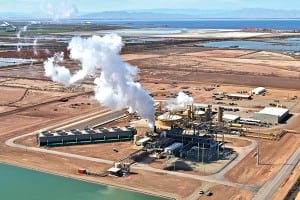
Mining for Lithium in Geothermal Brine: Promising but Pricey
Worldwide, the U.S. is the largest producer of geothermal power; however, geothermal energy provides less than 0.5% of total generation in the U.S. Given geothermal’s small piece of the U.S. electricity pie
-
 Water
WaterFeedwater Chemistry Meets Stainless Steel, Copper, and Iron
Alloys found in the condensate and feedwater systems of power plants include carbon steel for piping, pumps, and in some cases heat exchangers. Many systems still have some copper-based alloys from admiralty
-
 Water
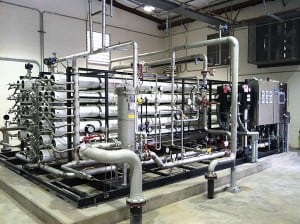
WaterWater and Wastewater Treatment Technology Update
Water is the lifeblood of a thermal power plant. As such, obtaining clean and pure makeup water and dealing with wastewater has been a requirement since the first steam generating unit went into operation. As
-
 Gas
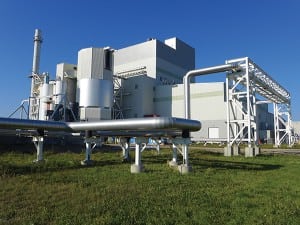
GasCHP: A Rocky Path for a Promising Approach
Combining electric power production with use of steam for heating, cooling, and industrial processes is an old idea that had a brief boom in the U.S., kicking off the rise of non-utility generation. Since then, combined heat and power, or cogeneration, has become a niche market player. What happened? In the late 1990s, the University […]
-
 Renewables
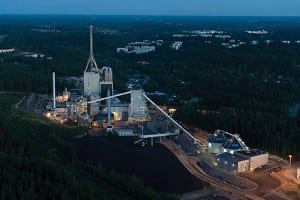
Global CHP Still Struggling to Break Out of Its Niche
Despite its efficiency and environmental benefits, combined heat and power (CHP) generation has languished at around 10% of worldwide capacity for more than a decade. But a global review shows growth in some sectors and promising new technology on the way. The statistics are both eye-opening and somewhat depressing. Globally, according to the International Energy […]
-
 Coal
CoalOptimizing Combined Heat and Power in China
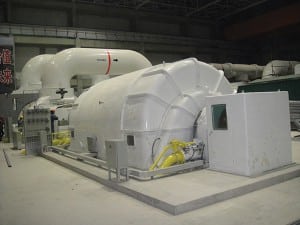
As it struggles to grow its economy while improving air quality in urban areas, China is updating its energy delivery infrastructure. A key part of that plan is switching from coal-fired to gas-fired combined heat and power plants. To push efficiency even further, some plants are turning to synchronous clutches. The developed world has done […]
-
 Coal
CoalFuel Economics Will Drive 2015 U.S. Power Markets
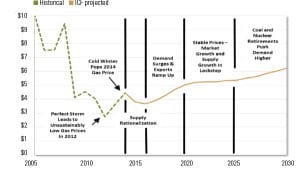
Energy market dynamics in the U.S. continue to evolve. Regulatory developments, advancements in power plant technology, and fuel dynamics are transforming the industry. Although the outcome of these
-
Coal
Opportunities to Thrive in Evolving Power Market
The power generation market continues to evolve due to fundamental changes in market forces. Ongoing opportunities exist to partner with utilities to support this evolutionary process. Leadership Is Key for
-
 Gas
GasCan Mexico’s Electricity Reform Deliver on Its Promise?
In 2013 the Mexican government passed historic reforms that eliminated the state’s monopoly on the energy sector in an effort to attract private investment. In the electricity sector, reform was sold on the
-
Gas
Labor Crunch Complicates the Gas Turbine Arms Race
The rate of introduction of new gas turbine products has accelerated, and the speed of change creates challenges for engineering, procurement, and construction (EPC) contractors who are also coping with a
-
 Legal & Regulatory
How U.S. Power Generators Are Preparing for 2015
In mid-November, members of the POWER Generating Company Advisory Team responded via email to the following set of questions. Their comments have been edited for style. POWER: What changes in your fleet’s
-
 Coal
CoalThe Urge to Merge, or Vice Versa?
The urge to merge, a key feature of the power industry for the past 20 years or so, showed no signs of slowing in 2014. Major players sought to beef up their asset portfolios and diversify their generating
-
 Renewables
Top Plant: Agua Caliente Solar Project, Yuma County, Arizona
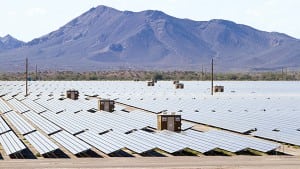
The western Arizona desert has become a popular location for constructing large solar projects. The sunshine is plentiful and there are large tracts of non-prime farmland available that make building
-
 Renewables
Top Plant: Ashta Hydropower Plant, Shkoder, Albania
Like many small countries, Albania is dependent on a specific generation type for the majority of its electricity. In the case of this mountainous nation of 3 million people, it’s hydropower. Roughly 98% of
-
 Renewables
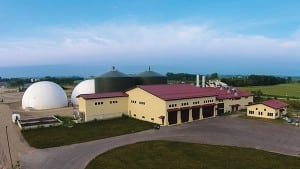
Top Plant: Hometown BioEnergy, Le Sueur, Minnesota
We’ve all heard the phrase “one man’s trash is another man’s treasure.” Hometown BioEnergy (HTBE) offers a case in point. The plant uses vegetable-processing waste and livestock manure in an
-
 Renewables
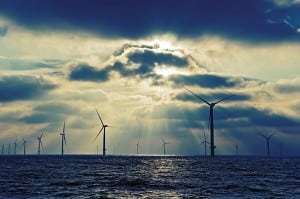
Top Plant: London Array Offshore Wind Farm, Outer Thames Estuary, UK
In 2001, the year that the world’s largest offshore wind farm was conceived, the outlook for offshore wind was foggy. A paltry 95 MW of capacity had been installed worldwide—mostly in Denmark—and a