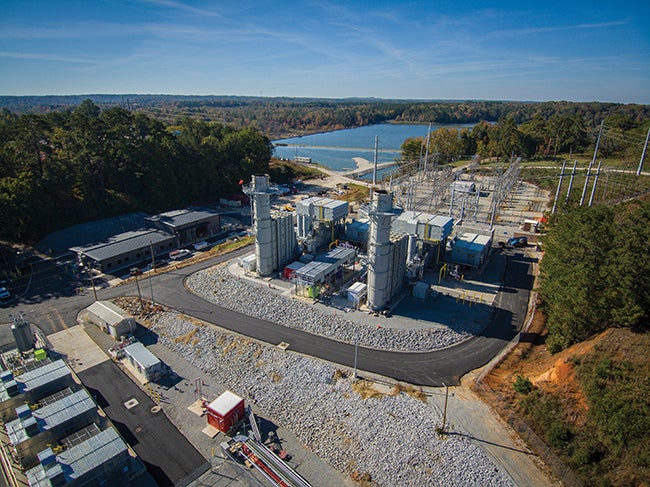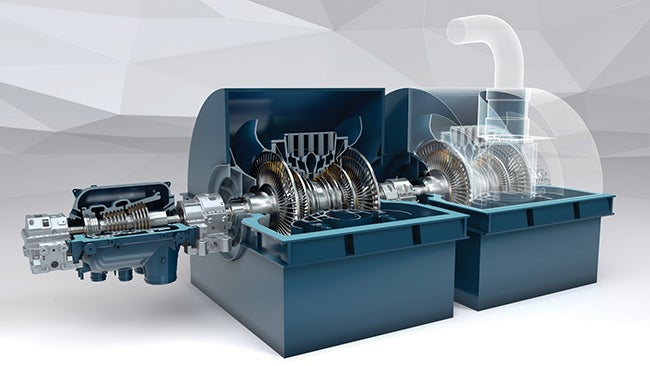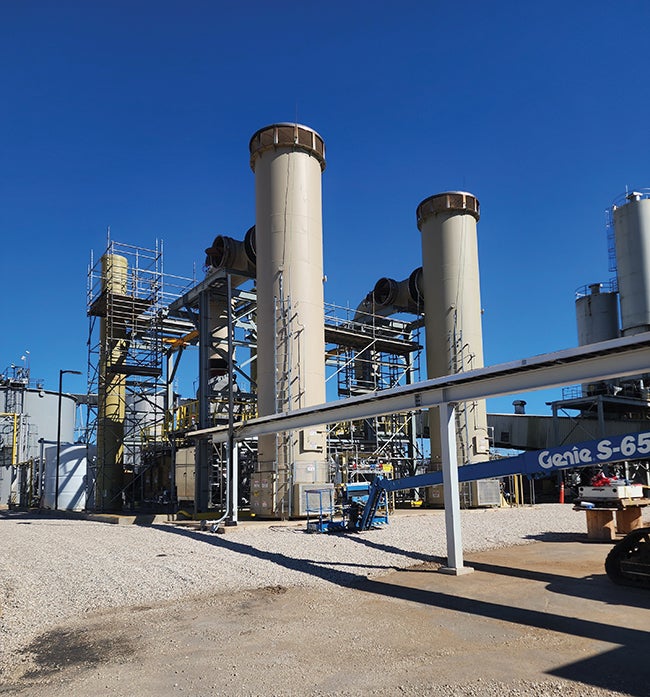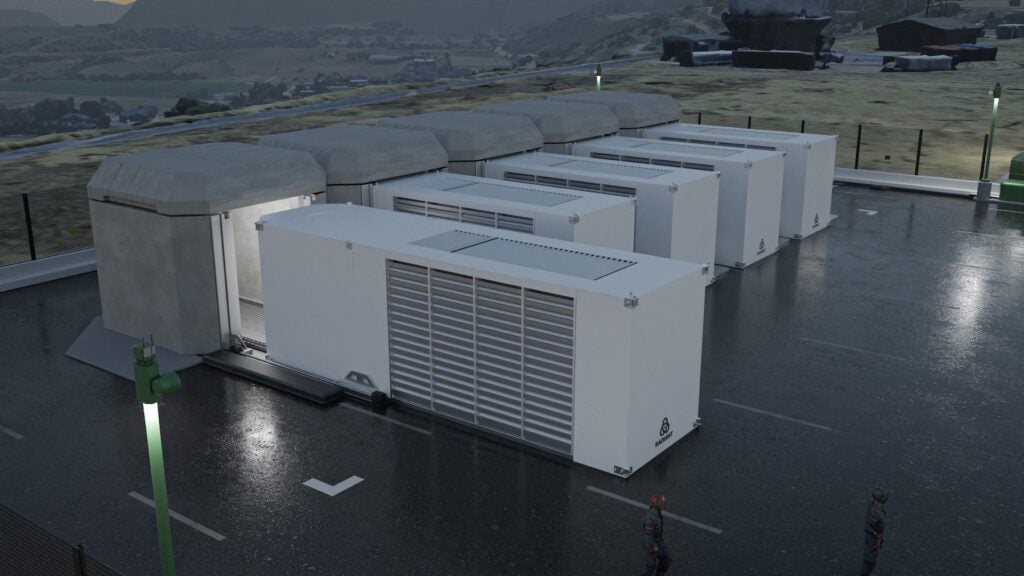
The U.S. Army has conditionally selected three private developers to negotiate long-term leases for commercial power generation at six installations in a new Strategic Capital Initiatives round that could bring battery storage, natural gas, and nuclear generation onto Army land.
On Sept. 18, the Army conditionally selected Ameresco, a Massachusetts-based energy infrastructure company, for Aberdeen Proving Ground in Maryland and Picatinny Arsenal in New Jersey. It also selected Indelible-Bloom—a partnership between management consulting firm Indelible and fuel cell manufacturer Bloom Energy—for Fort Detrick, Letterkenny Army Depot, and West Point. The Army also selected Frontier Power USA, a long-duration energy storage development and investment platform, for Tobyhanna Army Depot.
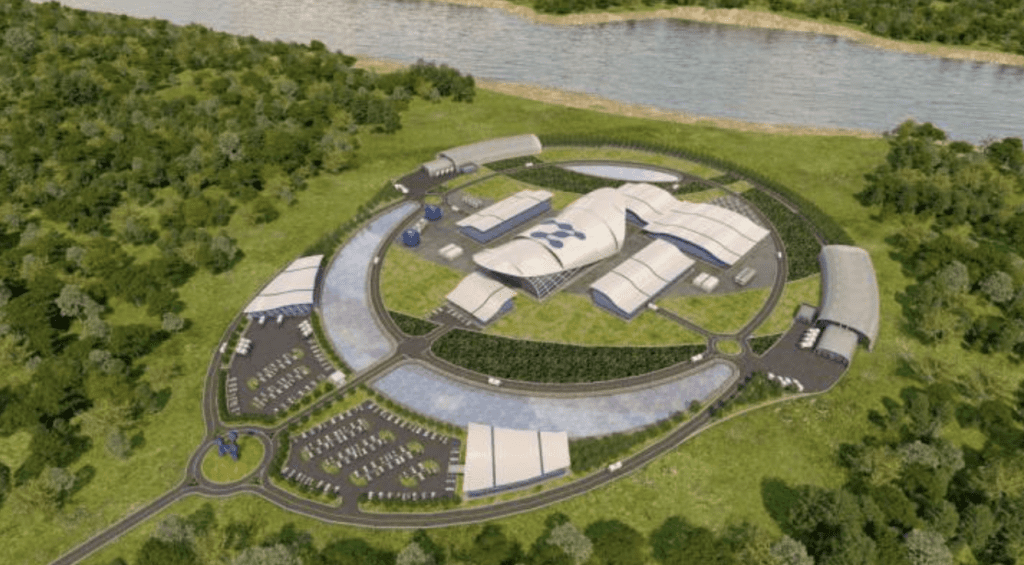
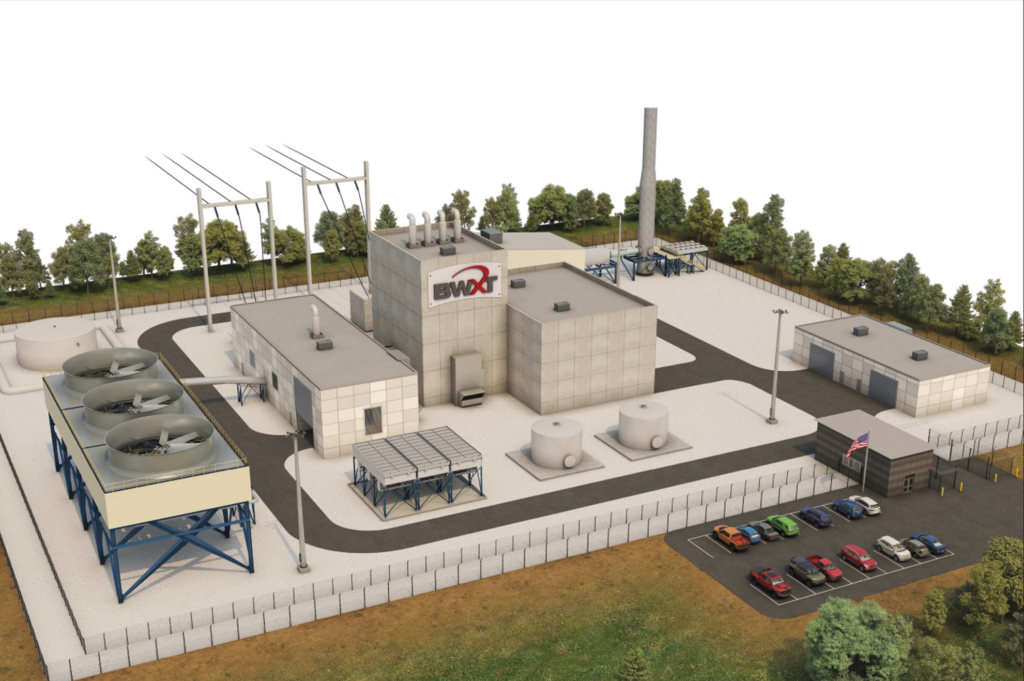
Ameresco told POWER it has proposed natural gas generation followed by a potential advanced-nuclear phase using Terrestrial Energy’s Integral Molten Salt Reactor (IMSR) at Aberdeen Proving Ground in Maryland. At Picatinny Arsenal in New Jersey, it proposes microreactors followed by a small modular reactor (SMR). The two developments, notably, are poised to advance Ameresco’s entry into commercial nuclear power, though natural gas will be spearheaded to meet Aberdeen’s pre-2030 operating goal, the company told POWER.
Indelible-Bloom, meanwhile, said its partnership will draw on Bloom Energy’s experience providing reliable power to universities, research laboratories, hospitals, and other critical facilities. At Tobyhanna Army Depot in Pennsylvania, Frontier Power USA plans to combine American-made battery energy storage with U.S.-compliant power generation to provide resilient, mission-ready power.
The initiative is structured under the Army’s Enhanced Use Lease (EUL) authority, which allows the service to lease non-excess, underutilized land while retaining title to the property. “An EUL is a real estate agreement that allows the Army to lease non-excess, underutilized land to private-sector partners,” the Army explained.
Under the conditional awards, the developers would finance, design, build, operate, secure, and decommission the facilities. In return, lessees would pay rent at or above fair-market value, preferably through in-kind consideration such as installation infrastructure improvements. The Army also requires a decommissioning bond to ensure funds are available to restore the land when a lease ends.
“The ability to provide backup power to our installations is critical to ensuring mission success and resiliency for our installations,” Jeff Waksman, principal deputy assistant secretary of the Army for installations, energy and environment, said in the Army announcement. “These awards are translating national energy priorities into action—promoting American energy dominance.”
For now, formal lease agreements remain in their initial stages, the Army said. Development could begin as early as 2027, with initial operating capability targeted by or before 2030. The projects are intended to provide market-based capacity to the grid and ready, on-site power capability for their host installations during utility outages.
Army Poised to Serve as a Landlord
While the Army has not yet finalized any lease agreements, the selections would support commercial power generation on military land, including proposed natural gas and advanced nuclear projects designed to serve both the grid and military installations.
The initiative’s broader request for information (RFI), posted Feb. 27, 2026, sought private-sector input on financing and partnership models for Army modernization. The Army subsequently issued its commercial-power request for proposals (RFP) on June 15, moving from industry input to a competition for specific development opportunities.
The structure is significant because the Army is not moving to procure or finance the generating assets. Under 10 U.S.C. § 2667, the service can lease non-excess, underutilized land to private developers while retaining ownership of the property. The Army describes its role as “purely as a landlord,” while the lessee assumes the cost and responsibility for financing, designing, building, operating, securing, and ultimately decommissioning the facility.
The arrangement also gives the Army value beyond cash rent. The service prefers “in-kind” consideration, under which developers can fund and execute infrastructure improvements at the host installation instead of making cash payments. The leases must also include a decommissioning bond to ensure funds are available to restore the land when the agreement ends.
Notably, the Army’s solicitation contemplated initial lease terms of about 50 years and specified that projects would proceed without an Army monetary contribution. During normal operations, developers would sell generation to third-party offtakers they are responsible for securing.
The Army’s resilience requirement is also unusually stringent. If a grid outage lasts more than four hours, the facilities must be able to island from the grid and supply their host installations continuously for at least 14 days to support mission-critical operations. While that obligation will be built into the lease, it is separate from the rent itself. The Army prefers additional in-kind consideration, such as infrastructure upgrades or other improvements that strengthen mission capability or reduce installation costs.
Ameresco’s Two-Site Nuclear and Gas Concept
Ameresco told POWER its proposals would take different routes. At Aberdeen, natural gas would provide the initial generation, followed by a proposed advanced nuclear phase using Terrestrial Energy’s Integral Molten Salt Reactor (IMSR). Terrestrial Energy has been named as the nuclear technology supplier for the project, although Ameresco said the IMSR selection remains subject to the Army lease negotiations. Picatinny would begin directly with microreactors and later add a small modular reactor (SMR), though the company has not selected either reactor supplier for the New Jersey site.
Cenk Güler, Ameresco’s director of nuclear partnerships, noted that the solicitation marked the first time the Army had opened this type of lease opportunity to nuclear generation. For Ameresco, he said, that means taking on a full-lifecycle development role, including financing, while assembling the partners needed to execute the nuclear portions of the projects. “It’s a huge undertaking from the nuclear perspective,” Güler told POWER.
Ameresco began formalizing that nuclear expansion in June 2025, when it appointed Güler to lead its entry into microreactors and SMRs, including strategic partnerships, technical diligence, and engagement across industry and federal agencies. He brought experience from senior leadership roles at Westinghouse involving advanced reactor development, space power applications, and fuel technologies.
Since joining, Güler said, he has been working with reactor vendors and developing partnerships. The Army proposals are part of that effort, but they may not become Ameresco’s first nuclear construction project. The company is also working with a separate vendor on a first-of-a-kind microreactor, he said, and preconstruction work has begun as the parties finalize their agreement. “So that’s going to be our first true nuclear project, and then this is going to be following that up very closely,” Güler said, though he did not identify the vendor or site.
At Aberdeen, the proposed phasing would allow Ameresco to pursue the Army’s nearer-term operating objective without tying it to the advanced reactor’s availability. Güler said the initial gas project is intended to operate before 2030, while the IMSR’s deployment would depend on the technology’s development and the Army’s requirements. “But the IMSR is for Phase Two, so it’s not going to be available prior to 2030,” he noted. “The first phase on Aberdeen side is going to be natural gas.”
Picatinny’s nuclear-first proposal would involve a broader technology-selection process. Ameresco anticipates an RFP that would consider potential partners it already knows and open the opportunity to additional reactor vendors. For that project, “Our Phase One is going to be micro nuclear reactors, and we’re going to do the selection of it with the Army and the local utilities,” Güler said. The second-phase SMR would also be selected in consultation with the relevant stakeholders.
Güler said some microreactors appear plausible for the earlier phase, while many SMR developers are targeting the early to mid-2030s. However, he did not provide a firm operating date for either Picatinny phase, saying the projects are still too early in development to establish a more detailed schedule.
Although nuclear introduces new technology and licensing responsibilities, Güler stressed that the underlying development model is familiar to Ameresco. At Kupono Solar at Joint Base Pearl Harbor-Hickam in Hawaii, for example, Ameresco developed a 42-MW solar array paired with a 42-MW/168-MWh battery system on 131 acres of Navy land under a long-term lease. That project entered commercial operation in 2024 and supplies power to Hawaiian Electric’s Oahu grid. For the Army opportunity, Ameresco would apply a similar real-estate and commercial-development framework to a different generation mix, while adding explicit resilience obligations for the host installations.
Commercial Generation, Military Resilience
While project details remain largely unsettled, the proposed Army projects are expected to generate substantially more electricity than their host installations consume, making external power sales central to the business model, Güler noted. At Aberdeen, the eventual configuration could combine natural gas, nuclear generation, and batteries, though Ameresco has not yet determined the project’s capacity or how much generation would continue operating once the installation islands from the grid.
At the time of the Sept. 21 interview, Ameresco was engaging local suppliers and prospective offtakers, but lease negotiations had not yet begun, Güler said. The company was also evaluating the commercial and regulatory arrangements for selling electricity in Maryland and New Jersey. Asked about PJM Interconnection, he said Ameresco was still investigating the applicable grid-connection processes and identifying the local expertise needed to navigate them.
The commercial nature of the projects is also expected to shape nuclear licensing. That would distinguish them from the Army’s separate Janus program, under which five reactor developers selected on Aug. 26 are advancing more than 20 commercial microreactors across Army installations using Army nuclear regulatory authority and milestone-based agreements backed by up to $2.2 billion in Army funding. The Army’s broader Janus program, notably, is intended to move microreactors from prototypes into repeatable commercial products—with at least one reactor targeted for useful service by Sept. 30, 2028.
Asked whether the Ameresco projects could follow that authorization pathway, Güler said he expects Nuclear Regulatory Commission (NRC) licensing because the projects are intended as commercial nuclear generation. “I should say, it should be NRC because it’s commercial nuclear power,” he said. “But again, that’s going to be part of the negotiations [and] agreement terms.” Reactor vendors would typically lead reactor licensing, while Ameresco expects to participate in site licensing, Güler said. The eventual technology partnerships and project agreements would determine the precise division of responsibilities, he noted.
The Army has separately stipulated that construction cannot begin until environmental and regulatory reviews—including those under the National Environmental Policy Act, Clean Air Act, and Clean Water Act—and applicable federal, state, and local permits are complete. Signed leases will be the next major public milestone, Güler said.
Adding Nuclear to an Established Infrastructure Business
Ameresco’s nuclear entry would add a new generation technology to a business that is already shifting toward larger, more complex power infrastructure. In its second-quarter earnings call in August, executives noted the company has reorganized around two core pillars—Power Infrastructure and Building & Public Infrastructure—after adding a record $1.8 billion of new awards during the quarter, including $1.2 billion tied to data centers.
“When you think about Ameresco, we’re really a power infrastructure company,” Leila Dillon, Ameresco’s senior vice president and chief marketing officer, told POWER. “That’s what we’ve been doing for 25 years.”
The company’s existing business spans project development and construction, owned energy assets, and long-term operations and maintenance. At the end of 2025, Ameresco owned and operated 227 small-scale renewable energy plants totaling about 838 MW-equivalent and had another 853 MW-equivalent in development or construction. Government entities accounted for 61% of Ameresco’s 2025 revenue, while the U.S. federal government alone represented 15.1%.
The federal experience is central to Ameresco’s push into newer power markets, Dillon said, noting that the company has spent years building behind-the-meter generation for federal customers in island-capable configurations that can continue serving critical loads when grid power is unavailable. She cited the U.S. Marine Corps Recruit Depot Parris Island in South Carolina as one example. That project integrates combined heat and power, solar generation, battery storage, and automated microgrid controls in a resilience package designed to let the installation island and sustain mission-critical training operations during a utility outage.
“The fact that we’ve been doing this for 25 years, and now we’re able to take the lessons learned and the experience that we have from building these on-site behind-the-meter power plants and parlay that over to the data center world has been extremely exciting for us,” Dillon said.
In August, Ameresco executives noted that five awarded data center projects represented more than 1 GW of planned generation, using combinations of reciprocating engines, gas turbines, fuel cells, battery storage, and integrated microgrids. Dillon said the company’s approach is driven in part by long interconnection queues and customer demand for earlier access to power. “Our lens is to build the power on site, get it up and running as quickly as possible,” she said. “The idea of having a microgrid and being able to connect to the grid over time, we’re always open to that, and we build, we develop with that plan in place.”
The Army projects would differ because Ameresco expects them to operate as grid-connected commercial plants from the outset, but they draw on the same capability: to develop generation close to critical loads, preserving islanding capability, and integrating multiple technologies around resilience requirements.
Güler said that model also reflects a broader shift toward distributed generation as utilities and large power users confront the cost and timing of grid expansion. “Instead of trying to do that super expensive grid expansion, you do power generation where you need the power the most,” he said.
—Sonal Patel is a POWER senior editor (@sonalcpatel, @POWERmagazine).
Editor’s Note: This is a developing story and will be updated as additional details become available.