Small modular reactors (SMRs) borrow steam turbine engineering from both coal-fired and nuclear plants, but the resulting “wet steam” problem, with exhaust moisture topping 15%, demands a fresh set of design countermeasures to keep blades from cracking.
With impressive breakthrough innovations in small modular reactor (SMR) technology, the quiet yet significant evolution of SMR steam turbines has been largely happening outside the limelight. Over on the turbine island there have been significant developments aimed at delivering a platform of efficient and reliable steam turbines that optimize fleet operations across the expected lifetime and contribute to lowering the levelized cost of electricity (LCOE).
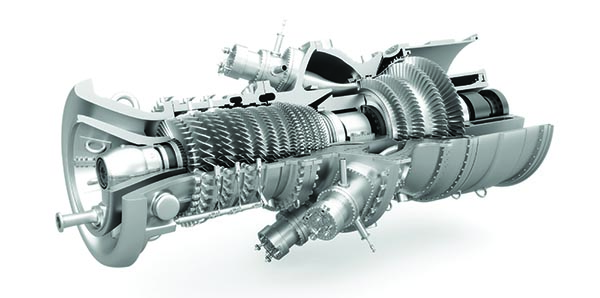
As we stand on the cusp of a new generation of reactor technology, steam turbines for SMR applications were required to dig into the tried and tested engineering toolbox of both fossil and nuclear steam applications. This latest generation of steam turbines needs to provide compact solutions with a high level of factory-preassembly, capable of handling the thermal power range and longer-term design lifetime of SMR reactors.
The Best of Both Worlds
Steam turbines have evolved significantly over recent decades, enhancing efficiency and safety while reducing costs and lead time for power plants.
Most SMR steam turbines are designed for power-output levels typically associated with coal or gas-fired combined cycle plants or industrial applications. However, the inlet pressure, temperature, and steam conditions are currently often still similar to their large nuclear counterparts, especially when coupled with boiling water reactors (BWRs) or pressurized water reactors (PWRs).
Steam turbines designed for SMRs therefore need to leverage the full speed shaft line, architecture, and blading philosophies from fossil applications while conforming to design methodologies from large nuclear applications.
Dealing With ‘Wet Steam’
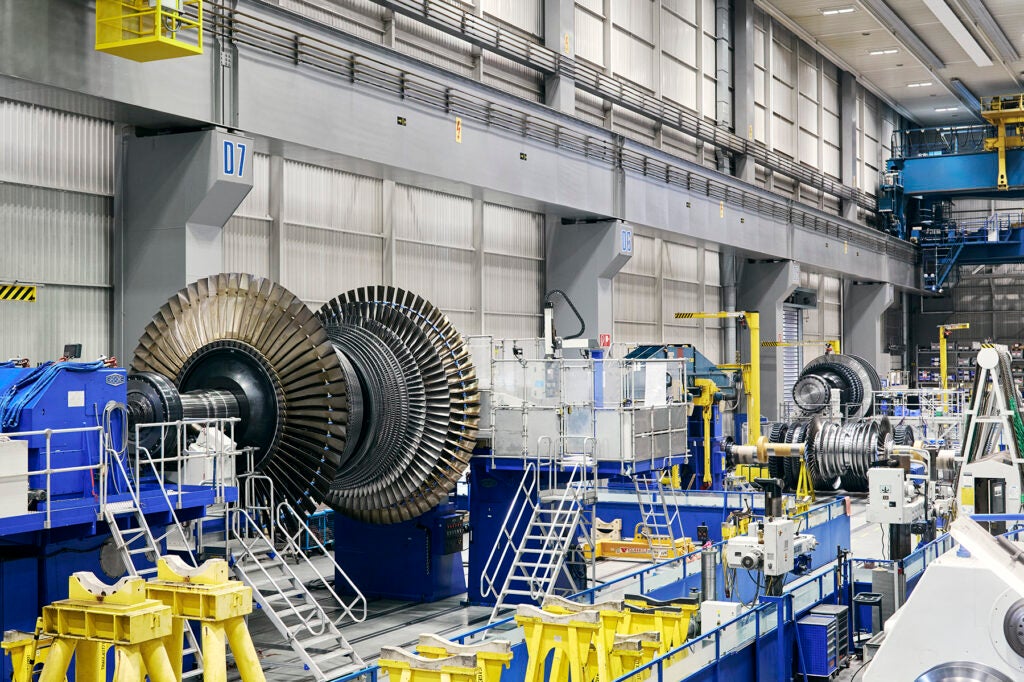
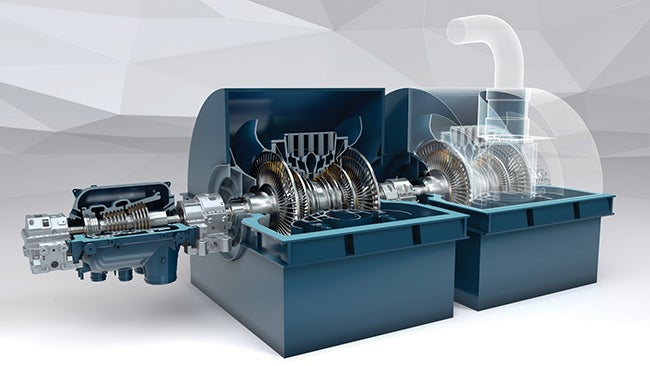
SMRs with conventional Gen III+ technologies often provide near-saturated steam at the turbine inlet, leading to high moisture of more than 15% at the exhaust of both high-pressure (HP) and low-pressure (LP) modules (Figure 1). In comparison, a comparable sized fossil turbine would typically see no moisture at HP and a much lower moisture content at LP module exhaust, of around 10%. Indeed, unlike fossil-fired turbines, moisture is present throughout most of the flow path in a nuclear turbine. Its detrimental effects intensify from stage to stage as fine droplets deposit on surfaces, coalesce into liquid films, and ultimately break up into larger, coarse water droplets.
 |
|
1. An STF-N200 frame of the small modular reactor (SMR) portfolio steam turbine consisting of a high-pressure (HP) and two low-pressure (LP) modules. Courtesy: Arabelle Solutions |
Risks associated with wetter steam are well known and managed in nuclear steam turbines. Larger nuclear turbine islands, for example, in most cases include a moisture separator reheater (MSR), which takes the wet exhaust steam from the HP module and removes most liquid water before heating the now “dry saturated steam” ready for the LP modules.
Operating in a “wetter steam environment” demands additional design considerations for the turbine to prevent dangerous erosion and stress corrosion cracking (SCC) damage. SCC refers to the premature cracking and failure of metallic materials resulting from the simultaneous presence of sustained tensile stress and a corrosive medium. Material selection, heat treatment, and chemistry control are essential to prevent the cracking of rotors, blades, and attachments.
In addition, the long and most efficient last-stage blades need to cope with non-synchronous excitation with better damping features to reach the required reliability. Shot peening and strain hardening are widely used for LP module rear-stage blades to introduce beneficial compressive residual stresses and increase surface hardness. These techniques improve fatigue strength, resistance to SCC, and protection against wet-steam erosion, ultimately enhancing blade reliability and service life. Left unmanaged, these issues can seriously reduce the lifetime of the turbine, potentially causing drastic impacts on maintenance schedules or even significant damage.
Modifications of the turbine that can mitigate the water-droplet-driven erosion of blades include water extraction from the interim steam path by utilizing centrifugal forces to channel the damaging water droplets out of the flow path. Additionally, slitted guide vanes can be implemented to remove water films directly from the stationary blade surface upstream of last-stage blades.
Reducing the steam wetness is especially important for the last-stage blade, which is highly susceptible to suffering erosion damage. Mitigating stress corrosion cracking and water droplet erosion risks keeps the blades in operation for longer, thus reducing the cost associated with avoidable spare parts as well as the need for unplanned shutdowns. If not properly addressed, the steam turbine would require additional inspections, premature parts replacement, leading to potentially major repairs recurring multiple times across the plant’s whole operating life.
Designed for the Nuclear Lifetime
SMRs, like most nuclear power plants of the future, will be designed for an expected lifetime of up to 80 years, twice as long as the typical design life intended for fossil-fueled power plants. Consequently, any equipment, including on the turbine island, needs to be designed for the extended operational lifetime of the entire plant, enhancing reliability and reducing the need for major replacements or long modernization outages.
 |
|
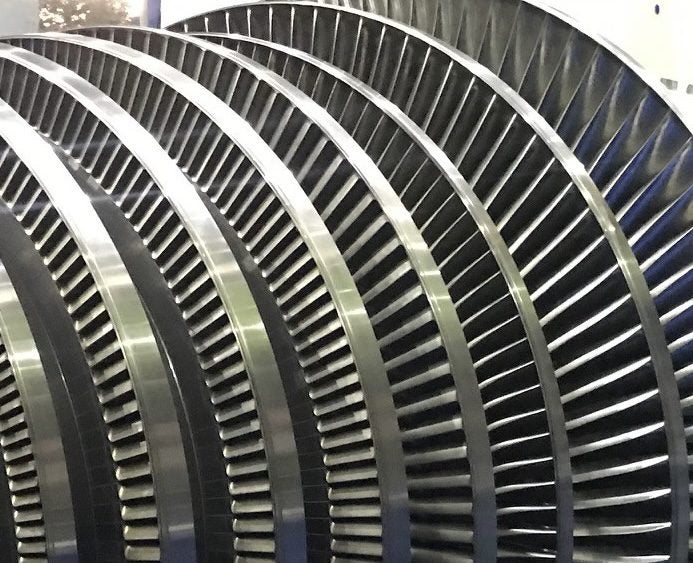
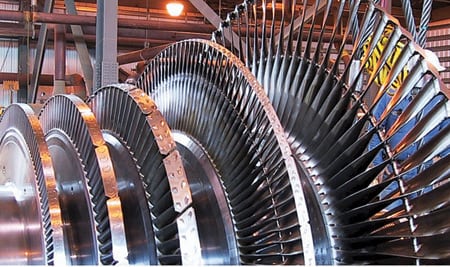
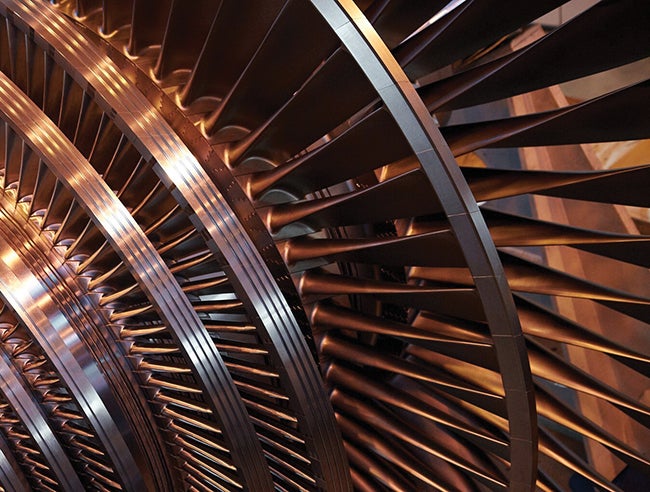
2. Rotating blades assembled on a LP turbine rotor. Courtesy: Arabelle Solutions |
Equally important for a longer lifetime can be blading design improvements. In LP modules (Figure 2), the rotating blades of the last three or four stages, for example, may also be vulnerable to SCC due to the high stresses from the larger centrifugal pull generated in longer blades. Here a lighter blade airfoil and the implementation of an enhanced blade root design can mitigate the stress corrosion cracking risks and increase the overall reliability.
Nuclear Safety Considerations
In most cases, the turbine island is physically separated from the nuclear island; however, it still operates in relative proximity, especially on compact sites like SMRs. A rigorous probabilistic analysis conducted in accordance with stringent regulatory standards will ensure that the risk on essential systems remains acceptable, even for extremely low probability risks such as a part of the spinning turbine detaching and being projected out “like a missile.” Risks resulting from “off-design operation,” such as overspinning, can be further reduced by the turbine’s protection and control system architecture, incorporating robust redundancies as well as the ability to perform functional testing of valves and critical components without shutting down the unit. This enables a safe operation, high availability, and minimal impact on plant output during routine testing and maintenance activities.
Radiation protection can also come into play for some SMRs, like those relying on BWR technology, where the turbine also manages radioactive steam, carrying nuclear safety and radiation protection implications for operation and maintenance. With a culture of “safety first” across all nuclear power plants, operators frequently prefer modifications such as locating the turning gear toward the non-driven end of the generator. This reduces the risk of equipment damage from potential exposure and allows staff, if needed, to manually operate the turning gear while helping to minimize their radioactivity exposure risks.
Lowering the LCOE
Higher electricity production is achieved with improved turbine efficiency and output for a given application.
Features, such as highly efficient Controlled Flow blading, designed to reduce aerodynamic losses, or an optimum last-stage blade for the LP module, can further increase the plant efficiency. Meanwhile, an improved HP turbine module inlet configuration can enhance the accuracy of the turbine’s “swallowing capacity,” critical to ensure perfect matching between the turbine and reactor design mass flows and enabling an optimum plant efficiency. Even a fractional percentage of thermodynamic efficiency increase can, over the lifetime of the plant, be well worth the investment.
Indeed, the implementation of this high-efficiency blading, enhanced inlet configuration, and an improved swallowing capacity could, for example, add one or more megawatts of electrical output onto a 300-MW plant.
Additional features like the reduced-bearing shaft line design, with a single bearing separating each turbine module, can further enhance steam turbine reliability and efficiency by reducing mechanical losses, simplifying maintenance, while providing a more compact turbine train design.
Even these small improvements in optimization and reliability can, over time, have a significant impact on the SMR’s availability and help maximize the electricity production throughout the plant’s expected 80-year lifetime.
Supporting the Success of SMRs
For SMRs to fulfill their promise as a scalable, cost-competitive source of low-carbon electricity, the turbine island technology must play its part by delivering high efficiency and reliability within rigorous nuclear safety parameters. Bringing together the experience from full-speed fossil applications and large-scale nuclear design methodologies allows the SMR turbine island to reconcile the current high-moisture thermal realities of nuclear power plants with the compact, standardized, and factory-preassembled modules historically associated with fossil plants. The resulting standardized platform enhances reliability, reduces lifecycle costs and project risk, simplifies maintenance, and accelerates deployment.
The quiet evolution of SMR steam turbines can support the success of SMR solutions by enabling higher plant performance, longer service life, and improved operational availability, ultimately supporting a lower levelized cost of electricity throughout an 80-year plant lifetime.
—Cedric Couffignal is executive vice president for New Build at Arabelle Solutions, a turbine island leader, with its technology used in one-third of the global nuclear installed base, including the first SMR steam turbines in North America. The company is currently supporting more than 30 nuclear new-build units across Europe, North America, Asia, and Africa.
Nuclear, Generation, Turbines, Technology