 |
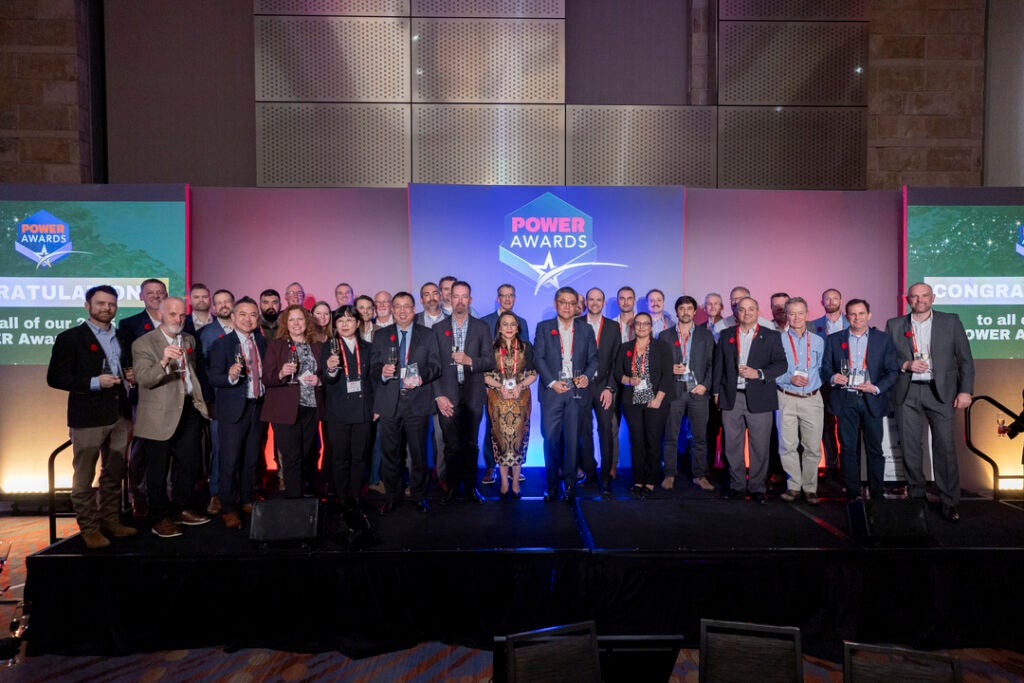
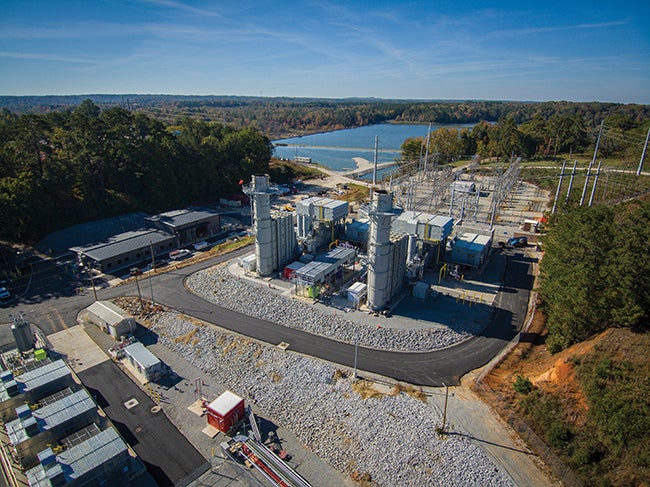
POWER’s 2026 Reinvention Award goes to Dominion Energy South Carolina’s Parr Station, where new dual-fuel turbines replace decades-old peaking units and extend a century-long pattern of reinvention at one of the utility’s oldest generating sites.
For more than a century, the Parr site along South Carolina’s Broad River has done whatever the grid needed it to do next. It began as a run-of-river hydro plant powering Columbia’s electric streetcars. It added a coal-fired steam unit in the 1920s to firm up that hydro output. It hosted one of the nation’s first civilian nuclear reactors. And for decades, it leaned on a set of aging GE Frame 5 combustion turbines for peaking power and black start support.
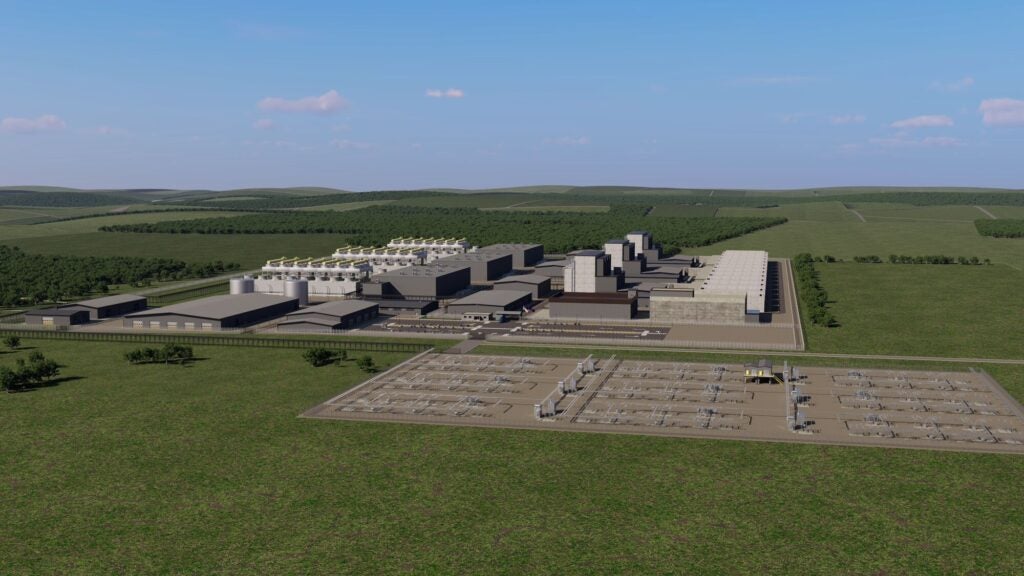
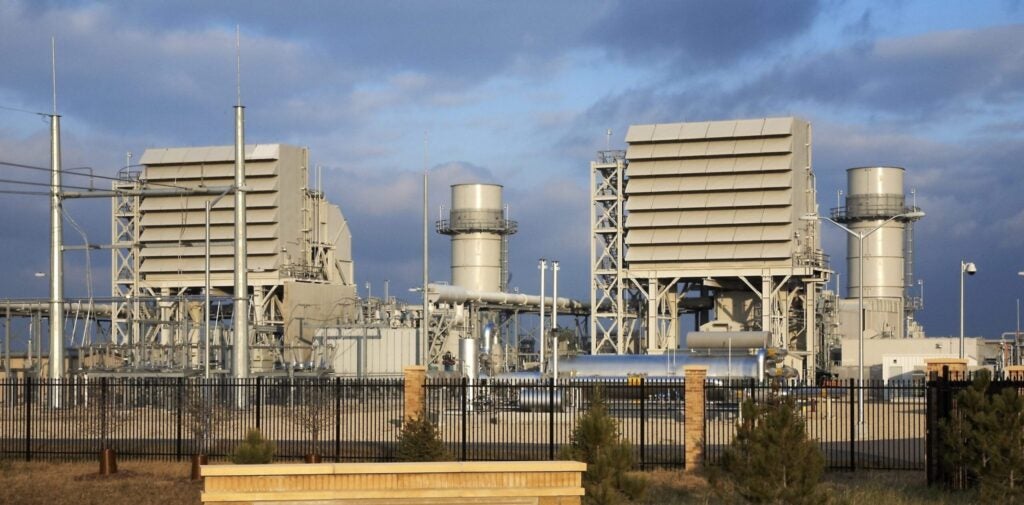
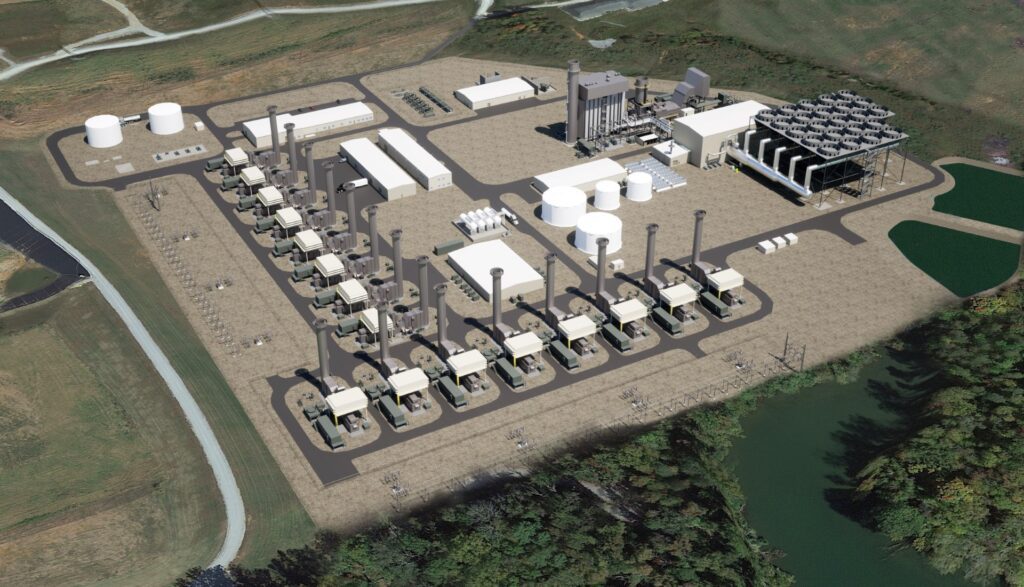
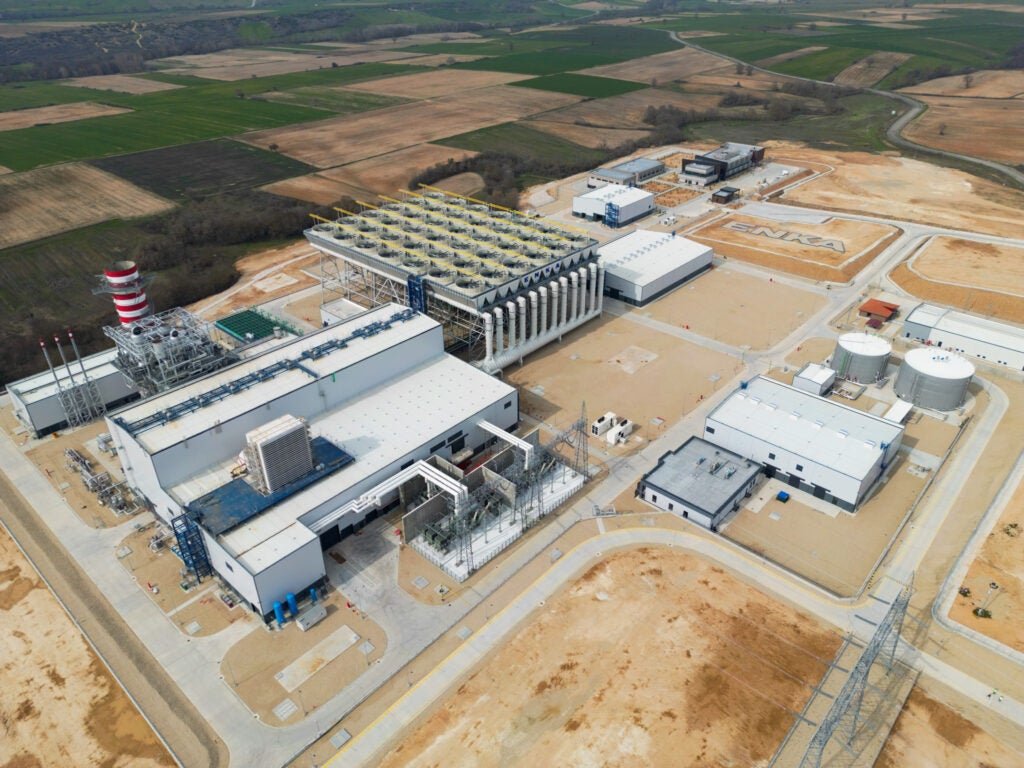
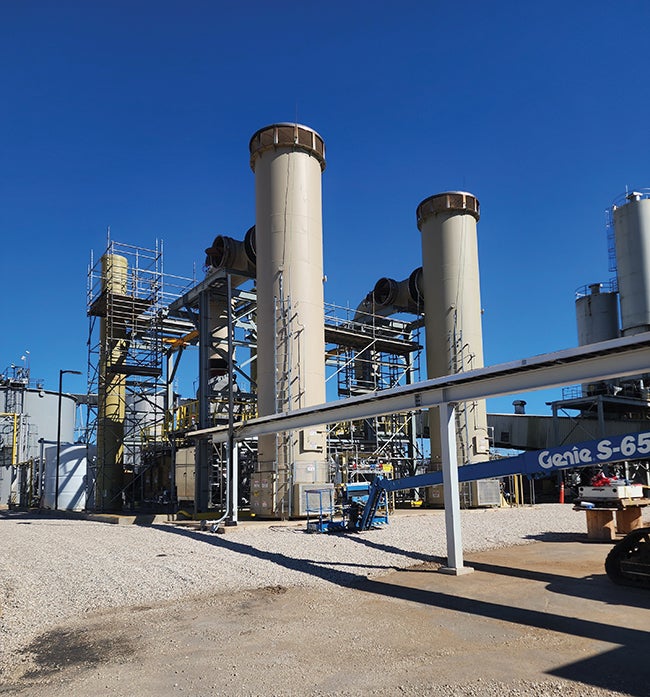
Now Dominion Energy South Carolina (DESC) has retired those Frame 5 units and replaced them with two GE Vernova LM6000 PF+ aeroderivative combustion turbines—part of a broader peaking modernization program that gives the utility fast-start, dual-fuel, black start, and synchronous condensing capability at a moment when solar has become the variable resource the system needs to manage, rather than hydro in the early 20th century.
“The Parr project was undertaken as part of an overall ‘peaking modernization’ strategy and portfolio of projects for DESC,” Andrew Walker, DESC’s director of generation development and planning, told POWER. That strategy retired nine older simple-cycle units—GE Frame 5s at Parr and Westinghouse 191 and 251 units at DESC’s Bushy Park, Hardeeville, and Coit sites—across four locations, consolidating and modernizing the utility’s peaking fleet in the process.
A Sister Project at Bushy Park
The Parr units didn’t arrive alone. DESC contracted the Parr and Bushy Park projects simultaneously, with GE Vernova supplying major equipment and Burns & McDonnell serving as engineering, procurement, and construction (EPC) contractor for both. A single LM6000 PF+ unit at Bushy Park, in Berkeley County, entered commercial operation in November 2024—notable, Walker said, as GE Vernova’s first LM6000 VELOX unit, the manufacturer’s third generation of that packaging, to reach commercial operation. The two Parr units followed in December 2025. Walker described the pairing as DESC’s first new generation project since the Jasper Station combined-cycle plant entered commercial operation in 2004, underscoring how long it had been since the utility last built new generating capacity of any kind.
Why the Frame 5s Had to Go
The Frame 5 units at Parr dated to the early 1970s, and by the time DESC began planning their replacement, the equipment was showing its age in ways that went beyond wear and tear. “As with other combustion turbine equipment of this vintage, we were experiencing shrinking support channels for parts, maintenance services, and general ‘know how,’ ” Walker said. The Frame 5s had served as fast-start, contingency-reserve units, but as industrial-type turbines, they were never designed for the kind of cyclic, start-stop operation the modern grid demands, and they lagged the LM6000 PF+ units on efficiency.
Fuel Security at the End of the Pipeline
One of the more distinctive features of the new units is dual-fuel capability—natural gas and fuel oil—a design choice rooted in South Carolina’s position on the interstate gas pipeline network. “South Carolina is essentially at the end of the line for both major interstate pipeline systems that supply the state,” Walker explained. Kinder Morgan’s Southern Natural Gas pipeline, originating in the Gulf, physically terminates in Aiken, South Carolina, and Savannah, Georgia, while the Williams Transco system’s “null point”—where Gulf supply flowing north meets Appalachian shale gas flowing south—has generally sat in Georgia or the Carolinas since the early 2010s.
DESC’s dual role as both an electric and natural gas local distribution utility normally works in its favor: the simple-cycle fleet uses natural gas capacity released by the gas distribution side when it’s available, an arrangement Walker called efficient for both sets of customers. But the electric and gas systems increasingly see coincident winter peaks, and when firm gas capacity isn’t available for release to generation, fuel oil provides the fuel security those units need. With the Parr modernization and the restoration of oil-firing capability at a combined-cycle plant that DESC acquired, the utility’s entire simple-cycle and combined-cycle fleet is now dual-fuel.
Managing a System That Runs on Solar
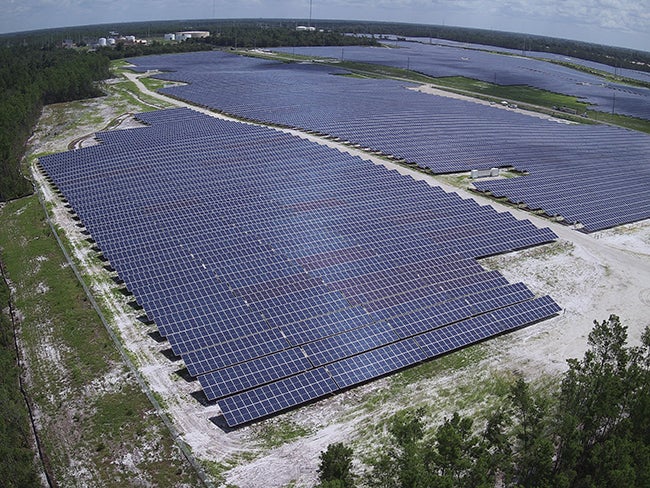
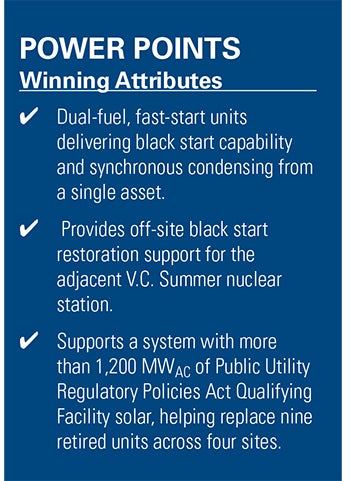
DESC’s transmission system now carries more than 1,200 MW AC of third-party-owned solar generation, connected under Public Utility Regulatory Policies Act (PURPA) Qualifying Facility contracts. That has changed what a difficult operating day looks like. Walker outlined three recurring scenarios: light-load shoulder-season days with high solar output, which produce the “duck curve” or “canyon curve” pattern familiar from California, forcing thermal generation down to system-minimum levels as solar ramps up and back up again as it ramps down; high-load summer days disrupted by fast-moving, hard-to-forecast afternoon thunderstorms that cause rapid swings in solar output, particularly acute given how much of DESC’s solar generation is concentrated in the rural areas between its Columbia, Charleston, and coastal load centers; and summer afternoon or winter-morning peaks that fall outside daylight hours entirely, when solar isn’t a factor.
DESC’s Fairfield Pumped Storage facility, located adjacent to Parr, helps manage some of that intermittency. But as Walker put it, “there is simply no replacement for non-energy-limited generating resources”—units that can be dispatched quickly and sustained for 30 minutes, three hours, or three days, depending on what the system needs.
That’s where the new units’ broader capability set comes in. Because Parr sits physically and electrically adjacent to the V.C. Summer nuclear station, the black start capability of the new LM6000 PF+ units supports nuclear safety as an off-site generation resource in the event of a system restoration scenario. Synchronous condensing gives transmission operators another tool for managing high or low transmission system voltage conditions on the DESC transmission system, particularly in the northern region of the system with the large concentration of generation at the Fairfield/Parr/V.C. Summer complex. Combined with fast-start and dual-fuel flexibility, Walker summed up the units’ role bluntly: “the veritable ‘Swiss Army knife’ of power generation.”
Building Around a Century of History
Construction wasn’t without its complications. Crews doing early foundation work encountered undocumented fill material and buried structures left over from the original Parr Steam Plant’s coal unloading, storage, and handling facilities—a legacy of the site’s long operating history working against the modernization effort. The project team mobilized quickly to excavate, demolish, and remove the structures and bring in clean fill, a more difficult task than it might otherwise have been given the site’s small footprint, its single access road, and its proximity to a Class I railroad mainline that has to be crossed at grade to enter or exit the property. Walker credited close coordination between DESC’s operations, project construction management, and environmental teams—along with contractor crews able to be redeployed from work at other sites that was concluding—with keeping the project on schedule.
A Site That Keeps Reinventing Itself
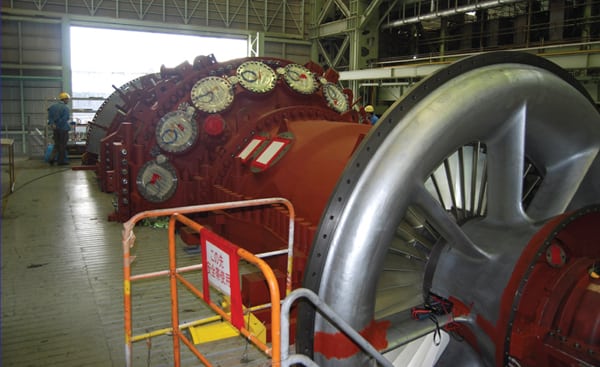
 Parr’s layered history is, in some ways, the real story here. The original run-of-river hydro units—built to serve the electric streetcar system of the Columbia Railway, Gas & Electric Co., a predecessor to South Carolina Electric & Gas Co. (SCE&G), now DESC—still operate today as part of a pumped-storage arrangement, impounding the lower reservoir for Fairfield Pumped Storage. Those original hydro generators ran at 40 Hz, predating 60 Hz as the U.S. grid’s nominal standard. The Parr Steam Plant that followed was built in part to balance the intermittency of that hydro generation—the same basic function the new LM6000 units now perform for solar. The Carolinas-Virginia Tube Reactor, an experimental heavy-water moderated reactor operated jointly by predecessors of today’s Dominion Energy and Duke Energy companies, later used the steam plant’s turbines to generate power from nuclear-heated steam; after that project wound down, the same turbines ran for a time in what Walker described as “a primitive combined-cycle plant arrangement,” with steam generated by a heat recovery boiler tied to the Frame 5 units’ exhaust.
The site’s connection to South Carolina utility history runs deeper still. Virgil C. Summer—namesake of the V.C. Summer nuclear station—began his career at age 16 at the Parr Steam Plant, cutting grass and sweeping floors in the late 1930s, according to Walker. He studied engineering through a correspondence school while working at the site, went on to earn his professional engineering license and, later, advanced degrees, and eventually rose to president, chairman, and CEO of SCE&G’s parent company. A resolution issued by the South Carolina General Assembly following his death in 2002 corroborates the outline of that story.
Today, Parr’s operations and maintenance staff is small, but not disconnected from that history. Its most senior operator has worked at the site for more than three decades and traces a family history there back to when there was company-provided housing at Parr Village, near the old steam plant. “There certainly is a sense of pride and significance for those who work at and support the site day in and out of its long history and its significance in our company and industry’s history,” Walker said.
That pride is arguably the throughline the equipment changes can’t capture. Parr has been asked to do something different in nearly every decade of its existence—firm up hydro, burn coal, split atoms, chase solar—and each time, the site has been rebuilt around whatever the grid needed next. The Frame 5s’ retirement isn’t an ending to that pattern. It’s simply the latest chapter.
—Aaron Larson is POWER’s executive editor.