 |
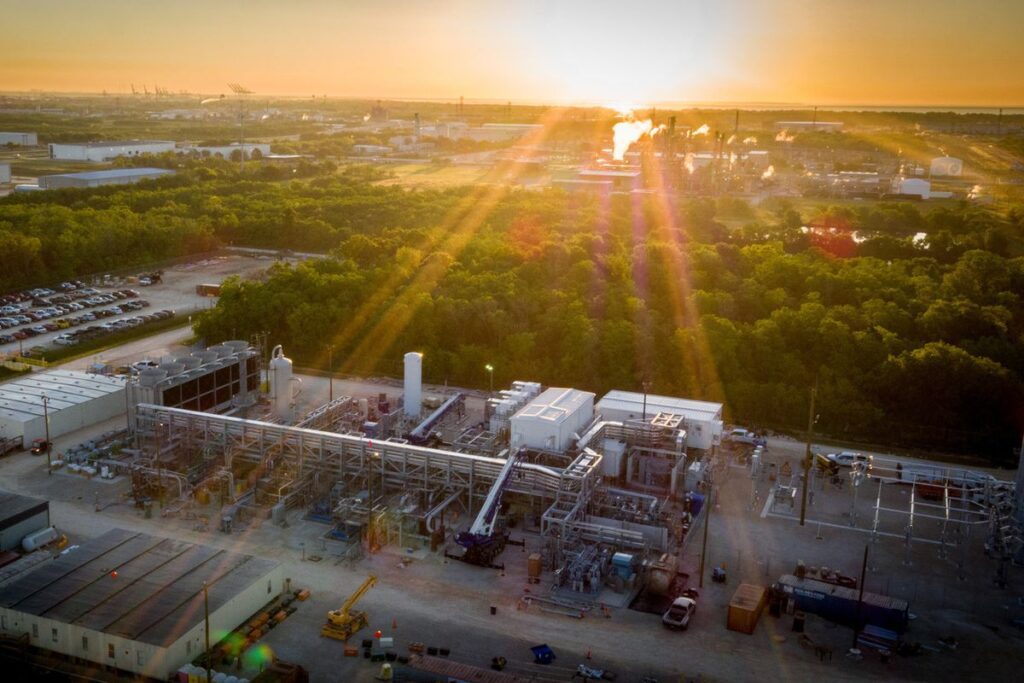
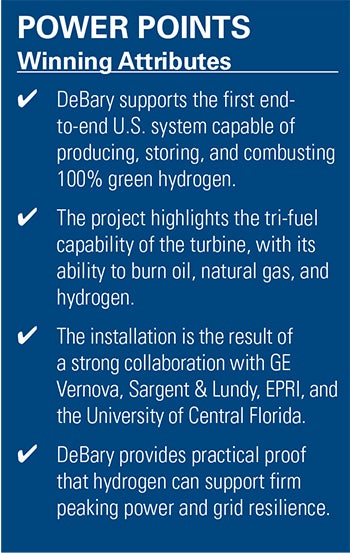
The DeBary Hydrogen Production Storage System, part of the DeBary power plant complex, is the first in the U.S. to produce, store, and burn 100% green hydrogen for power generation.
The power generation sector continues to debate the importance of hydrogen to the energy sector. There’s agreement, though, on the use of hydrogen in support of decarbonization, and how hydrogen produced using excess renewable energy can be used for carbon-free, dispatchable generation capacity.
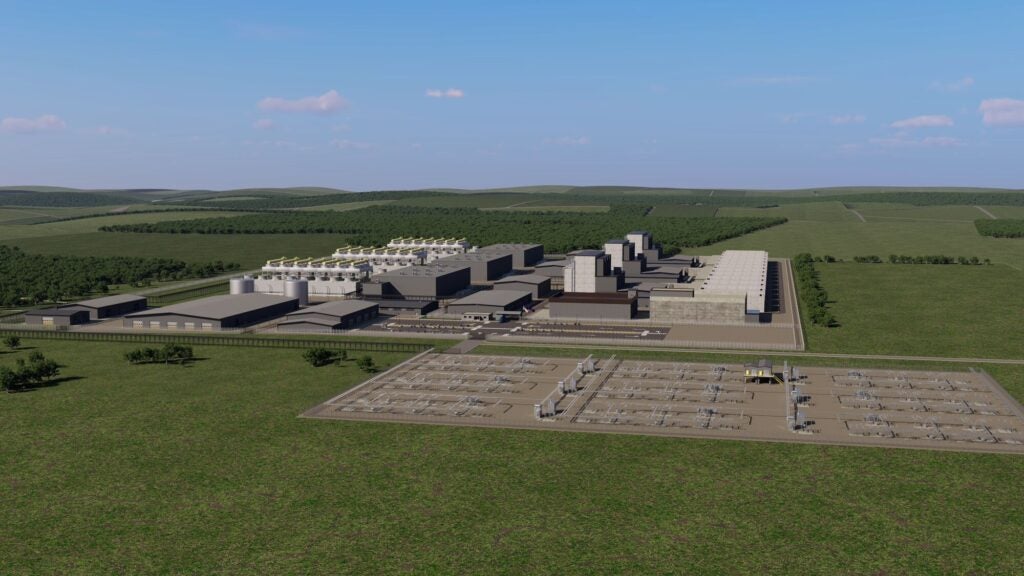
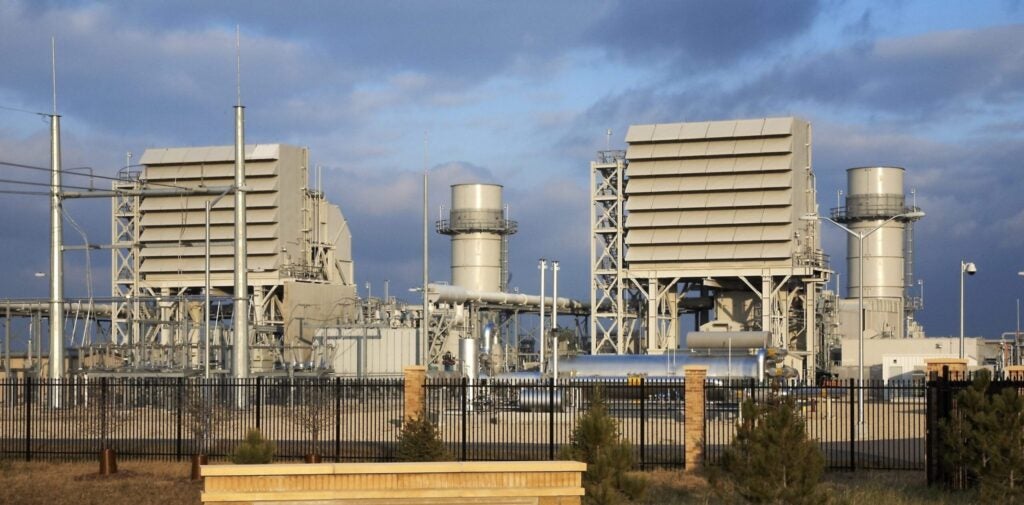
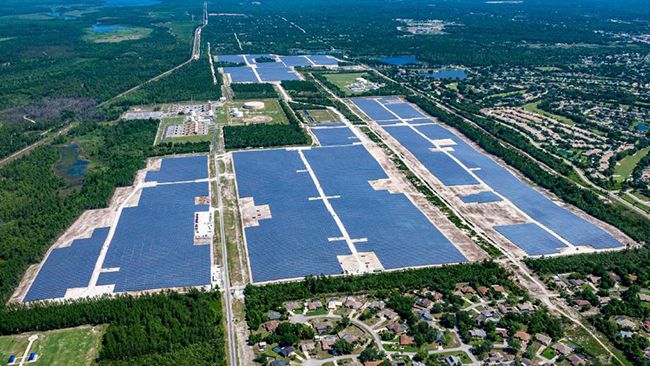
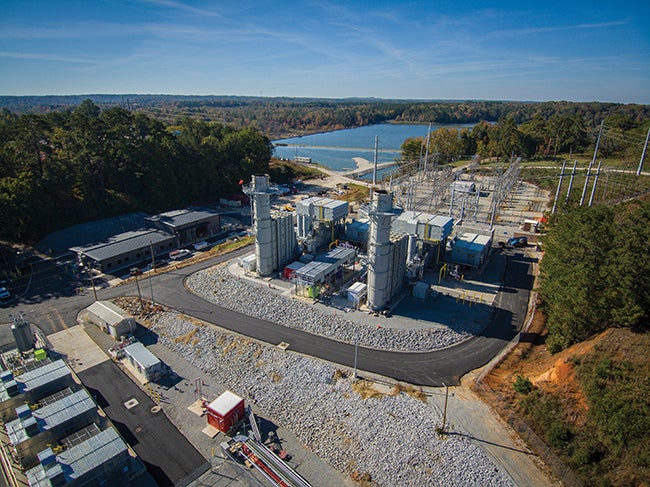
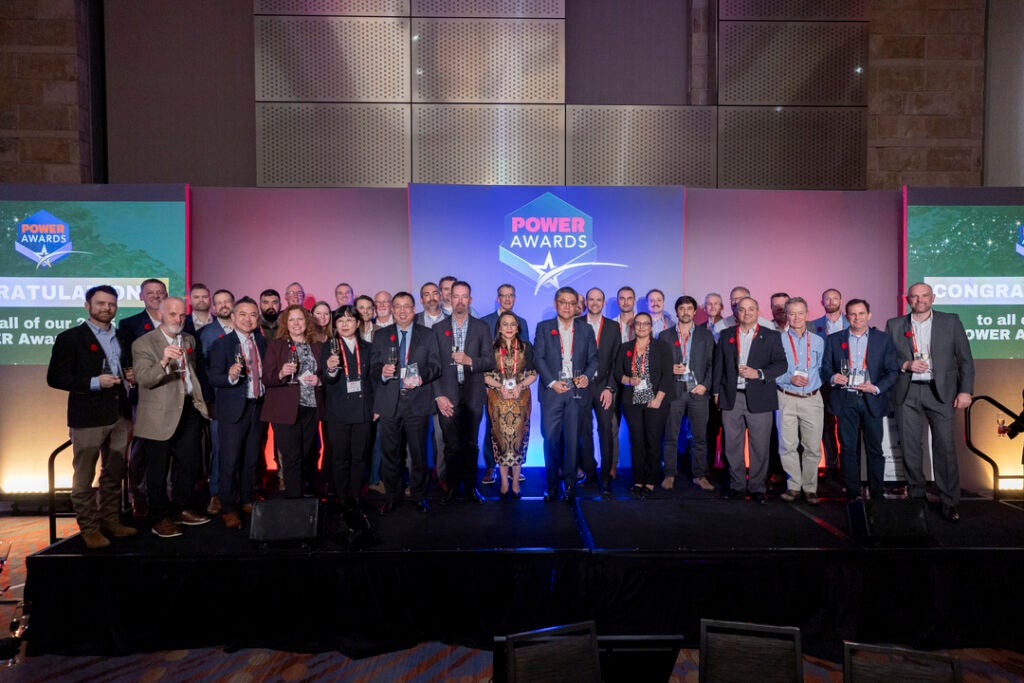
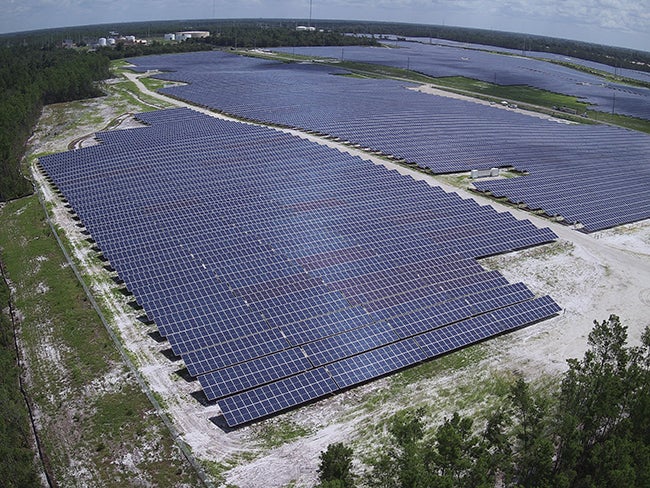
The DeBary Hydrogen Production Storage System project in Volusia County, Florida, is a model for this technology, and has been recognized with a POWER Top Plant Award for hydrogen. Duke Energy Florida and GE Vernova have moved hydrogen from concept and pilot scale into real‑world grid operations, with DeBary recognized as a first‑of‑its‑kind achievement for the U.S. power sector: the nation’s first end‑to‑end system capable of producing, storing, and combusting 100% green hydrogen for commercial peaking power generation. The hydrogen project is sited alongside the 692-MW DeBary natural gas–fired power plant, and 74.5-MW solar farm, with the combined complex spread across an area covering the equivalent of almost 200 football fields.
 |
|
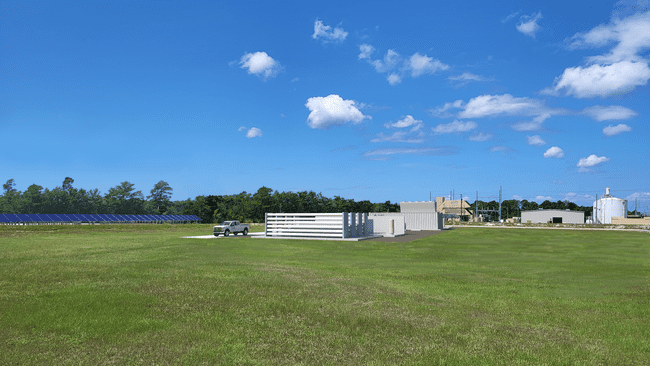
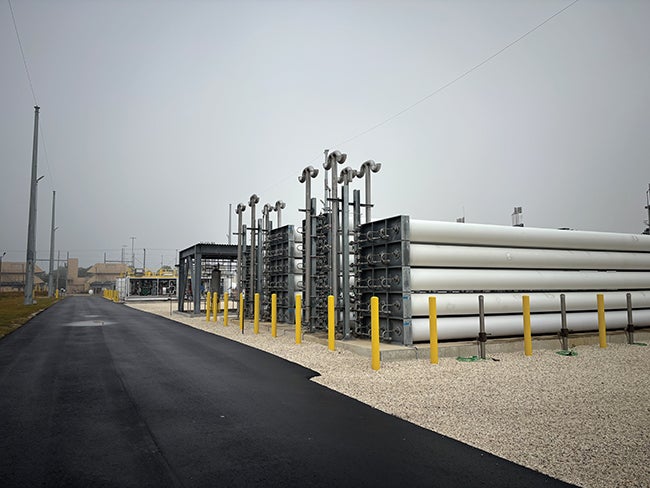
1. Hydrogen produced by the system at DeBary is stored before being used as fuel for power generation at the plant. Courtesy: Duke Energy |
The hydrogen production facility, which began commercial operation in January of this year, features a fully integrated, co-located design, combining onsite solar generation, two 1-MW hydrogen electrolyzer units, hydrogen storage, and a modified gas turbine at a single facility. A portion of the solar energy powers the electrolyzers, which split water molecules into hydrogen and oxygen, with oxygen released into the atmosphere and the hydrogen stored in reinforced containers (Figure 1). The hydrogen is then used as an alternative fuel to support grid balancing during peak hours at the plant.
This closed-loop approach demonstrates how excess renewable energy can be converted into dispatchable, carbon-free capacity, addressing one of the power grid’s most pressing challenges: maintaining reliability as the penetration of renewable energy increases. The project’s principals said DeBary shows that hydrogen is not merely a future fuel, but a practical solution for today’s peak demand needs.
“The main reasons for developing the DeBary hydrogen project were to demonstrate a practical way to convert excess renewable energy into dispatchable, on-demand power while maintaining grid reliability, as well as demonstrate the additional value of converting a power generation system to full hydrogen firing, helping validate a potential pathway for deeper carbon reductions on dispatchable assets,” said Peter Hoeflich, principal engineer at Duke Energy. “The project was designed to leverage Duke Energy’s existing solar field and combustion turbines at the DeBary station to create green hydrogen that could be fired in a turbine without CO2 emissions. In short, it was intended as a demonstration project and roadmap for decarbonizing existing dispatchable generation while addressing renewable intermittency and preserving capacity.”
Hoeflich said other motivations were improving grid reliability and resilience; increasing security of fuel supply; addressing intermittency from solar generation; maximizing the value of existing assets; supporting customer value and lower costs; and advancing Duke Energy’s “all-of-the-above” energy strategy. Both Duke Energy and GE Vernova said that from a system perspective, the DeBary project demonstrates how hydrogen can transform gas turbines into cleaner, dispatchable assets that complement intermittent renewable resources. The ability to store energy and deploy it on demand allows solar and other renewables to expand without placing additional strain on the grid, ultimately lowering fuel costs for customers while strengthening system resilience during peak conditions.
Turbine Upgrade
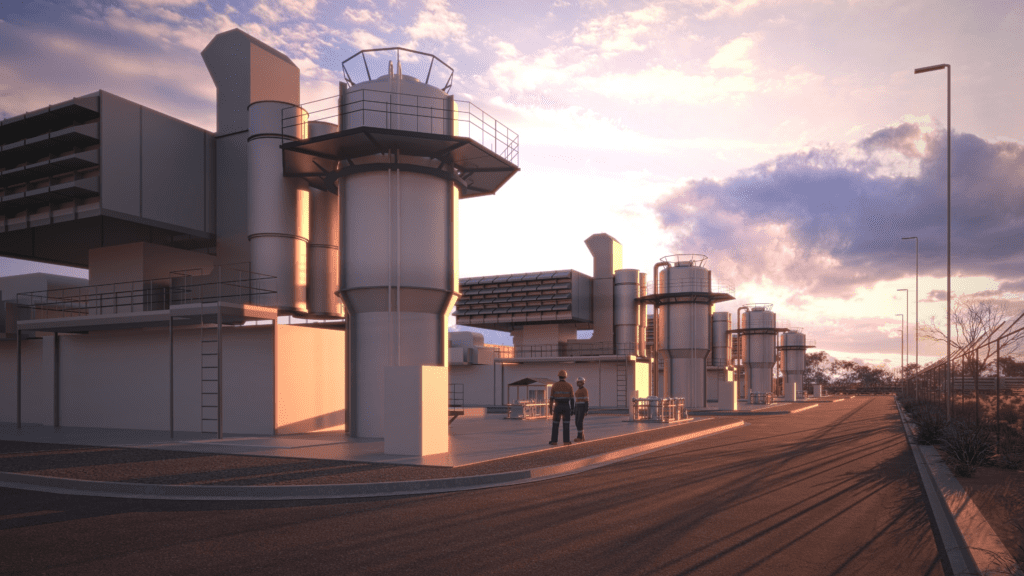
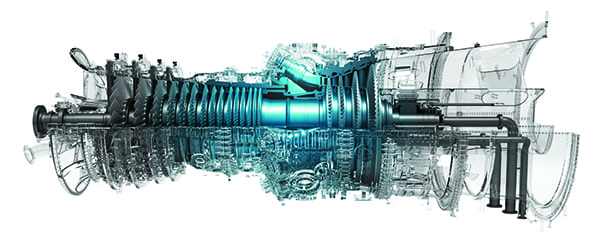
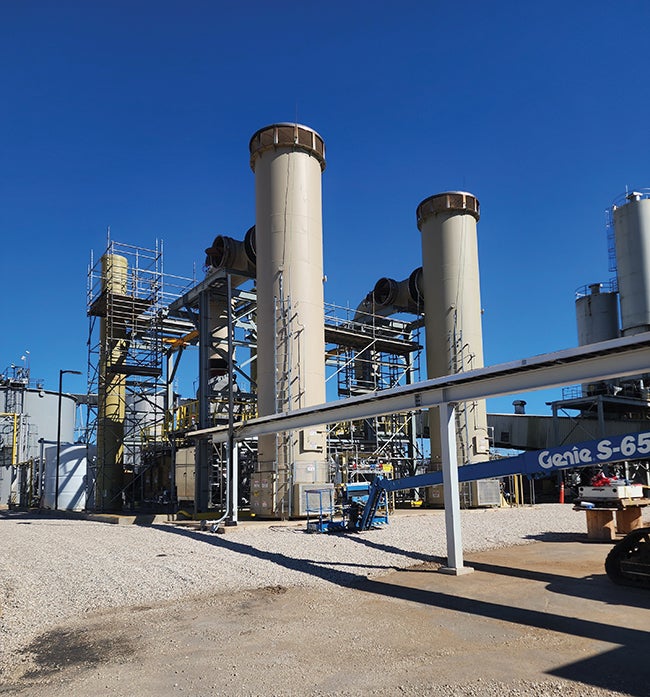
Planning of the DeBary project began in mid-2022. Construction began late in 2023, and took about two years to complete. The upgrade of an existing GE Vernova 7E gas turbine at DeBary to operate on up to 100% hydrogen is considered a technical milestone for the power industry. The gas turbine was commissioned to run on hydrogen in 2025; it successfully passed its final testing phase—including hot-load tests using hydrogen—and is verified to be safe, stable, and ready to operate fully on that fuel.
Rather than relying on new‑build infrastructure, the principals said the project proves that today’s gas turbine fleet can be retrofitted to support deep decarbonization while preserving operational flexibility. This capability—fuel‑agnostic operation across natural gas, blends, and pure hydrogen—creates a scalable pathway for utilities worldwide to reduce emissions without compromising reliability.
Jeremee Wetherby, Carbon Solutions leader for GE Vernova’s Gas Power division, told POWER the DeBary project showcases fuel flexibility and decarbonization options for GE Vernova’s gas turbines fleet. “The project shows that hydrogen is not merely a future fuel, but a practical solution for today’s peak demand needs,” said Wetherby. “The project proved technical feasibility at scale, including a world-record 80-MW run on 100% hydrogen in June 2026.”
Wetherby said the DeBary system’s “technical concept could have broader applications beyond a single power plant… because it serves as a scalable proof of concept for storing renewable energy as hydrogen and dispatching it when needed.” Wetherby also said GE Vernova sees DeBary “as an important demonstration of how existing turbine technology can be adapted to use hydrogen. The project shows a practical path for future deployments, including retrofits and new hydrogen-capable units across the industry.”
Hoeflich noted several more benefits of the project, including:
- ■ Environmental and Economic Advancements. By safely combusting 100% green hydrogen, the plant is a critical stepping stone in Duke Energy’s target to achieve net-zero carbon emissions by 2050. This sustainable energy integration will aid in lowering fuel and operational costs, contributing to statewide rate reductions.
- ■ Workforce and STEM (Science, Technology, Engineering, and Math) Development. The project supports local economic development and prepares area students for clean energy roles through regional hands-on training programs.
The Promise of Green Hydrogen
 Duke Energy and GE Vernova noted that both companies view green hydrogen as a promising but still emerging aspect of the energy sector. Wetherby said Duke Energy sees it as a practical grid and asset optimization solution, while GE Vernova sees it as an enabling technology with scaling potential across the industry.
Hoeflich told POWER, “Duke Energy views green hydrogen as an important emerging tool for decarbonization, grid reliability, and long-duration storage, especially where it can be produced domestically from renewable electricity and used to support dispatchable power.” Hydrogen represents a practical solution to intermittency and a way to reduce exposure to volatile global fuel markets. Duke Energy sees future value in evaluating additional turbine conversions and scaling the technology across its fleet.
Said Wetherby, “We see the market as one with significant long-term potential for hydrogen-enabled power generation, especially as utilities look for scalable pathways to decarbonize existing gas infrastructure. We have confidence in a growing market for hydrogen-ready generation assets and committed to a roadmap for future hydrogen-capable turbines, including retrofit potential.”
Hoeflich said, “The DeBary project is important because it moves hydrogen from concept to operational reality. It shows that existing renewable generation and thermal assets can be integrated into a system that produces firm, dispatchable, low-carbon power. That matters for the broader power sector because it offers a replicable model for decarbonizing peaking generation without sacrificing reliability.”
Wetherby said the project “represents a significant opportunity to fundamentally shift how we approach grid reliability. As renewable penetration continues to grow, we are often faced with periods of curtailed energy—clean power that is produced but cannot be absorbed by the grid at that moment. By capturing this curtailed energy through electrolysis and storing it as green hydrogen, we transform a potential inefficiency into a strategic reserve of dispatchable, carbon-free power. This closed-loop approach allows us to ‘firm up’ intermittent resources, ensuring that the grid remains stable even when the sun isn’t shining or the wind isn’t blowing.
“Beyond just solving for intermittency, this integration is a vital educational tool for the sector,” said Wetherby. “It highlights that the transition to a low-carbon grid does not require us to abandon our existing infrastructure. Instead, it demonstrates an opportunity to repurpose and augment current thermal assets, proving that dispatchable generation can evolve to be cleaner and more flexible. By prioritizing these solutions, the industry can bridge the gap between ambitious decarbonization goals and the practical, day-to-day requirements of maintaining a reliable and affordable power supply for customers.”
Both Duke Energy Florida and GE Vernova said the DeBary hydrogen project exemplifies leadership, innovation, and execution at utility scale. The groups said that “by progressing from readiness assessments to a fully operational system, the companies have delivered a replicable model that advances the hydrogen economy and sets a new benchmark for clean peaking power.” It’s selection as POWER’s 2026 Hydrogen Award winner recognizes that the DeBary hydrogen project is more than a technological achievement, it’s another defining step forward for hydrogen’s role in the future of reliable, affordable, and sustainable electricity.
—Darrell Proctor is a senior editor for POWER.