Nuclear plants have accumulated decades of operating experience, technical research, regulatory guidance, and other industry knowledge. Finding the right information, however, can mean searching several separate systems and then piecing the relevant material together.
To address that search burden, Atomic Canyon, a company developing artificial intelligence tools for the nuclear industry, built the Nuclear Industry Virtual Assistant (NIVA). The company says the platform allows nuclear professionals to search industry and regulatory resources in one place and trace results back to the underlying material.
Atomic Canyon launched NIVA across the North American commercial nuclear fleet in August after a six-month industry pilot. Developed in collaboration with the Institute of Nuclear Power Operations (INPO), EPRI, and the Nuclear Energy Institute (NEI), the platform is available to commercial nuclear plants that belong to those organizations.
The launch arrives as nuclear operators pursue license extensions, uprates, reactor restarts, and other projects across the existing fleet, while developers advance new nuclear construction. “The goal is to spend less time searching for information and more time putting nuclear expertise to work,” Atomic Canyon founder and CEO Trey Lauderdale told POWER.
NIVA runs on Atomic Canyon’s Neutron platform and FERMI family of nuclear-domain AI models. The company says FERMI was trained on more than 53 million pages of U.S. Nuclear Regulatory Commission (NRC) data in work conducted with Oak Ridge National Laboratory on the Frontier exascale supercomputer.
POWER asked Lauderdale what Atomic Canyon has actually deployed, who can use NIVA today, how it fits alongside existing plant systems, how users can verify the information it returns, where its safety and governance boundaries lie, and how the architecture could eventually support a broader range of nuclear work.

The following interview has been lightly edited for house style.
POWER: Would you explain what Atomic Canyon has launched across the North American nuclear fleet? Who is NIVA geared to today?
Trey Lauderdale: NIVA is now available to commercial nuclear plants across North America that are members of INPO, EPRI and NEI. We spent six months piloting the core capabilities across the industry, and we’ve now moved to fleetwide availability for nuclear professionals at those member plants.
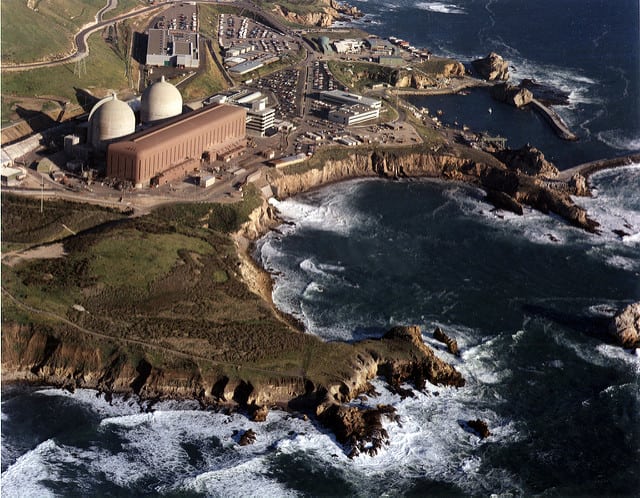
POWER: Before NIVA, Atomic Canyon had already deployed generative AI at Diablo Canyon. What did that experience teach you about how nuclear professionals actually find and use information?
Lauderdale: Diablo Canyon gave us experience putting generative AI inside an operating U.S. nuclear plant and, more importantly, learning how nuclear professionals actually work with information. Working with Diablo Canyon showed us that the industry does not have a shortage of knowledge, it has an access problem.
Across the industry, decades of operating experience, regulatory guidance, and technical standards are siloed in different systems that were never designed to work together. When someone is responding to an equipment issue, preparing for an outage or evaluating a design change, they may have to search several different systems and piece the answer together manually. NIVA is designed to reduce that friction and make the industry’s existing knowledge much easier to find and apply.
POWER: So where does NIVA sit relative to the systems plants already use for procedures, document control, corrective action, engineering, operating experience, work management, and training?
Lauderdale: NIVA sits alongside the industry’s existing knowledge sources and makes the information in them much easier to find and understand. Today, the industrywide NIVA platform connects nuclear professionals with external industry knowledge from INPO, EPRI and NEI. Through Neutron Enterprise, the same technology can also draw from plant-specific information and work with a station’s licensing basis, procedures, maintenance history, and engineering records and drawings.
It is not that those systems do not contain the right information, it is that finding the right piece of it, across multiple systems and millions of records, can take too long. Nuclear professionals should spend less time searching and more time doing real operational work. Now they can.
POWER: What does the fleetwide version actually search today? And what remains separate at the plant level?
Lauderdale: The fleetwide version of NIVA is built around shared industry information. Its Knowledge Assistant includes NRC Regulatory Guides and NUREGs, NEI guidance, INPO standards and EPRI technical reports. Its Operating Experience Assistant is designed to surface relevant industry operating experience based on meaning and context rather than relying only on keyword searches.
Plant-specific information is handled separately through Neutron Enterprise. That is where the technology can connect to a plant’s licensing basis, procedures, historical maintenance records, engineering drawings, work orders, root-cause analyses and corrective-action records.
POWER: Traceability is obviously critical in nuclear. If NIVA returns an answer, what can the user see behind it? Can they get back to the source record or passage themselves?
Lauderdale: Traceability is fundamental to NIVA. Nuclear professionals should not take an AI system’s word for something. NIVA grounds its responses in the underlying industry content and provides inline citations that link directly back to the source records. The user can go from the generated response to the original material and verify it for themselves. That is a basic design principle for Atomic Canyon’s AI work. The AI helps you find and synthesize the information, but the source remains visible.
POWER: And where is the hard boundary? What can NIVA help inform, and what decisions or actions must remain under licensed-operator, qualified-engineer, procedure-controlled, or plant-management authority?
Lauderdale: Everything we build keeps human expertise at the heart of it. NIVA finds and organizes information, but it’s people who decide, and people who act.
Practically, that means NIVA has no path to plant systems. It doesn’t write to control systems, doesn’t touch safety-related equipment, and doesn’t approve anything. Everything it produces is an input to processes that already exist. The licensed operator still runs the plant under approved procedures. The qualified engineer still owns the calculation and the design change. Plant management still owns the decision. NIVA just helps them get to their own existing documentation faster to help them do that.
From a quality perspective, NIVA isn’t a design or analysis tool — it’s a way to get to the right controlled document to empower people to make good decisions faster. Every output NIVA generates carries a citation back to the source documents, making it easy for the human to verify all information.
POWER: Why did this need to be built at the industry level instead of utility by utility? What did INPO, EPRI, NEI, and early adopters such as Constellation bring to the development process?
Lauderdale: This was intentionally built with the industry. INPO, EPRI and NEI collaborated with us on NIVA, and leadership and staff from plants across the fleet provided input during its development and pilot.
Constellation was an important early adopter. Operating one of the largest nuclear fleets in the country makes it a useful environment for understanding how better knowledge access can support distributed teams, knowledge transfer, and workforce continuity at scale.
Nuclear has accumulated decades of knowledge, but that knowledge is distributed across organizations. A utility-by-utility approach does not solve that fragmentation. NIVA creates an industrywide layer where that collective knowledge can be searched together, while users can trace answers back to the underlying source material from each organization.
POWER: Once NIVA has been in fleet use for a year, what would tell you it is actually making a difference? What will you be looking for?
Lauderdale: Success would look like nuclear professionals spending less time searching and more time doing the work that keeps plants running safely. There are millions of records and decades of expertise in this industry. If NIVA can dramatically reduce the time it takes an engineer or another nuclear professional to find the relevant regulatory information or make that knowledge easier to transfer to the next generation of the workforce, that is meaningful progress.
POWER: The information problem clearly extends beyond the operating fleet. Could this same architecture support license renewals, uprates, reactor restarts, advanced reactor licensing, or new nuclear construction? What would need to change before it could be used in those settings?
Lauderdale: The underlying problem is not unique to the existing fleet. Nuclear professionals working on license renewals, uprates, reactor restarts and new nuclear construction are all dealing with enormous volumes of highly technical information. The architecture we’re building gives us a foundation to support additional nuclear use cases over time. In order to be used in these settings, the industry has to be involved in how those capabilities are designed and validated.
—Sonal Patel is a POWER senior editor (@sonalcpatel, @POWERmagazine).*