 |
Saeul 3 is the latest evolution of South Korea’s APR1400 program, completed after an extraordinary interruption in national nuclear policy, fortified during construction to address newer safety requirements, and now advancing through a tightly regulated commissioning program toward commercial operation.
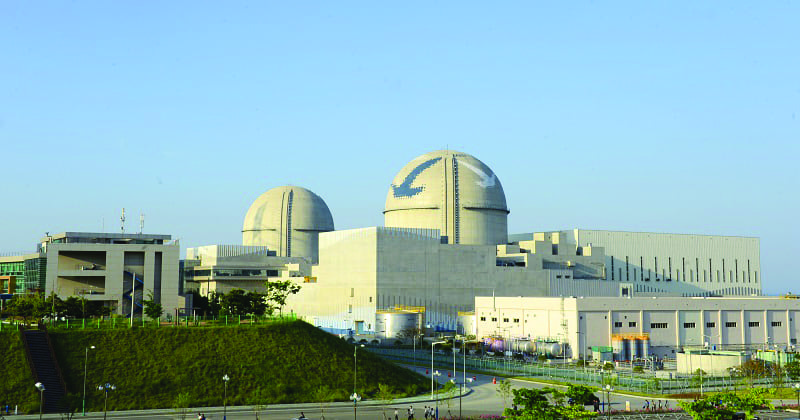
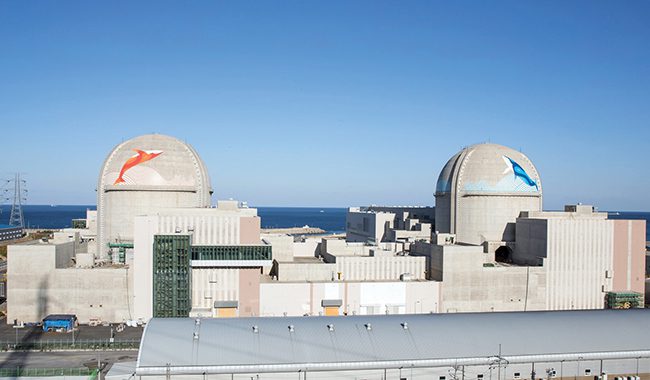
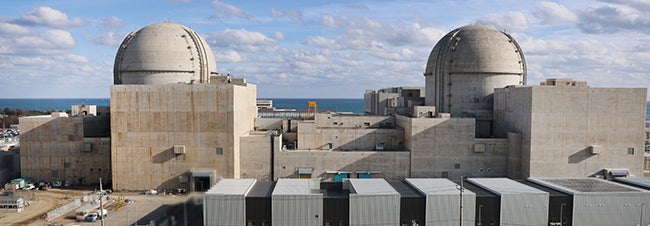
On April 12, 2026, operators at the Saeul Nuclear Power Plant on South Korea’s southeastern coast in Ulsan watched the neutron count in Unit 3’s reactor core settle into a stable, self-sustaining chain reaction for the first time. The “first start,” as owner and operator Korea Hydro & Nuclear Power (KHNP) called the milestone, marked a significant step for the 1,400-MW APR1400 pressurized water reactor (PWR)—better known through most of its life as Shin Kori Unit 5. The moment came after nearly a decade marked by a construction halt, an unprecedented national deliberation involving 471 citizens, later design and safety modifications, and an operating-license review that stretched more than five years.
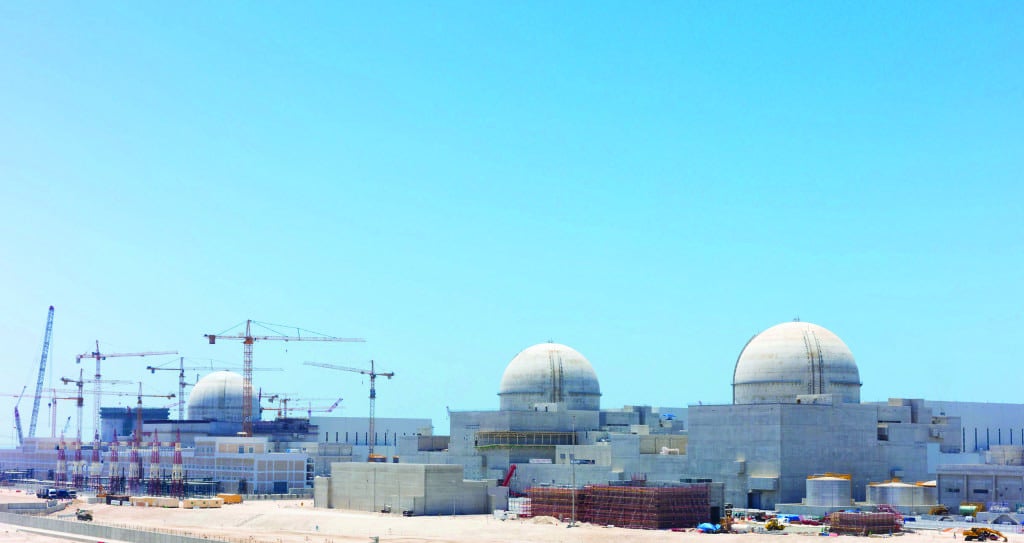
Saeul 3 is the fifth APR1400 built for the South Korean grid and the ninth of the design to reach criticality worldwide, following Saeul Units 1 and 2, Shin Hanul Units 1 and 2, and four units at the Barakah Nuclear Energy Plant in the United Arab Emirates (UAE). KHNP expects to raise output gradually while operators and regulators verify the performance of major equipment and safety systems ahead of commercial operation, now targeted for October 2026. As the first unit of the twin-reactor Saeul 3 and 4 project, Saeul 3 is expected to supply about 1.7% of South Korea’s total electricity generation and 37% of Ulsan’s electricity demand.
While Saeul 3 does not yet have an operating record from which to judge capacity factor, reliability, or long-term performance, as of August 2026, the unit has cleared its operating license, initial fuel loading, first criticality, and several months of power-ascension testing. Its nomination for POWER’s prestigious Top Plant recognition, therefore, rests on the engineering, project execution, and regulatory rigor demonstrated from resumed construction through the final stages of commissioning.
The Return Voyage
Remarkably, Saeul 3’s institutional life began to take shape in December 2008—nearly two decades ago—when South Korea’s government confirmed its Fourth Basic Plan for Long-Term Electricity Supply and Demand, the biennial national forecast that legally determines which power plants get built and when. Nuclear, at the time, was in its “renaissance,” seen as a viable pathway over rising fuel prices, mounting climate pressure, and a wave of new construction commitments in China, India, and Russia.
By then, given an ambitious nuclear program established in the 1970s that knit tightly with its rapid industrialization, South Korea had already built an admirable reactor fleet, including, starting in the late 1980s, 12 domestically designed Optimized Power Reactor 1000s (OPR1000s)—a rebrand of the Korean Standard Nuclear Power Plant (KSNP), which was based on Combustion Engineering’s System 80 design.
Intent on expanding that expertise into an international market, KHNP developed the third-generation APR1400, drawing on the OPR1000’s operating record and further System 80 technology transferred from Combustion Engineering. Construction on the first two APR1400s—Shin Kori 3 and 4 (now known as Saeul 1 and 2)—kicked off in October 2008 at the coastal site in Ulju County, and the Fourth Basic Plan envisioned a further two-unit expansion at the same site. In December 2009, KHNP parent Korea Electric Power Corp. (KEPCO) won the design’s first export order, a $20 billion contract to build four APR1400 units at Barakah in the UAE, prevailing over established bidders from France, the U.S., and Japan. KEPCO identified Shin Kori 3 and 4 as the reference plant for the 5,600-MW Barakah project, while the government set an ambitious goal of exporting 80 reactors by 2030.
Two years later, even as Fukushima roiled global nuclear ambitions, South Korea kept moving. KHNP applied for a construction license for Units 5 and 6 (now Saeul 3 and 4) in September 2012, and in 2014, it signed comprehensive architect-engineer and nuclear-steam-supply-system agreements with Korea Power Engineering Company and Doosan Enerbility, the same institutional partners that had built South Korea’s first APR1400s. The Nuclear Safety and Security Commission (NSSC) approved the license in June 2016, and construction on Unit 3 began that April.
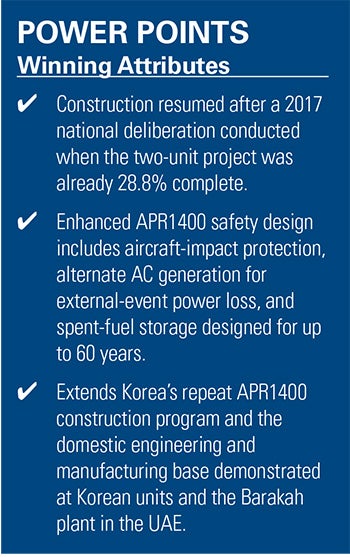
Barely a year later—even as the two-unit project stood at 28.8% overall completion and roughly KRW 1.6 trillion had already been spent—former President Moon Jae-in, elected in May 2017 on a platform that included a long-term nuclear phase-out, prompted KHNP’s board to halt construction of Units 5 and 6. But rather than canceling the project outright, the government convened an unprecedented Citizens’ Jury, including 471 randomly selected South Koreans who spent three months hearing testimony from both sides before voting. On October 20, 2017, 59.5% backed resuming construction, and Moon accepted the recommendation. While work resumed that November, the same government pledged not to approve any new reactor projects.
The interruption ultimately proved to be one of several setbacks. A shift to a 52-hour national workweek in 2018 constrained labor hours, while design changes adopted after a 2016 earthquake near Gyeongju strengthened seismic performance. Later regulatory updates also extended the pre-operational review. While KHNP applied for Saeul 3’s operating license in August 2020, the Korea Institute of Nuclear Safety did not complete its technical review until late 2025—prolonging the licensing process by more than five years.
The Phaeacian Gift: An Improved APR1400
Saeul 3 is a two-loop pressurized water reactor rated near 4,000 MWth, producing 1,400 MW gross across a 60-year design life—essentially double the licensed lifetime of Korea’s earliest commercial units. Its safety architecture follows the APR1400 standard design, which KHNP certified with the U.S. Nuclear Regulatory Commission in 2019. It includes four independent safety-injection trains with direct vessel injection; an in-containment refueling water storage tank that provides storage, delivery, and heat-sink functions without reliance on outside water sources; and a first-of-a-kind safety-injection-tank fluidic device, full-scale tested, that optimizes injection flow across both the initial blowdown and long-term core-reflood phases.
 |
|
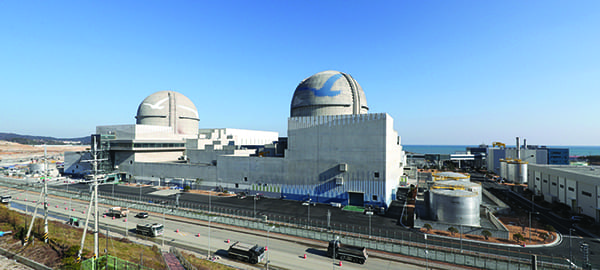
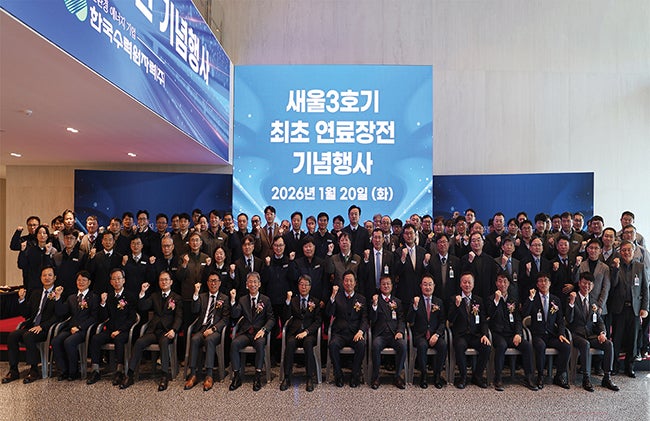
1. Saeul Unit 3 marked a major commissioning milestone on Jan. 20, 2026, when Korea Hydro & Nuclear Power, KEPCO Engineering & Construction (KEPCO E&C), and other project participants held a ceremony for the unit’s initial fuel loading. Courtesy: KEPCO E&C. |
But Saeul 3’s distinctions include enhancements KEPCO Engineering & Construction (E&C), the project’s architect-engineer, has called improvements “compared to earlier plants.” At a ceremony marking the unit’s initial fuel loading on Jan. 20, 2026 (Figure 1), KEPCO E&C described a structural design “capable of withstanding aircraft impact,” the addition of an alternate AC generator “to address potential loss of power caused by external events such as earthquakes,” and spent-fuel storage expanded to “approximately three times its previous level, allowing storage for up to 60 years.” Reactor-building walls were thickened by 15 centimeters (cm) to 137 cm, and auxiliary-building walls by 30 cm to 180 cm, according to the NSSC’s own explanation at license approval.
Ithaca in Sight
 Construction proceeded mostly as expected. Doosan Enerbility supplied the reactor vessel, major nuclear steam-supply components, and the turbine-generator, making Saeul 3 the ninth of 10 APR1400 units the company has built domestically and for export. Civil construction, meanwhile, proceeded under a consortium of Samsung C&T, Doosan Enerbility, and Hanwha Engineering & Construction. By Dec. 31, 2025, as KHNP reported combined Unit 3 and 4 construction progress at 98.26% against a planned 99.12%, the NSSC approved Saeul 3’s operating license by a 5–1 vote.
Fuel loading, as noted, followed on Jan. 20, 2026, and on April 10, the NSSC confirmed completion of all nine mandatory pre-criticality inspections. Commissioning has presented a handful of issues, including an April 22 smoke incident in an auxiliary building that prompted a prime-ministerial safety review, and on Aug. 4, the NSSC disclosed a turbine-system issue—affecting the conventional plant, not the nuclear island—though it called it “not a serious matter.”
Up to 31 additional NSSC inspections remain, including power-increase tests and emergency-response evaluations, before the commission signs off on full commercial output. Saeul 4, its twin, trails roughly seven months behind, with an operating-license decision expected in December 2026.
For now, neither unit can afford a delay. Data-center power requests submitted to KEPCO leaped from 906 MW in 2023 to a projected 7,343 MW by 2027—an eightfold surge that outstrips the country’s available supply by more than half, according to the trade ministry’s own accounting. Saeul 3 will be the first new large reactor to help close that gap since the 2017 suspension nearly took it off the board entirely.
—Sonal C. Patel is a POWER senior editor.