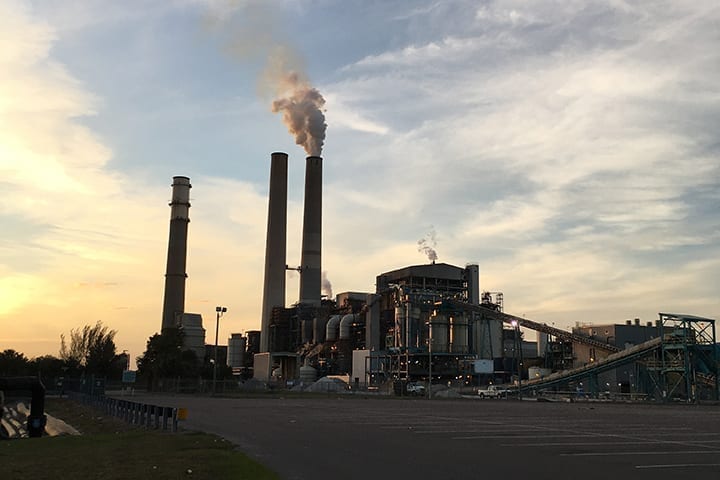
Age is wreaking havoc on the U.S. generation industry, especially the coal-fired sector. Industry conferences are replete with hand-wringing over the "brain drain," the lack of skilled personnel, the meager number of students pursuing engineering degrees, and the accelerated retirement of the older workers who make up the industry’s experience base. On top of this, the industry’s physical infrastructure is aging. Almost all new U.S. generating capacity added over the past decade has been gas-fired, which means that existing coal-fired capacity isn’t being replaced.
Sure, there’s a queue of over 100,000 MW of planned coal-fired capacity, but it’s a long slog between putting a resource plan in front of a public utility commission and putting megawatts on the grid. Plus, the industry hasn’t figured out a model for building and financing the attendant transmission system upgrades necessary to move that power to where it’s needed. And, of course, global climate change is the elephant in the room when new coal plants are discussed, and that beast is getting less and less modest.
The fuel-diversity aspect of the plant aging issue is even more depressing to ponder. Because natural gas prices have been so high, all that new gas-fired capacity only runs about 20% of the time. So, these newer but still-aging stalwarts are being run longer and harder. Five years ago, the national average capacity factor for coal plants was around 70%; today, it’s more like 80%, and some flagship plants are pushing 90%. In some cases, these coal plants also have to be more nimble, to function within new guidelines for transmission organizations or to capture spot- or day-ahead market revenues.
It would be worth a Letterman flashback segment to watch merchant genco CEOs from the 1990s predict the replacement of up to one-third of the "dirty, aging" coal-fired capacity by "clean, affordable" natural gas. Not even the Clinton-era New Source Review (NSR) could knock this capacity out of the market, although it certainly contributed to an attitude of underinvesting in these assets.
The bottom line is that these plants will probably run until they can’t.
Enter control upgrades
One of the most prevalent ways to manage the aging process is through control system upgrades. The new "brain" not only helps the physical equipment respond within the limits of its age, but the advanced software and control techniques that accompany the brain also capture and automate at least some of the expert knowledge resident in human operators and performance engineers. After all, airline pilots are now taught to "keep their hands off" the controls and let the automation system do what it is designed for.
Today, the power plant control system is also converging with the data acquisition system to create a more complete plant information system. With the integration of key software packages, advanced sensors and control elements, and intelligent plant devices, the automation system will, in time, truly become like a brain, responding in real time to dynamic input changes and optimizing outputs across the many demands imposed on the plant (POWER, September 2005, p. 56).
Every controls upgrade project is driven by a combination of imperatives, including these:
- Replace obsolete control equipment.
- Integrate separate, "islanded" control systems for boiler, turbine, burner management, coal handling and preparation, and the like.
- Incorporate new capital equipment—such as scrubbers, selective catalytic reduction (SCR) systems, low-NOx firing systems—into the plant controls.
- Reduce NOx emissions incrementally through more-stable boiler control.
- Improve unit flexibility and response to grid and market dispatch requirements.
- Enhance plant and worker safety (see box).
- Increase unit output incrementally.
- Reduce heat rate (improve plant efficiency).
- Avoid forced outages and improve commercial availability and plant reliability.
- Reduce plant staff.
- Implement a comprehensive corporate, enterprise, portfolio, or asset management strategy based on standardized information technology and knowledge management platforms.
- Enhance plant security.
A seminal report on this subject, Upgrading Instrumentation and Control in Coal-fired Plants (issued in January 2004 by Hermione Nalbandian of the London-based IEA Clean Coal Centre), notes that the average life of modern instrumentation and control (I&C) systems ranges between 10 and 15 years for PC-based systems and between 15 and 20 years for proprietary distributed control systems (DCS). In particular, this report dissects 15 I&C upgrade case studies. The cost of these projects ranged from $1 million to $6 million. However, the report also notes that other plant modifications are invariably carried out in conjunction with the controls upgrade, making it impossible to accurately assess the monetary value of the I&C portion.
First USC gets new DCS
Students of power plant history know that, as much as the term ultra-supercritical (USC) is bandied about today, Unit 1 of the four-unit Eddystone Generating Station of Exelon Corp. (formerly Philadelphia Electric Co.) still holds the record for the highest commercial steam conditions: 5,300 psig and 1,210F. Although it came on-line in 1960, Unit 1 remains to this day one of the world’s most efficient coal-fired units (although today’s operating steam parameters are somewhat lower than the design points). To keep Eddystone running another 15 years, Exelon determined that it needed a new brain.
According to a paper presented at last year’s Power-Gen conference by Mitchell Goldberg, Eddystone’s production manager, and Roger Leimbach of Metso Automation, part of the justification for the controls modernization has to do with the competitive market: PJM Interconnection requires the unit to follow load-dispatch commands, or automatic generation control (AGC).
As a result, Eddystone’s units, which used to run in turbine-follow mode with the governor valves wide open above 70% load, now are required to follow load at a rate of 6 MW/min. After 44 years of operating under a "direct energy balance" (DEB) control concept, Exelon and Metso Automation (the successor company to Leeds & Northrup, the control system original equipment manufacturer [OEM]) embarked on a project to provide the flexibility required without unduly stressing the equipment and while consolidating information monitoring, which had previously been dispersed throughout numerous hard-wired recorders and indicators.
The updated DEB system for Eddystone (Figure 1) decouples generation control (turbine output) from boiler control. Generation control makes maximum use of stored energy to balance turbine output with AGC demand. Unlike conventional coordinated control, in which an arbitrary feed-forward rate is used to overfire or underfire the boiler, the new DEB system calculates in real time stored energy requirements plus load change and applies that to the control of firing rate. The concept thus maximizes use of the once-through boiler’s stored energy.
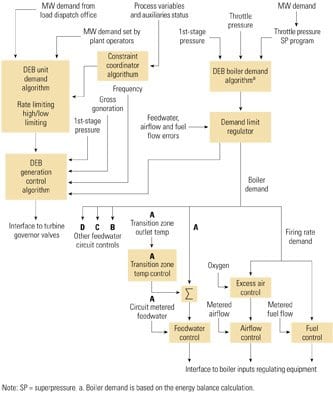
1. Separating generation and boiler control. The direct energy balance (DEB) control strategy at Eddystone Generating Station was updated as part of modernizing the plant’s distributed control system. Source: Metso Automation
Generation control includes a triple-cascade control loop with the following input parameters: megawatt output, turbine first-stage pressure, frequency, and aggregate governor valve position. This provides a linear megawatt response at maximum rate.
Two special algorithms allow for maximum rate of change at all times:
- A constraint coordinator ensures that all critical variables—including steam temperature, waterwall metal temperatures, and feedwater flows—are kept within allowable limits as the rate change is being implemented. When the rate of change is at the maximum level, operators don’t have to worry about exceeding any process limits. Mechanical and electrical limits on fan dampers, feeders, spray injection valves, boiler feedpumps, and turbine valves also are monitored and "constrained."
- A demand limit regulator monitors various process errors, including airflow, fuel flow, and feedwater flows. During a load ramp, if any of these parameters is exceeded, boiler demand is reduced to a point that supports the limited parameter.
Other notable aspects of the modernization project are the following:
- The schedule for Unit 1 was seven months from contract signing to shipment, followed by an eight-week outage to remove the old equipment and install the new.
- Prefabricated cables were installed between existing terminal strips and the new input/output (I/O) modules. Existing termination cables were used where possible. In some cases, new remote I/O was installed in areas near field devices to reduce the need for new cabling.
- Some 16 of the 92 original manual/auto control stations were included on the new console for emergency situations on critical loops.
- HART signals are transmitted for those new final control elements that are so equipped.
- The plant information subsystem provides reporting, alarming, historical data storage, and performance calculations, all of which can be transmitted back to Exelon’s engineering offices. A plant information system is included in the MaxDNA platform.
- Burner management and windbox damper operation are assigned to a programmable logic controller, which receives demand signals from the DCS via a serial communication link.
- Few plant components were replaced. Exceptions include the gravimetric coal feeders (to improve their feed-forward response when governor valves are wide open) and new process transmitters.
- A training simulator provides direct emulation of the configuration actually loaded into the control distributed processing units.
Optimization follows DCS retrofit
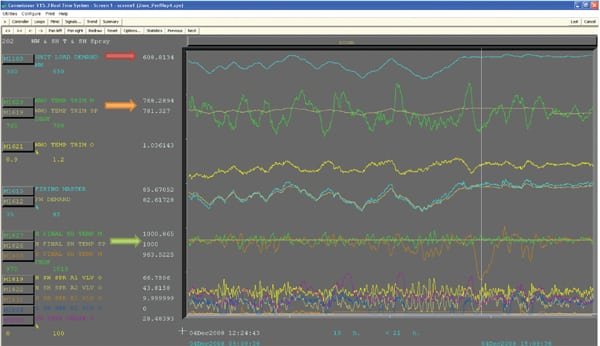
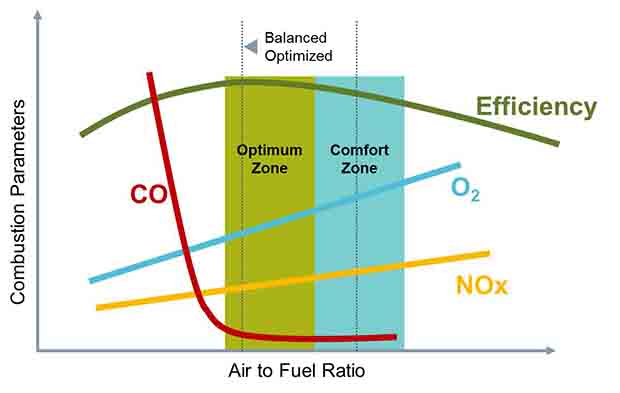
Following a DCS retrofit at Entergy Corp.’s Independence station in Arkansas, engineers there felt more was needed, so an optimization system was added. It combines a neural network approach with model predictive control (Figure 2) —the former to minimize NOx emissions, the latter to minimize heat rate while providing tighter control of peak steam temperatures during dispatch. An expert-system-based sootblower package completed the optimization system.
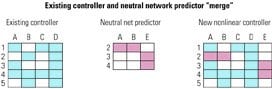
2. Minimizing NOx and heat rate. Model predictive control and neural networks were integrated to create an optimization package for Entergy Corp.’s Independence Station in Arkansas. Source: Invensys Systems Inc.
According to a paper authored by Entergy’s Steven Coker and engineers from Invensys Systems Inc. and presented at the 48th Annual Joint ISA/EPRI Power Industry Symposium last June, the optimization system paid for itself in fuel savings within months. NOx emissions were reduced by 20% to 25% over and above the DCS retrofit levels.
The complexity of the twin-furnace-design, 800-MW units fired by Powder River Basin coal made it difficult even for the new DCS to minimize NOx emissions within the envelope of other performance constraints. Specifically, the three objectives of the program were to:
- Drive the unit to minimize NOx emissions continuously, even during dispatch.
- Improve unit heat rate.
- Trim peak reheat and superheat temperatures during dispatch. Peak temperatures were suspected of contributing to tube failures, forced outages, and unreliability. The sootblower expert system avoids steam temperature impacts and potential tube erosion and also contributes to lower NOx emissions and heat rate improvement.
Invensys Systems’ Consulting Engineer Don Labbe notes in the paper that the tangentially fired twin-furnace design offered many opportunities to reduce NOx. as there are 152 air dampers, eight coal mills, and 64 primary air ports in the furnace. The development of control models was based on those parameters found to influence NOx emissions. The neural network technology used here reportedly allows faster training time, which aids in continuously updating the models.
Model predictive control, notes Labbe, is well suited for situations in which controlled variables and manipulated variables are related by thermodynamic, chemical, or control relationships. It provides rapid response and stable control within constraint limits. For example, final steam temperature is related to superheat spray, with a particular gain based on steam properties and a time response based on metal mass and steam flow.
The issue with the sootblowers was this: The system was effective at responding to gas path pressure drop and large accumulations of slag, but usually at the sacrifice of energy distribution (specifically, lower superheat steam temperatures, with attendant impact on unit heat rate). The expert system now "optimizes" among the various objectives. Operators now receive advisories and support data that help them select which sootblowers to activate and when.
Global sourcing approach
Like all projects, controls retrofits must work within the envelope of business realities. One faced by AES Corp. (Arlington, Va.), went like this: About half of its plants around the world employ control systems now supplied (as a result of mergers and acquisitions) by one vendor. Many of these plants in the U.S. needed control system upgrades. On the one hand, it was impractical, for cost and schedule reasons, for some of the plants to bid and replace these systems with offerings from other vendors. Obviously, this situation can be exploited by the system’s OEM.
The solution for AES proved to be a "preferred customer agreement" (PCA) with the supplier, Emerson Process Management’s Power & Water Solutions division. As a result, nine AES plant businesses—Greenidge (New York), Deepwater (Texas), Harding Street (Indiana), Cayuga (New York), Westover (New York), Thames (Connecticut), Red Oak (New Jersey), Warrior Run (Maryland), and Alamitos (California)—will be upgrading their systems over the next five years. According to AES’s Bill Rady, the company expects to save an additional 10% on costs for upgrades, new systems, maintenance agreements, and other ongoing support services. Each plant also reduces its cycle time by avoiding the bidding process. Plants are motivated to buy through the agreement by an annual volume discount available in succeeding years, based on the total purchases in the previous 12 months.
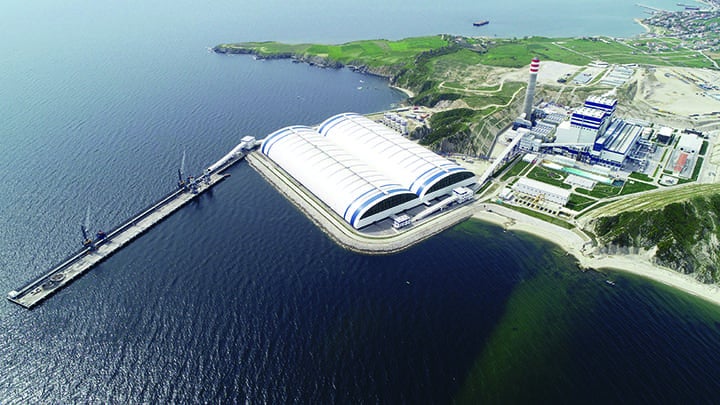
Rady’s plant, Greenidge (Figure 3), has what could be the oldest control system of its type, one of the first all-CRT-based DCS known as the WDPF. Obsolescence is the main driver of the project. "The controls are 20 years old," observes Rady, "and we started noticing mysterious things happening that we couldn’t explain." Maintainability and reliability of the system is paramount to the business. AES’s performance group had instituted a program to reduce "high-impact events," and any forced outages caused by an obsolete, outdated, or vintage control system would certainly qualify. Although there had not been a history of derates or events, the plant is taking no chances. The upgraded components will be installed during the fall outage this year.
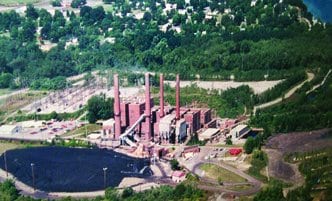
3. Volume discounts available. AES Greenidge will have its control system modernized this fall, under a preferred-supplier agreement governing nine AES plants. Obsolescence is the main driver of the updating. Courtesy: AES Greenidge
Another key benefit of the PCA, negotiated by AES’s Global Sourcing Group, is flexibility. Some plants may need a complete replacement, including thousands of I/O devices; others may need better processors and graphics. With the PCA in place, individual plants can pick and choose what they need.
Future pieces of the puzzle
Not all modernizations are control system upgrades; sometimes they are upgrades to how control is accomplished. A case in point was the installation of a full-stream elemental online coal analyzer (OLA) at Unit 1 of Minnkota Power Cooperative Inc.’s Milton R. Young Station (Figure 4). The OLA, from Energy Technologies Inc. (Knoxville, Tenn.), combines prompt gamma neutron activation analysis (PGNAA) with multi-gamma transmission and microwave attenuation to provide a complete elemental analysis of the coal stream as delivered to the plant on the conveyor belt. The justification here was control of slagging.
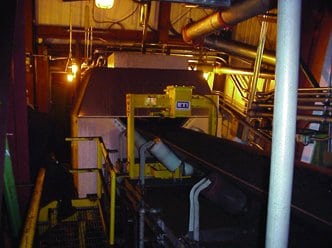
4. Full stream ahead. This online coal analyzer is used as an adjunct for control of boiler slagging at Minnkota Power’s Milton R. Young Station. Courtesy: Energy Technologies Inc.
Milton Young Station is a lignite-fired plant close to its mine source. Cyclone boilers there have suffered slagging, fouling, and ash-related problems for years. They also have infrequently, but annoyingly, exceeded plant opacity limits as a result of collection and transport problems. Slagging events are handled by burning oil, an expensive proposition. Plant personnel have conducted boiler optimization studies by correlating coal quality to cyclone performance. In particular, the studies have shown that slagging occurs when there in an increase in silicon-rich components such as illite and montmorrillonite clays in the ash.
Simplified relationships were developed between ash content and acid/base ratios of the coal, and resulting cyclone performance characteristics. This has helped the plant reduce oil consumption by 80% or more. Similarly, the new OLA has shown that when low base-to-acid-ratio coal constitutes even a small fraction of furnace feed, opacity will be affected. Thus, the analyzer is now being used to monitor and control the quality of each truckload of coal delivered to the plant.
In this application, the OLA could be considered an offline adjunct to the plant’s control capability. However, it takes little imagination to see how OLA data could be incorporated into the control and automation system for such functions as intelligent boiler cleaning, coal blending, emissions control, and heat rate and efficiency monitoring.
Security concerns next?
What might drive additional control system activity? Several experts say security issues. Obeying the law of unintended consequences, the transition away from proprietary control systems to open architectures has also led to greater security threats, both internal (for example, disgruntled employees) and external (such as cyber-terrorism, hackers, and pranksters). Thus, notes Tim McCreary of HF Controls Corp. (Addison, Texas), staff once devoted to plant operations are increasingly being diverted to address system security. Unfortunately, all of this adds cost without adding value to the product. McCreary believes that some of the best solutions for fossil-fueled plants could be derived from nuclear plant control systems.
Security directives are coming from several different directions. The federal government obviously has an interest in preventing energy infrastructure attacks and recovering quickly in the event of an attack. The Departments of Energy and Homeland Security have been assessing our electric infrastructure for vulnerabilities. The North American Electric Reliability Council (NERC) has issued Critical Infrastructure Protection standards and guidelines, including the NERC Cyber Security Standard-Urgent Action Standard 1200. ISA and IEEE also are actively addressing the issue through industry committee work—as are suppliers, by reconfiguring their offerings. Because the ensuing changes will affect both new control systems and plant upgrades, the topic of control system security is best left to a future article in POWER.