
Articles By

-
 Coal
CoalCoal Plant O&M: Coal Drying Reduces Pulverizer Start-up Costs
If coal leaving a pulverizer isn’t dry, it may plug up the coal pipes leading to the boiler. The coal-drying process in a pulverizer is similar to that used by flash dryers. Certain coals should be preheated to make them more combustible. Generally, preheating is done on higher rank coals — those with a low […]
-
 O&M
O&MEmissions Control: Layered NOx Reduction on a 500-MW Cyclone-Fired Boiler
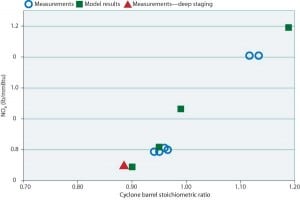
Historically, cyclone-fired boilers have been characterized as big emitters of NOx due to the very high temperatures in their primary combustion zone. Uncontrolled levels from 0.8 to 1.9 lb/mmBtu have been typical. The design of cyclone-fired units makes them impossible to retrofit with standard low-NOx burners. Prior to 1997, the conventional wisdom was that cyclone […]
-
 O&M
O&MEmissions Control: Cost-Effective Layered Technology for Ultra-Low NOx Control
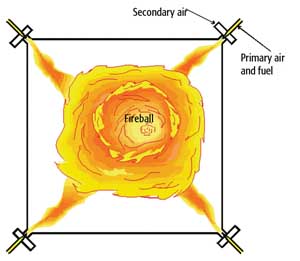
Layering NOx control technologies can reduce a coal-fired unit’s NOx emissions to levels achievable by selective catalytic reduction alone. Advanced Combustion Technology Inc. (ACT) (www.advancedcombustion.net) has demonstrated that using several in combination can cut emissions from boilers firing eastern bituminous coal or No. 6 oil to less than 0.15 lb/mmBtu. The following two case studies […]
-
 Coal
CoalEmissions Control: User-Designed Large-Particle Ash Screens Minimize SCR Fouling
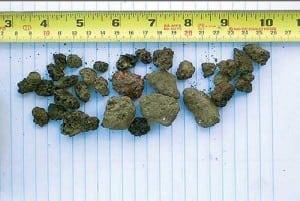
Large-particle ash (LPA), also called popcorn ash (Figure 1), is a serious concern for many coal-fired utility boiler operators who have retrofitted their unit(s) with a high-dust selective catalytic reduction (SCR) system. LPA formed in the boiler can easily carry over into the SCR reactor (Figure 2), where it often causes catalyst erosion damage and […]
-
 Coal
CoalThe Coal Pile
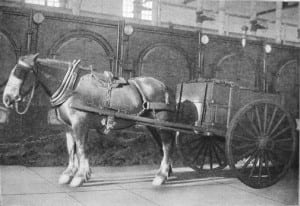
The February 1907 issue of POWER magazine reported on the construction of a new coal-fired steam engine plant on the Merrimac River outside of Lawrence, Mass. According to the plant’s owner, "the simplest and most flexible means for handling coal… to the furnace is by animal muscle… that brings the coal to the firing floor […]
-
 Business
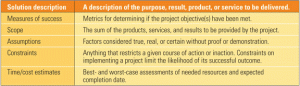
The five deadly sins of project management
IT project engineering skills aren’t taught in college; they’re developed through on-the-job training with seasoned mentors. Begin honing your project management skills by firmly grasping the fundamentals presented in this article.
-
 Wind
WindWind power: Disruptive or not?
Harvard Business School Professor Clayton Christensen coined the term "disruptive technology" in his best-selling 1997 book, The Innovator’s Dilemma. According to Christensen, a disruptive technology unseats a dominant technology by creating products that are so much cheaper or better in one or more ways that they quickly become the new mainstream standard, transforming an entire […]
-
 Gas
GasGlobal Monitor (Nov/Dec 2006)
Renewables require rethinking just about everything/Torque-splitting drive train improves wind turbine reliability/Waste gas–burning engines reach milestone/Hybrid power plant targets pipeline losses/Power from paint/Gulf Coast Power Association conference report/Pat Wood talks about the challenges facing ERCOT
-
 Commentary
A new vision for energy efficiency
The U.S. electric utility industry has long encouraged its customers to get more value from their electricity dollar. Today, the industry—facing volatile costs and mounting concerns about the environment—is coming together to create a new role for energy efficiency—one that enables technology to deliver more value to customers and electric utilities alike. For example, "smart" […]
-
Readers talk back and Correction (Nov/Dec 2006)
Fireproofing switchyards From an insurance carrier’s perspective, we fully condone the use of on-line condition monitoring for large, critical transformers ("Monitoring key gases in insulating oil keeps transformers healthy," POWER, October 2006). However, another issue that the transformer failure and subsequent fire at Arizona Public Service’s West Wing Substation in 2004 highlights is the need […]
-
-
 Legal & Regulatory
Renewable power: Environmental or political product?
What’s in a name? Plenty, if the word is "renewable." Intuitively, most people outside the energy industry consider hydroelectric power "renewable." The dictionary defines the word as follows: "capable of being replaced by natural ecological cycles." Accordingly, rainwater should indisputably qualify as renewable. Yet since the early days of renewable portfolio objectives, most hydro […]
-
 Instrumentation & Controls
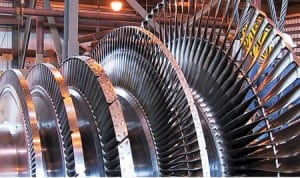
The long and short of last-stage blades
The use of longer steam turbine last-stage blades (LSBs) reduces the number of low-pressure casings and, thus, a turbine’s total installed cost. In many cases longer blades extract more energy from low-pressure steam before it enters the condenser and improve a turbine’s overall thermodynamic efficiency. But creating longer blades requires forsaking conventional design techniques for complex aerodynamic analysis of stationary vanes and rotating blades. Has the market push for longer LSBs exceeded current technology limits? Does the industry conduct proper analysis to determine when using longer blades is beneficial or not?
-
 Nuclear
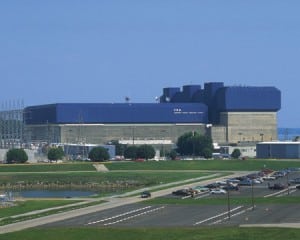
DOE project converts weapons-grade uranium to fuel for Browns Ferry
An offshoot of the 1993 Megatons to Megawatts nonproliferation program, the Blended Low-Enriched Uranium (BLEU) project has modified and developed new fabrication processes for converting surplus weapons-grade uranium materials into nuclear fuel for TVA’s Browns Ferry Nuclear Plant. This innovative public/private venture continues to deplete nuclear arsenal stockpiles while reducing storage, security, and disposal costs to U.S. taxpayers.
-
 Wind
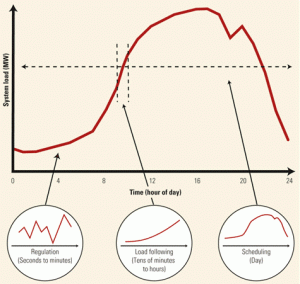
WindUnique challenges face wind power developers, buyers
Utility resource planners are used to viewing new generation in terms of firm, dispatchable capacity. Dispatching a renewable resource such as wind requires a different perspective. Wind capacity can serve as a hedge against fossil fuel price risks and perhaps future emissions restrictions, but it requires a much more structured planning horizon. Integrating wind farms into their portfolios may be the most difficult challenge utilities face today.
-
 Gas
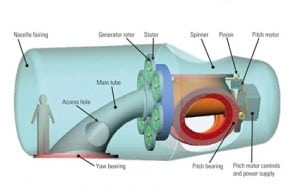
GasWind farmers: Heed the lessons of the merchant gas-power business
The wind energy business is beginning to look as frenetic as the merchant gas-fired power business in the late 1990s—with some critical differences. If the 10 issues listed here are addressed soon, wind power may avoid a crash and burn similar to the one that beset the gas turbine business.
-
 Hydro
HydroOsmotic power from the ocean
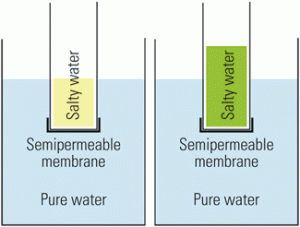
In chemistry, osmosis refers to the movement of water molecules through a selective membrane from an area of low solute concentration to an area of high solute concentration, creating a pressure gradient. Researchers have recently demonstrated that exploiting this natural phenomenon could produce useful amounts of electrical power.
-
 Coal
CoalExpert systems optimize boiler performance, extend plant life
Slagging and fouling of furnaces and boilers’ convective pass top the list of costly coal plant O&M problems. Although sootblowing is a tried and true solution, running sootblowers too often can erode boiler tubes. Lehigh University’s Energy Research Center has developed an "expert" sootblowing system that has outperformed experienced operators’ "seat of their pants" sootblowing procedures on two head-to-head field tests.
-
 Coal
CoalUtilities split on readiness of IGCC
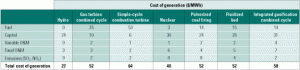
For some gencos, the dearth of operating experience for integrated gasification combined-cycle plants adds too much uncertainty to the risk/reward equation for new-capacity technology options. For others, the possibility of being able to comply with air pollution limits as far out as 2018, as well as to meet all-but-certain CO2 caps, makes IGCC well worth investing in—now.
-
 Coal
CoalTechnology options for capturing CO2
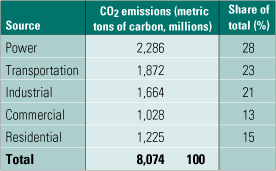
Concerns about global climate change have prompted interest in reducing or eliminating the carbon dioxide (CO2) emissions of fossil fuel-fired power plants. Here’s a guide to the technology and economics of three CO2 capture methods: postcombustion separation of CO2 from flue gas (applicable to existing plants), and oxygen-fired combustion and precombustion capture (suitable for new coal-fired capacity, including IGCC plants).
-
 O&M
O&MMeeting utility industry challenges through innovation
In 2005, Xcel Energy fully implemented its unique Utility Innovations initiative to encourage its IT vendors to work together. One pilot project completed under the UI umbrella confirmed that tighter integration of predictive and analytical systems and data can optimize preventive maintenance intervals, reducing costs and downtime while increasing profits and productivity.
-
 O&M
O&MMonitoring key gases in insulating oil keeps transformers healthy
Large T&D-sized transformers age as quickly as generating assets do. But preventing transformers from failing is difficult because they have no moving parts and are sealed up. Tracking the concentrations of certain gases—the more, the better—that are dissolved in a unit’s insulating oil is a proven way of detecting damage before it causes a costly problem.
-
 Business
Shaving load peaks from the substation
The first megawatt-class sodium sulfur (NaS) battery placed in service in North America was installed this June in Charleston, W.Va. The 1.2-MW system—comprising the battery and a bidirectional inverter—can be discharged during the day to provide 7.2 MWh of on-demand power for shaving peak loads and be recharged at night. It’s no longer true that electricity can’t be stored, except in small quantities.
-
 Commentary
Turning the corner on global warming
In his keynote speech this May to the Global Roundtable on Climate Change, held in Iceland and hosted by the Earth Institute of Columbia University, Ólafur Ragnar Grimsson—the president of Iceland—challenged government and business leaders to take measurable steps now to build a prosperous and sustainable future through smart science and public policy. Grimsson’s call […]
-
 O&M
O&MSO3’s impacts on plant O&M: Part I
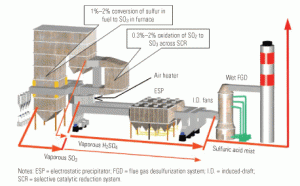
The visible consequences of sulfuric acid aerosol emissions—opaque stack emissions called “blue plumes”—are merely the tip of an iceberg. In sufficient concentration, SO3 also can increase corrosion and fouling of equipment and components downstream of the furnace while decreasing their efficiency and penalizing overall plant heat rate.
-

Balancing risks and rewards
More top utilities are making plans to add one or more integrated gasification combined-cycle (IGCC) plants to their generation portfolios over the next decade. Some 25 separate projects are on the drawing board, virtually all planning to use Eastern coal. Western coals pose tougher challenges for gasifiers, and their lower heat content disadvantages project economics. […]
-
 Coal
CoalGlobal Monitor (October 2006)
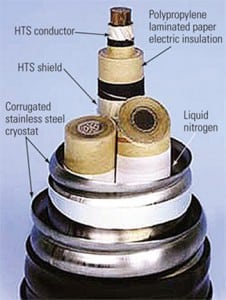
First live superconducting cable / Biggest CO2 storage project / Largest hydrogen-fueled plants / Record run for fuel cell cogen system / Largest PV plant still in Bavaria / Luz returns to U.S. / POWER digest
-
 O&M
O&MFocus on O&M (October 2006)
Upgrading to digital–twice / Lower-cost turbine monitoring / Pros and cons of remote process control / Nuts about Superbolt
-
 Legal & Regulatory
Restricting bids for new capacity raises costs, lowers reliability
Most sponsors of bid solicitations seek to attract the maximum number of high-quality bids. Basic economic principles tell us that the greater the number of respondents to a solicitation, the greater the competition and the greater the benefits to the solicitor. Somewhat counterintuitively, and notwithstanding California’s need for more electricity supply, the state’s utilities are […]
-
 O&M
O&MApply the fundamentals to improve emissions performance
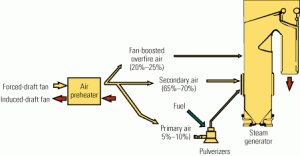
The O&M staff of AES Westover Station wisely took a holistic approach to optimizing combustion within Unit 8’s boiler in order to reduce its NOx emissions while maintaining acceptable levels of carbon-in-ash content. The results of major modifications—centered on the addition of a fan-boosted overfire air system—were a 60% reduction in NOx levels, improved unit reliability, and a project payback period measured in months rather than years. As this project proved, the whole is more than the sum of its parts.