
Articles By

-
 Commentary
Global warming "consensus" continues to melt away
We are witnessing an international awakening of scientists who are speaking out in opposition to former Vice President Al Gore, the United Nations, and the media-driven "consensus" on man-made global warming. In May, I released a report detailing scientists who were former believers in catastrophic man-made climate change but who have recently reversed themselves and […]
-
 Synfuel
Fueling around
Europeans didn’t know that corn existed before Columbus "discovered" America. It had been cultivated by indigenous North Americans for thousands of years before the Italian brought home what was to become a favorite food for many. The more adventuresome even figured out how to distill corn into something more to their liking. Fast-forward five hundred […]
-
 Gas
GasGlobal Monitor (August 2007)
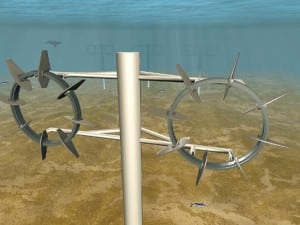
PG&E mounts tidal power project / GE F-class turbine breaks record / Iowa welcomes ethanol-fed hog / NYPA upgrades pumped-storage plant / Bush blesses Browns Ferry 1 restart / Shearon Harris looks to live on / Nevada bets on solar thermal / Climate models questioned / POWER digest
-
Readers talk back and Corrections (August 2007)
Reaction to reactor comment On page 34 of your April article on nuclear power, the author mischaracterized the maturity of one of the new reactors that have been submitted for NRC approval. The statement, "None of the advanced reactors that the NRC has certified (by reviewing engineering documents) has a performance record," is incorrect. GE’s […]
-
 O&M
O&MFocus on O&M (August 2007)
Stop valves from leaking money / Integrating plant and equipment models / Pricing priceless knowledge
-

Is ratepayer funding of utility R&D outdated?
Southern California Edison Co. (SCE) is requesting regulatory approval to recover over $50 million from ratepayers to analyze the feasibility and cost of a "commercial-scale" clean hydrogen power generation (CHPG) facility that would gasify coal to fuel a combined-cycle power plant and sequester the associated carbon emissions underground. If the study demonstrates the CHPG technology […]
-
 O&M
O&MMidAmerican’s Walter Scott, Jr. Energy Center Unit 4 earns POWER’s highest honor
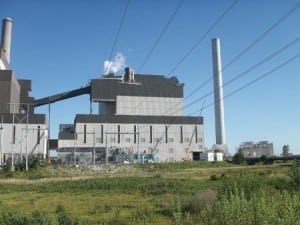
MidAmerican Energy Co. and its project partners are convinced that supercritical coal-firing technology’s inherently higher efficiency and lower CO2 emissions no longer come with a price: reduced reliability. Their Walter Scott, Jr. Energy Center Unit 4, the first major new supercritical plant in the U.S. in more than 15 years, is POWER’s 2007 Plant of the Year.
-
 Coal
CoalPSNH’s Northern Wood Power Project repowers coal-fired plant with new fluidized-bed combustor
The Northern Wood Power Project permanently replaced a 50-MW coal-burning boiler at Public Service of New Hampshire’s Schiller Station with a state-of-the-art fluidized-bed wood-burning boiler of the same capacity. The project, completed in December 2006, reduced emissions and expanded the local market for low-grade wood. For planning and executing the multiyear, $75 million project at no cost to its ratepayers, PSNH wins POWER’s 2007 Marmaduke Award for excellence in O&M. The award is named for Marmaduke Surfaceblow, the fictional marine engineer/plant troubleshooter par excellence.
-
 O&M
O&MFinding and fixing leakage within combined HP-IP steam turbines: Part II
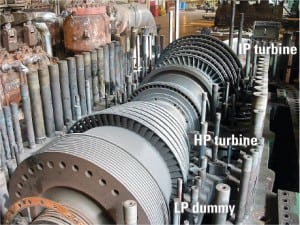
By design, combined HP-IP turbines have a small amount of internal leakage from the high-pressure turbine to the intermediate-pressure turbine. As turbines age, the leakage increases considerably and becomes excessive, creating a heat rate penalty and possibly a reliability problem. Last month we explored the symptoms and causes of steam leakage within GE steam turbines and how to correct the problem. In Part II, we examine the same issues for Westinghouse and Allis-Chalmers turbines from both theoretical and practical angles.
-
 Environmental
Field experience with mercury monitors
With U.S. mercury regulations pending and control technologies in the full-scale demonstration stage, accurate and reliable measurement of mercury in flue gas is becoming more important than ever. This article compares the results of field measurements of commercially available mercury monitors to approved reference methods. A key but not-so-surprising finding: Not all mercury monitors are created equal.
-
 O&M
O&MUse predictive techniques to guide your mercury compliance strategy
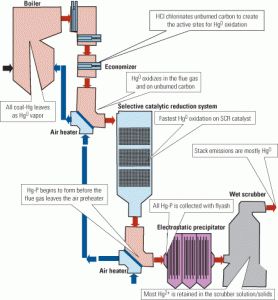
Several states have mandated faster and/or deeper reductions in plant mercury emissions than those called for by the Clean Air Mercury Rule. Unfortunately, differences between plants make accurate evaluation of control options difficult. In most cases, even statistically based Hg emission models don’t pass muster because they don’t account for the dynamic chemical behavior of Hg species in gas cleaning systems. This article describes one system evaluation tool that has been validated using Hg field test data from 50 full-scale flue gas cleaning systems. It is already being used by TVA and other utilities.
-
 Business
Application determines DG system configuration
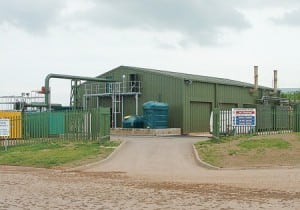
The intended use is the primary consideration (even fuel is secondary) when choosing an on-site energy system. Whether the need is for power alone or for heat as well, distributed generation plants have delivered lower energy costs and improved reliability to industrial and commercial customers worldwide. Following are six case studies of reciprocating engine systems that highlight their versatility.
-
 Instrumentation & Controls
Finding and fixing leakage within combined HP-IP steam turbines: Part I
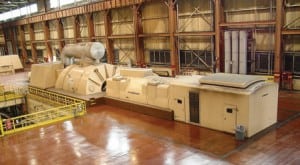
By design, combined HP-IP turbines have a small amount of internal leakage from the high-pressure turbine to the intermediate-pressure turbine. When turbines are new, the amount of this leakage is close to the design heat balance. But as turbines age, the leakage increases considerably, causing a heat rate penalty and possibly a reliability problem. In Part I, we explore the symptoms and causes of excessive leakage within GE steam turbines and how to correct the problem. Part II, in next month’s issue, will examine the same issues for Westinghouse and Allis-Chalmers turbines.
-
 Coal
CoalNavigating a carbon-constrained world
Scientific debate on the validity of global warming science continues, but the issue has yet had little impact on individuals. That impact is being negotiated in Washington, where a regulatory framework that would mandate reductions of greenhouse gases (GHGs) is taking shape. Legislative options under consideration would redefine what power plants must do-and not do-to […]
-
Environmental
The bumpy road to federal carbon dioxide caps
There are often five stages to enacting major legislative reforms: Initial enthusiasm, a sobering recognition of the complex issues to be solved, excruciating negotiations over those issues, hand-to-hand combat with supporters of the status quo, and resignation that the final product only deals with part of the problem. Congress has reached Stage 2 as it considers a cap-and-trade system for reducing carbon emissions. Now the real work begins.
-
 Coal
CoalDynamic classifiers improve pulverizer performance and more
Keeping coal-fired steam plants running efficiently and cleanly is a daily struggle. An article in the February 2007 issue of POWER explained that one way to improve the combustion and emissions performance of a plant is to optimize the performance of its coal pulverizers. By adding a dynamic classifier to the pulverizers, you can better control coal particle sizing and fineness—and increase pulverizer capacity to boot.
-
 Coal
CoalWhat’s that scrubber going to cost?
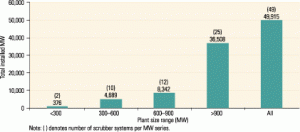
The latest benchmarking study by the EUCG examines the technology and costs of 49 flue gas desulfurization systems currently under design or construction by 12 of the nation’s largest utilities. Although the study’s detailed results are proprietary to EUCG members that participated in it, POWER was given access to the top-level findings. To get details at the plant/unit level, you’ll have to join the EUCG and participate in the study, which is ongoing.
-
This month in POWER…
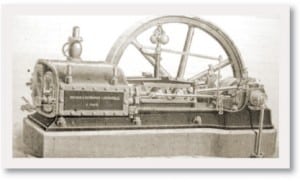
July 1886 POWER reported on the latest steam engine technology offered to the power generation market, this time by France. The Boulet engine (Figure 1) was described as a "French horizontal compound condensing receiver engine, having cranks at right angles, cylinders side by side, and live steam jacket. The valves are double slides, giving small […]
-
 Commentary
Third time the charm for unbiased open access?
The Federal Energy Regulatory Commission (FERC) recently issued major rules that address for the third time "discrimination" issues remaining after FERC’s 1996 landmark Order 888, which ushered in mandatory open access to transmission. The order was intended to give all power sellers equal access to power lines and thus increase wholesale price competition. Earlier […]
-
 News
NewsJust say no to power poaching
The Energy Policy Act of 2005 gave the Federal Energy Regulatory Commission (FERC) the authority to override state and local opposition to the construction of interstate transmission lines if the agency determines that they will reduce system congestion. In April, the Department of Energy designated two regions that might qualify for such treatment as "national […]
-
 Nuclear
Global Monitor (July 2007)
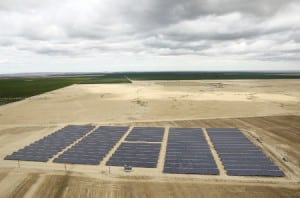
Pistachio plant gives new meaning to green/Slightly sun-powered grill/Will lithium revolutionize hydrogen storage?/Calpine’s major Geysers geothermal upgrade/Rhone-Alps is French PV hot spot/Fuel cell–powered ice-resurfacing machine/Westinghouse proposes revised AP100 design/Sandia perfects solar alignment/SCE wants comprehensive coal study/POWER digest
-
 O&M
O&MFocus on O&M (July 2007)
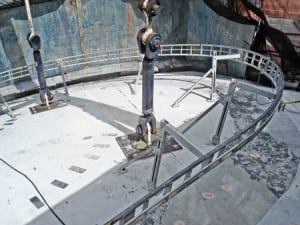
Hydro-demolition speeds reactor dome entry;
Tips for keeping your unit stable;
Air makes heavy move a breeze -
 Legal & Regulatory
Cogeneration qualifying facilities warrant extended contracts
Congress’s enactment of the Public Utility Regulatory Policies Act of 1978 (PURPA) triggered a revolution in the development and construction of power plants. PURPA’s creation of an independent class of generators—qualifying facilities (QFs)—exposed a century-old economic myth that had justified restricting ownership of generating facilities to governmental and investor-owned utilities (IOUs). The success of QFs […]
-
 Coal
CoalWestar’s Lawrence Energy Center wins for not blinking on safety
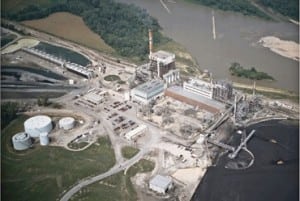
It took Westar Energy eight years to upgrade the Lawrence Energy Center to burn Powder River Basin coal. Its zero lost-time accident record during the million-man-hour project is a testament to Westar’s commitment to workplace safety. Here’s your backstage pass to meet the PRB Coal Users’ Group 2006 Plant of the Year.
-
 Coal
CoalMercury Control: Capturing Mercury in Wet Scrubbers: Part I
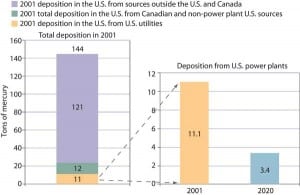
Are you using your flue gas desulfurization (FGD) system to its highest potential? You might not be if you’re not making it do double duty. It seems that million-dollar wet scrubber you installed to rid your flue gases of sulfur dioxide also can do a decent job of capturing mercury — under the right conditions. […]
-
Coal
Speaking of Coal Power: IGCC Sticker Shock
Former Illinois Senator Everett Dirksen once observed, "A billion here and a billion there, and pretty soon you’re talking real money." The same can be said about skyrocketing estimated costs of integrated gasification combined-cycle (IGCC) plants as their designs are fleshed out. The higher price tags shouldn’t be a surprise — the more you learn […]
-
 O&M
O&MPRB Tech Notes: Lawrence Energy Center Showcases Winning Plant
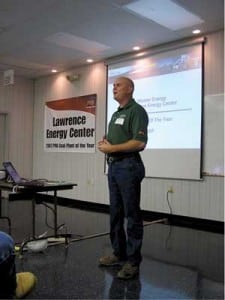
Lawrence Energy Center (LEC) proudly hosted about 60 representatives of the Powder River Basin Coal Users’ Group (PRBCUG) at its July 24th open house, luncheon, and plant tour. LEC was named the PRBCUG’s 2007 Plant of the Year at this year’s ELECTRIC POWER Conference and Exhibition in Chicago, May 1 – 3. Traditionally, the winning […]
-
O&M
Coal Plant O&M: Smart Sootblower Tailors Cleaning to Need for It / Blending’s Impact on Coal Quality
The 1990 amendments to the Clean Air Act require coal-fired power plants to reduce their emissions of the pollutant SO2. To do so, many have switched to, or are considering switching to, Powder River Basin (PRB) coal. Unfortunately, PRB coal has a tendency to leave excessive and tenacious deposits on boiler heat-exchange surfaces. Complicating the problem, the distribution of the deposits is far from uniform.
-
 Coal
CoalThe Coal Patrol: Coal to Synfuels: Deal or No Deal?
Synfuels’ political bubble has burst in Washington, but the market may step in where Congress fears to tread. When coal industry interests, in the form of the CTL Coalition, got a bill with strong federal support for coal-to-liquids technology before the Senate this spring, it appeared that the political skids were greased for some kind […]
-
 O&M
O&MLignite Drying: New Coal-Drying Technology Promises Higher Efficiency Plus Lower Costs and Emissions
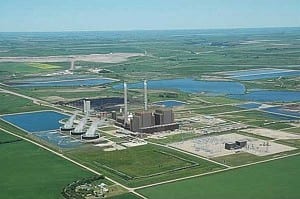
The U.S. Department of Energy (DOE) and Great River Energy are testing a new coal-drying technology that could dramatically reduce the emissions of lignite-burning power plants. The project was selected for funding during Round I of the DOE’s Clean Coal Power Initiative (CCPI), a series of competitions to demonstrate a range of promising clean-coal technologies. […]