POWER
-
 Coal
CoalReport: Costs for First-Generation Carbon Capture Plants Will Soar
Carbon capture and storage (CCS) has of late gained steam as the best way to mitigate emissions of the greenhouse gas carbon dioxide (CO2) from fossil fuel power plants, despite evidence that the approach would require much energy and increase the fuel needs of a coal-fired plant by more than 25%. A new study from […]
-
 O&M
O&MTop Plants: Portlands Energy Centre, Ontario, Canada
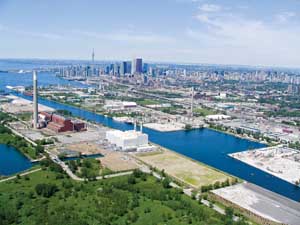
Construction of the Portlands Energy Centre was a logistical dream: A mothballed power plant next door had an active switchyard, natural gas pipeline, and cooling water structure. The new facility put peak power into the Ontario Power Authority’s grid from its two combustion turbines only two years after collecting the necessary permits. The entire plant entered commercial service on April 23, 2009 — six weeks early.
-
 Nuclear
Nuclear Developments in Europe
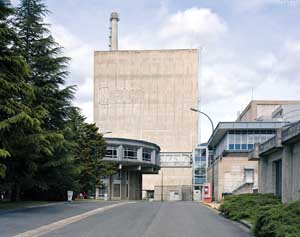
Recent months brought several developments in Europe’s much-touted "nuclear renaissance." Spain Extends Life of Nation’s Oldest Reactor Spain’s government on July 2 granted a four-year extension to the operating permit of the 466-MW Santa María de Garoña nuclear power plant (Figure 3). The decision follows a nonbinding recommendation by Spain’s nuclear regulator in June to […]
-
 Coal
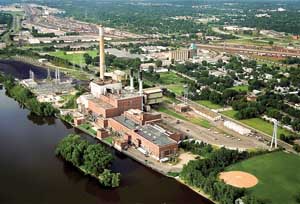
CoalTop Plants: Riverside Repowering Project, Minneapolis, Minnesota
Xcel Energy has completed the third and final project required by its 2003 Metropolitan Emissions Reduction Project agreement: repowering the Riverside Plant with a gas-fired 2 x 1 combined-cycle plant and tearing down the old coal-fired plant. Saved from demolition was the Unit 7 steam turbine system that now serves the new plant. Xcel staff expertly managed the project to an on-time start-up and accepted many important construction tasks, harkening back to the days when utilities took a more active role in the design and construction of projects.
-
 Solar
SolarSwiss Solar Plane Prototype Designed to Fly Day and Night
The first aircraft designed to fly day and night propelled solely by solar energy was unveiled at Dübendorf airfield, Switzerland, in late June. The Solar Impulse has the wingspan of a Boeing 747-400 and the weight of an average family car (1,600 kg) (Figure 4). More than 12,000 solar cells mounted onto the wings will […]
-
 O&M
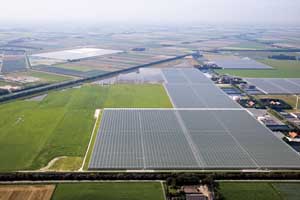
O&MTop Plants: Royal Pride Holland Commercial Greenhouse Cogeneration Plant, Middenmeer, North Holland Province, Netherlands
At Royal Pride Holland’s commercial tomato greenhouse, green thumbs and green energy go hand in hand. With a total energy utilization of 95% in this application, GE’s new Jenbacher J624 natural gas – fired engines offer the innovative greenhouse an economical supply of on-site electrical and thermal power, as well as CO2 fertilization, to support its operations.
-
 Hydro
HydroScotland Officially Opens 100-MW Glendoe Hydro Plant
In late June, Scotland officially opened the Glendoe Hydro Scheme, a 100-MW project whose construction near Loch Ness in the Scottish Highlands was the region’s biggest civil engineering project in recent times. Planning for the project began in 2001, and it took three years to build. Today, the project has the highest head — the […]
-
Waste to Energy
Biomass Electricity More Efficient than Ethanol, Researchers Say
Biomass — plant matter that’s grown to generate energy — converted into electricity could result in 81% more transportation miles and 108% more emissions offsets than ethanol, according to U.S. researchers. In addition, the electricity option would be twice as effective at reducing greenhouse gas (GHG) emissions. The study, published in the May 22 issue […]
-
 Gas
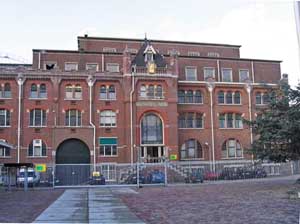
Gas2009 Marmaduke Award: The Hague Repowering Project Upgrades CHP System, Preserves Historic Building
The Hague’s century-old power plant, now owned by E.ON, provides electricity to the local grid and thermal energy for the city’s district heating system. Poor performance from the plant’s 25-year-old equipment and The Hague’s wish to become a carbon-neutral city by 2010 gave birth to the idea of repowering the existing plant. For protecting a historic building while investing in low-emissions electricity generation, achieving improved plant efficiency and reliability, and accelerating the project so the plant could be back online for the next heating season, The Hague Repowering Project is the winner of POWER’s 2009 Marmaduke Award for excellence in O&M. The award is named for Marmaduke Surfaceblow, the fictional marine engineer and plant troubleshooter par excellence.
-
 Waste to Energy
Turning Sewage into Renewable Energy
News has been emerging from around the world about several projects that seek to turn human sewage — arguably the dirtiest of manmade wastes — into clean energy.
-
 Water
WaterImproved FGD Dewatering Process Cuts Solid Waste
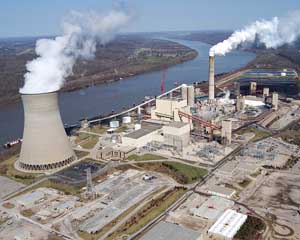
In 2007, Duke Energy’s W.H. Zimmer Station set out to advance the overall performance of its flue gas desulfurization (FGD) dewatering process. The plant implemented a variety of measures, including upgrading water-solids separation, improving polymer program effectiveness and reliability, optimizing treatment costs, reducing solid waste sent to the landfill, decreasing labor requirements, and maintaining septic-free conditions in clarifiers. The changes succeeded in greatly reducing solid waste generation and achieving total annual savings of over half a million dollars per year.
-
 O&M
O&MManaging Minimum Load
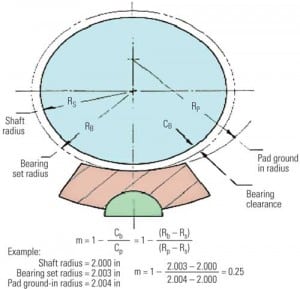
Reducing the minimum load at which a steam turbine can reliably operate is one way to increase revenue for marginal base-loaded units during periods of low electrical demand. For this reason, it is not unusual to see merchant plants operating at "super minimum" load levels that are well below the typical 25% rated full-load limits. However, such units are operating well outside the original equipment manufacturer (OEM) design basis, and owners may experience undesirable damage to their turbines for a number of reasons. That’s why it is important for owners to understand the trade-offs and risks that come with such operation.
-
 Coal
CoalIGCC Update: Are We There Yet?
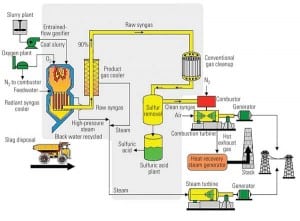
If a number of technical, financial, and regulatory hurdles can be overcome, power generated by integrated gasification combined-cycle technology could become an important source for U.S. utilities. Our overview presents diverse perspectives from three industry experts about what it will take to move this technology off the design table and into the field.
-
 O&M
O&MPolymeric Solution for Pump Cavitation
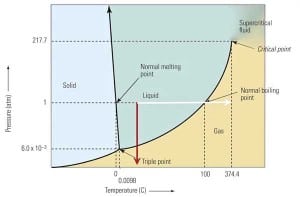
Cavitation is defined as the phenomenon of forming and imploding vapor bubbles in a region where the pressure of the liquid falls below its vapor pressure. Cavitation and the resultant damage can occur in any fluid-handling equipment, especially in pumps. Technological advances in industrial protective coatings and composite repair materials have made it possible to repair pumps operating in a cavitating environment rather than simply replacing them after damage occurs. Cavitation-resistant (CR) elastomers have the ability to retain adhesion under long-term immersion, dissipate energy created under high-intensity cavitation, and provide outstanding resistance to corrosion and other forms of erosion.
-
 Coal
CoalCommercially Available CO2 Capture Technology
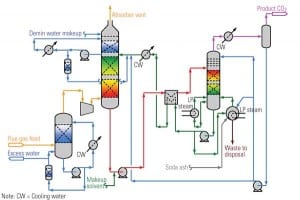
While many CO2 removal technologies are being researched through laboratory and pilot-scale testing, an existing technology has a significant operating history at commercial-scale facilities, where it is collecting CO2 from multiple sources, including low-CO2 concentration flue gas (<3.1% by volume) with high oxygen concentrations (>13% by volume).
-
 News
NewsAdjustable Speed Direct Drive Cooling Tower Motor
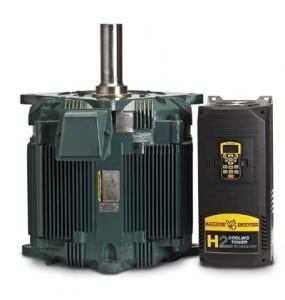
Arkansas-based Baldor Electric Co. launched a new direct drive technology for the cooling tower industry that improves reliability, reduces maintenance, runs quieter, and saves energy. The Adjustable Speed Direct Drive Cooling Tower Motor combines technologies of the field-proven laminated finned frame RPM AC motor with a high-performance permanent magnet salient pole rotor design, and it […]
-
 O&M
O&MPreventing Turbine Water Damage: TDP-1 Updated
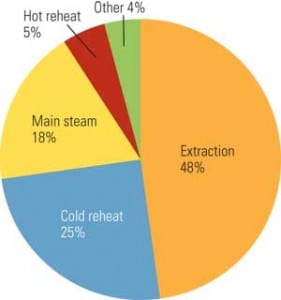
ASME’s latest revision of its Recommended Practices for the Prevention of Water Damage to Steam Turbines Used for Electric Power Generation: Fossil-Fuel Plants, ASME TDP-1-2006, contains much important design and operating advice that is proven to protect steam turbines. However, many in the industry are not as familiar with the update as they should be. This article provides a concise overview of this critical design standard.
-
 News
NewsImproved Coal Dust Collector
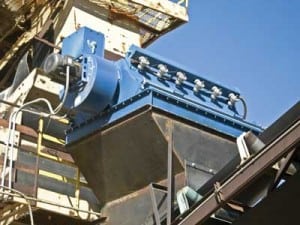
Martin Engineering has introduced an upgraded version of the MARTIN Insertable Dust Collector, which features improved filters and a smaller footprint to control airborne coal dust at belt conveyor loading points and other bulk material-handling operations. Insertable dust collectors are typically installed to reduce problems associated with central baghouse collection systems, including long runs of […]
-
 Gas
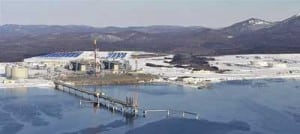
GasFlexible Fuel Combustor Design Accommodates LNG
To supplement domestic natural gas supplies, the U.S. is expected to increase its dependence on offshore liquefied natural gas suppliers in the coming years. However, the composition and hydrocarbon content of imported LNG may significantly vary from those of North American sources. Variation in fuel composition may lead to plants using fuel that violates their combustion turbine fuel specifications and may cause operational problems.
-
 Marmaduke
Marmy’s Deep-Freeze Blackout
Steve Elonka began chronicling the exploits of Marmaduke Surfaceblow — a six-foot-four marine engineer with a steel brush mustache and a foghorn voice — in POWER in 1948, when he raised the wooden mast of the SS Asia Sun with the help of two cobras and a case of Sandpaper Gin. Marmy’s simple solutions to seemingly intractable plant problems remain timeless. This Classic Marmaduke story, published 50 years ago, takes place during the Cold War at an Air Force Base in northern Greenland, where under-ice tunnels were constructed to move nuclear rockets around the facility unobserved. The miniature nuclear reactor was operated for almost three years before it was shut down and returned to the U.S., ending the Army’s nuclear program. Greenland officially became a separate county within the Kingdom of Denmark in 1953, and home rule was introduced in 1979.
-
 News
NewsIntelligent Cooling Tower System
Electro-Chemical Devices’ new plug-and-play Model 2122 Cooling Tower Control System (CTCS) is designed to apply the various chemicals used to prevent corrosion, scaling, and fouling in water-based wet cooling towers. The system also controls acid feed via pH monitoring, blowdown via conductivity, and the inhibitor via a user-selected time basis. Model 2122 CTCS features a […]
-
Commentary
Carbon Offsets: Scam, Not Salvation
In the battle against climate change, most media attention has been paid to "cap-and-trade" schemes, under which countries set upper limits ("caps") on greenhouse gas (GHG) emissions and allow companies to sell ("trade") unused emissions rights to other firms. However, there is a second path to global warming salvation: Carbon offsets.
-
 Environmental
Help Build the Global Energy Observatory
How would you like to be able to access data on all the power plants in the world and all of their performance metrics, analyze that data, and map it? Those abilities are part of the vision behind the Global Energy Observatory (GEO), an OpenModel website that serves as a wiki for global energy data.
-
 Coal
CoalRevived FutureGen Faces Renewed Funding Obstacles
A little more than a year after the Bush administration abruptly withdrew its support for the FutureGen project, the Department of Energy has again announced it will back the proposed Illinois gasified coal power plant and carbon capture initiative. Though the 275-MW project may be different in technical aspects — it will be initially designed for 60% carbon capture, not 90%, and gasify only Illinois Basin Coal (Figure 2) — it is still riddled with many of same funding problems. Making matters worse, it may have been revived too late: Since the DOE withdrew its support, several major carbon capture and storage (CCS) projects and alliances have sprouted in the U.S., and these could give FutureGen a run for its money.
-
News
Politics Trump Scientific Integrity
In their recent endangerment finding draft technical support document (TSD), scientists at the U.S. Environmental Protection Agency (EPA) conclude that carbon dioxide emissions are a public health hazard and should be regulated under the Clean Air Act. Federal law requires that regulations be based on scientific information that is "accurate, clear, complete, and unbiased"; the most recent available; and collected by the "best available methods." The EPA’s TSD on carbon emissions violates all of these requirements.
-
Coal
How Much Coal Does the U.S. Really Have?
The U.S. Geological Survey (USGS), a federal mapping agency, has of late been propounding the difference between "resources" and "reserves." It says that although the two terms are used interchangeably, the distinction is simple: Reserves are a subset of resources. Coal resources, as an example, include those in-place tonnage estimates determined by summing the volumes for identified and undiscovered deposits of coal, whereas coal reserves are those resources considered "economically producible" at the time of classification, even though extraction facilities are not in place and operative.
-
-
 Coal
CoalOf Fracking, Earthquakes, and Carbon Sequestration
Hydraulic fracturing — the process of drilling and then pumping fluid deep into a formation to generate fractures or cracks, typically for extracting natural gas from shale formations — has been under fire lately, owing to concerns that it contaminates drinking water. But while Congress debates proposed legislation that would impose new restrictions on the technology, an entirely different concern related to fracturing — or "fracking" — is emerging: It may trigger earthquakes.
-
 O&M
O&MThe 7,000-Foot Challenge
The Springerville Generating Station in Springerville, Ariz. (Unit 3 was POWER’s 2006 Plant of the Year), uses two lined ponds to hold water collected from its cooling towers. With the construction of Unit 4, the plant’s owner, Salt River Project (SRP), one of Arizona’s largest utilities, wanted to increase the capacity of pumps used to move effluent from one pond to another to avoid the possibility of overflow. SRP engineers wondered if using a vertical turbine pump on a floating barge would improve managing the water levels in the two ponds.