
POWER
-
 Coal
CoalCommercially Available CO2 Capture Technology
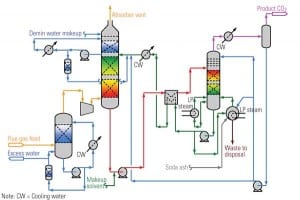
While many CO2 removal technologies are being researched through laboratory and pilot-scale testing, an existing technology has a significant operating history at commercial-scale facilities, where it is collecting CO2 from multiple sources, including low-CO2 concentration flue gas (<3.1% by volume) with high oxygen concentrations (>13% by volume).
-
 News
NewsAdjustable Speed Direct Drive Cooling Tower Motor
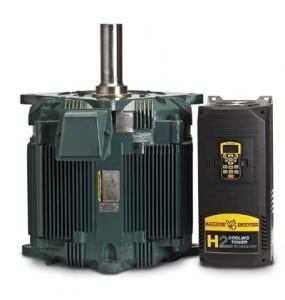
Arkansas-based Baldor Electric Co. launched a new direct drive technology for the cooling tower industry that improves reliability, reduces maintenance, runs quieter, and saves energy. The Adjustable Speed Direct Drive Cooling Tower Motor combines technologies of the field-proven laminated finned frame RPM AC motor with a high-performance permanent magnet salient pole rotor design, and it […]
-
 Environmental
Power Industry Needs to Do a Better Job of Educating and Messaging
At the opening ELECTRIC POWER 2009 plenary session, both the keynote speaker and the Power Industry Executive Roundtable participants kept circling back to the problems created by a public and lawmakers who seem to be promoting policies without an adequate understanding of energy realities. Most of the speakers acknowledged that the industry itself is partly to blame, but nobody offered a way forward.
-
 O&M
O&MOptimize Gas Turbine Performance Using Acoustic Simulation Software
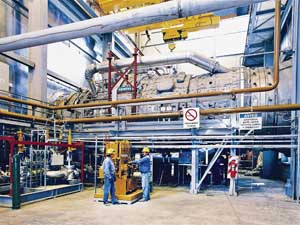
Increasingly fierce competition driven by deregulation and privatization is putting downward pressure on power plant operations and maintenance (O&M) budgets. Recently, lower natural gas prices have pushed natural gas – fired combined-cycle plants higher up in many utilities’ dispatch order in some regions, a welcome change from the twice-a-day cycling experienced by some plants during the past few years. However, with more operating hours comes more interest in plant operating availability, and that means increased emphasis on reliable gas turbine operation.
-
 Waste to Energy
The Growing Role of Waste-to-Energy in the U.S.
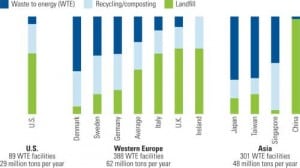
Using nonhazardous waste for power generation is a trend that’s gaining steam for several reasons. Though there are several environmental reasons, another is the reliability of the fuel supply.
-
 News
NewsCO2 Sensor/Transmitter
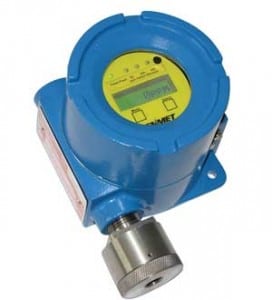
The recently released EX-5165 Sensor/Transmitter from ENMET Corp. is a three-wire 4-20 mA sensor for the detection of carbon dioxide in ranges from 0 to 500 ppm and 0% to 100% by volume. It also features a 24 VDC loop-powered transmitter. The nondispersive infrared sensor continuously monitors high concentrations of the gas, and it can […]
-
 Coal
CoalCarbon Control: The Long Road Ahead
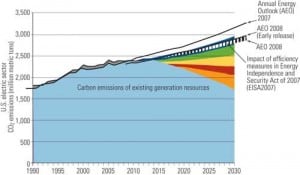
The industry is preparing for carbon legislation by exploring options for dealing with CO2. But even if the technical issues are resolved, actually sequestering CO2 poses a number of other daunting challenges.
-
 News
NewsRemanufactured Generator Ends
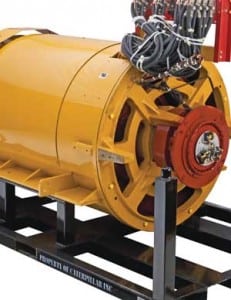
Caterpillar Inc. introduced a new family of remanufactured generator ends for standby, prime, and continuous power applications. The C32 and 3500 series Caterpillar engines have been used for applications ranging from distributed generation to prime power for remote communities. The first wave of remanufactured generator ends includes 34 part numbers, which are available worldwide in […]
-
 Coal
CoalTechnology Could Deliver 90% Hg Reduction from Coal
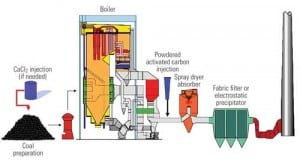
Reducing mercury emissions at coal-fired power plants by 90% has been considered the holy grail of mercury control. A new technique promises to get us there — at a price.
-
 News
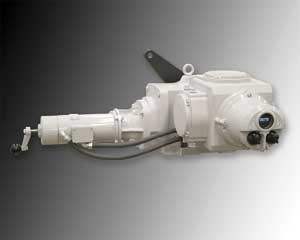
NewsHigh-Torque Electric Rotary Actuator
Rotork Process Controls introduced the SM-6000 S2, an electric rotary actuator for a wide range of heavy-duty damper drive applications found in power plants. The actuator provides high speeds and high torque for continuous modulating duty. It also offers positioning accuracy and can operate well in harsh and rugged environments. The SM-6000 S2 includes an […]
-
 O&M
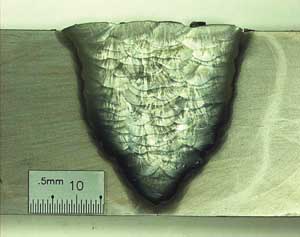
O&MImproved Filler Metal Enables Higher-Temperature Dissimilar Metal Welds
The welding of dissimilar metal joints in new and retrofit power plant boiler tubing has long proved challenging. New plants designed to operate at higher temperatures and pressures require advanced alloys and a filler metal that produces reliable welds. EPRI recently developed and sponsored the commercialization of a new filler metal. Its first application is the fabrication of boiler tubes for American Electric Power’s ultrasupercritical John J. Turk, Jr. Power Plant.
-
 News
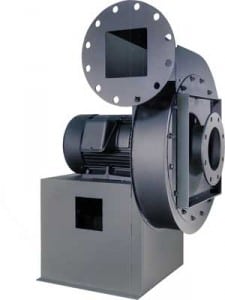
NewsPressure Blowers for High-Volume Applications
Chicago Blower has developed a series of 16 higher-pressure blowers that are suited to combustion air, aeration, cooling and drying systems, and other high-volume processes. The blowers support pressures of up to 91-inch water gauge and volumes of up to 18,000 cubic feet per minute. Features include a lightweight aluminum alloy wheel design to reduce […]
-
 Solar
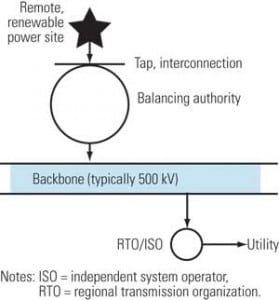
SolarThe Odd Couple: Renewables and Transmission
The tension between the growing number of renewable energy projects and limited transmission capacity is reflected in Washington’s legislative agenda of establishing a national renewable portfolio standard and new transmission lines dedicated to moving renewable energy coast-to-coast. Even if those ideas become law, hurdles to the happy marriage of renewables and transmission remain.
-
 News
NewsTool and Equipment Management Software
Washington-based software developer Dynamic Systems Inc. launched the Basic Tool Manager, a software based on barcode technology, which has been developed for companies that want to reduce the loss of tools and save time tracking down equipment and tools. Using a wireless barcode reader, users can scan a personnel badge and then a piece of […]
-
 Coal
CoalBiomass Cofiring: Another Way to Clean Your Coal
Demand for renewable power is burgeoning as state governments (and maybe soon the U.S. federal government) impose increasingly rigorous environmental and procurement standards on the energy industry. Surprisingly, biomass cofiring has yet to attract much attention, even though it could help many utilities meet their renewable portfolio requirements, reduce carbon emissions, and solve other regional environmental problems. U.S. developers, investors, and regulators should consider including cofiring as part of the energy mix going forward.
-
 News
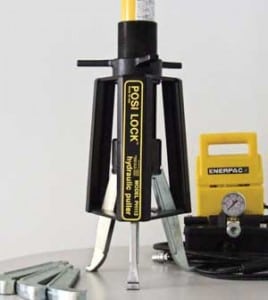
News25-Ton Hydraulic Internal/External Puller
Posi Lock’s hydraulic line featuring the patented "Safety Cage" has been expanded to include the PH-113IE, a three-jaw, 25-ton internal/external puller that is designed to solve problems associated with the removal of gears, bearings, and other press-fit items. The PH-113IE’s internal puller jaws have a reach from 2.5 inches to 7 inches and a spread […]
-
Commentary
Managing Solar’s Revenue Impact on Utilities
Since 1882, when Thomas Edison installed the world’s first central generating plant in New York City, utility business models have varied little from the basic one: cover costs and generate profit by selling more electricity. But today, unprecedented challenges are sweeping through the industry. Soon utilities will face yet another new challenge: the large-scale implementation of distributed solar power, which can result in lower electricity sales. As solar implementation further challenges business-as-usual models, what’s a forward-thinking utility to do?
-
 Gas
GasMitsubishi Wraps Up Development of J-Class Mega Turbine
This March, Japan’s Mitsubishi Heavy Industries Ltd. (MHI) quietly completed development of the "J-series" gas turbine — a machine that has been extolled in the turbo-machinery world for its ability to produce one of the world’s largest power generation capacities and highest thermal efficiencies.
-
 Nuclear
Sweden Selects Site of First Permanent Spent Nuclear Fuel Repository
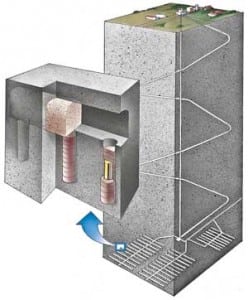
In early June, as U.S. Energy Secretary Steven Chu confirmed to a House Subcommittee that Yucca Mountain repository was, without doubt, "off the table" and that a blue ribbon panel would further advise the government on what it should do with its high-level nuclear waste, Sweden announced the site of what could be the world’s first permanent spent fuel repository.
-
Our Integrity Is Not for Sale
I was putting the finishing touches on this month’s editorial when I received an email from a reader who owns a company that serves the power industry. He was very complimentary of an article I recently wrote. "Goes without saying," I was thinking to myself. However, actually saying it goes a long way in my book, and I enjoy hearing from readers — at least most of the time.
-
 Hydro
HydroEthiopia Completes Construction of Africa’s Tallest Dam
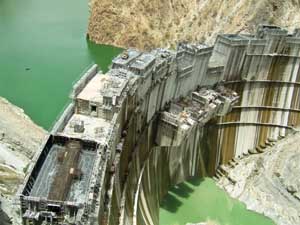
Ethiopia, the landlocked nation in East Africa from which key tributaries to the Nile River originate, completed construction of the continent’s highest dam, the 188-meter Tekezé Arch Dam (Figure 3) in February.
-
-
 Gas
GasQatar Starts Construction on Middle East’s Largest Power and Water Plant
The gas-rich Persian Gulf state of Qatar in May commenced construction of the region’s largest power and water plant, a massive project comprising eight gas turbine generators, eight heat-recovery steam generators, four steam turbine generators, and 10 desalination units.
-
 O&M
O&MExtreme Oil Changes
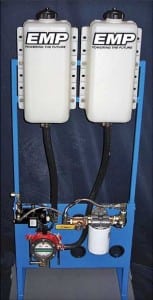
Performing regular oil changes on remote generators is far from simple or cost-effective. Here’s how one firm harnessed technology to extend oil change intervals from one week to two months.
-
 Wind
Wind"Smart Turbine Blades" to Improve Wind Power
Engineers at Purdue University and Sandia National Laboratories have developed a technique that uses sensors and computational software to constantly monitor forces exerted on wind turbine blades. Their achievement could one day improve the efficiency of wind turbines by providing the blades’ "smart" structure with necessary data to adjust to rapidly changing wind conditions.
-
Legal & Regulatory
Too Many Fingers in the Smart Grid Pie?
There has been much excitement about the advent of the "smart grid" recently, especially because of the strong push by the Obama administration. Despite the simple-sounding term, the smart grid is not a simple concept.
-
 Business
Energy Storage Efforts Making Progress
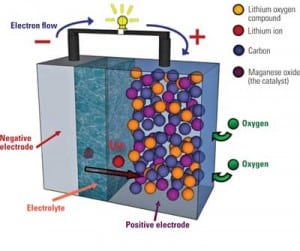
The intensifying spotlight on renewable energy seems to be casting a brighter light on the energy storage problem, with lawmakers, researchers, and investors scrambling to seek out the most feasible solution to bridge the intermittent nature of renewable power sources.
-
 Instrumentation & Controls
Digital Networks Prove Reliable, Reduce Costs
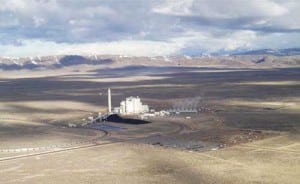
The debate over the benefits of using digital bus networks as the communications backbone of new power plants is all but settled. The technology is maturing, and the reliability of digital hardware is superior to that of hardwired systems. Newmont Gold Mining’s 200-MW TS Power Plant is perhaps the power industry’s best example of how a plantwide digital controls architecture can provide exceptional reliability and be significantly less costly to install.
-
 Solar
SolarPG&E Makes a Deal for Space-Based Power
Just as reports emerged earlier this year that NASA had abandoned, for lack of financial resources, its research into space-based solar power that would be harnessed via orbiting solar arrays beaming microwaves to earthly receivers, California’s Pacific Gas & Electric Co. (PG&E) wrote the California Public Utilities Commission (PUC) requesting its approval of a power purchase agreement from a similar technology.
-
 Coal
CoalDesigning an Ultrasupercritical Steam Turbine
Carbon emissions produced by the combustion of coal may be collected and stored in the future, but a better approach (in the near term at least) is to reduce the carbon produced through efficient combustion technologies. Increasing the efficiency of new plants using ultrasupercritical technology will net less carbon released per megawatt-hour using the world’s abundant coal reserves while producing electricity at the lowest possible cost.