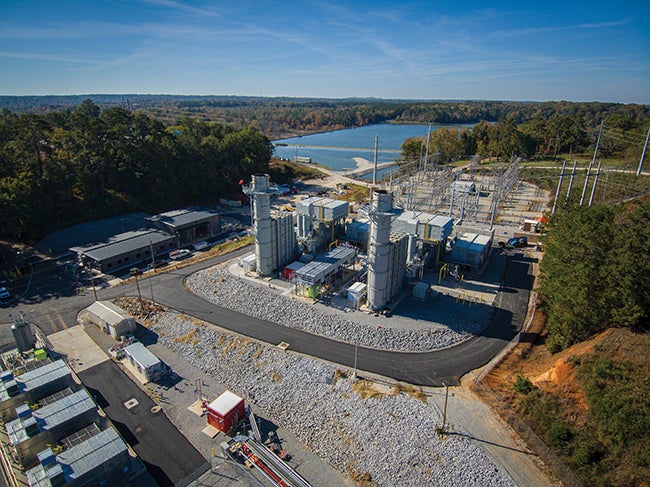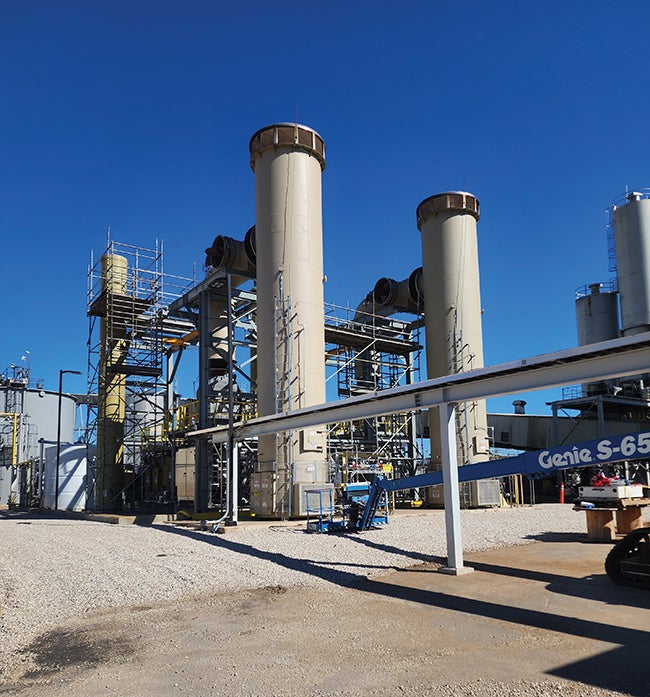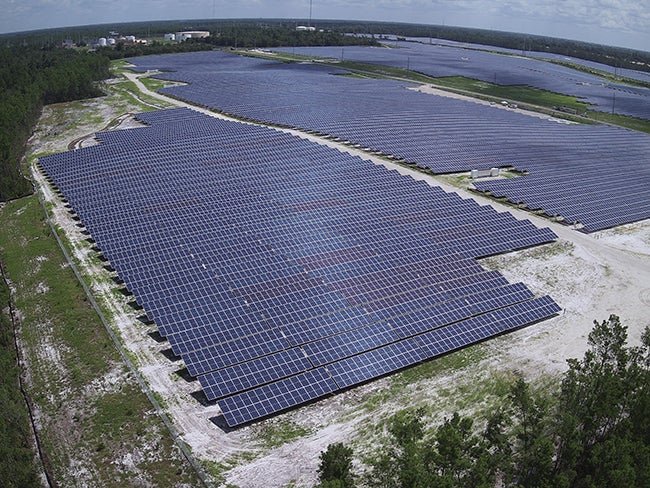
The Nuclear Company (TNC) has unveiled plans to develop a 6.6-GW nuclear power campus in Lewis County, Kentucky, that could accommodate up to six Westinghouse AP1000 reactors along the Ohio River. The venture-backed developer said it has secured control of a proposed site and intends to pursue federal approvals to begin construction in 2028. The effort could advance the firm’s strategy to build large nuclear reactors through standardized designs and fleet-scale construction.
The proposed development, called Prosperity One, would be located at Carrs Bottom along the Ohio River, on land that TNC has secured through an option agreement with a local landowner. It would be Kentucky’s first commercial nuclear power project and, if all six reactors are completed, the largest nuclear generating site in the U.S. The project would exceed the capacity of Georgia’s Plant Vogtle, currently the nation’s largest nuclear plant, which has approximately 4.5 GW of net summer generating capacity across four reactors, including two AP1000 units.
TNC plans to develop Prosperity One in phases, beginning with two AP1000 reactors totaling approximately 2.2 GW. According to the company’s project website, the initial units would advance through site studies, licensing, transmission interconnection arrangements, and financing before construction. Each additional unit, however, will require a separate development decision, the company said.
For now, TNC indicated it has not yet filed an application with the Nuclear Regulatory Commission (NRC) or PJM Interconnection, which operates the regional transmission grid. No nuclear license, grid-connection agreement, or federal loan has been approved or awarded, it noted, which means the announcement remains an early development milestone. TNC also has not disclosed an estimated project cost, financing arrangements, electricity purchasers, ownership structure, or expected commercial operation date. Although its Oct. 21 announcement targets construction in 2028, the project’s website does not establish a construction schedule.
Ohio River Site Faces Technical and Infrastructure Studies
The proposed site is owned by Trace Creek LLC, a Lewis County-based infrastructure company founded by Sam Howard, a lifelong county resident. Trace Creek and TNC have entered into a teaming partnership to advance Prosperity One. “The Nuclear Company has secured an option on land at Carrs Bottom from a local landowner and is evaluating additional land a full campus would need,” TNC states on its project website.
“For generations, communities along the Ohio River have formed America’s industrial backbone,” said Joe Klecha, TNC’s chief nuclear officer. “We are proud to partner with the community to apply our team’s collective experience to deliver lasting jobs, a stronger tax base, and reliable power for Kentucky.” Klecha, a former licensed senior reactor operator, has 33 years of nuclear industry experience, including construction and operational readiness leadership roles at Vogtle Units 3 and 4. TNC said its services division has performed maintenance at more than 40% of operating U.S. nuclear power facilities.
TNC has identified several features that could support development at Carrs Bottom, including access to the Ohio River, existing rail infrastructure, Kentucky Route 8, and regional high-voltage transmission facilities. Initial studies will examine site geology, environmental conditions, transportation requirements, and transmission interconnection options.
The Ohio River is a potential cooling water source, although the company has not selected a cooling system or established water withdrawal and discharge requirements. The project may also require improvements to Kentucky Route 8, while use or modification of existing railroad infrastructure would depend on additional studies and agreements.
The company’s published development process calls for approximately two years of on-site meteorological measurements, NRC licensing and environmental reviews, state and local permits, grid studies, financing, and a final investment decision before construction. TNC, notably, also acknowledges that the project’s proposed scale is not assured. “If studies show the site cannot meet federal requirements, or the project cannot be financed responsibly, it will not go forward at this scale or at all. We will say so here,” it says.
A Fleet-Scale Nuclear Development Strategy
Prosperity One is the latest development in TNC’s effort to establish a repeatable construction model for large nuclear reactors. The company emerged from stealth mode in 2024 with plans to deploy an initial 6-GW fleet using established reactor technology and a “design-once, build-many” approach. In December 2024, it solicited engineering, procurement, and construction contractors to support that fleet, seeking firms capable of applying advanced construction and manufacturing methods to large nuclear projects.
TNC’s strategy, however, appears to extend beyond standardizing reactor designs to coordinating engineering, permitting, procurement, construction logistics, and financing across multiple projects. When it launched, the company proposed using advanced analytics, artificial intelligence, and Internet of Things technologies to integrate project activities and supply chain management. Its Nuclear Operating System (NOS) is intended to support that effort through a common digital platform. TNC estimates that construction, logistics, financing, and other activities beyond the reactor itself account for 88% of a project’s scope, although it has not disclosed the basis for that calculation. The original fleet model also included an Industry Working Group, which sought to bring together utilities, independent power producers, hyperscalers, nuclear technology suppliers, and private equity firms to coordinate development and distribute project risks among participants.
In April 2025, TNC opened its primary engineering and construction office in Columbia, South Carolina, and announced the completion of a Series A financing round led by Eclipse. Other investors included CIV, True Ventures, Wonder Ventures, Goldcrest Capital, and MCJ Collective. CIV co-founder Patrick Maloney also co-founded TNC and serves as its chairman.
TNC expanded its development activities in May 2026, announcing a partnership with Brookfield to form a company dedicated to deploying Westinghouse nuclear technologies, including the AP1000 and AP300 small modular reactor. The proposed business would combine Brookfield’s infrastructure investment and development capabilities with TNC’s nuclear project delivery expertise, providing licensing support and oversight of engineering, procurement, construction, and commissioning. The partners said the arrangement remained subject to definitive documentation and customary approvals.
As part of that arrangement, Brookfield selected the proposed company to support due diligence and potentially manage completion of V.C. Summer Units 2 and 3 in Fairfield County, South Carolina, where construction of the two AP1000 reactors was abandoned in 2017. Santee Cooper, South Carolina’s state-owned utility, expressed support for the proposed company’s role, although project delivery remains contingent on a final investment decision, regulatory approvals, and definitive agreements. TNC has not indicated whether Prosperity One would be developed through its Brookfield partnership or whether the proposed Kentucky campus constitutes its previously announced initial 6-GW fleet.
Kentucky Advances Nuclear Site Readiness
The proposed development arrives as Kentucky expands its efforts to attract commercial nuclear investment. The state repealed its longstanding restrictions on new nuclear construction in 2017 and established the Kentucky Nuclear Energy Development Authority (KNEDA) in 2024 to support nuclear-related economic development, site evaluation, workforce preparation, and community engagement. KNEDA serves as a nonregulatory state agency administratively attached to the University of Kentucky’s Center for Applied Energy Research.
Lewis County is pursuing designation as a nuclear-ready community under KNEDA’s program. According to TNC’s project website, the Lewis County Fiscal Court unanimously initiated the process on July 13, 2026, followed by action from the Vanceburg City Council and public meetings on Aug. 6 and Oct. 3, before Prosperity One was proposed to local officials. However, Lewis County has not yet received the designation, which recognizes local preparedness and support for nuclear development but does not authorize construction of a nuclear power plant.
Kentucky further expanded its nuclear development framework in April 2026, when Gov. Andy Beshear signed Senate Bill 57, creating the Nuclear Reactor Site Readiness Pilot Program. The legislation allows the General Assembly, upon KNEDA’s recommendation, to award eligible applicants grant funding covering up to one-third of the actual costs incurred in applying for and obtaining an NRC early site permit, construction permit, or combined license, capped at $25 million per project.
However, the program imposes specific eligibility requirements. Under the enacted law, an eligible applicant must be a utility, an affiliate of a utility, or a current or prospective utility customer acting in partnership or collaboration with a utility or its affiliate. The host community must have applied for nuclear-ready designation before a grant application and received that designation before funding can be awarded. Applicants must also demonstrate material benefits to the region, including potential electricity service, employment, and returns to ratepayers and the host community.
On Oct. 16, KNEDA issued a request for information seeking input from prospective applicants on their eligibility, utility partnerships, anticipated application timelines, and the financial and regulatory documentation that should be required under the pilot program. Responses are due Nov. 6.
Howard, who leads Trace Creek, said the proposed development could create economic opportunities for younger generations. “I have nine grandchildren, and all of them live in Lewis County. I want them to have the opportunity to stay,” Howard said. “For years, our county’s unemployment rate has been among the highest in the state. An infrastructure project like this could provide jobs and economic opportunities for generations of Eastern Kentucky residents. I am proud to help advance this development.”
Growing AP1000 Pipeline Spans Federal Programs and Named Sites
Prosperity One joins a growing roster of proposed U.S. projects based on Westinghouse’s AP1000, a Generation III+ pressurized-water reactor that relies on passive safety systems.
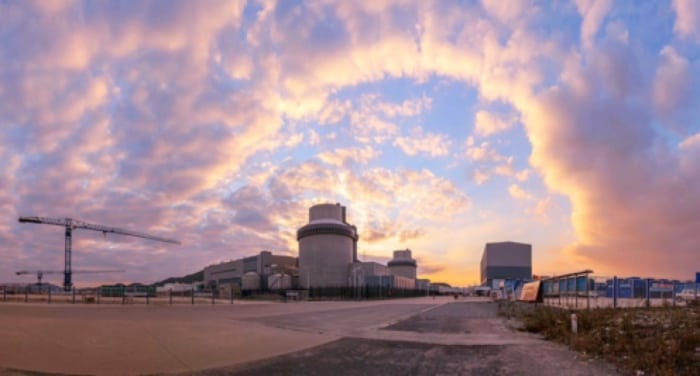
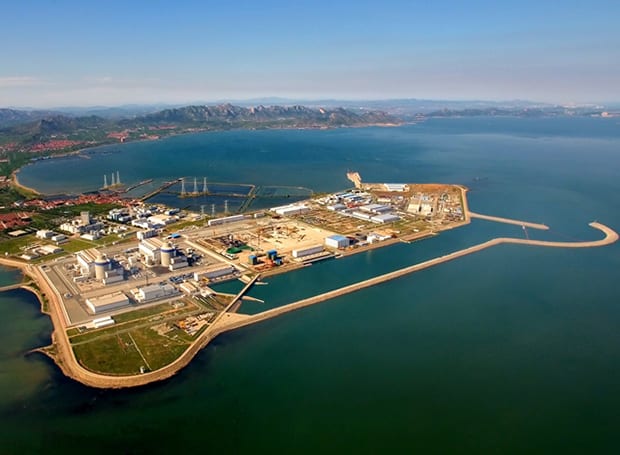
Six AP1000s are in commercial operation worldwide, and the first four entered service in China—Sanmen Units 1 and 2 in Zhejiang Province and Haiyang Units 1 and 2 in Shandong Province—in 2018 and 2019. Sanmen 1 became the world’s first AP1000 to enter commercial operation in 2018, and Haiyang 1 followed that October. The two Haiyang units later supported China’s first commercial nuclear cogeneration project, which supplies district heating to nearby housing. The design was later deployed at Vogtle Units 3 and 4 in Georgia, which entered commercial operation in 2023 and 2024, respectively, making Vogtle the largest nuclear power plant in the U.S. In its most recent fleet count, issued April 6 alongside its design certification filing, Westinghouse said 14 additional AP1000 reactors are under construction and five more are under contract. Westinghouse co-owner Cameco reported in August a global pipeline of up to 91 potential AP1000 reactors, totaling up to 105 GW.
In the U.S., the AP1000 notably received an updated regulatory foundation on Oct. 14, when the NRC issued a direct final rule to renew the reactor’s design certification and incorporate Revision 20 of its design control document. The revision incorporates changes made during the licensing, construction, and operation of Vogtle Units 3 and 4, providing future applicants an updated, construction-validated reference design that could reduce duplicative regulatory reviews. The rule is scheduled to take effect Dec. 28, 2026, unless significant adverse comments received by Nov. 13 prompt its withdrawal. The design certification, however, does not replace site-specific licensing requirements for proposed projects such as Prosperity One.
Federal efforts to support a new wave of large-reactor construction, meanwhile, have also accelerated over the past year. In October 2025, the U.S. government announced a strategic partnership with Westinghouse’s owners, Brookfield and Cameco, intended to support at least $80 billion in new reactor construction using Westinghouse technologies. The Department of Energy (DOE) followed on June 23, 2026, by issuing a conditional commitment of $17.5 billion in American Nuclear Supply Chain Loans to support procurement of long-lead equipment for 10 AP1000 reactors.
According to a DOE program overview, the financing could support up to five two-reactor projects, each jointly owned by Westinghouse and a participating utility or energy company, and each partnership would need to commit approximately $1 billion in upfront equity before accessing loan funds. DOE said Westinghouse had signed letters of intent with seven prospective partners that had identified project sites, but it did not disclose their identities or locations.
A second federal initiative emerged on Sept. 30, when the U.S. Department of Commerce announced Project Power, a U.S.–South Korea nuclear investment framework contemplating construction of up to eight large reactors in the U.S., including six Westinghouse AP1000s and two South Korean APR1400s. The framework envisions $120 billion in South Korean investment, including $100 billion for overnight construction costs and $20 billion in contingency reserves. The two countries also agreed to cooperate toward transferring a $10 billion advance payment by year-end, primarily to support procurement of long-lead equipment. Commerce did not identify project locations, indicating that individual projects would be announced as sites, schedules, and commercial terms are finalized.
Brookfield subsequently specified that the framework contemplates six AP1000 reactors across three two-unit plants on federal sites designated by the U.S. government. Cameco, in a Sept. 30 disclosure filed with the Securities and Exchange Commission, said deployment would begin with two AP1000 reactors and confirmed that the framework is separate from DOE’s $17.5 billion conditional loan commitment. Still, the framework remains nonbinding, pending definitive agreements, site identification, regulatory approvals, and financing.
Beyond the federal programs, several AP1000 projects have been tied to specific sites. Fermi America is pursuing combined licenses for four AP1000s at its Project Matador campus in Carson County, Texas. The NRC has accepted the first two parts of that application for docketing, and the final part is targeted for submission by the end of 2026. On Oct. 9, the NRC published notice of a draft environmental impact statement for the project, and public comments are due Nov. 23.
In South Carolina, state-owned utility Santee Cooper selected Brookfield in October 2025 to pursue completion of the abandoned V.C. Summer Units 2 and 3 and entered a memorandum of understanding in December 2025, according to a Santee Cooper budget presentation to the South Carolina House Ways and Means Committee. Under the proposed terms, Brookfield would make a $2.7 billion cash payment at final investment decision, and Santee Cooper would retain up to 25% ownership of the units. In May, as noteed, Brookfield selected its new venture with TNC as project manager for the effort.
Finally, Duke Energy holds NRC combined licenses for two AP1000s at the William States Lee III site in Cherokee County, South Carolina, issued in December 2016. In a Sept. 25, 2026, filing with the South Carolina Public Service Commission, Duke Energy identified Lee as its best opportunity to deploy large light-water reactors, citing its existing licenses, and said it has initiated work to develop a license amendment request incorporating AP1000 design changes. That effort includes consultations with Westinghouse and Southern Nuclear to examine lessons from the construction of Vogtle Units 3 and 4, providing a concrete example of how experience from the completed AP1000 project is informing preparations for future reactor deployments. Duke Energy is also evaluating updates to its combined license application for two AP1000s at the Harris site in Wake County, North Carolina. Meanwhile, Florida Power & Light holds combined licenses for two AP1000s at Turkey Point Units 6 and 7, issued in April 2018.
—Sonal Patel is a POWER senior editor (@sonalcpatel, @POWERmagazine).
Editor’s Note: This story has been substantially expanded since its original publication to include additional details on Prosperity One’s proposed development, regulatory requirements, and the broader pipeline of AP1000 projects in the U.S. POWER will continue to update this report as new information becomes available.