Technology breakthroughs, efficiency gains, and the rising need for electricity are all powering solar energy’s continued deployment.
Solar power continues to hit historic milestones worldwide, and certainly in the U.S. The Solar Energy Industries Association (SEIA) earlier this year reported that solar energy accounted for about 60% of the new U.S. power generation capacity added in 2026. The group said solar power globally this year produced more electricity than coal-fired generation for the first time, and did so for several months.
Solar is a big part of hybrid power generation installations. Solar paired with energy storage now makes up more than 70% of all new U.S. generation capacity. Growth has occurred despite continued challenges, such as lengthy grid interconnection queues and tariffs on equipment.
 |
|
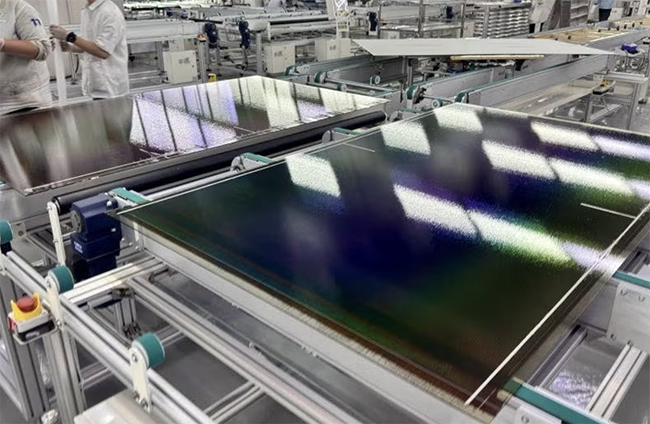
1. A Caelux perovskite top glass being integrated into a four-terminal tandem solar module by a manufacturing partner in Asia. Courtesy: Caelux |
Industry analysts point to recent and rapid breakthroughs in solar technology that are moving efficiency levels well above traditional silicon panels. Perovskite solar cells are a significant advancement; perovskite represents a new class of materials that can be layered on top of standard silicon to create tandem solar cells (Figure 1). Tandem panels, which capture different wavelengths of light, reportedly have moved efficiency levels above 30%, compared to the usual 22% of standard panels. Pairing perovskites with traditional silicon in tandem solar cells provides a boost because while silicon absorbs lower-energy, infrared light, it wastes higher-energy blue light as heat. Perovskites can be chemically tuned to absorb that high-energy blue and green light, and by stacking a perovskite cell on top of a silicon cell, the tandem stack harvests two distinct parts of the solar spectrum at once, squeezing far more power out of the exact same footprint.
“The most sustainable panel will be the one that produces more power per square meter and operates for a long period of time in the field,” said Dr. Oleg Demidov, general partner at Beyond Earth Ventures, a U.S.-based deep-tech venture capital fund investing in energy, compute, and autonomous infrastructure. Demidov told POWER, “Tandem PV, one of our portfolio companies, stacks perovskite on top of silicon to increase panel efficiency from 21% to 22%, the range of today’s silicon panels, to 30%. This means 30% less land, glass, and racking for the same power.”
The industry also is utilizing transparent solar panels and solar windows, which have moved from experimental prototypes to real-world applications. Buildings can generate power from their windows and other glass. The advent of flexible, ultra-thin organic photovoltaics has made it possible to print solar cells onto textiles, building materials, and curved surfaces—even the roofs of vehicles.
Artificial intelligence (AI) also is transforming solar power, with AI algorithms being used to track weather patterns and automatically adjust the angle of bifacial panels, equipment that absorbs light from both sides of a panel by catching reflections from the ground. This advanced equipment also pairs well with energy storage systems.
Yagiz Sullu, PhD, founder and lead analyst at Sullu Strategic Advisory, talked with POWER about some of the main topics of discussion when it comes to today’s solar energy industry. “Solar power can play an important role in meeting both sustainability and electricity reliability goals, but it alone is not sufficient to meet broader goals of energy security,” said Sullu. “The main challenge about solar production is that it fluctuates during the day and falls to zero at night and electricity demand continues during day and night.
“Combining solar with battery storage can help address this problem by storing electricity when solar production is high and then releasing it later to meet demand when solar generation declines,” said Sullu, adding that this is especially important as data centers and other large consumers push demand higher.
“We see this process expanding rapidly in the U.S. as solar and battery storage account for most of the new generating capacity planned for the U.S. grid in 2026,” he said. “Although most solar panels can operate for decades, large volumes of panels will eventually need to be retired. Recycling technologies already exist, but recycling can be costly. Developing more economical recycling systems and recovering materials from retired panels will therefore become important as the electricity demand grows. The broader goal of the U.S. should focus on building a diversified and resilient electricity system rather than relying too heavily on any single source of power.”
Lindsey Wiedmann, Chief Legal and Sustainability Officer at Nextpower, talked about the importance of solar power at a time of rapidly rising demand for energy. “Data centers are driving enormous growth in electricity demand, and some hyperscalers are building their own fossil-fueled power plants to meet immediate needs,” said Wiedmann. “But meeting the long-term needs of AI infrastructure sustainably will require a more capable and flexible grid. Utility-scale solar is the fastest and most cost-effective way to add significant new generation. Paired with energy storage and intelligent controls, solar can help utilities deliver affordable electricity, strengthen grid reliability, and accommodate growing industrial demand.”
 |
|
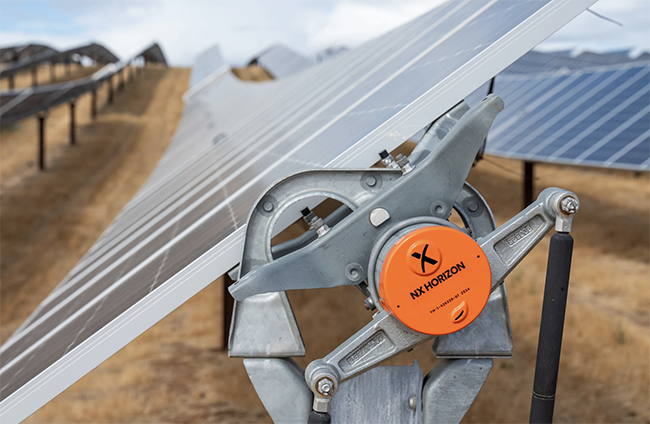
2. Nextpower has said its NX Horizon tracker is built to withstand challenging environments. The self-powered tracker rows maximize uptime and energy output. The company has said the tracker’s intelligent stowing safeguards against wind, hail, and flooding. Courtesy: Nextpower |
Wiedmann said technology advancements are key. “Sustainability also depends on how we engineer and manufacture the power plants themselves. Designing trackers, foundations, electrical systems, and controls to work together can reduce component counts, material requirements, and construction complexity while improving long-term performance,” said Wiedmann. “Localized manufacturing also strengthens supply chains, reducing reliance on imported components while improving visibility into material sourcing and its environmental impact. For our NX Horizon solar tracker [Figure 2], sourcing steel manufactured using electric arc furnaces can reduce carbon emissions by approximately 42% compared with conventional blast-arc furnace production. Another example is the advancement of steel frames for solar modules instead of aluminum. Steel frames not only improve the structural durability of the solar panel, but the shift from imported aluminum to recycled steel frames can reduce embedded carbon emissions of the frame by up to 90%.
“All of these innovations up and down the supply chain add up,” said Wiedmann. “Combined with site-specific engineering and intelligent controls that respond to extreme-weather risks [see sidebar], they contribute to more resilient, longer-lasting solar power plants with predictable economics and lower environmental impacts across the lifecycle.”
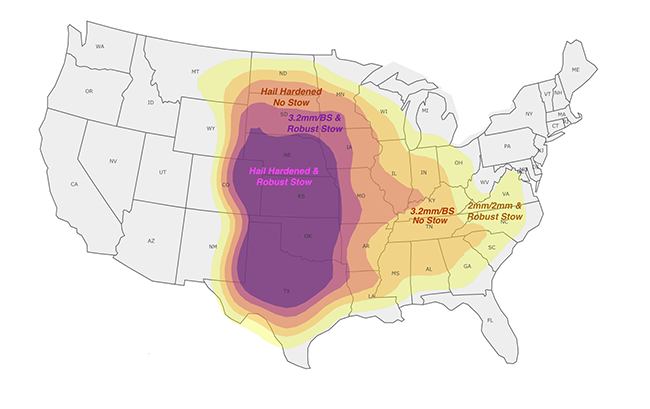
How Solar Is Learning to Weather Its Toughest ZonesHail, the bane of solar sites everywhere. Ask any developer to name their least favorite word in a siting report, and “hail” is likely to come up; understandable, considering more than 70% of insured losses are due to hail damage. But the industry is turning a corner. What once looked like an unmanageable exposure is increasingly a solvable engineering problem, even in the toughest hail zones in the country. This meaningful shift means that resilience is no longer reserved for temperate, low-risk geographies. With the right combination of equipment, operational practices, and risk transfer strategy, solar assets can be built to withstand hail even in historically exposed regions of the U.S. A Shifting Catastrophe Landscape Premiums across the insurance industry are increasingly being shaped by natural catastrophe activity. Part of what makes this hard to plan for is that the geography of risk itself is moving, or at least our understanding of it is. Regions once considered low-risk for severe weather are now recording damaging events from intense storms, extreme rainfall, and prolonged drought. Any industry with physical assets exposed to the outdoors, renewable energy included, is feeling the effects in the form of tighter, costlier coverage. Historically, the best defense available to an asset owner was a smart siting decision: avoid the highest-risk zones altogether. But land, interconnection queues, and project economics don’t always allow for that flexibility. Sometimes the best resource is in a tough zone, and the project gets built there anyway. The good news is that mitigation tools and technologies have kept pace. Asset owners no longer have to choose between “avoid the risk” and “accept the risk.” Increasingly, they can manage it. What the Data Shows About Hail Research published in the 2026 Solar Risk Assessment (SRA) set out to answer which mitigation approach actually holds up, and in which parts of the country (Figure 3). The study paired physical testing data with loss modeling to run a range of module-and-stow combinations through a 100-MW single-axis tracker plant, tested across many U.S. locations. A single benchmark determined success or failure at each site: whether the configuration could keep a 1-in-100-year hail event’s modeled losses under 10% of the asset’s value, the level at which losses would be expected to surpass standard deductibles and cause real damage.
The results show that standard equipment alone, such as glass-glass modules with 2-millimeter (mm) glass on both the front and back, isn’t enough to clear that bar across roughly half of the contiguous U.S. (52%, per the research). Further, a single upgrade like stow or hail-hardened glass alone isn’t sufficient in mitigating risk in the toughest 13% of the country. However, the combination of hail-hardened modules working alongside robust stow (consistently executed at 70 degrees or steeper) brings risk down to an acceptable level in that highest-risk zone. Notably, the research found it isn’t simply a matter of choosing the steepest stow angle and calling it done. In higher-risk regions, robust stow can be what gets a site under the loss threshold: 3.2 mm glass/backsheet modules paired with good stow may pass where hail-hardened modules without it fall short. In the most exposed areas, both are needed together; more moderate regions can get by with lighter combinations. Hail-hardened modules, typically built with 2.5 mm/2.5 mm or 3.2 mm/2 mm glass-glass constructions, raise the energy threshold a module can withstand before breaking, meaning stow’s protective benefit is layered on top of an already stronger baseline. It’s worth noting, however, that these results are a practical guide rather than site-specific prescriptions. Module quality, wind and stow direction, and hail’s inherently localized nature can all shift outcomes for any individual project. The takeaway for developers and asset owners is that even the toughest 13% of the country isn’t off-limits, provided the modules and stow protocols match the site’s actual risk. Building a Resilient Site Even in the Toughest Markets That principle extends to catastrophe risk management more broadly, not just hail. A few practices consistently separate resilient projects from vulnerable ones. Design Resilience in from Day One. The cheapest time to build in hail and catastrophe protection is during project design, before equipment is procured or assets go in the ground. Getting equipment specifications and catastrophe protocols right in the project design phase pays off long before a storm ever tests the site. Match Equipment to the Site’s Specific Exposure. Investing in high-quality equipment from reputable original equipment manufacturers matters, but so does matching module specifications to the site’s actual hail risk. As the 2026 SRA research shows, that increasingly means pairing hail-hardened modules with a robust stow program in the highest-risk zones, rather than relying on either alone. Operationalize the Protocols, Not Just the Specs. Stow programs only work if they’re executed consistently. The same goes for wind, flood, and snow protocols; hurricane preparedness plans; and thermal runaway management for battery storage assets. A strong stow angle on paper doesn’t help if operational execution falls short in the field. Partner With Experienced Operations & Maintenance (O&M) Providers. Precautionary maintenance tailored to a site’s specific exposures, whether that’s hail, equipment fires, wildlife intrusion, or extreme wind, helps close the gap between design intent and real-world performance. Bring in Brokers Who Specialize in Renewable Energy. Carrier appetite and pricing for catastrophe risk varies widely, and a generalist broker may not know how to make the case for a specific site’s actual risk profile. A specialist broker who understands the nuances of renewable energy catastrophe risk can translate an asset’s equipment choices, stow execution, and O&M practices into terms carriers will price fairly, rather than defaulting to a broad regional assumption. When a project’s risk management posture is clearly understood and translated, the payoff shows up in both lower premiums and fewer losses. The Bottom Line Hail, and natural catastrophe risk more broadly, is a real and growing challenge for solar assets across the country. But it isn’t a reason to abandon otherwise strong sites. The research is increasingly clear on what works, and where: hail-hardened modules, robust stow execution, and smart risk-transfer partnerships can bring even the highest-risk 13% of the U.S. within an acceptable loss threshold. The industry has more tools in its belt than it did even a few years ago. Resilience isn’t limited to the easiest geographies anymore. It’s achievable nearly everywhere if asset owners are willing to build it in. —Nicole Thompson is senior manager, Data Science, for kWh Analytics. The company recently released the second edition of the Resilient Power Report. |
Solar Paired With Storage Proving Its Worth
The common thinking was always that solar power’s value was diminished because it wasn’t available at night. Enter energy storage, increasingly paired with solar power to store energy for dispatch when needed—even when it’s dark.
“The reliability issue that exists for solar isn’t about the panels,” said Demidov. “It’s about the hours that the sun isn’t shining. By combining solar with storage, you can turn inexpensive intermittent generation into dispatchable capacity. Grid planners are now valuing generation in terms of firm megawatt-hours rather than nameplate capacity.”
“Solar and storage are among the most practical tools we have to deliver affordable, reliable power. Solar offers predictable energy costs with no exposure to fuel-price swings, and storage turns that generation into on-demand capacity by capturing excess energy and delivering it when the grid needs it most. A recent example being Texas: solar and storage played a meaningful role in meeting peak summer demand and keeping the grid stable,” said Jon Powers, president and co-founder of CleanCapital, an independent power producer focused on distributed solar and energy storage.
“That combination matters more than ever as electricity demand rises,” said Powers. “Data centers alone could consume as much as 12% of U.S. electricity by 2028, and many of the largest technology companies are already turning to solar and storage to power their growth. The reason is speed. These projects can be built faster than most alternatives and sited closer to where demand is rising, which eases pressure on constrained transmission. The technology is ready today. Our job is to deploy it at the pace this moment requires, so we can strengthen reliability while keeping power affordable.”
“Many of today’s most successful projects are being developed with resilience in mind, incorporating battery storage, microgrid capabilities, and smart energy management systems along with solar,” said Dave Lima, director of Energy Efficiency with MD Energy Advisors, a Maryland-based energy advisory service. “These integrated solutions demonstrate that sustainability and reliability are not competing goals but complementary outcomes of a well-designed energy plan.”
Lima, like Powers, said that as data center demand continues to grow, solar energy is becoming an increasingly important part of corporate sustainability strategies. “However, data centers operate 24/7, and solar generation alone cannot meet the constant power requirements of these facilities,” he said. “To support both sustainability and reliability goals, solar must be paired with energy storage, complementary generation resources, and a resilient grid infrastructure. The most effective approach is a diversified energy portfolio that leverages solar while ensuring the continuous, reliable power that modern data centers require.”
Ildi Telegrafi, a policy fellow with the Alliance for Innovation and Infrastructure, noted that solar energy’s intermittency “destabilizes the electric power system’s operations, requiring it to be supported by other resources that can ramp up or down in response. These supporting resources can be interconnected with the solar energy resource as a joint unit or they can be interconnected to the distribution system or bulk power system. Joint interconnection places balancing responsibility onto the energy resource unit while interconnection to the grid places balancing responsibility to the system balancing authority.
“Energy storage systems [ESS], which are mostly lithium-ion batteries currently, have the fastest response time toward balancing system dynamics. The supply must equal demand at all times, so ESS units consume excess solar power while discharging when solar does not have the necessary irradiance [like at night]. The ESS component sizing depends on the system dynamic being supported, whether in the system aggregate or at the joint unit level, and ESS must ideally be large enough to provide discharging through the time period of poor irradiance.”
Flexibility and Resiliency
Other arguments against solar power are being solved with innovations tied to making solar power available more often, and in more places. Brian Pascoe, president of Signature Solar, told POWER: “As electricity demand continues to rise, the conversation around energy is shifting from simply expanding generation to giving customers more options for accessing and managing reliable power. Data center growth, electrification, and increasing demand across residential and commercial markets are adding pressure to the existing energy system, making flexibility and resilience increasingly important.
 |
|
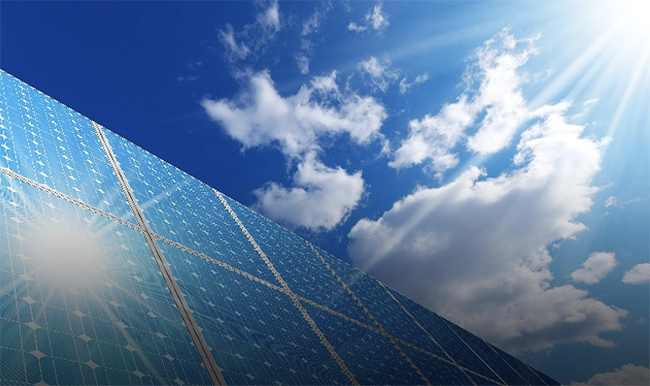
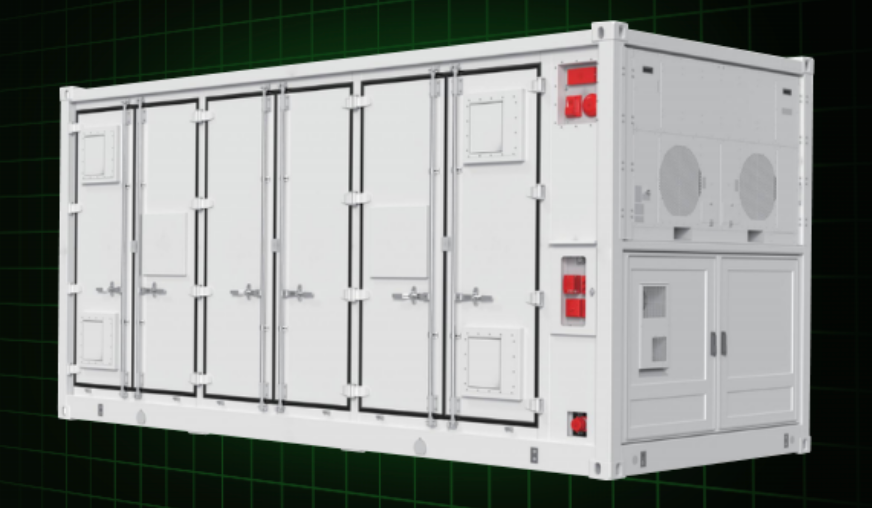
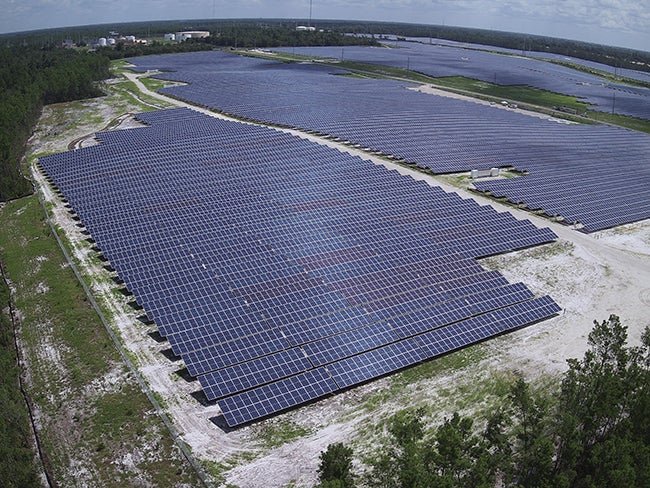
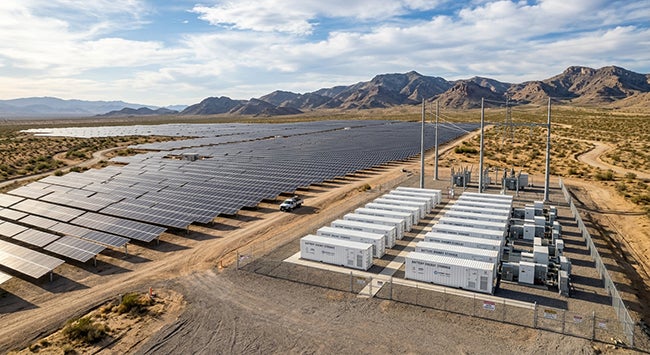
4. Solar power arrays are being increasingly paired with energy storage installations to enable solar energy to be dispatched regardless of the time of day. Source: POWER |
“Solar paired with battery storage [Figure 4] gives homeowners and businesses greater control over their energy use and provides an additional layer of resilience during grid outages. These systems also allow customers to generate and store power on-site, helping them manage their energy needs rather than relying entirely on electricity from the grid,” said Pascoe. “As demand grows, distributed energy resources can play an increasingly valuable role alongside traditional generation and broader infrastructure investments. The opportunity is to make reliable power more accessible while giving customers greater choice in how they meet their energy needs. As the energy landscape evolves, solar and storage will be increasingly important tools for improving energy resilience and helping customers navigate a more demanding and complex power environment.”
 |
|
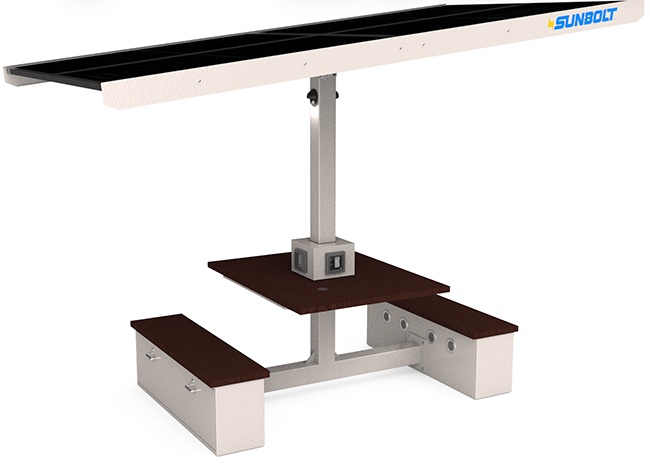
5. This Campus XL workstation, designed by Sunbolt, stores solar power during the day so students and others on college campuses, or visitors to a city park or other location, can charge devices after sunset or on cloudy days, with no trenching or grid connection required. Courtesy: Sunbolt |
Vanessa Branco is chief sales and marketing officer at Sunbolt, a company that designs off-grid solar charging tables (Figure 5), workstations, and umbrellas used on college and corporate campuses, in parks and municipalities, and at hospitality properties. Branco told POWER, “Reliability is where solar has to prove itself, and pairing panels with on-board battery storage is what makes that possible at the small scale. Our units store energy during the day so students, employees, and park visitors can charge devices after sunset or on cloudy days, with no trenching or grid connection required. For cities and campuses, that means adding power to outdoor spaces without adding to their electric load or their construction budget. Distributed, off-grid solar won’t replace utility-scale generation, but it takes pressure off the grid in exactly the places people need power most.”
Christian Nagel, senior director of Power Supply & Production with Texas-based Rayburn Electric Cooperative, talked with POWER about how solar paired with storage has performed on his state’s grid. The Electric Reliability Council of Texas (ERCOT) system has been one of the more closely watched grids in recent years due to a series of storms and heat waves that have taxed its electricity supply.
“Solar produces the most when ERCOT’s demand peaks on hot summer afternoons, and batteries allow for shifting some of that energy into the evening, when solar output falls off but demand is still high,” said Nagel. “That pairing helps cover the net-peak hours that have become the tightest part of the day, and batteries also provide fast-responding services like frequency regulation that help stabilize the system. Together, they have meaningfully improved summer reliability in ERCOT in recent years, particularly because they have an expedited construction and interconnection timeline relative to other technologies. They work best as one part of a diversified resource mix since batteries are typically sized for a few hours of discharge and aren’t designed to cover multi-day events.”
Nagel highlighted Kellam Solar, which he said is “a 59.8-MW solar facility that interconnects and transmits power to Rayburn’s Ben Wheeler Switching Station. It has been a useful source of energy primarily because of the low cost of our PPA [power purchase agreement] and the correlation of its output to our load shape in the summer months. Solar delivers real value when its output lines up with when the system needs energy, and its value is greatest when it’s complimented by resources that can be dispatched when the sun isn’t shining. For us, that has reinforced the importance of building a portfolio rather than relying on any single resource type.
“With load growing as fast as it is, we need every economic resource we can get, and solar is one of the fastest and most cost-effective to build, particularly for covering summer daytime demand,” said Nagel. “It plays a role as an energy resource that reduces fuel burn and exposure to volatile gas prices, and paired with storage, as a contributor to peak-period reliability. But as demand grows, we also have to make sure we’re preserving and adding dispatchable, longer-duration resources that can perform during extended or extreme events like a severe winter storm, when solar output is limited and batteries can be depleted. The goal should be a balanced mix in which each resource type does what it does best, rather than one type crowding out the others.”
Solar and the Data Center Dilemma
The rush to build more sources of power to satisfy demand for electricity from data centers has been focused on natural gas and nuclear power. Solar power also is now part of the conversation.
“Energy demand has emerged as one of the biggest obstacles to data center expansion in the United States, especially as organizations accelerate investments in AI infrastructure,” said Will White, senior product manager for Solar at Fluke. “Growing pressure on the power grid is forcing developers to rethink how data centers are powered, driving interest in alternative energy solutions that can meet escalating capacity requirements while minimizing impact on local communities. For example, developers have used natural gas-fired power in some large-scale data center buildouts to help address energy constraints and supplement available grid capacity.
“While several alternative energy options are being explored, solar power is rapidly gaining momentum as a scalable and sustainable solution for future data center development,” said White. “When combined with utility-scale battery storage and smart load management, solar can reduce dependence on constrained grid resources while improving energy resilience and reliability. As AI drives unprecedented demand for computing capacity, these integrated solar solutions offer organizations a cost-effective way to support rapid expansion, accelerate deployment timelines, and advance sustainability goals.”
“The data center boom is changing the conversation around solar. It’s not just about sustainability anymore. It’s about how quickly we can get more power onto the grid,” said Masud Haq, senior vice president and energy client partner lead at Publicis Sapient, where he works with energy and utilities organizations to modernize legacy platforms, scale AI, and strengthen operational resilience. “Data center demand is showing up much faster than some traditional generation can be built, so we have a timing problem as much as a capacity problem. That’s where solar has a real advantage. It can be brought online relatively quickly, especially when paired with storage. And there’s an interesting irony here: data centers are putting enormous pressure on the power system, but that same demand could actually push us toward a more diversified generation mix. We need a lot more power, and there simply isn’t the luxury of waiting for one technology to solve the problem.”
Haq continued, “The next challenge is reliability. Data centers aren’t just driving the need for more generation. They’re forcing the grid to modernize around a much larger and more diverse supply mix. As more solar, storage, gas, nuclear, and other resources come onto the system, utilities will have to get much better at coordinating when and where that power is available against both traditional electricity demand and these enormous new data center loads. That means better forecasting, better data, and more intelligent coordination across generation, storage, and the grid. In that sense, data centers are creating the pressure and helping force the solution. Their demand is driving investment in new generation, but it is also making the old way of managing the power system increasingly difficult to sustain. What looks like a major reliability challenge today could ultimately accelerate the technology and grid modernization needed to build a more flexible and resilient power system.”
James Mercer of Metro Colo Advisory, a New York City-based data center and AI infrastructure advisory group, said his company finds generation capacity for businesses running AI and cloud workloads, advising developers and investors about where data centers can actually get power.
“Solar on its own can’t run a data center,” said Mercer. “A data center draws nearly the same power around the clock, while solar produces only in daylight. Storage is what makes the pairing work: batteries shift midday solar into the evening, and the grid or on-site generation covers the rest. That’s why the serious projects pair all three.”
Mercer continued, “The biggest reason developers are building solar and storage right next to data centers is speed. New grid connections for large loads can take years. Bringing generation to the site, instead of waiting for the grid to deliver it, shortens that wait and eases strain on the local grid.” Mercer noted two projects as examples, both involving Google and Intersect, a clean energy and data center development company acquired by Alphabet (Google’s parent) earlier this year.
 |
|
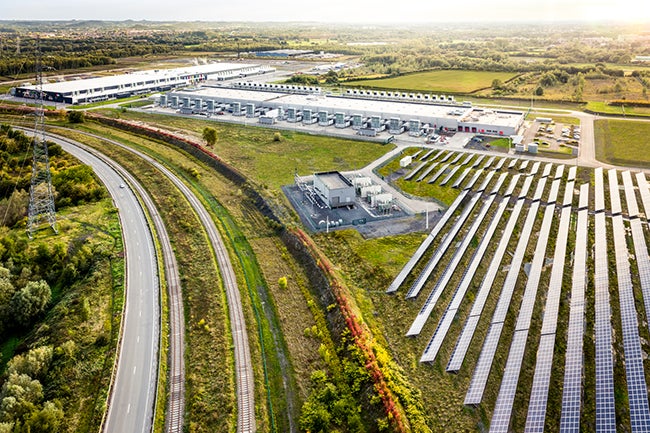
6. The Google solar field at the company’s data center in St. Ghislain, Belgium. Courtesy: Google |
In Haskell County, Texas, a Google data center is being built alongside Intersect’s Quantum Clean Energy Project, with 640 MW of solar and 1.3 GWh of battery storage. In Gray and Roberts counties in Texas, construction is underway on Google and Intersect’s Meitner Energy Center, a data center paired with more than a gigawatt of wind, solar, and battery storage. Google also has a solar field at its data center in St. Ghislain, Belgium (Figure 6).
“Projects like these treat power as part of the campus design, not a utility bill,” said Mercer. “Texas is where that shift is happening fastest, because it has the land, the solar resource, and room to build generation on site.”
Jonás Rodríguez, head of Renewables North America, Energy, at RINA, a global engineering consulting firm, told POWER, “When it comes to the rise in large-load data centers, solar power and BESS can help meet these facilities’ significant energy needs while also supporting sustainability goals and reducing pressure on the grid during peak demand. In addition, industry maturity keeps driving LCOE [levelized cost of energy] reductions, further improving the competitiveness of hybrid solar-plus-storage projects.”
Rodriguez continued, “The American Clean Power Association and Wood Mackenzie have reported that the U.S. energy storage market deployed in 2025 reached a record 18.9 GW of BESS installations, which corresponds to a 52% increase over 2024. SEIA and Benchmark Mineral Intelligence reported that standalone storage added approximately 30 GWh of new capacity in the U.S. during that period, while storage co-located with solar delivered 20 GWh. The residential sector provided an additional 3.1 GWh. Continued investment in renewable power sources, storage systems, and transmission infrastructure will be key for continued advancements in power generation longevity.”
Making Solar More Circular
Several companies are active in solar equipment recycling, an area that has fueled years of debate over how “clean and green” the solar sector really is. Adam Saghei, CEO and founder of We Recycle Solar, told POWER, “Solar has the potential to become one of the first truly circular energy sources—where the infrastructure that generates today’s clean energy becomes the raw material for tomorrow’s economy. We’re not just recycling panels—we’re turning waste into value.
“Solar isn’t truly sustainable if its story ends when the panel stops producing power. The next chapter is recovering the silver, copper, aluminum, silicon, and glass inside those panels and putting those materials back to work within the domestic supply chain,” said Saghei. “That’s how we move from simply managing waste to building a truly sustainable circular energy economy.”
Lima of MD Energy Advisors said, “Solar power continues to be one of the most effective tools for reducing carbon emissions in the power sector, but long-term sustainability also requires a strong focus on end-of-life equipment management. Expanding solar panel recycling programs and developing circular supply chains will help ensure that the environmental benefits of solar extend throughout the technology’s lifecycle.”
Charles D. Carey, founder and CEO of CIG Companies, a Florida-based firm active in the energy space, told POWER: “I’ve always looked at solar as more than just a way to produce cleaner electricity. We’re building energy infrastructure that people and businesses will depend on for decades. Producing electricity without burning fuel is an important part of sustainability, but delivering reliable power is another responsibility altogether. We need to plan for both. Our teams and I believe that reliability starts long before a solar farm generates its first megawatt-hour. A project has to be properly financed, engineered, supplied, constructed, and connected to the grid. If any one of those steps gets delayed, you’re not delivering that power when it’s needed.”
Carey said his group developed US Modules in College Station, Texas, to manufacture utility-scale solar panels in the U.S.; the first production line was commissioned in March of this year. “We didn’t build it simply to own a manufacturing business,” said Carey. “We built it because we wanted a more dependable source of a critical component for the solar projects we’re developing through CIG Energy. The goal is to have better visibility and more control from the factory to the field. Manufacturing domestically doesn’t eliminate every supply-chain risk, but it gives us more direct oversight of production, quality, and planning.”
Carey said his view of “long-term sustainability means building things that last. That includes durable equipment, proper quality controls, responsible use of materials, and assets designed to perform for decades. Producing cleaner electricity is important, but so is making sure the infrastructure itself holds up over time. Vertical integration doesn’t replace good engineering, independent verification, or sound financial judgment. For us, it’s about making sure the people responsible for capital, manufacturing, and project development are all working toward the same long-term outcome.
“That’s how I look at solar supporting both sustainability and reliability,” said Carey. “We shouldn’t measure progress simply by how much generating capacity gets announced. What matters is what actually gets built, brought online, and continues to perform over time.”
Doug Vernon, co-owner of Saguaro Solar, Electric, and Roofing, a Tucson, Arizona-based company specializing in electrical and solar services for residential and commercial properties, told POWER: “With solar, the real opportunity is that it’s moving the sustainability conversation beyond simply adding renewable energy generation. Theoretically, solar can provide a large portion of the electricity supply, but its variable output means that reliability must be addressed at the system level. This, of course, is where battery storage is critical. Batteries can shift solar generation into higher-demand periods and give grid operators more flexibility as electricity consumption grows. This becomes increasingly more important as data centers and electrification drive electricity demand higher.”
Vernon added, “We also need to be more thoughtful about what happens to solar equipment at the end of its useful life. If we want solar to be a truly sustainable energy resource, and that is the end goal, recycling and recovering materials from panels and batteries needs to become part of the infrastructure strategy.”
—Darrell Proctor is a senior editor for POWER.