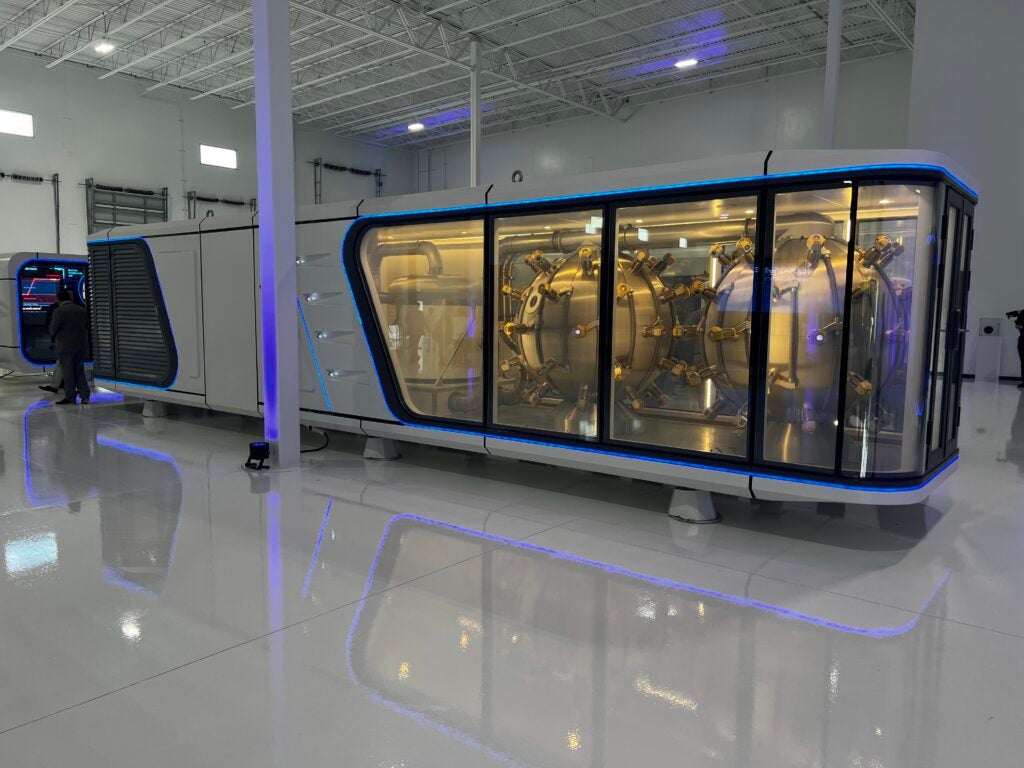
The Nuclear Regulatory Commission (NRC) on Nov. 9 issued its first construction permit for a high-temperature gas-cooled reactor (HTGR) in nearly six decades, authorizing construction of four X-energy Xe-100 reactors that could supply electricity and high-temperature process steam to Dow’s chemical manufacturing operations on the Texas Gulf Coast. While the authorization follows nearly eight years of technical and regulatory engagement between X-energy and the NRC, development of the first commercial Xe-100 facility will require extensive engineering, fuel and materials qualification, component procurement and manufacturing, and a series of capital investment decisions by Dow.
The construction permit (CPAR-3), issued to Long Mott Energy LLC, a wholly owned Dow subsidiary, authorizes construction of the proposed Long Mott Generating Station in Calhoun County, Texas. The facility is expected to comprise four helium-cooled, graphite-moderated pebble-bed reactors, each rated at 200 MW of thermal capacity (MWth) and 80 MW of electrical capacity (MWe), to replace aging energy and steam generation assets at Dow’s adjacent Seadrift Operations complex.
The NRC’s 852-page final safety evaluation report (FSER), issued Oct. 30, and an independent assessment by its Advisory Committee on Reactor Safeguards (ACRS) detail the technical basis for construction authorization, the safety questions that remain to be resolved, and the extent of design and analytical work required before the facility can be licensed to operate. The regulatory record also sheds new light on Dow’s financial arrangements and its selection of a NextEra Energy Resources subsidiary to operate the plant.
The Long Mott authorization is the NRC’s third advanced reactor construction permit this year, following permits issued for TerraPower’s sodium-cooled Kemmerer Unit 1 in Wyoming on March 9 and the Tennessee Valley Authority’s (TVA’s) BWRX-300 light-water reactor at Clinch River in Tennessee on Sept. 28. As the NRC noted, the Long Mott permit marks several regulatory firsts for the agency: authorization of a multimodule advanced reactor facility, a pebble-bed reactor core, and a reactor design that refuels during operation, as well as the first HTGR review under the risk-informed Licensing Modernization Project framework.
Supported by the U.S. Department of Energy’s (DOE’s) Advanced Reactor Demonstration Program (ARDP), Long Mott is advancing through Dow’s phased capital investment process. According to X-energy, Dow is expected to consider a preliminary investment decision in 2027, ahead of a separate final investment decision that would authorize full-scale nuclear construction. For now, the companies are targeting initial energy delivery in the early 2030s.
Eight Years of Regulatory Groundwork
The historic construction permit is the first for an HTGR since September 1968, when U.S. nuclear regulators authorized Public Service Co. of Colorado to build Fort St. Vrain, an 842-MWth plant that used prismatic graphite fuel blocks and subsequently supplied electricity to the Colorado grid. While Long Mott would have nearly the same thermal capacity—800 MWth—it would distribute heat production across four continuously refueled pebble-bed reactors designed to supply both electricity and industrial process steam.
X-energy began pre-application engagement with the NRC in 2018, two years before the DOE selected the Xe-100 for one of its two principal ARDP demonstration awards. At the time, the company envisioned deploying its first four-reactor facility with Energy Northwest in Washington state by 2028. The demonstration, however, took a markedly different direction in March 2023, when X-energy signed a joint development agreement with Dow and shifted the project to the Texas Gulf Coast. The DOE added Dow as a sub-awardee under the ARDP cooperative agreement, and the companies committed to an engineering program valued at up to $50 million, including preparation of a construction permit application. The change introduced an industrial application for the first commercial demonstration of the Xe-100, though the DOE retained Energy Northwest as a sub-awardee to preserve the potential for a subsequent Washington deployment.
Dow and X-energy selected Seadrift in May 2023. By the time Long Mott Energy submitted its construction permit application on March 31, 2025, several of the analytical methodologies needed to establish the Xe-100’s safety basis had already undergone individual NRC reviews. X-energy says it has now secured approval of 14 topical reports that apply generically to the Xe-100, covering some of the most technically demanding aspects of licensing a gas-cooled pebble-bed reactor: fuel and graphite qualification, reactor core behavior, thermal-hydraulic transients, radioactive material releases and atmospheric dispersion, emergency planning, and control room staffing. Developers of subsequent Xe-100 projects can incorporate those methodologies by reference, subject to their prescribed limitations and conditions, though each facility will require an individual licensing review.
Integral to Long Mott’s application was the Licensing Modernization Project (LMP) methodology, an industry-developed approach to licensing non-light-water reactors that the NRC endorsed in 2020 through Regulatory Guide 1.233. The methodology, notably, uses the frequency and radiological consequences of postulated events to inform which safety functions a reactor must perform, which equipment it relies on to perform them, and whether the design incorporates adequate defense-in-depth.
For the Xe-100, the five fundamental safety functions are retaining radionuclides, controlling reactivity, controlling heat removal, controlling water and steam ingress, and maintaining geometry. The resulting classification of structures, systems, and components as safety-related, non-safety-related with special treatment, or non-safety-related without special treatment has implications well beyond the safety analysis itself. It informs how equipment will be specified, procured, qualified, and maintained throughout the plant’s operating life.
The NRC accepted Long Mott Energy’s application for docketing on May 12, 2025, and established an 18-month review schedule the following month. In May 2026, as POWER reported, the NRC issued its final environmental assessment and a finding of no significant impact, determining that the project did not warrant preparation of an environmental impact statement (EIS).
By September, Long Mott Energy had incorporated eight supplements into a consolidated revision of its application, six addressing the preliminary safety analysis report and two concerning general and financial information and regulatory exemptions. The NRC held its mandatory hearing on Sept. 22. The ACRS reported to the Commission on Oct. 16 that its review “supports issuance of the construction permit,” and NRC staff completed the FSER later that month, one month ahead of its scheduled November milestone.
“We delivered on the 18-month schedule, proving we can do rigorous safety reviews on predictable timelines that move advanced nuclear technology from design to construction,” NRC Chairman Ho Nieh said in the agency’s Nov. 9 announcement.
For X-energy, the licensing process has unfolded alongside a substantial overhaul of U.S. nuclear regulation. Congress, through the Nuclear Energy Innovation and Modernization Act (NEIMA) of 2019 and the bipartisan Accelerating Deployment of Versatile, Advanced Nuclear for Clean Energy (ADVANCE) Act of 2024, directed the NRC to modernize its advanced reactor licensing framework, improve the predictability of reviews, and establish expedited licensing procedures. The reform effort intensified on May 23, 2025—just 11 days after the NRC accepted Long Mott’s application for docketing—when President Donald Trump issued Executive Order 14300, directing the agency to establish fixed licensing deadlines and undertake a comprehensive revision of its regulations and guidance. The NRC, notably, identified Long Mott’s 18-month review schedule among its initiatives to accelerate licensing.
“Getting the construction permit earlier than expected is reflective of the thorough and efficient work of the NRC, the reforms that have been put in place by the Congress over the last six years, and the phenomenal work of the X-energy and Dow teams,” X-energy CEO Clay Sell said in the companies’ joint announcement.
Engineering a Four-Reactor Industrial Nuclear Facility
Dow’s plans for the Xe-100 at Seadrift, where the company manufactures polyethylene, glycols, and oxide derivatives, hinge on the reactor’s ability to supply both electricity and high-temperature process steam. According to X-energy, the reactor can produce steam at temperatures of up to 565C (1,049F), considerably higher than those typically achieved by conventional light-water reactors, which could broaden the range of industrial applications for nuclear heat.
While Long Mott’s aggregate reactor capacity of 800 MWth corresponds to a nominal electrical generating capacity of 320 MWe, the plant’s proposed conventional island would incorporate turbine-generators, extraction steam systems, and dedicated process steam supply equipment to accommodate Seadrift’s electrical and thermal energy requirements. According to the FSER, any excess power would be exported to the electrical grid.
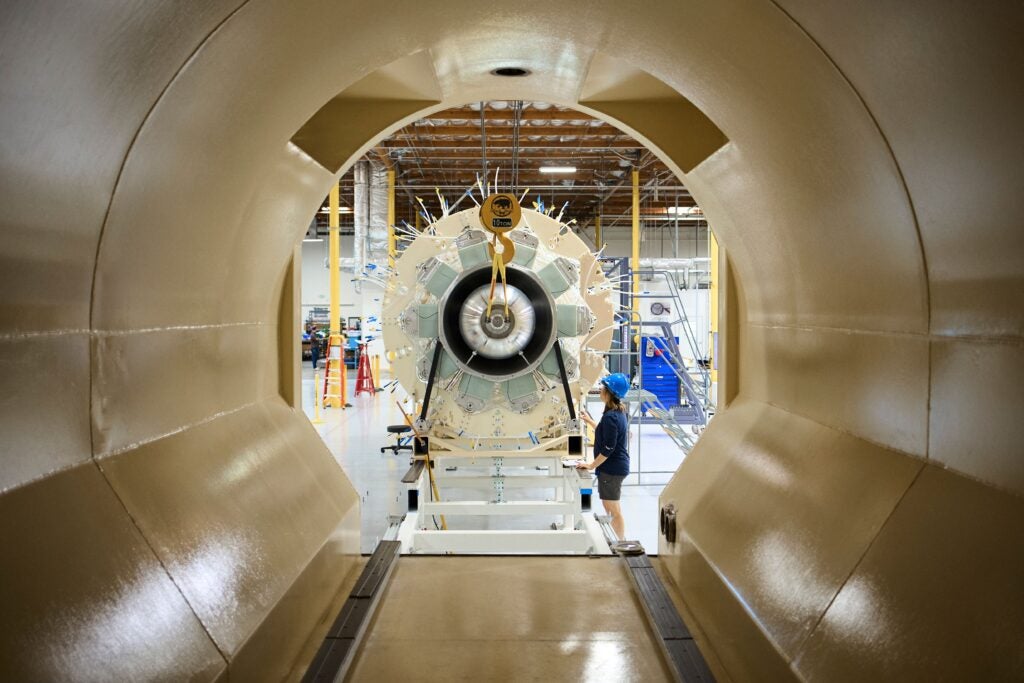
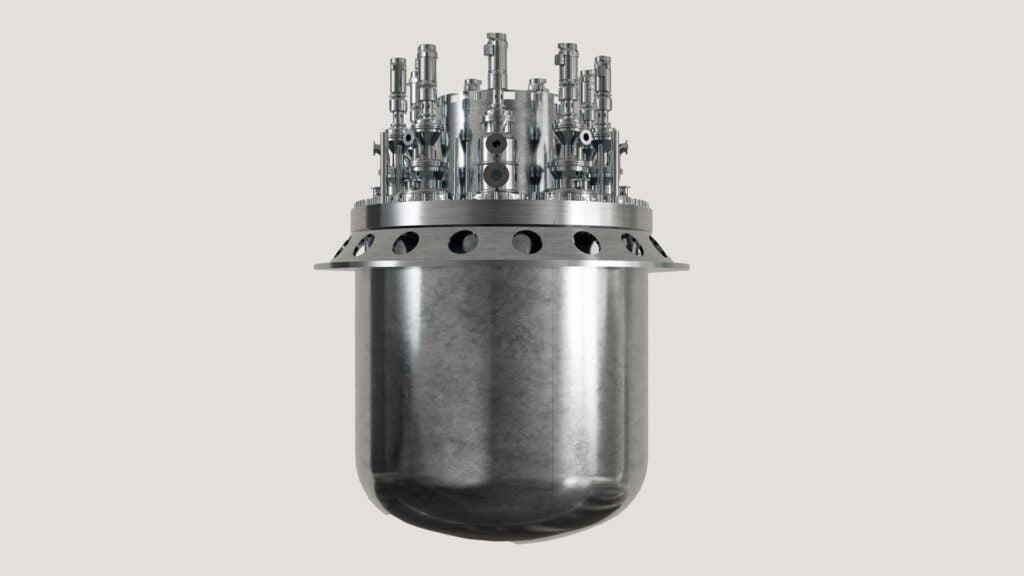
The Xe-100’s pebble-bed fuel configuration allows the reactor to be refueled during operation, an important consideration for industrial facilities that require a continuous supply of process steam. According to the FSER, each reactor core contains approximately 220,000 spherical fuel elements embedded with uranium oxycarbide tristructural isotropic (TRISO) coated fuel particles. Essentially, helium circulates through the pebble bed, transferring heat generated by fission to secondary-side water in the steam generator to produce superheated steam.
The fuel pebbles, meanwhile, circulate through a dedicated fuel handling system, which loads them at the top of the reactor vessel and conveys them using gravitational and pneumatic forces. The system measures the accumulated burnup of pebbles discharged from the bottom of the core and determines whether they should be returned to the reactor or transferred to storage. Operators can thus replenish the core continuously during operation, eliminating the need for the periodic batch refueling outages characteristic of conventional light-water reactors.
Although Long Mott would comprise four reactors, each rated at 200 MWth and equipped with its own steam generator, the NRC evaluated the facility as a single multimodule nuclear power plant. The four reactor and steam generator pairs would occupy a common nuclear island and share a reactor building foundation, a shield structure, and several auxiliary systems. The regulatory review, notably, assessed the safety implications of equipment sharing under the design’s Principal Design Criterion 5, which governs shared structures, systems, and components.
The proposed facility would occupy approximately 1,537 acres of Dow-owned land in the coastal prairie of the Guadalupe River delta, about 22 miles southeast of Victoria. Its proximity to an established petrochemical manufacturing complex required the NRC to evaluate potential hazards associated with industrial accidents, fires, toxic chemical releases, and the transportation of hazardous materials, in addition to the hurricanes and flooding characteristic of the Texas Gulf Coast.
Fuel Performance, Safety Analysis, and Design Qualification
Unlike conventional light-water reactors, the Xe-100 does not rely on a leak-tight, pressure-retaining containment structure. Instead, it incorporates what the NRC calls “functional containment”—a series of barriers to radioactive material transport, principally the successive coating layers surrounding individual TRISO fuel kernels. A central question in the NRC’s safety analysis was how well those coatings would retain fission products under prolonged neutron irradiation and at the elevated temperatures predicted under postulated accident conditions.
Fuel Performance and Accident Analysis. For a depressurized loss-of-forced-cooling event, Long Mott Energy calculated a nominal peak fuel temperature of 1,803C (3,277F), compared with 1,788C (3,250F) in the NRC’s independent confirmatory calculations using its MELCOR accident analysis code. The applicant’s calculated peak, however, rose to 1,885C (3,425F) when it incorporated analytical uncertainties.
The preliminary peak temperatures for the limiting design-basis accident, the NRC noted in its FSER, “are beyond the limits typically associated with TRISO fuel particles, including the results from the Department of Energy’s (DOE) Advanced Gas Reactor (AGR) program.” While the preliminary radiological analyses account for increased fission product releases at elevated temperatures and indicate a maximum 30-day dose of 14.4 rem at the exclusion area boundary—below the applicable 25-rem regulatory criterion—Long Mott Energy must further substantiate its fuel performance assumptions.
The ACRS, which supported issuance of the construction permit in its Oct. 16 letter to the Commission, similarly cautioned that “both fuel and structural materials are challenged by the peak temperatures predicted under limiting accident conditions.” The committee identified fuel performance, functional containment, mechanistic source term analysis—the assessment of radioactive material release and transport during an accident—and graphite and metallic component performance as areas that “require significant additional development.”
Notably, the committee questioned the use of correlations derived from uranium dioxide fuel in the applicant’s source term analysis, given that the Xe-100 uses uranium oxycarbide. It noted, however, that data from the AGR program show substantially lower cesium release from uranium oxycarbide and that the calculated doses are therefore likely conservative.
Long Mott Energy, meanwhile, has proposed a plume exposure pathway emergency planning zone extending 400 meters (about a quarter mile), compared with the roughly 10-mile zone generally associated with conventional U.S. light-water power reactors. The proposal draws on an X-energy methodology the NRC approved in February 2026, subject to seven limitations and conditions, though the agency will evaluate final emergency planning arrangements during its operating license review.
Qualification of the Final Design. Under the two-step licensing process established in Title 10 of the Code of Federal Regulations (10 CFR) Part 50, the NRC can authorize construction before an applicant resolves all outstanding safety questions, provided the applicant establishes a research and development (R&D) program reasonably designed to resolve them before completing construction. Long Mott Energy, notably, did not request Commission approval of any design feature under 10 CFR 50.35(b), and it must substantiate its final design through a separate operating license application.
The NRC found that Long Mott Energy’s R&D program, which covers TRISO fuel, the graphite core assembly, and safety-related metallic components, is reasonably designed to resolve the outstanding safety questions. The NRC’s approval of X-energy’s graphite core assembly qualification and design methodologies alone carries 25 conditions that Long Mott Energy plans to address through testing, development of analytical methodologies, or both before completing its operating license application.
Engineering for Gulf Coast Flooding. At Seadrift, hurricane-driven storm surge presents a separate engineering challenge. While Long Mott Energy proposes a finished site grade of 31 feet for the nuclear island area relative to the North American Vertical Datum of 1988 (NAVD 88), its calculations indicate a stillwater storm surge elevation of 36.38 feet, rising to 46.49 feet when wave runup is included.
Because the applicant had not submitted detailed designs for site grading and passive flood protection features, the NRC stipulated in Paragraph 3.D of the construction permit that Long Mott Energy must notify the agency when those designs are available for examination. The permit anticipates that notification will occur before the placement of safety-significant concrete for structure foundations. The designs should demonstrate that safety-related structures, systems, and components, along with non-safety-related components that must remain functional, are protected during and after the design-basis flood.
Fuel qualification, flooding, and financial qualifications also featured in a contested licensing proceeding brought by the San Antonio Bay Estuarine Waterkeeper. On Nov. 6, three days before the NRC issued the construction permit, the Commission denied the organization’s petition for review of six licensing board decisions and orders, leaving in place the board’s termination of the contested proceeding.
Dow’s Investment Decision and Federal Cost-Sharing
While Dow and X-energy initially envisioned a 2026 construction start and project completion by the end of the decade, Dow now projects construction could begin later this decade, with startup in the early 2030s. The chemical manufacturer has stressed, however, that securing a construction permit does not constitute a commitment to build Long Mott.
“As we move forward, we will continue to evaluate the project through the lens of competitiveness, execution readiness, and capital affordability before any decision regarding construction is made,” Edward Stones, Dow’s business vice president for energy and climate, said in the company’s Nov. 9 announcement.
During X-energy’s Nov. 12 earnings call, CEO Clay Sell elaborated on Dow’s formal investment decision process, through which the chemical manufacturer assesses whether engineering has sufficiently advanced, whether cost targets are being met, and whether operations and maintenance (O&M) assumptions have been validated before investment decisions reach its board. X-energy is still developing manufacturing drawings and detailed construction plans, Sell noted, and while the company does not expect to complete the final reactor design before Dow’s anticipated 2027 preliminary investment decision, it intends to do so before construction begins.
Sell underscored the importance of completing detailed engineering before construction, given the industry’s history of cost overruns and schedule delays. “Now we also have to avoid other mistakes that have been made in our industry in the past, like starting construction before you have it completely designed,” he told analysts. Sell did not, however, specify the level of engineering completion or the class of cost estimate Dow would require to sanction the investment.
Construction Financing and Federal Reimbursements. Although the companies have not publicly disclosed an overall construction cost estimate for Long Mott, Dow has committed to providing financial support exceeding half of the projected construction cost, according to the FSER. Under a Feb. 23, 2026, financial support agreement, The Dow Chemical Company agreed to fund construction costs up to a specified amount unless it secures substitute financial assurance through a loan facility, a letter of credit, or both, with the NRC’s written consent. The arrangement, notably, allows Long Mott Energy to incur project expenditures before receiving federal cost-sharing reimbursements under the ARDP.
On that basis, the NRC determined that Long Mott Energy appears financially qualified to undertake construction. The agency granted an exemption from the construction permit financial qualification requirements in 10 CFR 50.33(f) and Appendix C to Part 50, applying instead the standard under 10 CFR 70.23(a)(5), under which an applicant must appear financially qualified to engage in the proposed activities.
X-energy, meanwhile, said on Nov. 9 that it had been informed of an intended increase in the total value of its ARDP award to $2.15 billion, encompassing both the Long Mott demonstration and its TRISO-X fuel fabrication facility in Tennessee. The DOE had previously indicated it could invest up to $1.23 billion over seven years in the reactor and fuel facility, though the agency did not address the increased award amount in its Nov. 13 announcement on the construction permit.
X-energy reported $66.3 million in revenue and grant income for the third quarter of 2026, including $51.5 million in services revenue, primarily from Xe-100 design work under the ARDP, and $14.8 million in grant income tied to the Dow demonstration. The company incurred $71.8 million in capital expenditures for construction projects, including its TX-1 fuel fabrication facility, and received $27.8 million in associated cash reimbursements from the DOE during the quarter.
X-energy Chief Financial Officer Daniel Gross told analysts that cumulative ARDP reimbursements had reached $618 million through September 2026. While the program reimburses roughly half of eligible expenditures, Gross noted that X-energy must first incur the costs and invoice the DOE, and its financial statements also include capital and operating expenditures from other projects that do not qualify for federal cost-sharing.
Operating License and Construction Schedule. Long Mott’s construction permit specifies July 1, 2033, as the earliest date for completion of construction and Dec. 31, 2033, as the latest. The permit expires on the latter date unless the NRC extends it. X-energy has already begun developing the operating license application, which Sell anticipates filing approximately two years before commissioning, allowing for an expected 18-month NRC review ahead of initial fuel loading and startup.
For subsequent Xe-100 deployments, X-energy expects to reuse much of the engineering and safety analysis undertaken for Long Mott, particularly for the standardized nuclear island, which comprises the reactor and nuclear steam supply system. Sell said the company anticipates substantially shorter construction permit reviews for subsequent applications, citing unofficial indications from the NRC that the agency is targeting review periods of six to 12 months.
Project Delivery and the Xe-100 Supply Chain
Still, while Dow is evaluating the investment, X-energy has committed its own capital to reserve manufacturing capacity and procure long-lead materials, including graphite, steel forgings, and steam generator tubing. “We’ve chosen to make some early investments to secure capacity and to buy early material with the full expectation that when our customers reach their investment decisions, they will take over those obligations on a go-forward basis,” Sell told analysts.
Project Engineering and Nuclear Operations. Dow, notably, has enlisted NextEra Energy Resources to provide technical support in nuclear procurement, licensing, personnel training, and the development of operating disciplines. According to the FSER, Long Mott Energy has also selected a subsidiary of NextEra Energy Resources to operate the facility. In assessing Long Mott Energy’s technical qualifications, the NRC considered the complementary expertise of the three companies: Dow’s experience in industrial energy production and large capital projects, X-energy’s reactor engineering capabilities, and the operating experience of NextEra Energy’s nuclear fleet, which comprises seven light-water reactors across four sites.
Fluor, a U.S. engineering, procurement, and construction (EPC) firm, has also secured engineering contracts for X-energy’s two most advanced U.S. reactor projects. On Nov. 5, X-energy selected Fluor to provide engineering, design development, supply chain, estimating, and project controls services for the nuclear island of Energy Northwest’s proposed Cascade Advanced Energy Facility near Richland, Washington, following an earlier 2026 award for similar services at Seadrift. At Cascade, Cascade Nuclear Partners, a joint venture of Kiewit, Black & Veatch, and Aecon, holds the progressive design-build contract. Sell noted that Fluor is supporting the design of systems within Cascade’s nuclear island, while Cascade Nuclear Partners is advancing the conventional island design and coordinating requirements across the broader plant.
The Cascade project, which would initially employ four Xe-100 reactors with provisions for expansion to 12 modules totaling 960 MW, would be sited near Energy Northwest’s Columbia Generating Station, where X-energy originally planned its ARDP demonstration. It is the first project under X-energy’s collaboration with Amazon, which aims to support deployment of more than 5 GW of new U.S. nuclear capacity by 2039.
Component Testing and Manufacturing Readiness. X-energy is expanding component fabrication, machining, and testing capabilities at its 90,000-square-foot X-energy Technology Advancement Center (XTAC) in Frederick, Maryland. The company has begun testing graphite components and expects over the next couple of years to commission a helium test loop to validate the mechanical systems that operate in the helium environment. Those systems, Sell noted, fall broadly into three groups: the fuel handling system, the helium circulator system, and the control rods and their drive mechanisms.
Sell said the testing program is intended to refine manufacturing and installation procedures and validate long-term O&M assumptions before commercial deployment, though he noted that work at XTAC is not a significant input to Dow’s preliminary investment decision. “In the simplest terms, we want to have done it at the XTAC before we do it in the field,” he said.
Component Procurement. Five days before the NRC issued Long Mott’s construction permit, X-energy announced its first procurement of steam generator tubing for the Xe-100. Swedish specialty materials manufacturer Alleima will supply specialized stainless steel tubing to South Korean nuclear component manufacturer Doosan Enerbility, which will bend it into helical coils for Long Mott’s steam generators. The companies, however, did not disclose the quantity, contract value, or delivery schedule.
The procurement follows a December 2025 agreement under which X-energy, as POWER reported, reserved manufacturing capacity at Doosan for 16 sets of reactor pressure vessels, steam generator pressure vessels, and additional steel components of the main power system. According to Doosan, the reservation covers the four proposed Long Mott reactors and the potential 12-reactor Cascade development in Washington. Doosan has also committed to building a dedicated small modular reactor fabrication facility in Changwon, South Korea, which X-energy says could support production of components for approximately 20 Xe-100 reactors annually at full capacity.
Beyond steel forgings and steam generator tubing, X-energy has secured graphite manufacturing capacity and materials through Toyo Tanso and SGL Carbon.
“Regulatory approval is not on the critical path for any of our projects. It really relates more to the supply chain, which is why we are making early investments in the supply chain because that’s the best opportunity to reduce schedule on our future projects,” Sell told analysts.
Commercial-Scale Fuel Fabrication. In Oak Ridge, Tennessee, X-energy’s wholly owned fuel subsidiary TRISO-X completed vertical construction of the shell of its TX-1 fuel fabrication facility on schedule in the third quarter of 2026, according to X-energy’s third-quarter financial results. The next phase encompasses interior buildout, installation of fuel fabrication equipment, and construction of supporting facilities, including a graphite matrix powder facility that will prepare and blend graphite materials for fuel pebble fabrication.
In February, the NRC granted TRISO-X a 40-year special nuclear material license—the first Category II fuel fabrication license for processing high-assay low-enriched uranium (HALEU). The DOE characterizes TX-1 as the first commercial-scale HALEU fuel fabrication facility in the U.S. to receive NRC approval.
TX-1 has a designed production capacity of approximately 700,000 fuel pebbles annually, equivalent to 5 metric tons of uranium and sufficient to support operation of up to 11 Xe-100 reactors. TRISO-X, which will also require a reliable supply of enriched uranium feedstock, received an initial HALEU allocation from the DOE in April 2025 that X-energy says will be used to manufacture fuel for Long Mott’s first core loads.
X-energy is also advancing design work for TX-2, its second planned commercial fuel fabrication facility, and TX-L, a dedicated R&D center. Costs associated with TX-2’s design and site preparation are currently being expensed rather than capitalized, Gross noted, owing to the project’s stage of development.
The company’s ambitions for TRISO-X, notably, extend beyond supplying its own reactor fleet. Sell said the Part 70 license authorizes commercial fuel manufacturing using uranium enriched up to 20% at its first two commercial facilities, and the company intends to pursue third-party customers developing reactors and microreactors that use coated particle fuel.
X-energy, meanwhile, continues to pursue qualification of its own TRISO fuel through an irradiation campaign at the Advanced Test Reactor in Idaho. Asked about the campaign on Nov. 12, Sell said interim results had met the company’s expectations, though X-energy has yet to complete the campaign and publish its assessment.
Building a Commercial Reactor Portfolio. X-energy, which reported $1.8 billion in cash and investments and no debt as of Sept. 30, has a prospective commercial portfolio encompassing 144 reactors representing approximately 11.5 GW of generating capacity, assuming each customer exercises its contingent rights in full. Of those, Sell said, up to 40 reactors are associated with identified project plans and development partnerships involving Dow, Energy Northwest, American Electric Power (AEP), and Centrica.
Beyond Long Mott and Cascade, the prospective deployments include a 960-MW project involving Amazon and AEP in Sullivan County, Indiana, where AEP is evaluating redevelopment of a former coal-fired generation site with an existing PJM Interconnection grid connection. The parties are committing resources to site characterization, feasibility studies, community engagement, preparation for a construction permit application, and development of the prospective commercial arrangement between Amazon and AEP.
In the UK, where X-energy’s Xe-100 entered the Generic Design Assessment process in September, the company is pursuing a collaboration with Centrica targeting up to 6 GW. Sell said expanded cooperation between U.S. and UK nuclear regulators enables X-energy to draw on NRC-approved technical documentation and safety analyses during the British assessment.
For X-energy, whose commercial strategy includes sales of reactor technology, associated services, and fuel over the operating lives of its customers’ plants, executing the first commercial deployment at Seadrift will be critical to establishing the cost and schedule assumptions for subsequent projects.
“This is the process. This is where we develop the mastery through repetition, to move from the first, more expensive plants all the way down to lower cost lower risk, shorter scheduled plants that can be financed and deployed at scale,” Sell said.
—Sonal Patel is a POWER senior editor (@sonalcpatel, @POWERmagazine).